English

Data (What Is Data?)
Data is information, such as facts, numbers, or measurements, collected together for reference or analysis.
Reads at Grades 3–5 Listens at Grades 1–5
Print & create
Answer keys·No prep·Free with an account
28 worksheets · answer keys · full story · quiz · Ages 8-10 · CEFR B1
Plus adds 244,000+ more stories in 27 languages, audio for every one, and printables for all of them.
Just want Data (What Is Data?)?

Have you ever wondered how many steps you take in a day? Or how tall you were last year compared to this year? Have you ever checked the temperature before deciding to wear a jacket? Every time you count, measure, or observe something, you are meeting me! I’m in the score of your favorite video game, the number of pages in a book, and the list of ingredients in a recipe. I am like millions of tiny clues scattered all over the world. On my own, one clue might not mean much, but when you gather me together, I can tell you amazing stories and help you solve mysteries. I am the information that helps you understand things. Hello! My name is Data.
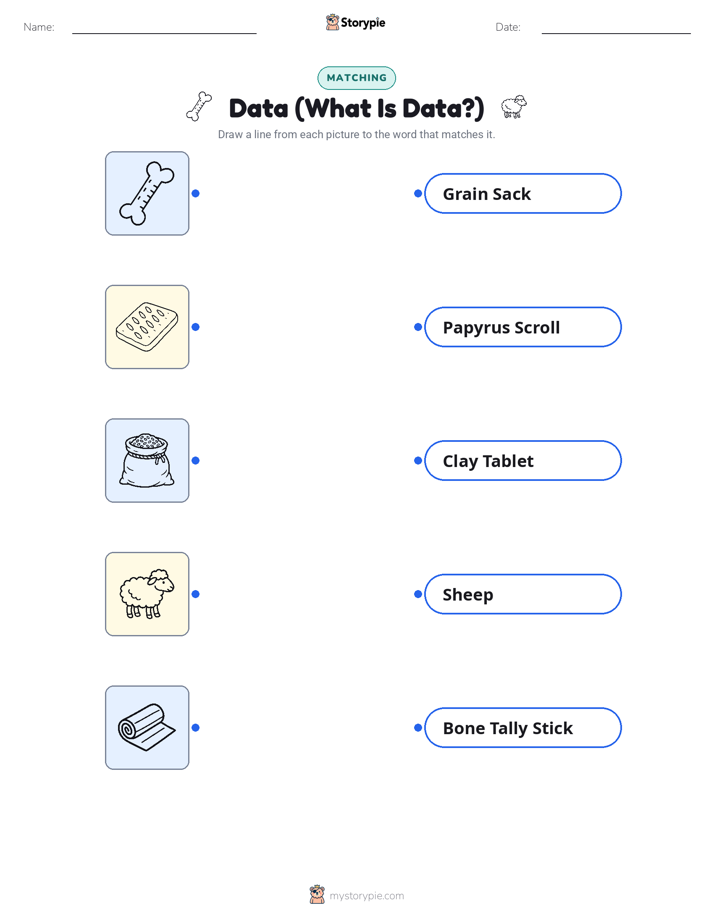
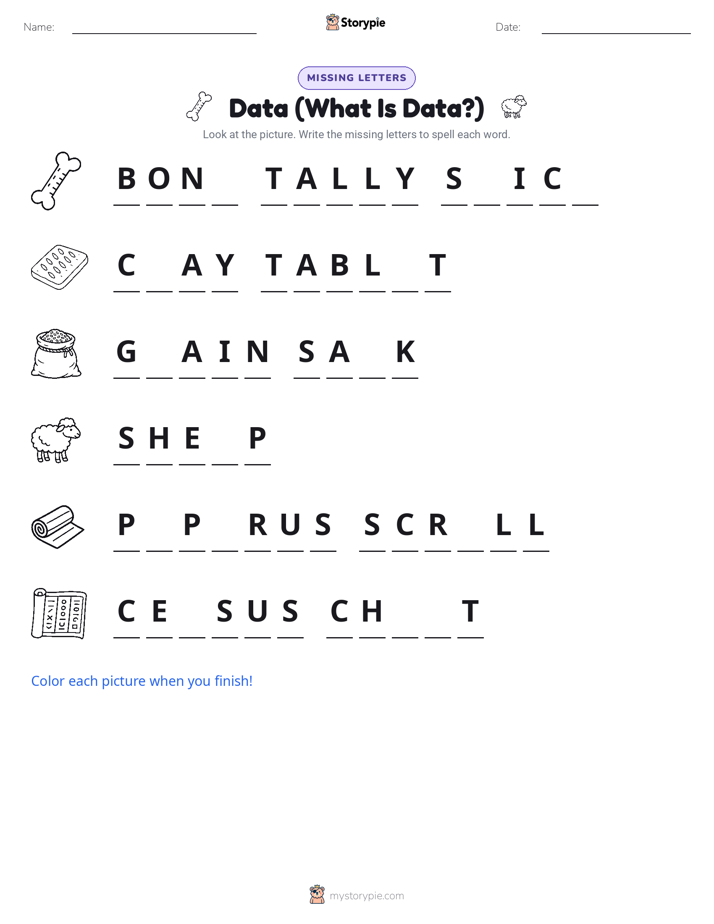
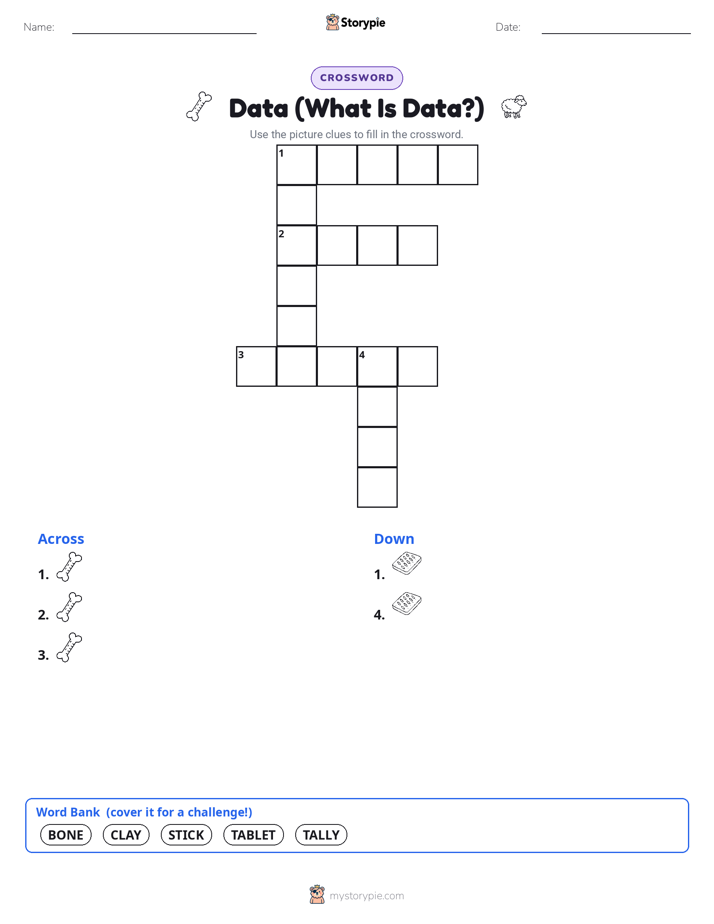
I am much older than you might think. Long, long ago, before there were even words written down, people used me to remember things. One of my oldest memories is from around 35,000 BCE, when someone carved 29 scratches onto a baboon's bone in Africa. This, the Lebombo bone, might have been a way to count the days or track the moon. I was a simple tally mark! Then, around 3500 BCE in a place called Mesopotamia, the Sumerian people gave me a very important job. They used a special wedge-shaped writing called cuneiform to press me into clay tablets. I helped them keep records of everything—how many sheep a farmer owned or how much grain was in a city’s storage. I was the secret to building some of the world's first great cities. Later, the powerful Roman Empire used me to conduct a census, which was a giant headcount of everyone living there starting in the 6th century BCE. By counting people, I helped the Romans organize their armies and build their roads.
The Story of Data
Have you ever wondered how many steps you take in a day? Or how tall you were last year compared to this year? Have you ever checked the temperature before deciding to wear a jacket? Every time you count, measure, or observe something, you are meeting me! I’m in the score of your favorite video game, the number of pages in a book, and the list of ingredients in a recipe. I am like millions of tiny clues scattered all over the world. On my own, one clue might not mean much, but when you gather me together, I can tell you amazing stories and help you solve mysteries. I am the information that helps you understand things. Hello! My name is Data.
I am much older than you might think. Long, long ago, before there were even words written down, people used me to remember things. One of my oldest memories is from around 35,000 BCE, when someone carved 29 scratches onto a baboon's bone in Africa. This, the Lebombo bone, might have been a way to count the days or track the moon. I was a simple tally mark! Then, around 3500 BCE in a place called Mesopotamia, the Sumerian people gave me a very important job. They used a special wedge-shaped writing called cuneiform to press me into clay tablets. I helped them keep records of everything—how many sheep a farmer owned or how much grain was in a city’s storage. I was the secret to building some of the world's first great cities. Later, the powerful Roman Empire used me to conduct a census, which was a giant headcount of everyone living there starting in the 6th century BCE. By counting people, I helped the Romans organize their armies and build their roads.
For thousands of years, I was mostly used for counting and listing. But then, people started to see the patterns I could reveal. In London, on October 24th, 1662, a shopkeeper named John Graunt published a book that looked at me in a whole new way. He studied lists of births and deaths and discovered amazing things, like how many people lived in the city and what seasons were most dangerous. He was one of the first data detectives, using me to understand the health of an entire population. A couple of centuries later, in the United States, I was needed for another huge census in 1890. The country had grown so much that counting everyone by hand would take forever! So, an inventor named Herman Hollerith created a fantastic machine that could read me from holes punched in paper cards. His Tabulating Machine turned a ten-year job into a one-year job. It was the beginning of using machines to process me at super speed.
Herman Hollerith’s machine was just the start. In 1945, the first giant electronic computers like ENIAC were built, and they could work with me faster than any human ever could. But my biggest change came with the invention of the internet. Suddenly, I was zipping around the world in an instant! By the early 2000s, there was so much of me being created every second—from emails, photos, and videos—that people gave me a new nickname: 'Big Data.' Today, I am everywhere, helping in countless ways. I help scientists predict hurricanes, doctors understand diseases, and engineers design safer cars. I even help your favorite streaming service guess which movie you'll love next. I am the collection of facts and figures that helps humanity learn, grow, and make smarter decisions. And every time you learn a new fact, you are helping me grow, too!
Wow facts
About
Data is information, such as facts, numbers, or measurements, collected together for reference or analysis. Humans have utilized information for thousands of years, but the modern idea of 'data' in computers started in the mid-20th century to help us count, record, and understand the world.
Take a Quiz
Question 1 of 5
The story says John Graunt was a 'data detective.' What does this phrase mean?
Explore next






Want to do even more?
Go beyond exploring. Unlock tools that turn every story into real learning.

Storypie Plus for families
Full stories, quizzes, and printables. Nights and car rides, sorted.
- Unlimited audio stories
- Create Mode: your child stars in the story
- Offline downloads
- Printable worksheets & coloring pages

Why Storypie for Schools
Students engaged. Prep in seconds. Evenings back to you.
- Worksheets & Quizzes
- Classroom Management
- Formative Assessment
- Custom Curriculum & Lesson Plans
- 27 Languages

Why Storypie for Homeschool
Curriculum done. They'll ask for more. Hours back in your day.
- Worksheet Generator
- First-Person Audio Stories
- Built-in Comprehension Quizzes
- Custom Curriculum & Lesson Plans
- Print & Go Activities