English

Domestication
Domestication is the process by which humans tame and breed wild animals and plants over generations for…
Reads at Grades 6–8 Listens at Grades 4–8
Print & create
Answer keys·No prep·Free with an account
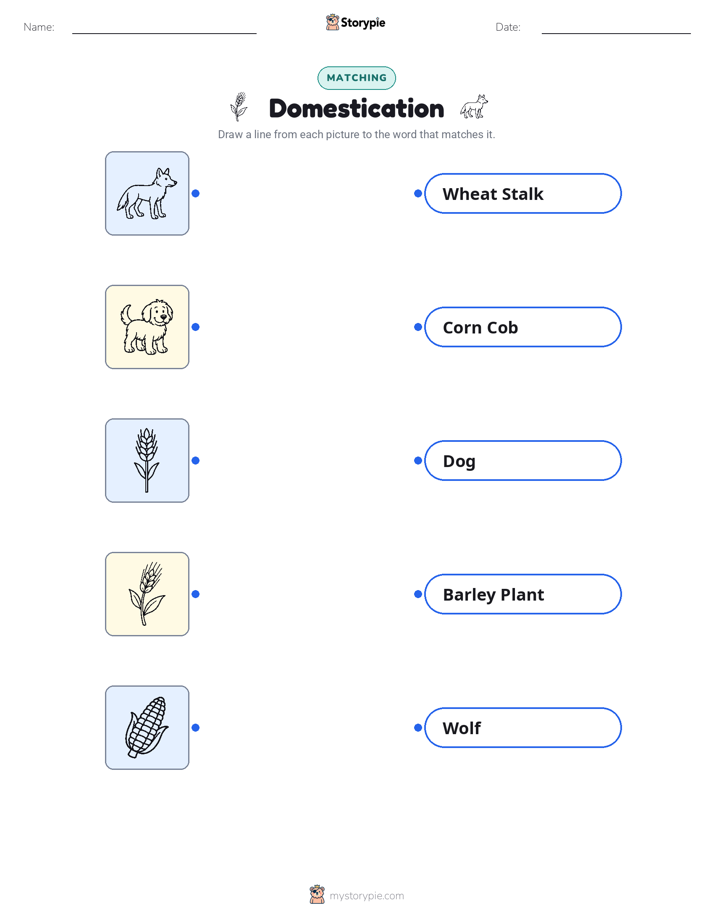
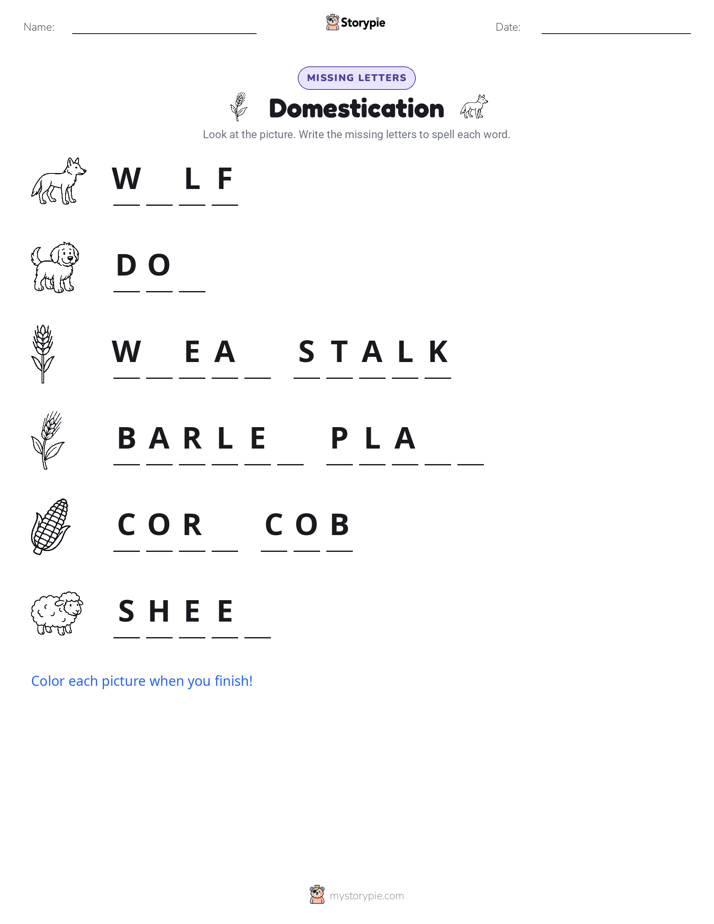
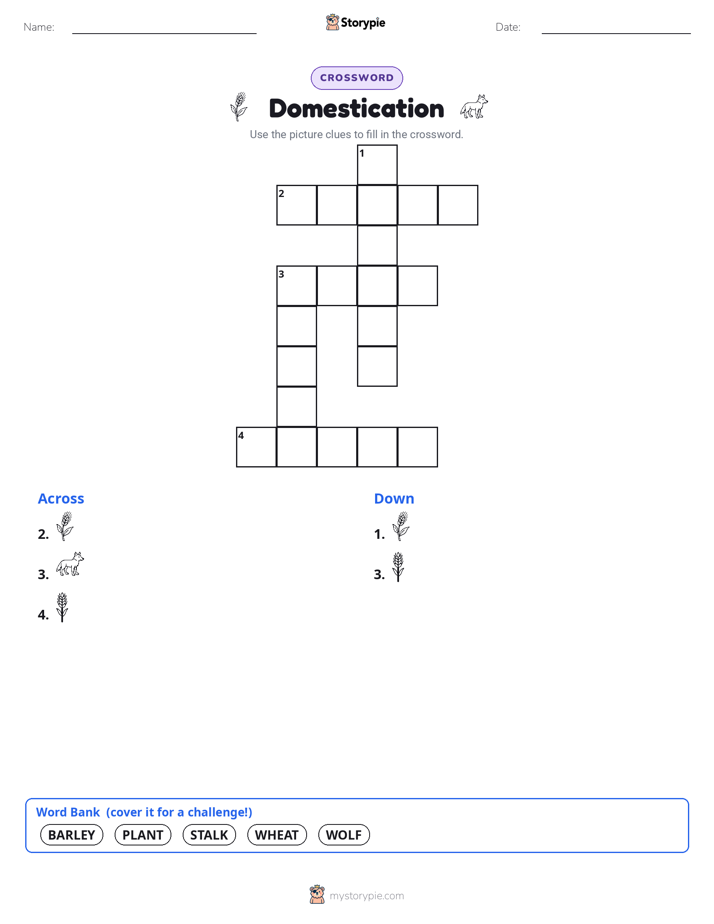
28 worksheets · answer keys · full story · quiz · Ages 10-12 · CEFR B2
Plus adds 164,000+ more stories in 27 languages, audio for every one, and printables for all of them.
Just want Domestication?

Think about the soft fur of the cat curled up on your lap, or the happy bark of your dog when you come home. Consider the sweet corn you eat in the summer or the fluffy cotton that makes up your favorite shirt. Have you ever wondered how these creatures and plants became such a close part of our lives? It feels so natural now, but it was not an accident. It was a choice, a partnership that began so long ago it is almost forgotten. How did a fierce, wild wolf, a creature of the forest and the hunt, decide to trust humans and become a loyal companion? How did a tough, scrawny wild grass transform over time into the golden wheat that gives us bread, pasta, and pizza? A secret agreement was made, a quiet promise between the world of humans and the wild world. It was a pact that changed the course of history forever, reshaping landscapes and building civilizations from the ground up. This ancient bond, this incredible process of transformation, has a name. I am the ancient agreement between your world and the wild one. I am Domestication.
Let’s journey back in time, far back to the Ice Age, as early as 30,000 BCE. The world was a harsh and frozen place, and humans lived in small, wandering groups of hunter-gatherers. They followed herds of mammoths and bison, never staying in one place for long. At the edges of their flickering campfires, another hunter watched with intelligent eyes: the ancient wolf. At first, our relationship was one of caution and distance. Wolves were competitors, and humans were a source of easy scraps. But slowly, something shifted. The bolder, less fearful wolves crept closer to human camps to scavenge for leftovers. Humans, in turn, noticed that these wolves would bark and alert them to the approach of dangerous predators, like cave bears or saber-toothed cats. A silent understanding began. Perhaps these wolves could be more than just rivals. Over thousands of years—countless generations of both people and wolves—a partnership was forged. Humans began to favor the wolves that were friendlier, more helpful, and less aggressive. They might have shared food with them or even raised orphaned pups. These favored wolves survived better and had more pups of their own, passing on their tamer traits. Generation by generation, they changed. Their snouts shortened, their tails began to wag, and their bond with humans deepened until they were no longer truly wolves. They became the first dogs, our first great success story together.
The Story of Domestication
Think about the soft fur of the cat curled up on your lap, or the happy bark of your dog when you come home. Consider the sweet corn you eat in the summer or the fluffy cotton that makes up your favorite shirt. Have you ever wondered how these creatures and plants became such a close part of our lives? It feels so natural now, but it was not an accident. It was a choice, a partnership that began so long ago it is almost forgotten. How did a fierce, wild wolf, a creature of the forest and the hunt, decide to trust humans and become a loyal companion? How did a tough, scrawny wild grass transform over time into the golden wheat that gives us bread, pasta, and pizza? A secret agreement was made, a quiet promise between the world of humans and the wild world. It was a pact that changed the course of history forever, reshaping landscapes and building civilizations from the ground up. This ancient bond, this incredible process of transformation, has a name. I am the ancient agreement between your world and the wild one. I am Domestication.
Let’s journey back in time, far back to the Ice Age, as early as 30,000 BCE. The world was a harsh and frozen place, and humans lived in small, wandering groups of hunter-gatherers. They followed herds of mammoths and bison, never staying in one place for long. At the edges of their flickering campfires, another hunter watched with intelligent eyes: the ancient wolf. At first, our relationship was one of caution and distance. Wolves were competitors, and humans were a source of easy scraps. But slowly, something shifted. The bolder, less fearful wolves crept closer to human camps to scavenge for leftovers. Humans, in turn, noticed that these wolves would bark and alert them to the approach of dangerous predators, like cave bears or saber-toothed cats. A silent understanding began. Perhaps these wolves could be more than just rivals. Over thousands of years—countless generations of both people and wolves—a partnership was forged. Humans began to favor the wolves that were friendlier, more helpful, and less aggressive. They might have shared food with them or even raised orphaned pups. These favored wolves survived better and had more pups of their own, passing on their tamer traits. Generation by generation, they changed. Their snouts shortened, their tails began to wag, and their bond with humans deepened until they were no longer truly wolves. They became the first dogs, our first great success story together.
After the ice retreated and the world grew warmer, around 10,000 BCE, humanity stood at the brink of another tremendous change. In a lush area of the Middle East that historians call the Fertile Crescent, people began applying the lessons they had learned from their partnership with dogs to the world of plants. Instead of just gathering wild grains wherever they could find them, they started to experiment. They noticed that some stalks of wheat had plumper, bigger seeds than others. They observed that some barley plants were tougher and could survive with less water. I was the whisper in their minds that said, 'Save the seeds from the very best plants. Plant only those next season.' It was a revolutionary idea. Year after year, they selected and sowed the seeds from the most desirable plants, and the crops slowly transformed, becoming more nutritious and easier to harvest. This was the dawn of agriculture. At the same time, around 8500 BCE, they began to apply the same principles to other animals. They captured wild sheep and goats, choosing the most docile ones with the thickest wool or those that produced the most milk. They tamed wild aurochs, the ancestors of modern cattle, for their strength to pull plows. For the first time, humans did not have to follow the herds or wander in search of ripe plants. They had a reliable source of food right where they were. They could finally put down roots, building permanent homes, which grew into villages, and eventually, the very first cities.
A World We Built Together. Today, you can see my work everywhere. I am in the wool sweater that keeps you warm, the glass of milk you drink with breakfast, and the loyal gaze of the pet waiting for you at the door. I am the reason you can eat an apple from a tree or a potato from the ground, fruits and vegetables that look very different from their wild ancestors. I am the silent, foundational agreement that allowed human civilization to grow. Without the stable food supply I provided, there would be no cities, no great inventions, no art, and no science as we know it. My story is a testament to the power of observation, patience, and cooperation. And my work is not finished. Today, scientists use my principles to develop new kinds of crops that can resist disease or grow in difficult climates, helping to feed a growing world population. I am a living, breathing reminder of the incredible things that can happen when humanity works with nature, not against it, building powerful partnerships based on mutual trust and care.
Wow facts
About
Domestication is the process by which humans tame and breed wild animals and plants over generations for companionship, food, or work, creating a relationship where both humans and the animals or plants can benefit.
Take a Quiz
Question 1 of 5
According to the story, what were the main steps in the process of domesticating wolves into dogs?
Want to do even more?
Go beyond exploring. Unlock tools that turn every story into real learning.

Storypie Plus for families
Full stories, quizzes, and printables. Nights and car rides, sorted.
- Unlimited audio stories
- Create Mode: your child stars in the story
- Offline downloads
- Printable worksheets & coloring pages

Why Storypie for Schools
Students engaged. Prep in seconds. Evenings back to you.
- Worksheets & Quizzes
- Classroom Management
- Formative Assessment
- Custom Curriculum & Lesson Plans
- 27 Languages

Why Storypie for Homeschool
Curriculum done. They'll ask for more. Hours back in your day.
- Worksheet Generator
- First-Person Audio Stories
- Built-in Comprehension Quizzes
- Custom Curriculum & Lesson Plans
- Print & Go Activities