English

Economic Systems (Market vs. Command Economies)
A concept explaining the three primary ways societies organize the production and distribution of goods and…
Reads at Grades 6–8 Listens at Grades 4–8
Print & create
Answer keys·No prep·Free with an account
28 worksheets · answer keys · full story · quiz · Ages 10-12 · CEFR B2
Plus adds 244,000+ more stories in 27 languages, audio for every one, and printables for all of them.
Just want Economic Systems (Market vs. Command Economies)?

Have you ever wondered who decides what gets made in the world. Who makes the final call on a new video game, a different brand of cereal, or the latest style of sneaker. It seems like magic, but it’s not. It’s me. I am the invisible rulebook that every town, city, and country uses to answer three of the most important questions you can imagine: What do we make. How do we make it. And who gets what we make. I don't have a single personality; I have a few that people have tried over the centuries. One of my main personalities is like a giant, busy, free-for-all marketplace. Millions of people are buying, selling, and trading, and all their individual choices create a kind of beautiful, unpredictable chaos that somehow works. My other main personality is the total opposite. It's like a super-organized planner holding a clipboard, with a detailed plan for every single thing. This planner decides exactly what needs to be made and who gets it, all to make sure everything is perfectly fair and nobody is left out. These two very different ways of organizing the world are my two biggest ideas. I am the idea of an Economic System.
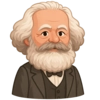
My two big ideas didn't just appear overnight; they grew out of centuries of human history, hard work, and deep thinking. Let's start with my marketplace personality, which you might know as the Market Economy. People have been trading in markets for thousands of years, but it was in the 18th century that they really started to analyze how it all worked. A brilliant Scottish philosopher named Adam Smith was fascinated by it. He spent years observing and thinking, and on March 9th, 1776, he published a revolutionary book called 'The Wealth of Nations.' In it, he described what he called the 'invisible hand.' He argued that when millions of people make their own free choices—what to buy, what to sell, what to create—they are guided by this invisible force to produce exactly what society needs, all without a single person being in charge. It was a powerful idea that celebrated freedom and individual choice. But as the world changed, another idea began to form. During the 19th-century Industrial Revolution, huge factories sprang up, and while some people became very wealthy, many workers, including children, faced incredibly difficult and unfair conditions. Two German thinkers, Karl Marx and Friedrich Engels, saw this suffering and believed there had to be a better way. On February 21st, 1848, they published a small but explosive book, 'The Communist Manifesto.' They argued that the 'invisible hand' was creating too much inequality. Their solution was my other personality: the Command Economy. They proposed that the government should own all the farms and factories and plan everything centrally. The goal was to eliminate poverty and distribute resources equally among all people. This idea was famously put into practice in the 20th century in places like the Soviet Union after its revolution in 1917.
The Invisible Rulebook: The Story of Economic Systems
Have you ever wondered who decides what gets made in the world. Who makes the final call on a new video game, a different brand of cereal, or the latest style of sneaker. It seems like magic, but it’s not. It’s me. I am the invisible rulebook that every town, city, and country uses to answer three of the most important questions you can imagine: What do we make. How do we make it. And who gets what we make. I don't have a single personality; I have a few that people have tried over the centuries. One of my main personalities is like a giant, busy, free-for-all marketplace. Millions of people are buying, selling, and trading, and all their individual choices create a kind of beautiful, unpredictable chaos that somehow works. My other main personality is the total opposite. It's like a super-organized planner holding a clipboard, with a detailed plan for every single thing. This planner decides exactly what needs to be made and who gets it, all to make sure everything is perfectly fair and nobody is left out. These two very different ways of organizing the world are my two biggest ideas. I am the idea of an Economic System.
My two big ideas didn't just appear overnight; they grew out of centuries of human history, hard work, and deep thinking. Let's start with my marketplace personality, which you might know as the Market Economy. People have been trading in markets for thousands of years, but it was in the 18th century that they really started to analyze how it all worked. A brilliant Scottish philosopher named Adam Smith was fascinated by it. He spent years observing and thinking, and on March 9th, 1776, he published a revolutionary book called 'The Wealth of Nations.' In it, he described what he called the 'invisible hand.' He argued that when millions of people make their own free choices—what to buy, what to sell, what to create—they are guided by this invisible force to produce exactly what society needs, all without a single person being in charge. It was a powerful idea that celebrated freedom and individual choice. But as the world changed, another idea began to form. During the 19th-century Industrial Revolution, huge factories sprang up, and while some people became very wealthy, many workers, including children, faced incredibly difficult and unfair conditions. Two German thinkers, Karl Marx and Friedrich Engels, saw this suffering and believed there had to be a better way. On February 21st, 1848, they published a small but explosive book, 'The Communist Manifesto.' They argued that the 'invisible hand' was creating too much inequality. Their solution was my other personality: the Command Economy. They proposed that the government should own all the farms and factories and plan everything centrally. The goal was to eliminate poverty and distribute resources equally among all people. This idea was famously put into practice in the 20th century in places like the Soviet Union after its revolution in 1917.
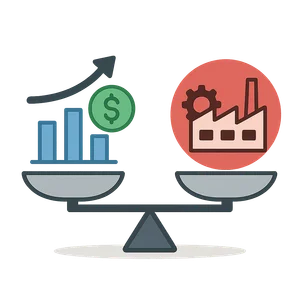
In the real world, however, I am rarely one hundred percent market or one hundred percent command. Most countries have discovered that the best approach is to mix and match my ideas, creating what is called a Mixed Economy. Think of it like a recipe. Some countries, like the United States, use a lot of market ingredients with just a pinch of command. They have a very strong market economy where businesses and consumers have a lot of freedom, but the government still steps in to provide important things like roads, schools, and rules to keep everyone safe. Other countries, like Sweden, add a much bigger scoop of command ingredients to their market recipe. They also have a market system, but their government plays a much larger role in providing services like healthcare and education to all its citizens, paid for with higher taxes. Each recipe has its own strengths and weaknesses. The market-heavy recipe is fantastic at creating new inventions, amazing products, and a huge variety of choices. But, if you're not careful, it can sometimes lead to great inequality, where some people have a lot and others have very little. The command-heavy recipe aims for fairness and equality above all else, but it can struggle with efficiency. Sometimes this leads to shortages of things people need, and it often limits personal and economic freedom. For a large part of the 20th century, during a period known as the Cold War, which lasted from about 1947 to 1991, countries with different economic recipes competed to prove their way was the best for humanity.
So, what does all this history of big ideas and global competition have to do with you. Everything. You are a part of my story every single day. Every choice you make—whether you're buying a snack at the store, saving your allowance for something special, or trading cards with a friend—is a small but important part of how I work. Your decisions are like tiny votes that send signals to businesses, telling them what you value and what they should make more of. Understanding me, the idea of Economic Systems, is like having a superpower. It helps you understand the news, see the reasons behind the world's biggest challenges, and have important conversations about fairness, freedom, and the best ways to build a better world for everyone. The story of how we all decide to live and work together is still being written, and now that you know my secrets, you get to help write the next chapter.
Wow facts
About
A concept explaining the three primary ways societies organize the production and distribution of goods and services: market economies driven by individual choice, command economies directed by central authorities, and traditional economies based on customs and traditions.
Take a Quiz
Question 1 of 5
According to the story, why did Karl Marx and Friedrich Engels believe a command economy was a better system?
Explore next





Want to do even more?
Go beyond exploring. Unlock tools that turn every story into real learning.

Storypie Plus for families
Full stories, quizzes, and printables. Nights and car rides, sorted.
- Unlimited audio stories
- Create Mode: your child stars in the story
- Offline downloads
- Printable worksheets & coloring pages

Why Storypie for Schools
Students engaged. Prep in seconds. Evenings back to you.
- Worksheets & Quizzes
- Classroom Management
- Formative Assessment
- Custom Curriculum & Lesson Plans
- 27 Languages

Why Storypie for Homeschool
Curriculum done. They'll ask for more. Hours back in your day.
- Worksheet Generator
- First-Person Audio Stories
- Built-in Comprehension Quizzes
- Custom Curriculum & Lesson Plans
- Print & Go Activities