English

Economic Systems (Market vs. Command Economies)
A concept explaining the three primary ways societies organize the production and distribution of goods and…
Reads at Grades K-2 Listens at K–3
Print & create
Answer keys·No prep·Free with an account
28 worksheets · answer keys · full story · quiz · Ages 6-8 · CEFR A2
Plus adds 244,000+ more stories in 27 languages, audio for every one, and printables for all of them.
Just want Economic Systems (Market vs. Command Economies)?
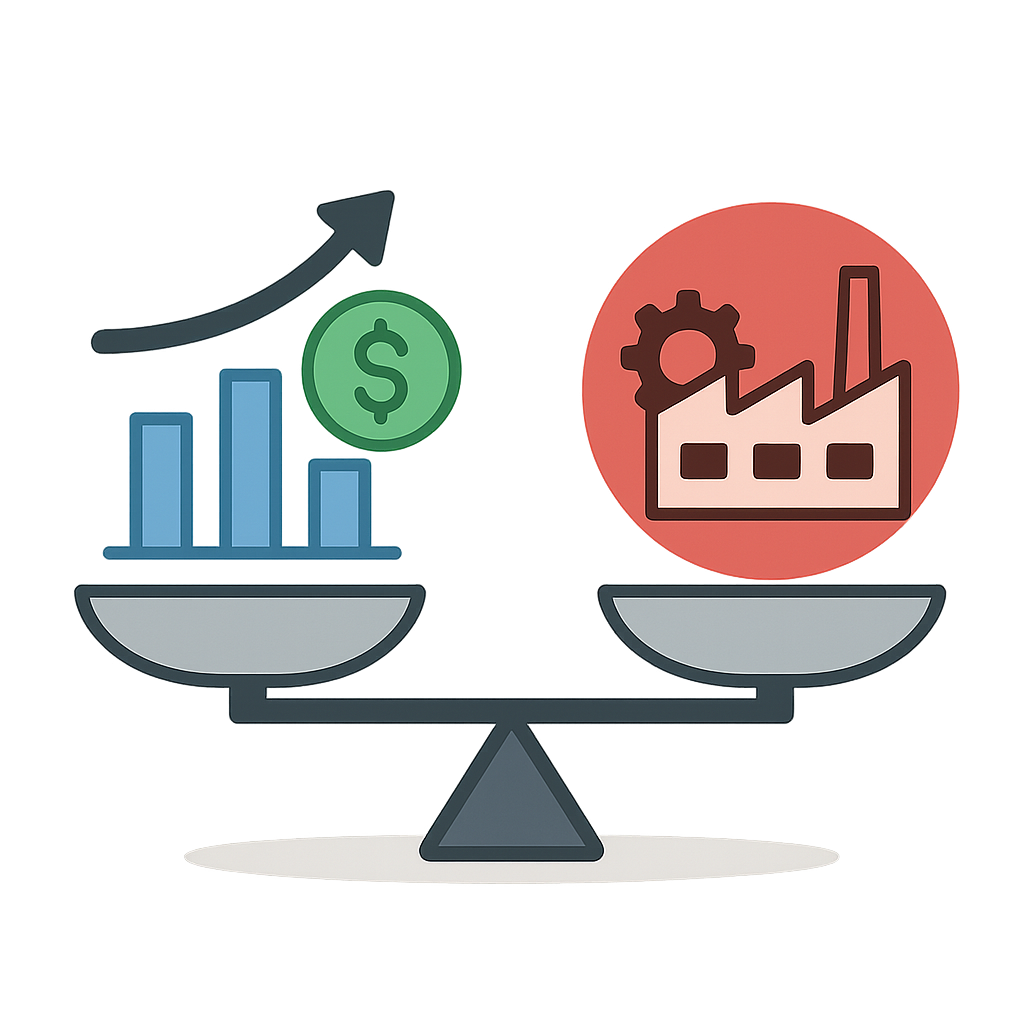
Imagine everyone in your town loves cookies, but there are only enough for half the people. Who decides who gets a cookie? Who decides how many to bake tomorrow? What if someone wants to open a new cookie shop? I am the big idea that helps answer these questions. I am the set of rules a community uses to decide what to make, how to make it, and who gets to have it. It’s like being the official rulebook for all the stuff a town has. Hello. You can call me an Economic System.
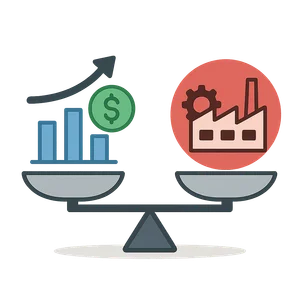
For a long, long time, people have had different ideas about the best way for me to work. One of my oldest forms is the Market Economy. Think of it as the 'You Decide.' plan. Way back in the year 1776, a smart man named Adam Smith wrote a famous book called 'The Wealth of Nations.' He believed I work best when people are free to open their own cookie shops, choose their own prices, and shoppers can decide which cookies to buy. He said an 'invisible hand' would guide everyone to make and get what they needed, almost like magic. If people wanted more chocolate chip cookies, more shops would start making them. Then, in the 1800s, during a time of big factories called the Industrial Revolution, another thinker named Karl Marx had a different idea. He saw that some factory owners were getting very rich, while many workers who made the goods were very poor. He thought this was not fair at all. He imagined a Command Economy, which is like the 'Team Captain Decides' plan. In this version of me, the government is the captain who decides how many cookies to bake, what they should cost, and makes sure everyone gets a fair share. This idea became very important in places like the Soviet Union during the 20th century.
The Tale of the World's Cookies
Imagine everyone in your town loves cookies, but there are only enough for half the people. Who decides who gets a cookie? Who decides how many to bake tomorrow? What if someone wants to open a new cookie shop? I am the big idea that helps answer these questions. I am the set of rules a community uses to decide what to make, how to make it, and who gets to have it. It’s like being the official rulebook for all the stuff a town has. Hello. You can call me an Economic System.
For a long, long time, people have had different ideas about the best way for me to work. One of my oldest forms is the Market Economy. Think of it as the 'You Decide.' plan. Way back in the year 1776, a smart man named Adam Smith wrote a famous book called 'The Wealth of Nations.' He believed I work best when people are free to open their own cookie shops, choose their own prices, and shoppers can decide which cookies to buy. He said an 'invisible hand' would guide everyone to make and get what they needed, almost like magic. If people wanted more chocolate chip cookies, more shops would start making them. Then, in the 1800s, during a time of big factories called the Industrial Revolution, another thinker named Karl Marx had a different idea. He saw that some factory owners were getting very rich, while many workers who made the goods were very poor. He thought this was not fair at all. He imagined a Command Economy, which is like the 'Team Captain Decides' plan. In this version of me, the government is the captain who decides how many cookies to bake, what they should cost, and makes sure everyone gets a fair share. This idea became very important in places like the Soviet Union during the 20th century.
So, which idea is better? The 'You Decide.' plan or the 'Team Captain Decides' plan? Well, today, almost every country in the world uses a mix of both. It's like making a recipe for a yummy cake; you need a little bit of this and a little bit of that. This is called a Mixed Economy. Countries let people open their own businesses and make their own choices, but the government also makes rules to keep things fair and help people who need it. For example, the government makes sure schools and parks are open for everyone, not just for people who can pay a lot. I'm not just one thing; I'm a recipe that every country mixes a little differently to help its people. I am always changing and growing, helping people share, create, and work together to build communities where everyone has a chance to be happy and successful.
Wow facts
About
A concept explaining the three primary ways societies organize the production and distribution of goods and services: market economies driven by individual choice, command economies directed by central authorities, and traditional economies based on customs and traditions.
Take a Quiz
Question 1 of 4
Why did Karl Marx think a new economic system was needed?
Explore next



Want to do even more?
Go beyond exploring. Unlock tools that turn every story into real learning.

Storypie Plus for families
Full stories, quizzes, and printables. Nights and car rides, sorted.
- Unlimited audio stories
- Create Mode: your child stars in the story
- Offline downloads
- Printable worksheets & coloring pages

Why Storypie for Schools
Students engaged. Prep in seconds. Evenings back to you.
- Worksheets & Quizzes
- Classroom Management
- Formative Assessment
- Custom Curriculum & Lesson Plans
- 27 Languages

Why Storypie for Homeschool
Curriculum done. They'll ask for more. Hours back in your day.
- Worksheet Generator
- First-Person Audio Stories
- Built-in Comprehension Quizzes
- Custom Curriculum & Lesson Plans
- Print & Go Activities