English

Factors and Multiples
Factors and Multiples are fundamental concepts in number theory that describe the relationships between…
Reads at Grades 3–5 Listens at Grades 1–5
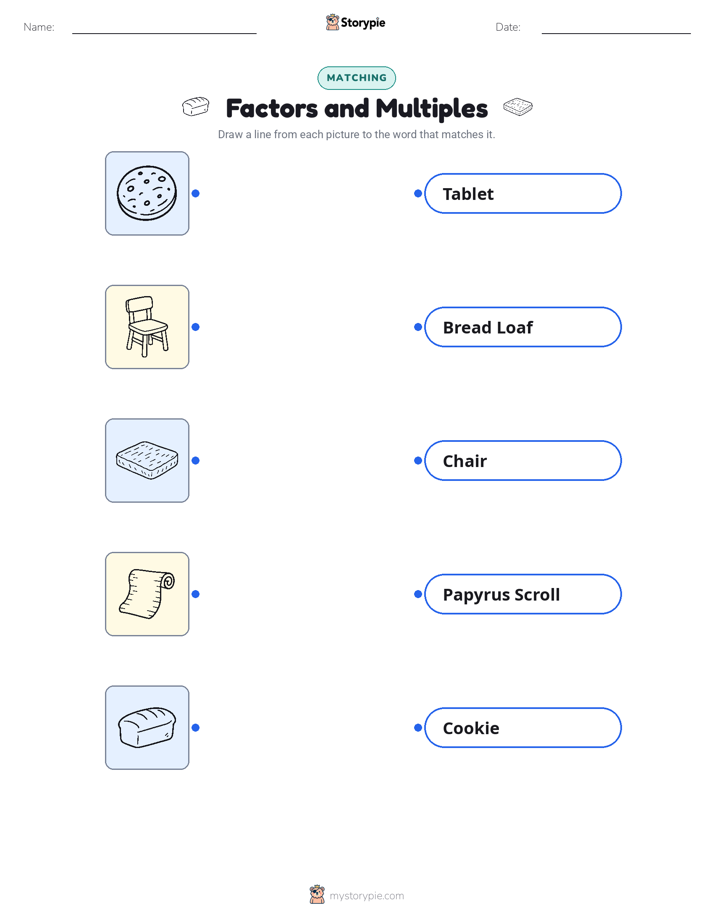
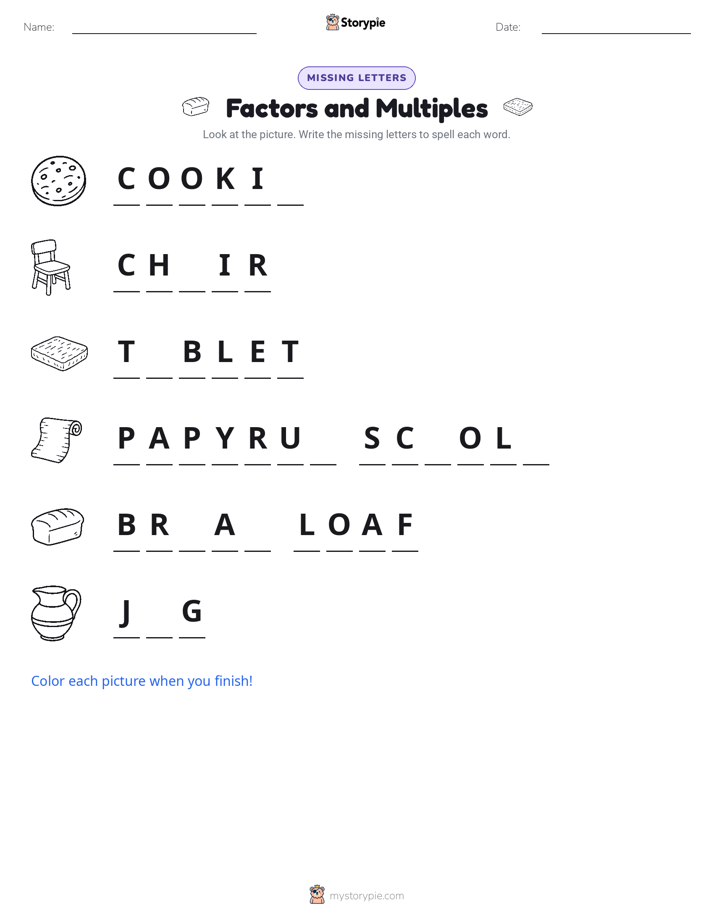
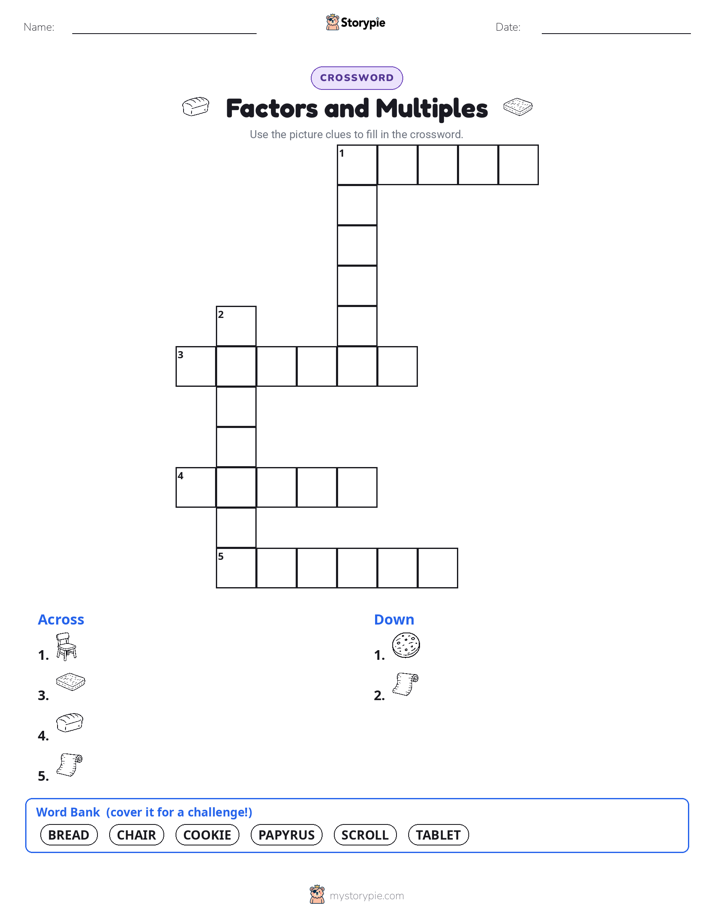
Print & create
Answer keys·No prep·Free with an account
28 worksheets · answer keys · full story · quiz · Ages 8-10 · CEFR B1
Plus adds 244,000+ more stories in 27 languages, audio for every one, and printables for all of them.
Just want Factors and Multiples?

Have you ever shared something so perfectly that it felt like magic. Imagine a pizza with eight yummy slices for you and three friends. Everyone gets two slices, and not a single crumb is left over. Or have you ever noticed how patterns repeat themselves, like the beats in a song or the tiles on a floor. I am the secret rule that makes sure everything fits just right. I am the helpful guide behind skip-counting by twos, fives, or tens, and the reason you can divide things into equal, happy groups. Can you imagine a world without me. You wouldn't know how many teams to make for a game or how many cookies to bake for a party. Before I tell you my name, think about organizing your toys into neat rows or figuring out how many friends can fit in a rollercoaster car. That’s me, working behind the scenes. I am the family of numbers you call Factors and Multiples, and I help bring order and fairness to your world.
My story began a very, very long time ago. Let’s travel back in time, way before computers or even paper. Around 2000 BCE, in a place called Mesopotamia, people first started to notice my patterns. They were clever traders and farmers who etched my multiplication tables onto soft clay tablets. They used me to trade grain, measure land for their crops, and build their cities. I was their secret tool for making sure everything was fair and exact. Then, I traveled on a journey to ancient Greece. Around the 6th century BCE, a group of thinkers called the Pythagoreans thought I was the most special thing in the universe. They loved finding my 'perfect numbers,' which were rare and beautiful. A perfect number is one whose factors, the numbers that divide into it perfectly, add up to the number itself. Take the number 6. Its factors are 1, 2, and 3. And guess what. 1 plus 2 plus 3 equals 6. They thought that was amazing. A little while later, around 300 BCE, a brilliant man named Euclid decided I was so important that he wrote all about me in his famous book, *Elements*. He gave my parts their names. He called the numbers that divide another number perfectly 'factors,' and he called the results you get from skip-counting 'multiples.' Then, around 240 BCE, another clever Greek named Eratosthenes invented a fun puzzle to find my most special children. He called it the 'Sieve of Eratosthenes.' It was a clever way to sift through all the numbers and find the prime numbers—the ones who only have two factors, 1 and themselves.
The Pattern Keepers
Have you ever shared something so perfectly that it felt like magic. Imagine a pizza with eight yummy slices for you and three friends. Everyone gets two slices, and not a single crumb is left over. Or have you ever noticed how patterns repeat themselves, like the beats in a song or the tiles on a floor. I am the secret rule that makes sure everything fits just right. I am the helpful guide behind skip-counting by twos, fives, or tens, and the reason you can divide things into equal, happy groups. Can you imagine a world without me. You wouldn't know how many teams to make for a game or how many cookies to bake for a party. Before I tell you my name, think about organizing your toys into neat rows or figuring out how many friends can fit in a rollercoaster car. That’s me, working behind the scenes. I am the family of numbers you call Factors and Multiples, and I help bring order and fairness to your world.
My story began a very, very long time ago. Let’s travel back in time, way before computers or even paper. Around 2000 BCE, in a place called Mesopotamia, people first started to notice my patterns. They were clever traders and farmers who etched my multiplication tables onto soft clay tablets. They used me to trade grain, measure land for their crops, and build their cities. I was their secret tool for making sure everything was fair and exact. Then, I traveled on a journey to ancient Greece. Around the 6th century BCE, a group of thinkers called the Pythagoreans thought I was the most special thing in the universe. They loved finding my 'perfect numbers,' which were rare and beautiful. A perfect number is one whose factors, the numbers that divide into it perfectly, add up to the number itself. Take the number 6. Its factors are 1, 2, and 3. And guess what. 1 plus 2 plus 3 equals 6. They thought that was amazing. A little while later, around 300 BCE, a brilliant man named Euclid decided I was so important that he wrote all about me in his famous book, Elements. He gave my parts their names. He called the numbers that divide another number perfectly 'factors,' and he called the results you get from skip-counting 'multiples.' Then, around 240 BCE, another clever Greek named Eratosthenes invented a fun puzzle to find my most special children. He called it the 'Sieve of Eratosthenes.' It was a clever way to sift through all the numbers and find the prime numbers—the ones who only have two factors, 1 and themselves.
Even though my story started thousands of years ago, I am more important today than ever. I am your partner in patterns, hiding in plain sight. Do you ever wonder how city buses from different routes manage to arrive at the same bus stop at the exact same time. That’s me at work, using my trick called the 'least common multiple' to create perfect schedules. When a musician creates a rhythm that makes you want to dance, they are using me to space the beats out perfectly. But my most important modern job is also my biggest secret. I help keep your information safe online. My children, the biggest prime numbers, are used in something called cryptography. It’s like a secret code. It’s very easy to multiply two huge prime numbers together to create a new number, but it’s incredibly difficult, even for the smartest computers, to take that new number and figure out the original prime factors. This one-way trick protects everything from your messages to your video games. From sharing cookies fairly to protecting the world's secrets, I am always here. I am a pattern waiting to be found, a puzzle ready to be solved. So next time you see numbers line up perfectly, remember me, Factors and Multiples, your partner in making sense of the world.
Wow facts
About
Factors and Multiples are fundamental concepts in number theory that describe the relationships between integers through division and multiplication.
Take a Quiz
Question 1 of 5
In the story, Euclid's book 'Elements' was described as 'famous'. What is another word for famous?
Explore next






Want to do even more?
Go beyond exploring. Unlock tools that turn every story into real learning.

Storypie Plus for families
Full stories, quizzes, and printables. Nights and car rides, sorted.
- Unlimited audio stories
- Create Mode: your child stars in the story
- Offline downloads
- Printable worksheets & coloring pages

Why Storypie for Schools
Students engaged. Prep in seconds. Evenings back to you.
- Worksheets & Quizzes
- Classroom Management
- Formative Assessment
- Custom Curriculum & Lesson Plans
- 27 Languages

Why Storypie for Homeschool
Curriculum done. They'll ask for more. Hours back in your day.
- Worksheet Generator
- First-Person Audio Stories
- Built-in Comprehension Quizzes
- Custom Curriculum & Lesson Plans
- Print & Go Activities