English

Fibonacci Sequence
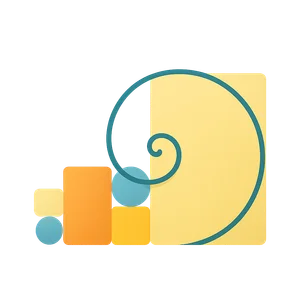
A mathematical sequence where each number is the sum of the two preceding ones, starting from 0 and 1.
Reads at Grades 6–8 Listens at Grades 4–8
Print & create
Answer keys·No prep·Free with an account
28 worksheets · answer keys · full story · quiz · Ages 10-12 · CEFR B2
Plus adds 116,000+ more stories in 27 languages, audio for every one, and printables for all of them.
Just want Fibonacci Sequence?
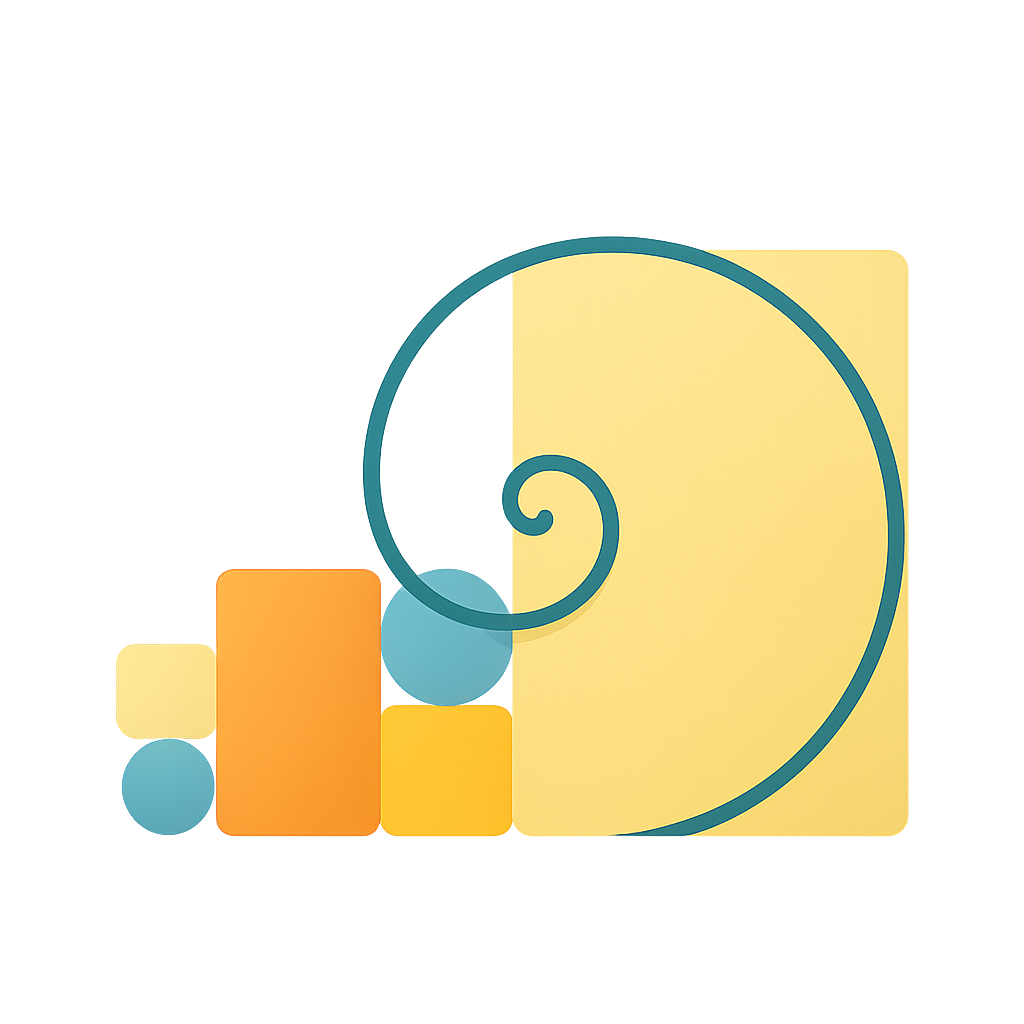
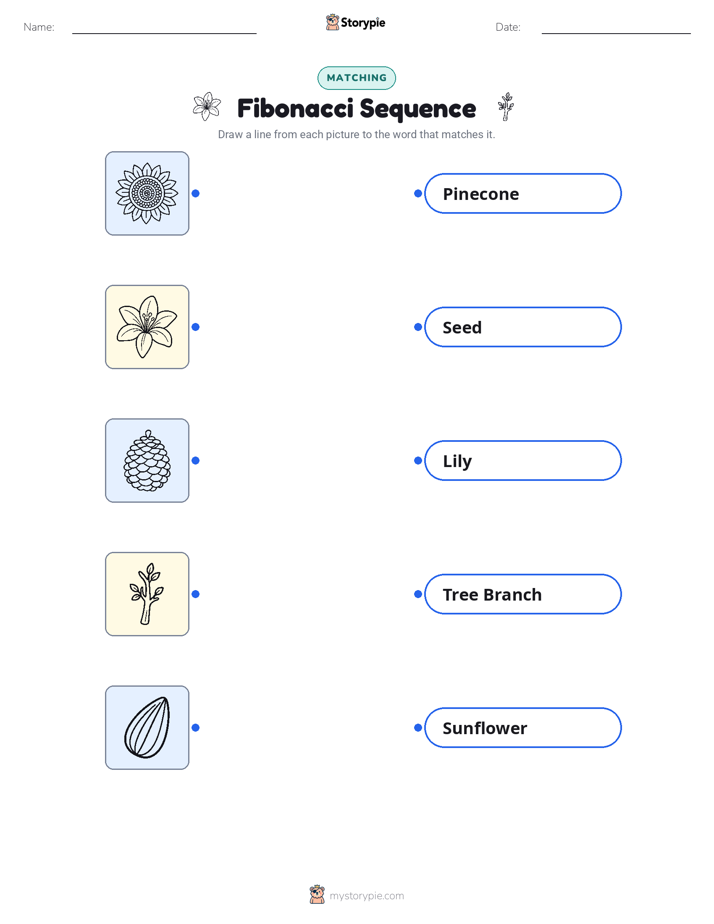
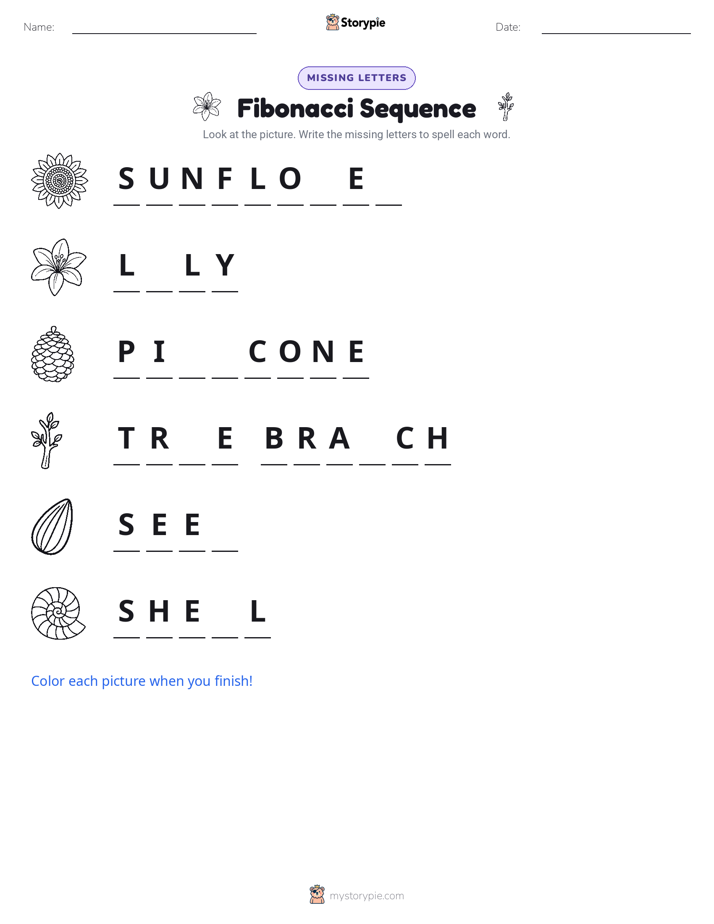
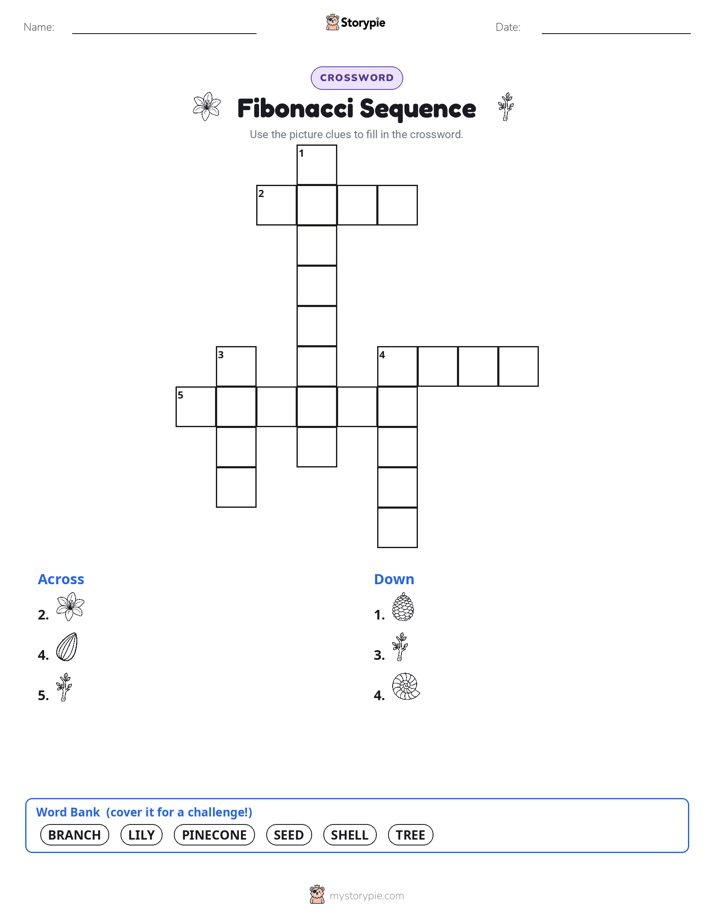
Hello. You don't know my name yet, but you have seen me everywhere. Have you ever looked closely at a sunflower's head and noticed the perfect spirals of seeds. Or counted the petals on a lily. I am the secret code that arranges those seeds and petals. I am the quiet rule that decides how a pinecone's scales are ordered and how the branches of a tree reach for the sky. I am a pattern of growth, a blueprint for beauty. I start small, with just a 0 and a 1, but by adding my last two numbers together, I grow and grow, spiraling out into the world. Before people gave me a name, I was simply there, hiding in plain sight in flowers, shells, and even galaxies. I am a whisper of numbers that connects the smallest snail to the biggest star. Soon, you will learn my story and the name people gave me, but for now, just know that I am the rhythm of the natural world.
Long before I was famous in Europe, scholars in ancient India knew about me. My story begins there, not with rabbits, but with poetry. Around the 2nd century BCE, a writer named Pingala was studying the rhythms of Sanskrit poems. He found a way to count the patterns of long and short syllables, and in doing so, he stumbled upon my first few steps. For centuries, other Indian mathematicians like Virahanka, Gopala, and Hemachandra played with my numbers. Around the year 1150 CE, a scholar named Hemachandra wrote about me very clearly. He asked a question: How many different rhythms can you make that are a certain length, using only short and long beats. The answer was me. They saw me not just as a curiosity, but as a fundamental pattern. They did not call me by my modern name, but they understood how I worked, adding one number to the one before it to get the next. I was a secret of rhythm and language, waiting to travel the world.
The Spiral's Song: My Story as the Fibonacci Sequence
Hello. You don't know my name yet, but you have seen me everywhere. Have you ever looked closely at a sunflower's head and noticed the perfect spirals of seeds. Or counted the petals on a lily. I am the secret code that arranges those seeds and petals. I am the quiet rule that decides how a pinecone's scales are ordered and how the branches of a tree reach for the sky. I am a pattern of growth, a blueprint for beauty. I start small, with just a 0 and a 1, but by adding my last two numbers together, I grow and grow, spiraling out into the world. Before people gave me a name, I was simply there, hiding in plain sight in flowers, shells, and even galaxies. I am a whisper of numbers that connects the smallest snail to the biggest star. Soon, you will learn my story and the name people gave me, but for now, just know that I am the rhythm of the natural world.
Long before I was famous in Europe, scholars in ancient India knew about me. My story begins there, not with rabbits, but with poetry. Around the 2nd century BCE, a writer named Pingala was studying the rhythms of Sanskrit poems. He found a way to count the patterns of long and short syllables, and in doing so, he stumbled upon my first few steps. For centuries, other Indian mathematicians like Virahanka, Gopala, and Hemachandra played with my numbers. Around the year 1150 CE, a scholar named Hemachandra wrote about me very clearly. He asked a question: How many different rhythms can you make that are a certain length, using only short and long beats. The answer was me. They saw me not just as a curiosity, but as a fundamental pattern. They did not call me by my modern name, but they understood how I worked, adding one number to the one before it to get the next. I was a secret of rhythm and language, waiting to travel the world.
A Journey to Europe with Leonardo's Rabbits
My big trip to Europe happened in the year 1202 CE. A clever Italian mathematician named Leonardo of Pisa—you probably know him as Fibonacci—was writing a very important book called 'Liber Abaci,' or 'The Book of Calculation.' He had traveled the world and learned about a brilliant number system from Hindu and Arab scholars, the very numbers you use today, 0, 1, 2, 3... To show how useful these numbers were, he filled his book with puzzles. One of them was about a family of rabbits. He asked: If you start with one pair of rabbits on the 1st day of January, how many pairs will you have in a year, assuming each pair has a new pair every month. The solution to his puzzle was me. Month by month, the rabbit pairs grew according to my pattern: 1, 1, 2, 3, 5, 8, and so on. People were fascinated. Because of his famous rabbit problem, I became known throughout Europe. It was not until the 19th century that people started calling me the Fibonacci Sequence, in his honor. He did not invent me, but he gave me a starring role on a whole new continent.
After Leonardo of Pisa introduced me to a wider audience, people started to see me everywhere he had—and more. Scientists and artists began to notice my connection to another famous number, the Golden Ratio. In the 17th century, the astronomer Johannes Kepler noticed something amazing. If you take any two of my neighbors in the sequence, like 8 and 13, and divide the larger one by the smaller one, you get a number very close to 1.618... the Golden Ratio. The further you go in my sequence, the closer the ratio gets. This Golden Ratio is considered by many to be a perfect proportion, found in beautiful art like the Mona Lisa and in magnificent buildings like the Parthenon in ancient Greece. Suddenly, people realized my pattern was not just about counting rabbits; it was connected to what humans find beautiful and balanced. I was the link between simple counting and the complex beauty of art, architecture, and all the natural forms I had been shaping for millions of years.
Today, I am more than just a cool pattern in a sunflower; I am helping people in incredible ways. Computer scientists use me to create efficient algorithms, which are like recipes for solving problems. Stock market analysts watch for me in the rise and fall of prices, trying to predict the future. Artists and musicians still use my proportions to create works that feel just right. I am the Fibonacci Sequence, and my story is proof that mathematics is not just about solving problems in a textbook. It is about discovering the hidden connections that tie everything together. So next time you see a spiraling shell on the beach or the leaves on a stem, look for me. I am a reminder that our universe is full of elegant, beautiful patterns, just waiting for you to find them.
Wow facts
About
A mathematical sequence where each number is the sum of the two preceding ones, starting from 0 and 1. It appears in nature, particularly in the arrangement of leaves and petals.
Take a Quiz
Question 1 of 5
Why did Leonardo of Pisa include the rabbit problem in his book, 'Liber Abaci'?
Explore next






Want to do even more?
Go beyond exploring. Unlock tools that turn every story into real learning.

Storypie Plus for families
Full stories, quizzes, and printables. Nights and car rides, sorted.
- Unlimited audio stories
- Create Mode: your child stars in the story
- Offline downloads
- Printable worksheets & coloring pages

Why Storypie for Schools
Students engaged. Prep in seconds. Evenings back to you.
- Worksheets & Quizzes
- Classroom Management
- Formative Assessment
- Custom Curriculum & Lesson Plans
- 27 Languages

Why Storypie for Homeschool
Curriculum done. They'll ask for more. Hours back in your day.
- Worksheet Generator
- First-Person Audio Stories
- Built-in Comprehension Quizzes
- Custom Curriculum & Lesson Plans
- Print & Go Activities