English


Fibonacci Sequence
A mathematical sequence where each number is the sum of the two preceding ones, starting from 0 and 1.
Reads at Grades 3–5 Listens at Grades 1–5
Print & create
Answer keys·No prep·Free with an account
28 worksheets · answer keys · full story · quiz · Ages 8-10 · CEFR B1
Plus adds 116,000+ more stories in 27 languages, audio for every one, and printables for all of them.
Just want Fibonacci Sequence?
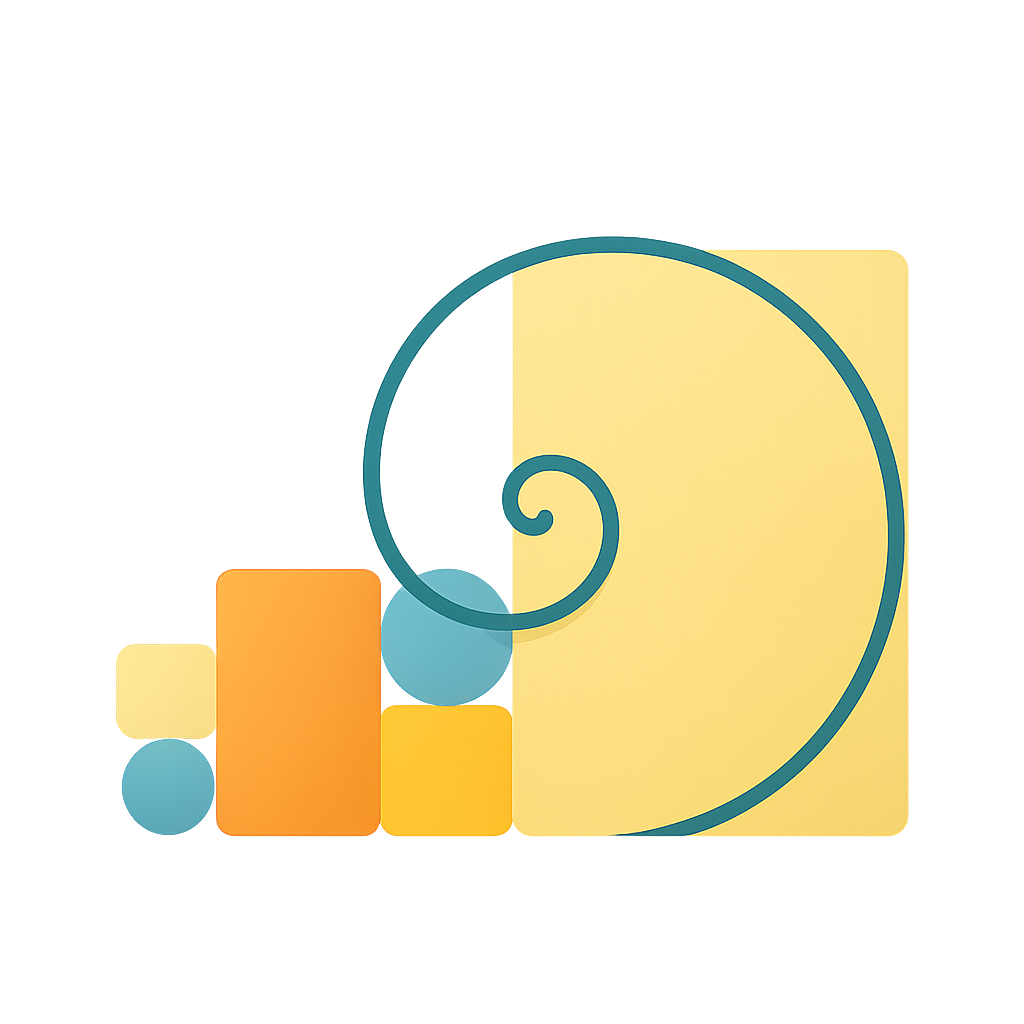
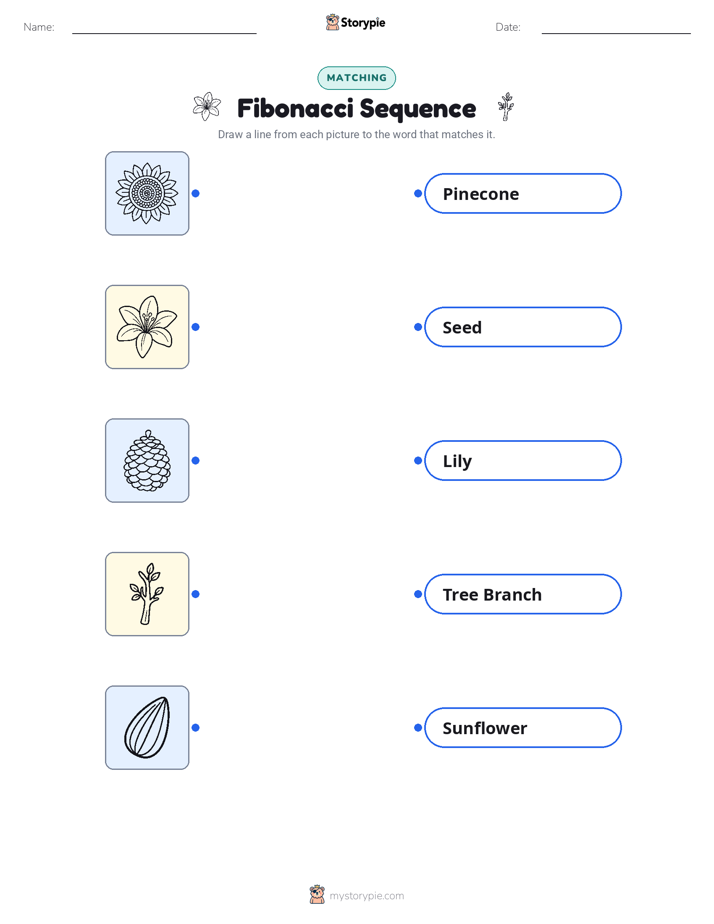
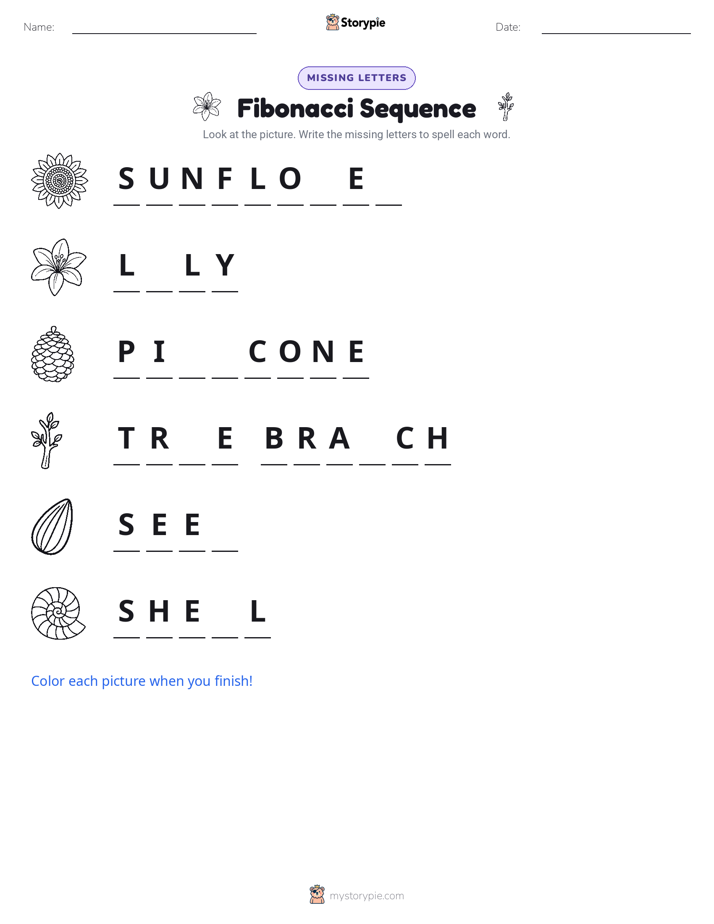
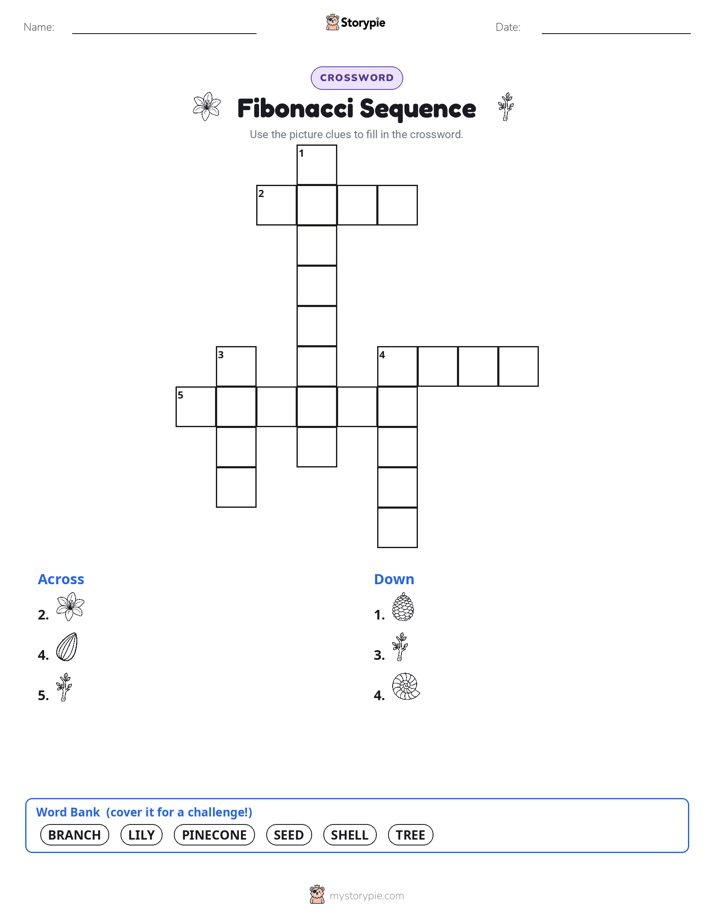
Have you ever noticed a secret code hidden in the world around you? It’s a growing, swirling pattern that you can find almost anywhere, if you just know where to look. I spin into the beautiful spiral of a seashell and unfold in the delicate shape of a fern. I decide how many petals many flowers have. Lilies often have 3 petals, buttercups have 5, and some daisies have 34. If you look closely at a sunflower, you’ll see me spiraling in the seeds, both clockwise and counter-clockwise. I am a number chain, and my rule is very simple. I always start with 0 and 1. To get the next number, you just add the last two numbers together. So, after 0 and 1 comes another 1, because 0 plus 1 is 1. Then comes 2, because 1 plus 1 is 2. Then 3, then 5, then 8, and on and on forever. Can you guess the next number? I am a quiet, magical rhythm that helps build the world, a secret pattern hiding in plain sight.
My story begins a very long time ago, not in a garden, but in the minds of clever thinkers. The first people to write me down lived in ancient India, as early as 200 BCE. A mathematician named Pingala was studying the rhythms of poetry and discovered the pattern I make. He used me to understand the different ways you could combine long and short sounds in poems. For centuries, I was mostly known in India. Then, many years later, I traveled to Europe. A brilliant man named Leonardo of Pisa, who people now call Fibonacci, met me. He wrote a very important book called 'Liber Abaci,' which means 'The Book of Calculation.' In his book, which was published on January 1st, 1202, he shared a fun puzzle. He asked people to imagine a pair of rabbits. How many pairs of rabbits would there be after one year if every pair had a new pair of babies each month? The answer was my special growing pattern. This simple rabbit puzzle made people all over Europe curious about me, and soon, I became famous.
The Secret Pattern of the World
Have you ever noticed a secret code hidden in the world around you? It’s a growing, swirling pattern that you can find almost anywhere, if you just know where to look. I spin into the beautiful spiral of a seashell and unfold in the delicate shape of a fern. I decide how many petals many flowers have. Lilies often have 3 petals, buttercups have 5, and some daisies have 34. If you look closely at a sunflower, you’ll see me spiraling in the seeds, both clockwise and counter-clockwise. I am a number chain, and my rule is very simple. I always start with 0 and 1. To get the next number, you just add the last two numbers together. So, after 0 and 1 comes another 1, because 0 plus 1 is 1. Then comes 2, because 1 plus 1 is 2. Then 3, then 5, then 8, and on and on forever. Can you guess the next number? I am a quiet, magical rhythm that helps build the world, a secret pattern hiding in plain sight.
My story begins a very long time ago, not in a garden, but in the minds of clever thinkers. The first people to write me down lived in ancient India, as early as 200 BCE. A mathematician named Pingala was studying the rhythms of poetry and discovered the pattern I make. He used me to understand the different ways you could combine long and short sounds in poems. For centuries, I was mostly known in India. Then, many years later, I traveled to Europe. A brilliant man named Leonardo of Pisa, who people now call Fibonacci, met me. He wrote a very important book called 'Liber Abaci,' which means 'The Book of Calculation.' In his book, which was published on January 1st, 1202, he shared a fun puzzle. He asked people to imagine a pair of rabbits. How many pairs of rabbits would there be after one year if every pair had a new pair of babies each month? The answer was my special growing pattern. This simple rabbit puzzle made people all over Europe curious about me, and soon, I became famous.
After Leonardo of Pisa shared my rabbit puzzle, people started seeing me everywhere. It was like they had put on special glasses that helped them see the secret patterns of the universe. A famous astronomer named Johannes Kepler, who studied the planets and stars, wrote about me around the year 1611. He was amazed to find me in the way leaves were arranged on a stem and in the patterns of flowers. He saw that I helped plants get as much sunlight as possible. I also have a very famous cousin, a special number called the Golden Ratio. Artists and architects have used the Golden Ratio for thousands of years to make their creations feel perfectly balanced and beautiful to look at. From the spirals on a tiny pinecone to the design of magnificent buildings, my pattern and the Golden Ratio work together to bring a sense of harmony to the world. I am the bridge that connects mathematics to nature, science, and even art.
So, who am I, this secret code of nature and numbers? I am the Fibonacci Sequence. I am more than just a list of numbers; I am a reminder that our world is full of amazing, hidden connections that are just waiting to be discovered. Now that you know my secret, you can become a pattern detective. Can you find me at the park in a pinecone? Or in the grocery store in the bumps on a pineapple? You might even spot my influence in a favorite painting. Every time you see me, remember that mathematics is not just about problems on a page. It is a beautiful language that helps us understand the incredible, patterned universe we live in. The world is full of wonders, and I am one of them. Go on, your adventure to find me is just beginning.
Wow facts
About
A mathematical sequence where each number is the sum of the two preceding ones, starting from 0 and 1. It appears in nature, particularly in the arrangement of leaves and petals.
Take a Quiz
Question 1 of 5
In his book, what puzzle did Leonardo of Pisa (Fibonacci) use to explain the sequence?
Explore next






Want to do even more?
Go beyond exploring. Unlock tools that turn every story into real learning.

Storypie Plus for families
Full stories, quizzes, and printables. Nights and car rides, sorted.
- Unlimited audio stories
- Create Mode: your child stars in the story
- Offline downloads
- Printable worksheets & coloring pages

Why Storypie for Schools
Students engaged. Prep in seconds. Evenings back to you.
- Worksheets & Quizzes
- Classroom Management
- Formative Assessment
- Custom Curriculum & Lesson Plans
- 27 Languages

Why Storypie for Homeschool
Curriculum done. They'll ask for more. Hours back in your day.
- Worksheet Generator
- First-Person Audio Stories
- Built-in Comprehension Quizzes
- Custom Curriculum & Lesson Plans
- Print & Go Activities