English

Molecule
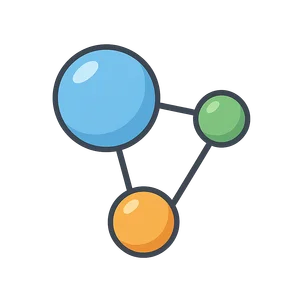
A molecule is the smallest unit of a substance that keeps its chemical properties.
Reads at Grades 6–8 Listens at Grades 4–8
Print & create
Answer keys·No prep·Free with an account
28 worksheets · answer keys · full story · quiz · Ages 10-12 · CEFR B2
Plus adds 244,000+ more stories in 27 languages, audio for every one, and printables for all of them.
Just want Molecule?

I am in the sweet scent that drifts from a rose on a summer day. I am in the satisfying crunch and sugary taste of a crystal on your tongue. I am the very essence of the cool raindrop that splashes against your windowpane. You cannot see me, but I am everywhere, in everything. I am a tiny team, a collaboration of even smaller players called atoms, all holding hands in a specific, unbreakable dance. We work together to build the world you know. We are the reason water is wet and diamonds are hard. We are the invisible architects constructing the visible universe, a secret society of partners that gives every substance its unique properties. Before you knew my name, you felt my presence in the warmth of the sun and the air in your lungs, a constant, silent force shaping reality.
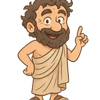
My story, the story of people trying to understand me, began a very long time ago, in a sun-drenched land of olive groves and marble temples. Let me take you back to ancient Greece, around the 5th century BCE. There, thinkers with curious minds, men like Leucippus and his student Democritus, sat and wondered about the world. They asked a simple question: what would happen if you took a piece of cheese, or a stone, or anything at all, and cut it in half, and then in half again, and again, and again. They imagined that eventually, you would reach a particle so incredibly small that it could not be cut any further. They called this final, indivisible piece ‘atomos,’ which means ‘uncuttable.’ This was a brilliant guess, a spark of an idea in the human mind. They had no microscopes, no laboratories, no way to prove it. For them, I was just a philosophical concept, a logical conclusion. For more than two thousand years, this idea of tiny, fundamental particles remained just that—a fascinating thought experiment, a whisper of a possibility that floated through the centuries without any hard evidence to support it.
The Molecule's Tale: From an Ancient Guess to Modern Marvel
I am in the sweet scent that drifts from a rose on a summer day. I am in the satisfying crunch and sugary taste of a crystal on your tongue. I am the very essence of the cool raindrop that splashes against your windowpane. You cannot see me, but I am everywhere, in everything. I am a tiny team, a collaboration of even smaller players called atoms, all holding hands in a specific, unbreakable dance. We work together to build the world you know. We are the reason water is wet and diamonds are hard. We are the invisible architects constructing the visible universe, a secret society of partners that gives every substance its unique properties. Before you knew my name, you felt my presence in the warmth of the sun and the air in your lungs, a constant, silent force shaping reality.
My story, the story of people trying to understand me, began a very long time ago, in a sun-drenched land of olive groves and marble temples. Let me take you back to ancient Greece, around the 5th century BCE. There, thinkers with curious minds, men like Leucippus and his student Democritus, sat and wondered about the world. They asked a simple question: what would happen if you took a piece of cheese, or a stone, or anything at all, and cut it in half, and then in half again, and again, and again. They imagined that eventually, you would reach a particle so incredibly small that it could not be cut any further. They called this final, indivisible piece ‘atomos,’ which means ‘uncuttable.’ This was a brilliant guess, a spark of an idea in the human mind. They had no microscopes, no laboratories, no way to prove it. For them, I was just a philosophical concept, a logical conclusion. For more than two thousand years, this idea of tiny, fundamental particles remained just that—a fascinating thought experiment, a whisper of a possibility that floated through the centuries without any hard evidence to support it.
For centuries, I remained a ghost, an idea without proof. Then, the world began to change. The quiet contemplation of philosophers gave way to the noisy, bubbling experiments of scientists. My story jumps forward to the early 19th century, to a humble English schoolteacher named John Dalton. He wasn't just thinking; he was measuring and observing. Around 1808, while studying gases and how different substances combined, he noticed something extraordinary. They didn't just mix together in a messy jumble. They combined in specific, predictable, whole-number ratios. It was like they were following a recipe. Dalton proposed that all matter was made of tiny atoms, and that each element, like oxygen or hydrogen, had its own unique type of atom. More importantly, he realized these atoms linked together to form what he called 'compound atoms.' He had found the first real scientific evidence for my existence. He showed the world that I wasn't random; I was a carefully constructed team. And it was then that I was finally given my modern name. I am a molecule, a group of two or more atoms bonded together, the fundamental unit of a chemical compound.
Even after Dalton's breakthrough, there was still a lot of confusion. Scientists argued about the difference between a single atom of an element and a group of them working together as one of my teams. The breakthrough came from an Italian scientist, Amedeo Avogadro. In 1811, he published a paper with a truly revolutionary idea. He proposed that if you took equal volumes of any gases—say, a balloon of oxygen and a balloon of hydrogen—and kept them at the same temperature and pressure, they would contain the exact same number of me's, of molecules. This was a critical insight. It meant that a molecule of oxygen wasn't just one atom, but a team of two (O2), and a molecule of water was a team of three (H2O). His hypothesis provided a clear way to distinguish between atoms and molecules and to figure out how many atoms were on each team. But his idea was so far ahead of its time that most scientists simply ignored it. It was a frustrating time for me. I knew what I was, but the world wasn't ready to understand. It took nearly fifty years until another brilliant chemist, Stanislao Cannizzaro, presented Avogadro's work with passionate clarity at the first-ever international chemistry conference, the Karlsruhe Congress in 1860. Finally, the light bulbs went on in chemists' minds across the world. They at last agreed on the fundamental difference between an atom and me, the molecule.
That moment at the Karlsruhe Congress changed everything. Once scientists truly understood me, they could begin to purposefully build with me. Today, I am the foundation of our modern world. I am at the heart of chemistry, biology, and materials science. Look around you. I am in the complex medicines that fight diseases and heal your body. I am in the versatile plastics that can be molded into everything from toys to car parts. I am even the star player in the most important story of all: life. The incredible, twisting ladder of DNA that holds the instructions for every living thing. That’s me, a giant, complex molecule. Scientists are no longer just discovering me; they are designing me. They build new versions of me to create stronger materials, more efficient solar panels, and new ways to deliver medicine. My story is a testament to human curiosity. It’s a journey from a philosophical guess in ancient Greece to the cutting edge of modern technology. I am proof that even the smallest things, when they work together, can build an entire universe. And the quest to understand and create new versions of me is a story that is still being written, one tiny, powerful team at a time.
Wow facts
About
A molecule is the smallest unit of a substance that keeps its chemical properties. Molecules are made up of two or more atoms held together by chemical bonds.
Take a Quiz
Question 1 of 5
What is the main idea of this story?
Explore next





Want to do even more?
Go beyond exploring. Unlock tools that turn every story into real learning.

Storypie Plus for families
Full stories, quizzes, and printables. Nights and car rides, sorted.
- Unlimited audio stories
- Create Mode: your child stars in the story
- Offline downloads
- Printable worksheets & coloring pages

Why Storypie for Schools
Students engaged. Prep in seconds. Evenings back to you.
- Worksheets & Quizzes
- Classroom Management
- Formative Assessment
- Custom Curriculum & Lesson Plans
- 27 Languages

Why Storypie for Homeschool
Curriculum done. They'll ask for more. Hours back in your day.
- Worksheet Generator
- First-Person Audio Stories
- Built-in Comprehension Quizzes
- Custom Curriculum & Lesson Plans
- Print & Go Activities