English


Money
Money is a medium of exchange, a unit of account…
Reads at Grades 6–8 Listens at Grades 4–8
Print & create
Answer keys·No prep·Free with an account
28 worksheets · answer keys · full story · quiz · Ages 10-12 · CEFR B2
Plus adds 102,000+ more stories in 27 languages, audio for every one, and printables for all of them.
Just want Money?

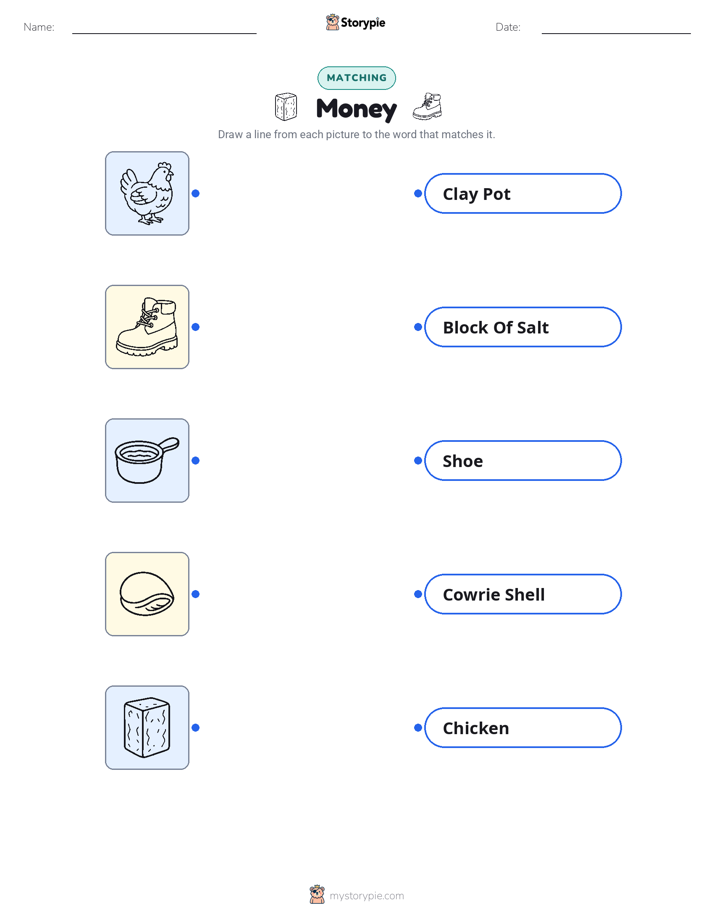
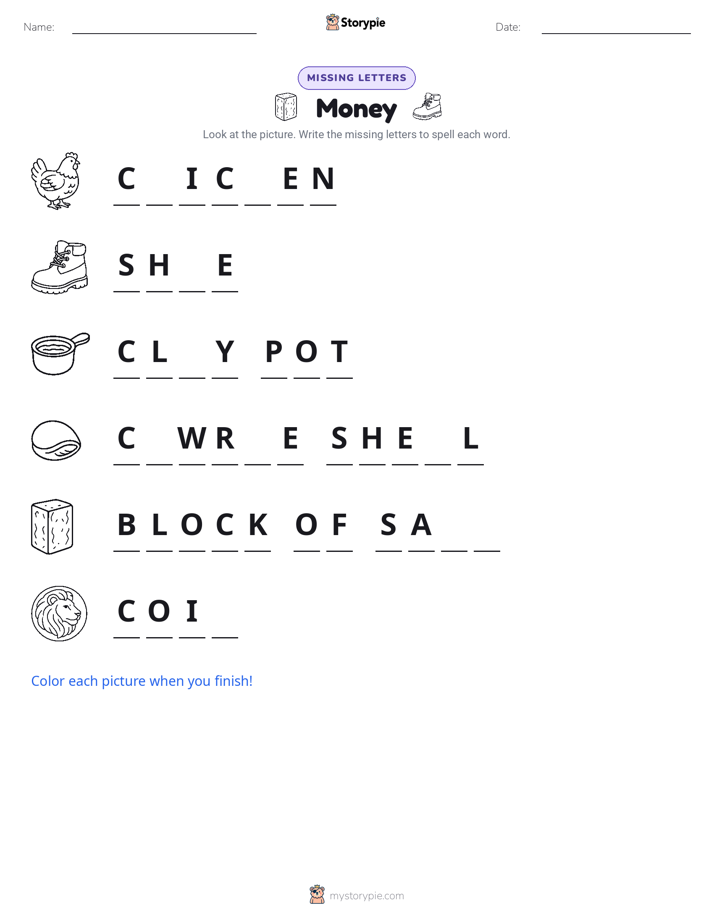
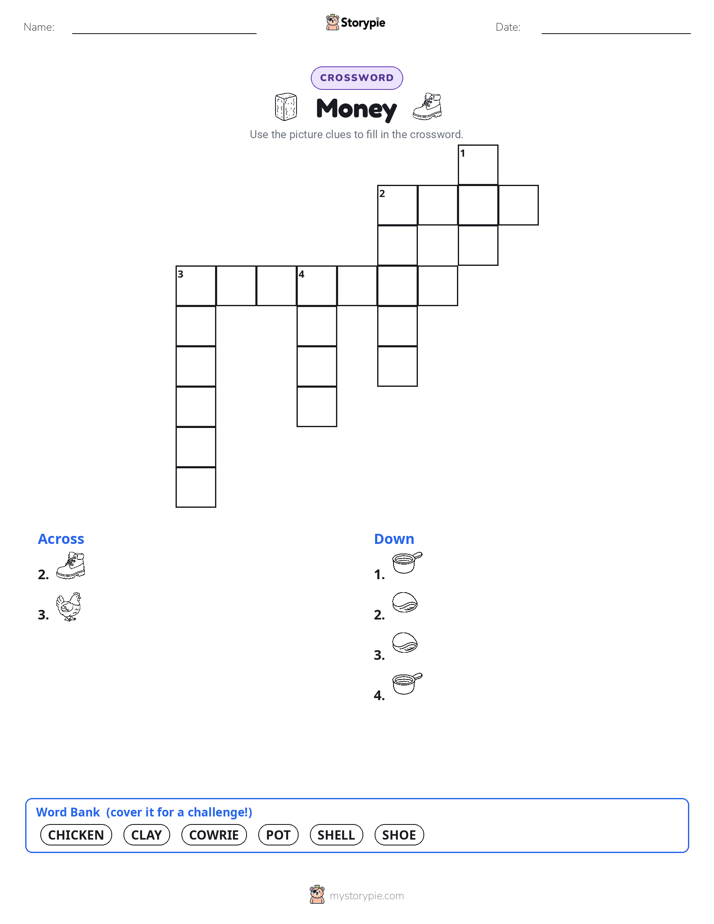
Imagine a world without me. Picture a farmer with a basket full of healthy chickens, but what she really needs is a sturdy pair of shoes for the winter. She goes to the shoemaker, who has shelves of wonderful leather boots. The farmer offers him six of her finest chickens. But the shoemaker shakes his head. "I have too many chickens already," he says. "What I really need is a new clay pot for my stew." So the farmer must find a potter who wants chickens, trade her chickens for a pot, and then take the pot back to the shoemaker, hoping he still has the shoes she needs. It was complicated, tiring, and often unfair. People's skills and goods were valuable, but it was so hard to trade them for exactly what they needed. That’s why I was born. I am Money. I am the great go-between, the promise that everyone can agree on. I am the idea that a person’s hard work can be turned into something small, portable, and accepted by everyone. I am the bridge that connects the chicken farmer directly to the shoemaker, the weaver to the baker, and the blacksmith to the fisherman. I am not the chicken or the shoe, but the trust that makes the swap possible for everyone.
For a very long time, I took on many different shapes. I was anything people found rare and beautiful enough to agree on its value. In ancient China, around 1200 BCE, I was a small, glossy cowrie shell, carried in pouches and exchanged for rice and silk. In other parts of the world, I was a block of salt, so precious that Roman soldiers were sometimes paid with me—that’s where the word ‘salary’ comes from. But shells could break, and salt could dissolve. People needed something that would last, something that was easy to count and hard to fake. My big moment came around 600 BCE in a kingdom called Lydia, in what is now modern-day Turkey. The Lydians were clever people who lived near a river filled with a natural mixture of gold and silver called electrum. They took this shiny metal, melted it into small, bean-shaped lumps of a standard weight, and stamped them with an official seal—often a roaring lion's head. These were the world’s first true coins. Suddenly, I had a reliable form. I was durable, portable, and my value was guaranteed by the king. I could travel in a merchant's pocket from one city to the next, helping trade to flourish like never before. I made it possible to build bigger markets, fund armies, and construct magnificent temples, all because I was a form of value everyone could trust.
The Story of Money
Imagine a world without me. Picture a farmer with a basket full of healthy chickens, but what she really needs is a sturdy pair of shoes for the winter. She goes to the shoemaker, who has shelves of wonderful leather boots. The farmer offers him six of her finest chickens. But the shoemaker shakes his head. "I have too many chickens already," he says. "What I really need is a new clay pot for my stew." So the farmer must find a potter who wants chickens, trade her chickens for a pot, and then take the pot back to the shoemaker, hoping he still has the shoes she needs. It was complicated, tiring, and often unfair. People's skills and goods were valuable, but it was so hard to trade them for exactly what they needed. That’s why I was born. I am Money. I am the great go-between, the promise that everyone can agree on. I am the idea that a person’s hard work can be turned into something small, portable, and accepted by everyone. I am the bridge that connects the chicken farmer directly to the shoemaker, the weaver to the baker, and the blacksmith to the fisherman. I am not the chicken or the shoe, but the trust that makes the swap possible for everyone.
For a very long time, I took on many different shapes. I was anything people found rare and beautiful enough to agree on its value. In ancient China, around 1200 BCE, I was a small, glossy cowrie shell, carried in pouches and exchanged for rice and silk. In other parts of the world, I was a block of salt, so precious that Roman soldiers were sometimes paid with me—that’s where the word ‘salary’ comes from. But shells could break, and salt could dissolve. People needed something that would last, something that was easy to count and hard to fake. My big moment came around 600 BCE in a kingdom called Lydia, in what is now modern-day Turkey. The Lydians were clever people who lived near a river filled with a natural mixture of gold and silver called electrum. They took this shiny metal, melted it into small, bean-shaped lumps of a standard weight, and stamped them with an official seal—often a roaring lion's head. These were the world’s first true coins. Suddenly, I had a reliable form. I was durable, portable, and my value was guaranteed by the king. I could travel in a merchant's pocket from one city to the next, helping trade to flourish like never before. I made it possible to build bigger markets, fund armies, and construct magnificent temples, all because I was a form of value everyone could trust.
As powerful as I was as a coin, I had one significant drawback: I was heavy. Imagine a wealthy merchant trying to buy a shipload of spices. He would need carts filled with thousands of clanking gold and silver coins. It was cumbersome, difficult to transport, and a tempting target for robbers. Again, people needed a better way, and again, the solution came from China. During the Tang Dynasty in the 7th century CE, merchants began leaving their heavy coins with a trusted person and receiving a paper receipt in return. This piece of paper was a promise, an IOU that could be traded just like the coins it represented. It was so much lighter and more convenient. Seeing how well this worked, the government eventually took over and began printing official paper notes. When the Italian explorer Marco Polo traveled through China in the 13th century, he was astonished. He saw people happily trading pieces of paper for valuable goods. In Europe, they were still using heavy metal coins, and this idea seemed like magic. It took a while, but the idea eventually traveled west along the same trade routes I did. My first official appearance as a government-issued paper banknote in Europe was in Sweden, where the Stockholm Banco issued me on July 16th, 1661. It was a revolutionary step that made large-scale banking and trade simpler and safer than ever before.
From shells to coins to paper, I have changed my costume many times throughout history. And today, I am undergoing my most dramatic transformation yet. More often than not, you can’t even see or touch me. I have become invisible. I am the silent numbers that flash on a screen when your parents buy groceries with a plastic card. I am the digital signal that zips across the world when you buy a game or a song online. I even exist in new forms like cryptocurrency, a completely digital me, secured by complex computer code. My form may be different, a ghost in the machine compared to a heavy gold coin, but my soul remains exactly the same. I am still a symbol of trust. I still represent the value of someone’s time, skill, and effort. My purpose is still to connect people, to make the exchange of goods and ideas easier so that society can thrive. Whether I am a shell, a coin, a piece of paper, or a flicker of light on a computer chip, I am the tool that helps people turn their dreams into reality, to build businesses, to support their families, and to work together to create a better world.
Wow facts
About
Money is a medium of exchange, a unit of account, and a store of value that helps with trade and shows the value of goods and services in an economy.
Take a Quiz
Question 1 of 5
According to the story, what was the main problem with the bartering system?
Explore next





Want to do even more?
Go beyond exploring. Unlock tools that turn every story into real learning.

Storypie Plus for families
Full stories, quizzes, and printables. Nights and car rides, sorted.
- Unlimited audio stories
- Create Mode: your child stars in the story
- Offline downloads
- Printable worksheets & coloring pages

Why Storypie for Schools
Students engaged. Prep in seconds. Evenings back to you.
- Worksheets & Quizzes
- Classroom Management
- Formative Assessment
- Custom Curriculum & Lesson Plans
- 27 Languages

Why Storypie for Homeschool
Curriculum done. They'll ask for more. Hours back in your day.
- Worksheet Generator
- First-Person Audio Stories
- Built-in Comprehension Quizzes
- Custom Curriculum & Lesson Plans
- Print & Go Activities