English

Money
Money is a medium of exchange, a unit of account…
Reads at Grades 3–5 Listens at Grades 1–5
Print & create
Answer keys·No prep·Free with an account
28 worksheets · answer keys · full story · quiz · Ages 8-10 · CEFR B1
Plus adds 102,000+ more stories in 27 languages, audio for every one, and printables for all of them.
Just want Money?
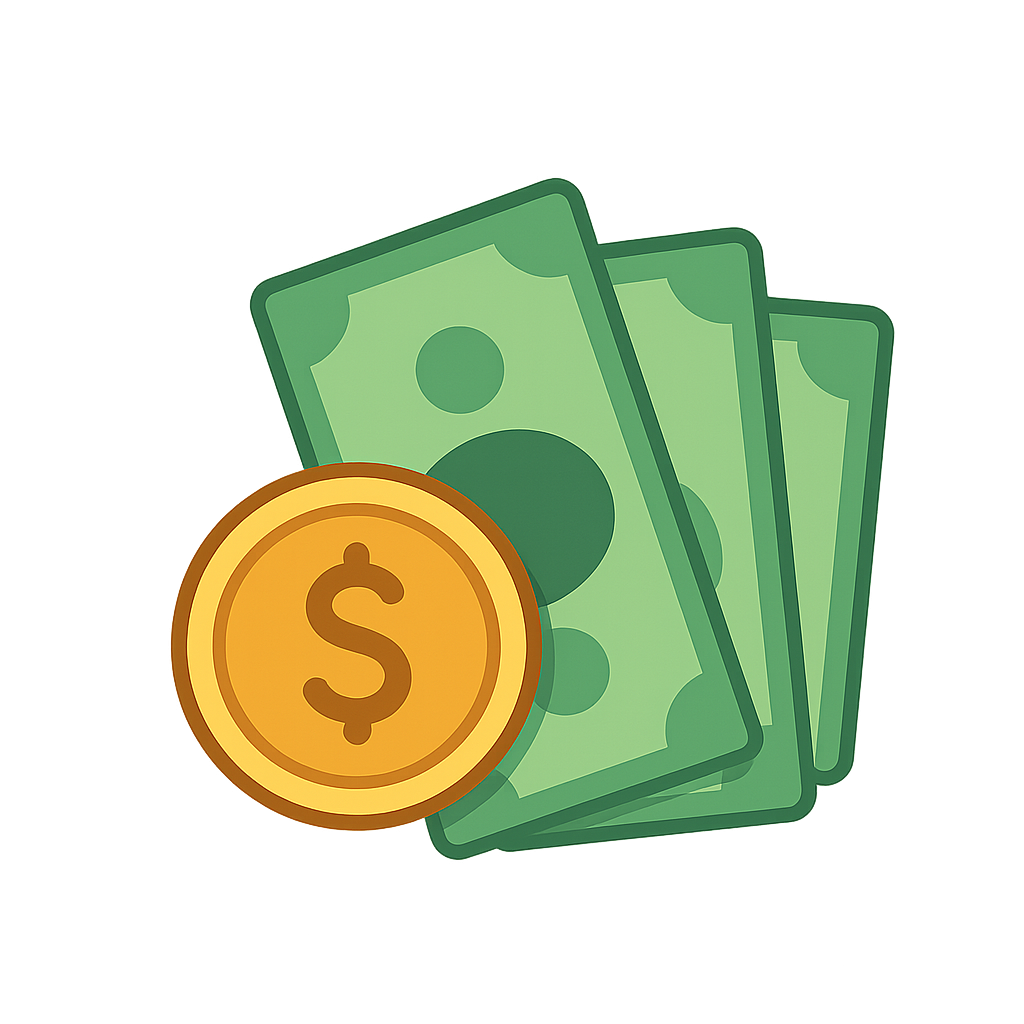
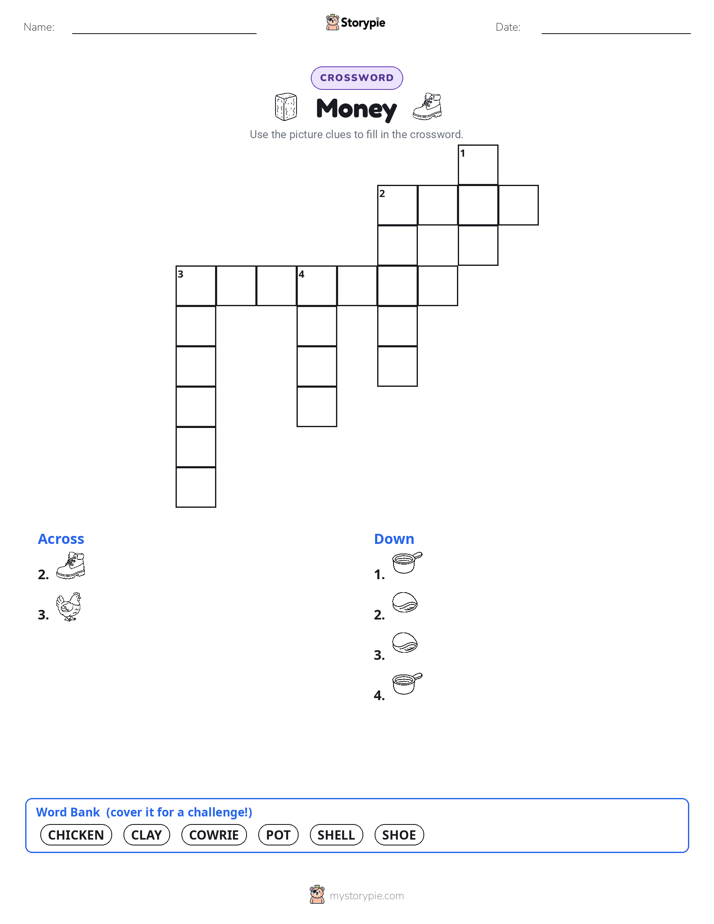
Can you imagine a world without stores or prices. A long, long time ago, if you were a farmer with a huge pile of crunchy carrots but you needed a new pair of shoes, you had to find a shoemaker. But what if the shoemaker didn't want carrots. What if she wanted a new blanket instead. This tricky system was called bartering, and it was like a giant, confusing puzzle. People had to find someone who had exactly what they wanted and also wanted exactly what they had. It could take a very long time to get anything done. That’s where the big idea for me came from. Hello. I’m Money, and I was created to make trading easier and fairer for everyone.
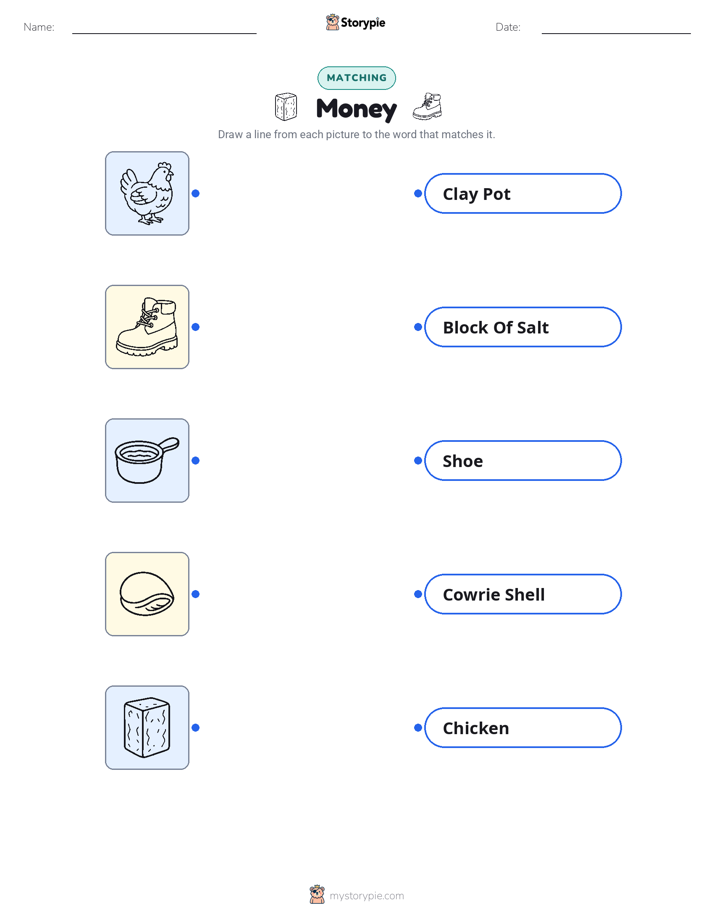
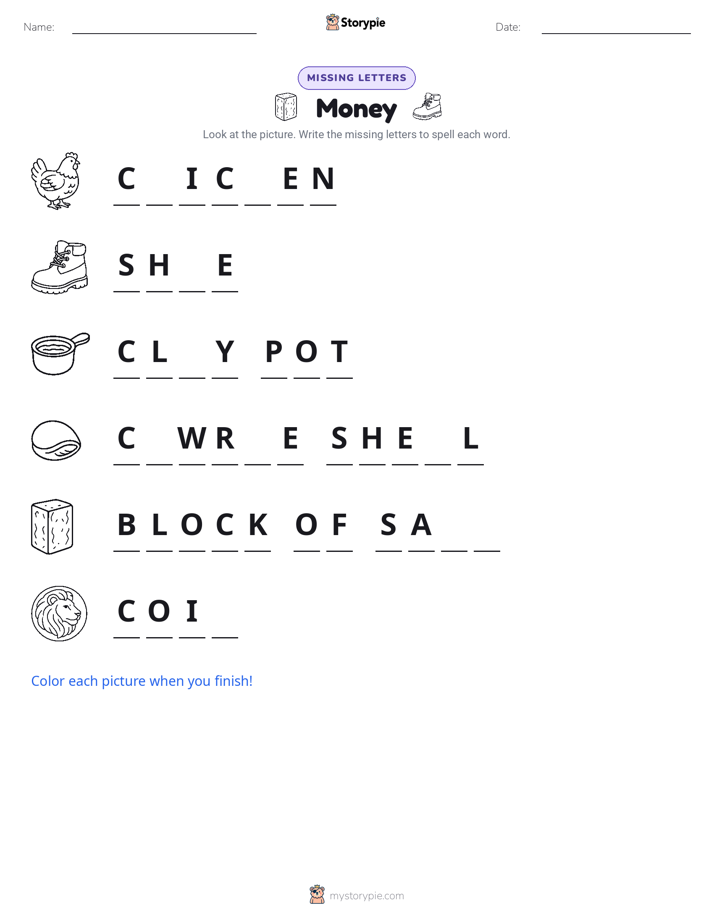
Before I was made of metal or paper, I took on all sorts of interesting shapes and sizes. As far back as 9000 BCE, people started using something called commodity money. This meant they agreed that a certain item, or commodity, was valuable and could be used for trading. In some parts of the world, I was a block of salt. Salt was so important for keeping food fresh that Roman soldiers were sometimes even paid with it. In ancient China, around 1200 BCE, I was a beautiful, smooth cowrie shell that people would string together. I have been many things like bundles of grain, big strong cattle, or even special beads. The most important thing was that everyone in a community agreed on my value. This made trading so much simpler than trying to swap carrots for shoes.
Of course, carrying around heavy blocks of salt or leading a cow to the market just to buy some bread was a lot of work. Can you imagine putting a cow in your pocket. People needed something smaller, stronger, and much easier to carry. So, I got a fantastic makeover. Around 600 BCE, in a kingdom called Lydia, which is in the country we now call Turkey, people had a brilliant idea. They started making me into small, round discs of metal. These were the world's first coins. They were made from a natural mix of gold and silver called electrum. To prove each coin was real and had a certain value, the Lydians stamped them with a symbol, like a lion’s head. Suddenly, trading became fast and simple. You didn’t have to guess how many carrots a cow was worth, you just had to count your shiny coins.
My Journey as Money
Can you imagine a world without stores or prices. A long, long time ago, if you were a farmer with a huge pile of crunchy carrots but you needed a new pair of shoes, you had to find a shoemaker. But what if the shoemaker didn't want carrots. What if she wanted a new blanket instead. This tricky system was called bartering, and it was like a giant, confusing puzzle. People had to find someone who had exactly what they wanted and also wanted exactly what they had. It could take a very long time to get anything done. That’s where the big idea for me came from. Hello. I’m Money, and I was created to make trading easier and fairer for everyone.
Before I was made of metal or paper, I took on all sorts of interesting shapes and sizes. As far back as 9000 BCE, people started using something called commodity money. This meant they agreed that a certain item, or commodity, was valuable and could be used for trading. In some parts of the world, I was a block of salt. Salt was so important for keeping food fresh that Roman soldiers were sometimes even paid with it. In ancient China, around 1200 BCE, I was a beautiful, smooth cowrie shell that people would string together. I have been many things like bundles of grain, big strong cattle, or even special beads. The most important thing was that everyone in a community agreed on my value. This made trading so much simpler than trying to swap carrots for shoes.
Of course, carrying around heavy blocks of salt or leading a cow to the market just to buy some bread was a lot of work. Can you imagine putting a cow in your pocket. People needed something smaller, stronger, and much easier to carry. So, I got a fantastic makeover. Around 600 BCE, in a kingdom called Lydia, which is in the country we now call Turkey, people had a brilliant idea. They started making me into small, round discs of metal. These were the world's first coins. They were made from a natural mix of gold and silver called electrum. To prove each coin was real and had a certain value, the Lydians stamped them with a symbol, like a lion’s head. Suddenly, trading became fast and simple. You didn’t have to guess how many carrots a cow was worth, you just had to count your shiny coins.
As wonderful as my coin form was, carrying a big, clanking bag of them could be very heavy and noisy. Imagine trying to sneak up on someone with a pocket full of coins. So, I had to change again to become even more convenient. This change happened in China during the Tang Dynasty, around the 7th century CE. Clever merchants who traveled long distances didn't want to carry all their heavy coins. They started leaving them with a trustworthy person and would get a paper note as a receipt. This piece of paper was a promise that it could be traded for the real coins at any time. Soon, people realized these notes were much easier to carry than the coins themselves. By the 11th century CE, the government in China started printing the world's first official paper money. I became a lightweight promise that could fit right in your pocket.
Today, I am still changing and evolving. I can be the coins you drop into a piggy bank or the paper bills you use to buy a comic book. But I can also be something you can’t even see or touch. I am the numbers that appear on a screen when your parents buy groceries online. I am the quick swipe of a plastic card at the store or even just a simple tap of a phone. I am an idea that connects people all over the planet, helping them trade goods, build businesses, save up for their dreams, and help others who are in need. I am a powerful tool, and when people use me wisely, I help them turn their hard work into amazing things for themselves, their families, and their communities.
Wow facts
About
Money is a medium of exchange, a unit of account, and a store of value that helps with trade and shows the value of goods and services in an economy.
Take a Quiz
Question 1 of 5
What does the word "valuable" mean in the sentence, "In some places, I was a block of salt—so valuable that Roman soldiers were sometimes paid in it!".
Explore next



Want to do even more?
Go beyond exploring. Unlock tools that turn every story into real learning.

Storypie Plus for families
Full stories, quizzes, and printables. Nights and car rides, sorted.
- Unlimited audio stories
- Create Mode: your child stars in the story
- Offline downloads
- Printable worksheets & coloring pages

Why Storypie for Schools
Students engaged. Prep in seconds. Evenings back to you.
- Worksheets & Quizzes
- Classroom Management
- Formative Assessment
- Custom Curriculum & Lesson Plans
- 27 Languages

Why Storypie for Homeschool
Curriculum done. They'll ask for more. Hours back in your day.
- Worksheet Generator
- First-Person Audio Stories
- Built-in Comprehension Quizzes
- Custom Curriculum & Lesson Plans
- Print & Go Activities