English

Pop Art
Pop Art is an art movement that emerged in the 1950s…
Reads at Grades 6–8 Listens at Grades 4–8
Print & create
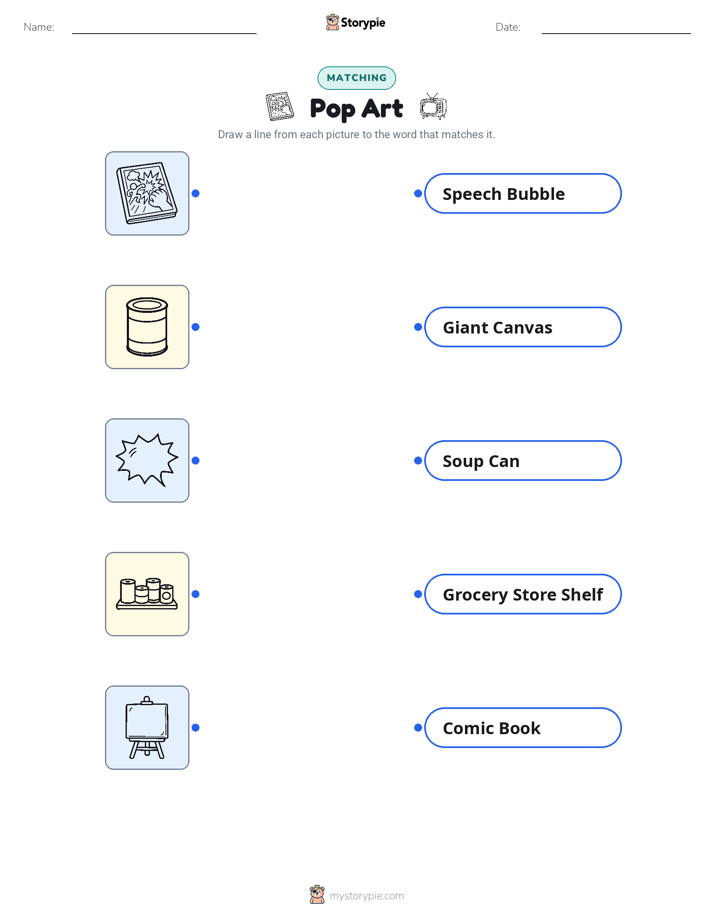
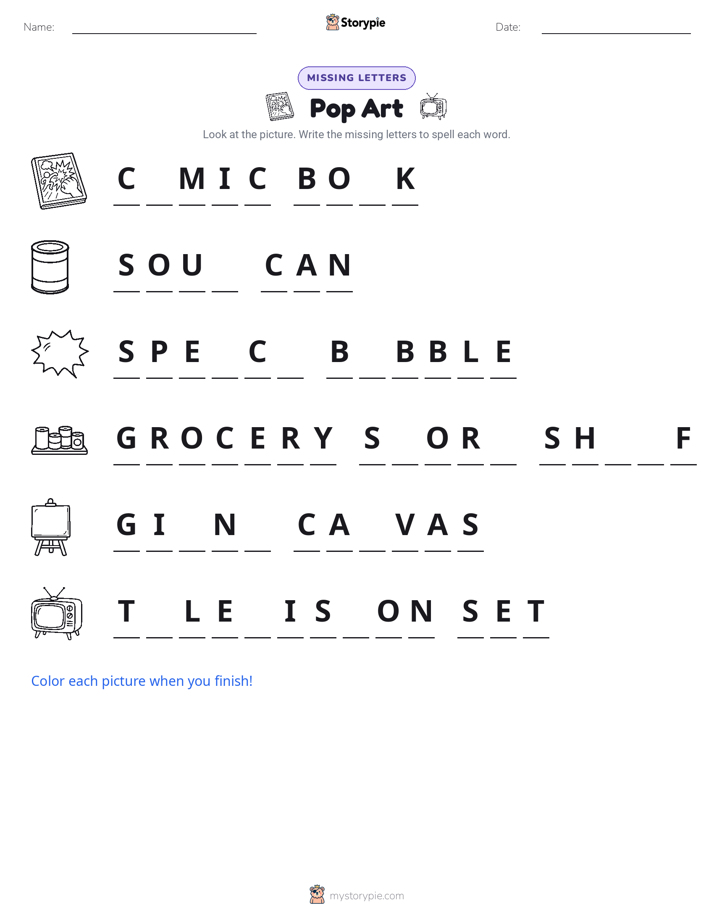
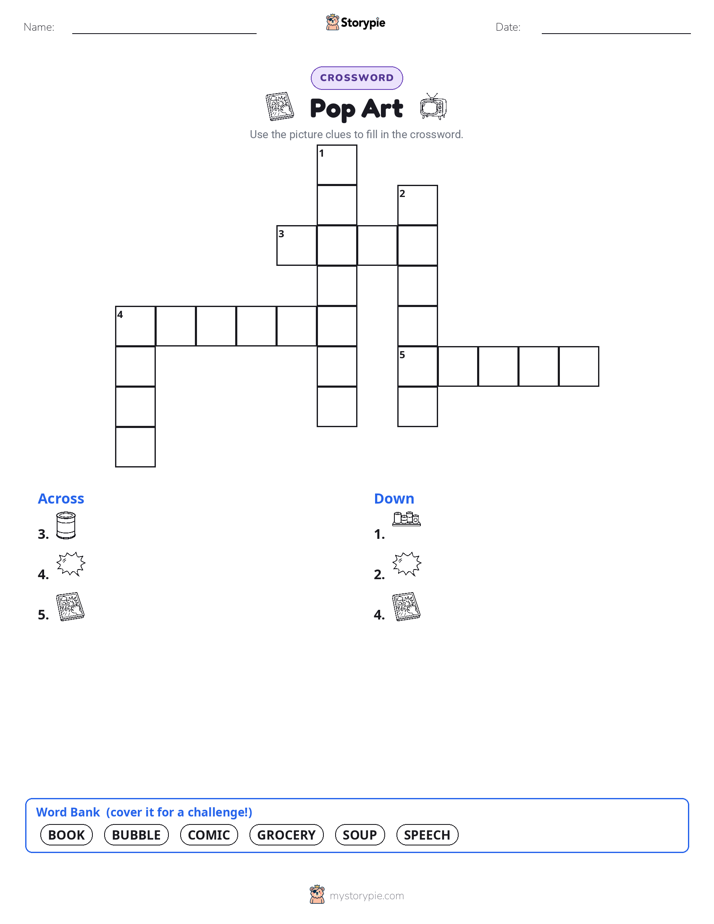
Answer keys·No prep·Free with an account
28 worksheets · answer keys · full story · quiz · Ages 10-12 · CEFR B2
Plus adds 208,000+ more stories in 27 languages, audio for every one, and printables for all of them.
Just want Pop Art?
Have you ever seen a painting that looks like it jumped right out of a comic book, complete with a dramatic speech bubble? Or maybe a picture of a simple soup can, displayed as if it were a king's portrait? Perhaps you've seen a famous movie star’s face, repeated over and over in a rainbow of shocking pinks, electric blues, and sunshine yellows. If you have, then you’ve met me. I take the ordinary, everyday things that you might see in a grocery store or a magazine and I put them on a giant canvas. I make them bold, bright, and impossible to ignore. I’m not a quiet, gentle painting of a field of flowers or a serious, shadowy portrait from centuries ago. I am loud. I am fun. I am full of the energy of the modern world. I find the extraordinary in the ordinary. I am the art of the 'popular,' and you can call me Pop Art.
Before I arrived, the world of serious art was a very different place. After World War II, in the 1950s, life was changing at lightning speed. Families were gathering around new television sets, glossy magazines were filled with colorful advertisements for shiny new cars and fizzy sodas, and movie stars felt like modern royalty. The world was buzzing with commercial energy. Yet, the most celebrated art of the time was often abstract, full of drips and splatters that were meant to show deep, complicated emotions but didn't look like anything from the real world. I began as a question, a new idea brewing in the United Kingdom during the mid-1950s. A circle of artists and writers called the Independent Group started looking at the vibrant popular culture all around them and wondered, why isn't this considered a subject for art? One of them, Eduardo Paolozzi, had made a collage with the word 'POP!' in a burst of energy as early as 1947. Another, Richard Hamilton, created a famous collage in 1956 titled *Just what is it that makes today's homes so different, so appealing?*, which was filled with images cut from magazines. But it was in the United States during the late 1950s and early 1960s, where this new world of consumerism was the biggest and brightest, that I truly burst onto the scene.
The Art of the Everyday
Have you ever seen a painting that looks like it jumped right out of a comic book, complete with a dramatic speech bubble? Or maybe a picture of a simple soup can, displayed as if it were a king's portrait? Perhaps you've seen a famous movie star’s face, repeated over and over in a rainbow of shocking pinks, electric blues, and sunshine yellows. If you have, then you’ve met me. I take the ordinary, everyday things that you might see in a grocery store or a magazine and I put them on a giant canvas. I make them bold, bright, and impossible to ignore. I’m not a quiet, gentle painting of a field of flowers or a serious, shadowy portrait from centuries ago. I am loud. I am fun. I am full of the energy of the modern world. I find the extraordinary in the ordinary. I am the art of the 'popular,' and you can call me Pop Art.
Before I arrived, the world of serious art was a very different place. After World War II, in the 1950s, life was changing at lightning speed. Families were gathering around new television sets, glossy magazines were filled with colorful advertisements for shiny new cars and fizzy sodas, and movie stars felt like modern royalty. The world was buzzing with commercial energy. Yet, the most celebrated art of the time was often abstract, full of drips and splatters that were meant to show deep, complicated emotions but didn't look like anything from the real world. I began as a question, a new idea brewing in the United Kingdom during the mid-1950s. A circle of artists and writers called the Independent Group started looking at the vibrant popular culture all around them and wondered, why isn't this considered a subject for art? One of them, Eduardo Paolozzi, had made a collage with the word 'POP!' in a burst of energy as early as 1947. Another, Richard Hamilton, created a famous collage in 1956 titled Just what is it that makes today's homes so different, so appealing?, which was filled with images cut from magazines. But it was in the United States during the late 1950s and early 1960s, where this new world of consumerism was the biggest and brightest, that I truly burst onto the scene.
I couldn't have become famous without my superstars, the artists who understood my language and shared it with the world. One of the most famous was a man in New York City with shocking white hair named Andy Warhol. Andy saw art everywhere, especially in the things people bought and sold. In 1962, he stunned the art world by painting Campbell's Soup Cans, creating a separate canvas for each of the 32 flavors then available. He made something from a pantry shelf into a masterpiece. He used a commercial printing technique called screenprinting to make many copies of his images, just like a factory produces identical products. In fact, he even called his studio 'The Factory.' Through screenprinting, he created his iconic, colorful portraits of celebrities like Marilyn Monroe, repeated in grids. His work asked a question: in a world of mass media, have famous people become products, just like a can of soup? Then there was Roy Lichtenstein, an artist who adored the bold drama of comic books. He would find a single, powerful panel from a comic strip and recreate it on a massive canvas. His paintings, like the explosive Whaam! from 1963, perfectly captured the action and emotion of comics, right down to the tiny 'Ben-Day dots' used by printers to create color. And you can't forget Claes Oldenburg, who played with reality in a different way. He created enormous, soft, squishy sculptures of things you might find in a diner or an office, like a giant, floppy hamburger or a drooping light switch, making hard objects soft and small things monumental. These artists were my champions, showing everyone that the world around them was packed with artistic inspiration.
My biggest and most revolutionary idea was simple: art is not just for fancy museums, and it doesn't have to be about ancient myths or wealthy patrons. Art can be about the world you live in right at this very moment. It can be about the breakfast cereal you eat, the television shows you watch, the logos you see, and the celebrities you follow. I tore down the invisible wall between 'high art' and 'low art.' I argued that a well-designed comic strip panel had just as much artistic power as a classical painting. I democratized art, making it accessible and understandable to everyone, not just a small group of experts. My influence is still all around you today. You can see my bright colors, clean outlines, and playful attitude in graphic design on websites, in the clothes you wear, in music videos, and in advertisements. I taught the world to look closer at the things we often overlook and to find the beauty, humor, and meaning hidden in plain sight. I am a constant reminder that your world, right now, is filled with incredible things just waiting for a creative eye. Art belongs to everyone, and it is everywhere.
Wow facts
About
Pop Art is an art movement that emerged in the 1950s, drawing inspiration from sources in popular and commercial culture such as advertising, comic books, and everyday objects.
Take a Quiz
Question 1 of 5
Based on the story, what was the main goal of Pop Art artists like Andy Warhol and Roy Lichtenstein?
Explore next



Want to do even more?
Go beyond exploring. Unlock tools that turn every story into real learning.

Storypie Plus for families
Full stories, quizzes, and printables. Nights and car rides, sorted.
- Unlimited audio stories
- Create Mode: your child stars in the story
- Offline downloads
- Printable worksheets & coloring pages

Why Storypie for Schools
Students engaged. Prep in seconds. Evenings back to you.
- Worksheets & Quizzes
- Classroom Management
- Formative Assessment
- Custom Curriculum & Lesson Plans
- 27 Languages

Why Storypie for Homeschool
Curriculum done. They'll ask for more. Hours back in your day.
- Worksheet Generator
- First-Person Audio Stories
- Built-in Comprehension Quizzes
- Custom Curriculum & Lesson Plans
- Print & Go Activities