English

Pop Art
Pop Art is an art movement that emerged in the 1950s…
Reads at Grades 3–5 Listens at Grades 1–5
Print & create
Answer keys·No prep·Free with an account
28 worksheets · answer keys · full story · quiz · Ages 8-10 · CEFR B1
Plus adds 208,000+ more stories in 27 languages, audio for every one, and printables for all of them.
Just want Pop Art?
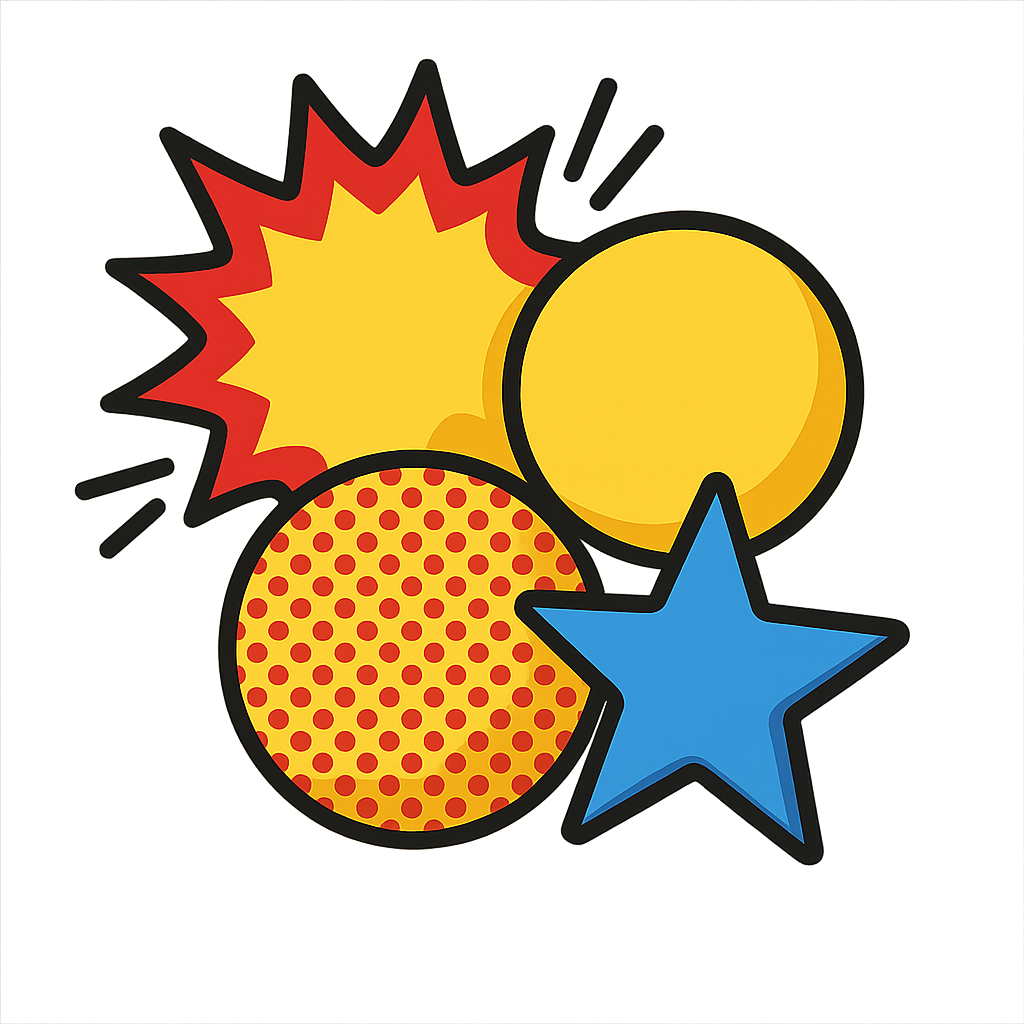
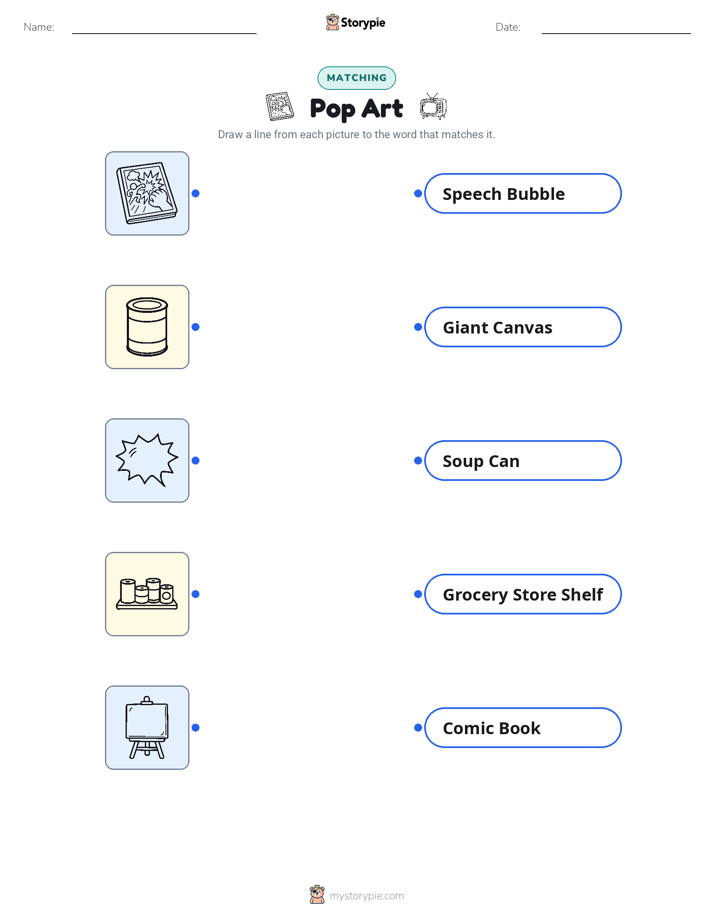
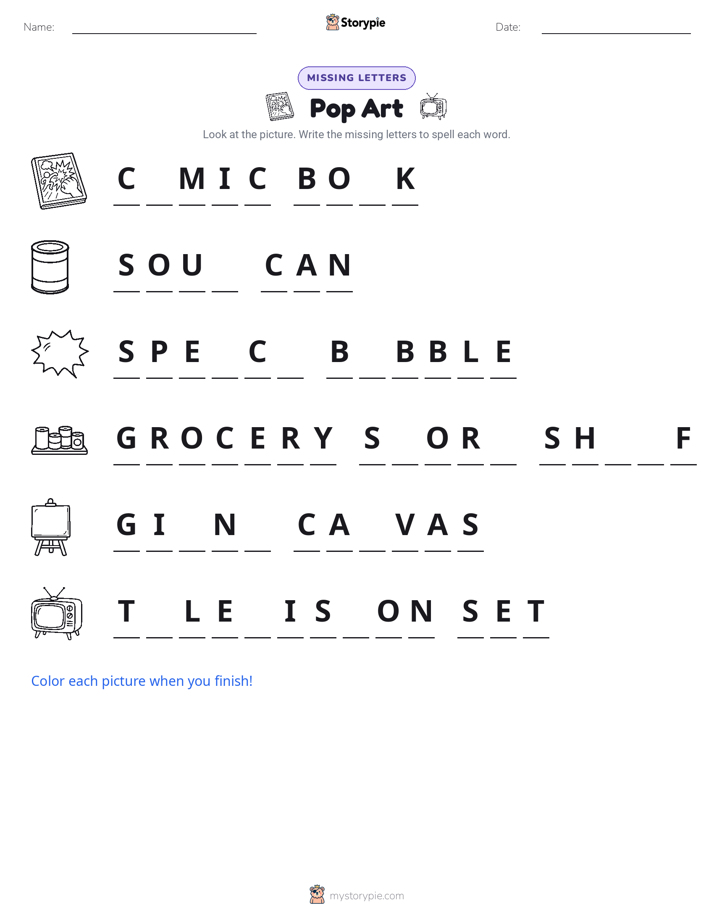
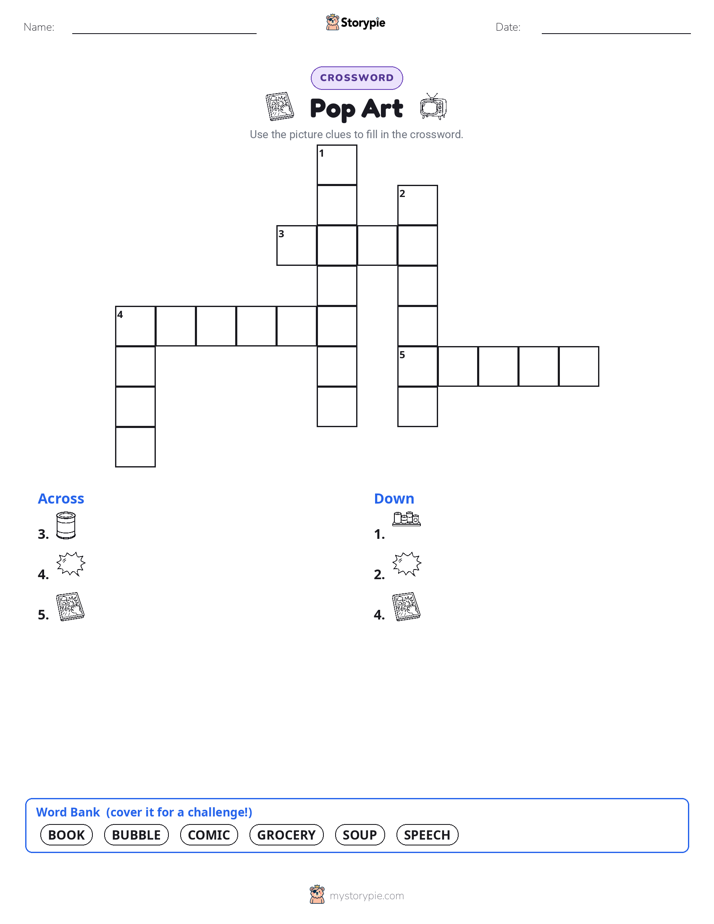
Imagine walking into an art gallery, but instead of paintings of fancy kings or quiet landscapes, you see a giant comic book panel. BAM. POW. Or maybe you see a painting of a soup can, exactly like the one in your kitchen pantry. You might see movie stars, advertisements, and brand logos—all the things you see every day—turned into bright, bold, colorful art. That’s me. Before I came along in the middle of the 20th century, many people thought art had to be very serious and about serious things. I showed up to prove that art can be fun, loud, and about the 'popular' world all around us. I am a celebration of the everyday, and I love to be colorful and exciting. Can you guess my name? I am Pop Art.
I was born in a place of new ideas and excitement: London, England, during the 1950s. After a long, difficult war, people were ready for something new and optimistic. A group of artists, writers, and thinkers called the Independent Group started meeting in 1952. They were fascinated by the bright, shiny world of American popular culture they saw in magazines and movies. One of these artists, Eduardo Paolozzi, made a collage way back on June 2nd, 1947, called 'I was a Rich Man's Plaything.' It was a mix of images from magazines, and it even had the word 'pop.' in a puff of smoke. Another artist, Richard Hamilton, created a famous collage in 1956 called 'Just what is it that makes today's homes so different, so appealing?' It was filled with images of new vacuum cleaners, canned ham, and bodybuilders—all symbols of modern life. These British artists were the first to look at all the 'stuff' of the world—the ads, the logos, the celebrities—and say, 'This can be art, too.'.
The Art of the Everyday
Imagine walking into an art gallery, but instead of paintings of fancy kings or quiet landscapes, you see a giant comic book panel. BAM. POW. Or maybe you see a painting of a soup can, exactly like the one in your kitchen pantry. You might see movie stars, advertisements, and brand logos—all the things you see every day—turned into bright, bold, colorful art. That’s me. Before I came along in the middle of the 20th century, many people thought art had to be very serious and about serious things. I showed up to prove that art can be fun, loud, and about the 'popular' world all around us. I am a celebration of the everyday, and I love to be colorful and exciting. Can you guess my name? I am Pop Art.
I was born in a place of new ideas and excitement: London, England, during the 1950s. After a long, difficult war, people were ready for something new and optimistic. A group of artists, writers, and thinkers called the Independent Group started meeting in 1952. They were fascinated by the bright, shiny world of American popular culture they saw in magazines and movies. One of these artists, Eduardo Paolozzi, made a collage way back on June 2nd, 1947, called 'I was a Rich Man's Plaything.' It was a mix of images from magazines, and it even had the word 'pop.' in a puff of smoke. Another artist, Richard Hamilton, created a famous collage in 1956 called 'Just what is it that makes today's homes so different, so appealing?' It was filled with images of new vacuum cleaners, canned ham, and bodybuilders—all symbols of modern life. These British artists were the first to look at all the 'stuff' of the world—the ads, the logos, the celebrities—and say, 'This can be art, too.'.
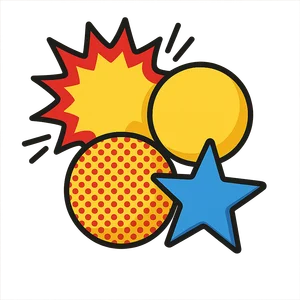
While I was getting started in Britain, I was also making my way across the ocean to the United States in the late 1950s. This is where I became a superstar. American artists took my ideas and made them bigger, bolder, and even more famous. An artist named Andy Warhol decided that anything could be a subject for his art. On July 9th, 1962, he opened a show with 32 paintings of Campbell's Soup Cans, one for each flavor. He also made colorful prints of famous people like Marilyn Monroe. He used a printing method called screenprinting to make many copies of his work, just like a factory makes many copies of a product. Another artist, Roy Lichtenstein, loved the look of comic books. He created huge, dramatic paintings that looked like they were taken straight from a comic strip, complete with speech bubbles and tiny dots, called Ben-Day dots, that printers used. His painting 'Whaam.' from 1963 is a perfect example. These artists weren't just making art; they were asking questions about what art could be.
My big idea was simple: art shouldn't be hidden away or only understood by a few people. It should be for everyone. I took the things people saw every day and put them on a gallery wall, showing that there is beauty and meaning in the ordinary world. I broke the old rules and mixed high art with popular culture. Because of me, artists today feel free to get inspiration from anywhere—video games, internet memes, fashion, or their favorite cereal box. I showed the world that art can be playful, smart, and a reflection of the times we live in. So next time you see a cool advertisement, a funny comic, or a colorful package at the store, look closely. You might just see a little bit of my spirit, reminding you that art is all around you, waiting to be discovered.
Wow facts
About
Pop Art is an art movement that emerged in the 1950s, drawing inspiration from sources in popular and commercial culture such as advertising, comic books, and everyday objects.
Take a Quiz
Question 1 of 5
According to the story, where did Pop Art first get its start before becoming a superstar in America?
Explore next



Want to do even more?
Go beyond exploring. Unlock tools that turn every story into real learning.

Storypie Plus for families
Full stories, quizzes, and printables. Nights and car rides, sorted.
- Unlimited audio stories
- Create Mode: your child stars in the story
- Offline downloads
- Printable worksheets & coloring pages

Why Storypie for Schools
Students engaged. Prep in seconds. Evenings back to you.
- Worksheets & Quizzes
- Classroom Management
- Formative Assessment
- Custom Curriculum & Lesson Plans
- 27 Languages

Why Storypie for Homeschool
Curriculum done. They'll ask for more. Hours back in your day.
- Worksheet Generator
- First-Person Audio Stories
- Built-in Comprehension Quizzes
- Custom Curriculum & Lesson Plans
- Print & Go Activities