English

Seed Dispersal
Seed dispersal is the movement or transport of seeds away from the parent plant…
Reads at Grades 6–8 Listens at Grades 4–8
Print & create
Answer keys·No prep·Free with an account
28 worksheets · answer keys · full story · quiz · Ages 10-12 · CEFR B2
Plus adds 116,000+ more stories in 27 languages, audio for every one, and printables for all of them.
Just want Seed Dispersal?
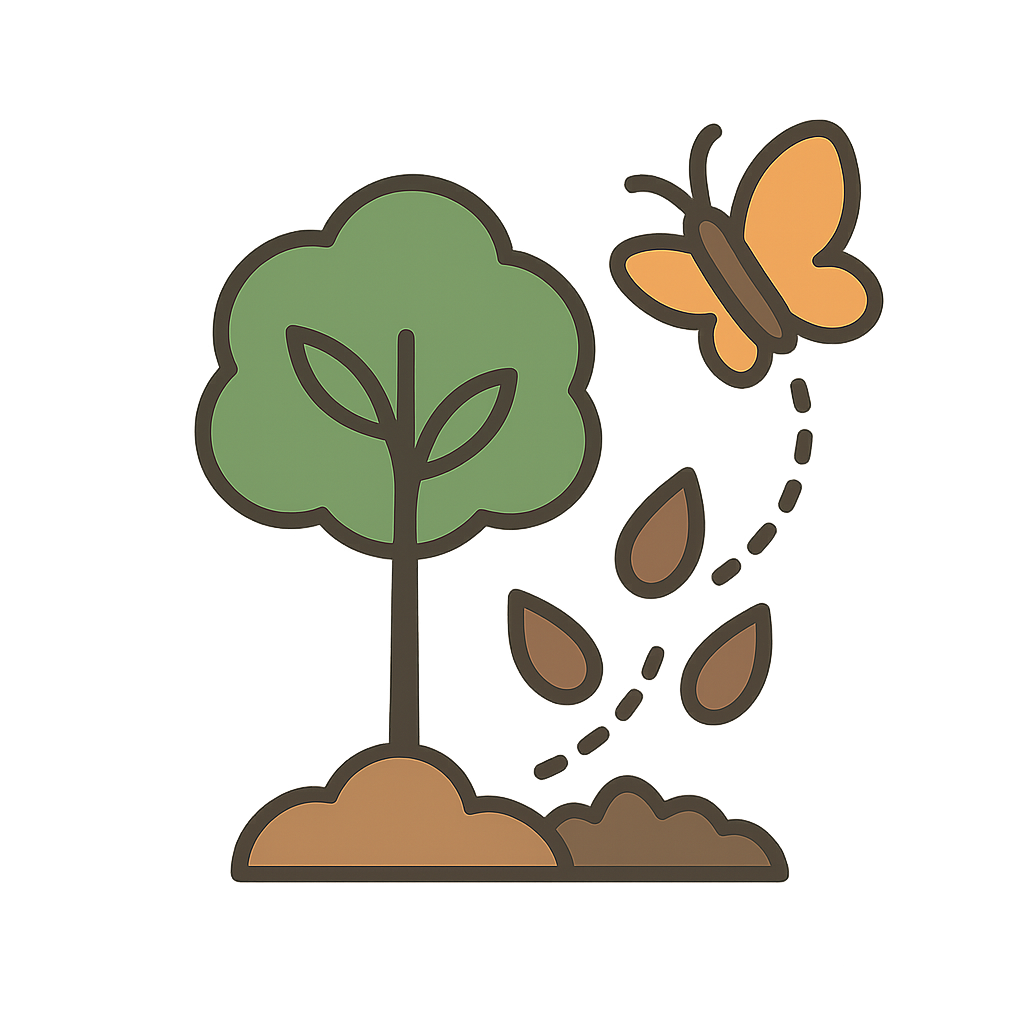
Have you ever watched a fluffy white dandelion seed float on a summer breeze, like a tiny parachutist on a grand mission. Or perhaps you’ve seen a bright red berry vanish into the beak of a bird, only to wonder if a new bush might sprout wherever that bird flies. Maybe you’ve returned from a walk in the woods to find sticky, prickly burrs clinging to your socks, determined to hitch a ride. I am the invisible force behind all these journeys. I am the silent planner, the unseen courier, the architect of expansion. Before you knew my name, you saw my work in every field, forest, and garden. I am the travel agent for the entire plant kingdom, the reason a stationary, rooted being can send its children on the greatest adventure of all: the quest to find a new place to call home, to reach for the sun, and to lay down roots in soil all their own. I make sure the forest doesn't become too crowded and that life finds a way to flourish in the most surprising of places.
I am Seed Dispersal. My purpose is simple but profound: I help plant babies, the seeds, move away from their parent plant. Why is this so crucial. Imagine trying to grow up in the exact same spot as your parents, competing for the same food, water, and sunlight. It would be incredibly difficult. Plants face the same challenge. I give their offspring a chance to find their own space, where resources are plentiful and they can thrive. For thousands of years, humans understood my results without knowing my name. Since the dawn of agriculture around 10,000 BCE, early farmers selected and planted seeds, but the idea of me as a natural, complex process was not yet understood. It wasn’t until around 300 BCE that a thoughtful Greek philosopher named Theophrastus, often called the 'Father of Botany,' began to carefully observe and document how plants mysteriously appeared in new places. He was one of the first to write about my methods. But my biggest detective arrived much later. In the 19th century, a brilliant and meticulous naturalist named Charles Darwin became fascinated by my work. He was puzzled by how plants could colonize remote, faraway islands. How did they cross vast oceans. In his groundbreaking book, 'On the Origin of Species,' published on November 24th, 1859, he detailed his ingenious experiments. He soaked different seeds in saltwater to see how long they could survive a journey at sea and still germinate. He examined the mud caked on birds' feet and found seeds hidden within, proving they could be ferried through the air. Darwin showed the world that I was not just a random accident, but a powerful engine of evolution and a key to understanding how life spreads across the globe.
The Great Plant Adventure
Have you ever watched a fluffy white dandelion seed float on a summer breeze, like a tiny parachutist on a grand mission. Or perhaps you’ve seen a bright red berry vanish into the beak of a bird, only to wonder if a new bush might sprout wherever that bird flies. Maybe you’ve returned from a walk in the woods to find sticky, prickly burrs clinging to your socks, determined to hitch a ride. I am the invisible force behind all these journeys. I am the silent planner, the unseen courier, the architect of expansion. Before you knew my name, you saw my work in every field, forest, and garden. I am the travel agent for the entire plant kingdom, the reason a stationary, rooted being can send its children on the greatest adventure of all: the quest to find a new place to call home, to reach for the sun, and to lay down roots in soil all their own. I make sure the forest doesn't become too crowded and that life finds a way to flourish in the most surprising of places.
I am Seed Dispersal. My purpose is simple but profound: I help plant babies, the seeds, move away from their parent plant. Why is this so crucial. Imagine trying to grow up in the exact same spot as your parents, competing for the same food, water, and sunlight. It would be incredibly difficult. Plants face the same challenge. I give their offspring a chance to find their own space, where resources are plentiful and they can thrive. For thousands of years, humans understood my results without knowing my name. Since the dawn of agriculture around 10,000 BCE, early farmers selected and planted seeds, but the idea of me as a natural, complex process was not yet understood. It wasn’t until around 300 BCE that a thoughtful Greek philosopher named Theophrastus, often called the 'Father of Botany,' began to carefully observe and document how plants mysteriously appeared in new places. He was one of the first to write about my methods. But my biggest detective arrived much later. In the 19th century, a brilliant and meticulous naturalist named Charles Darwin became fascinated by my work. He was puzzled by how plants could colonize remote, faraway islands. How did they cross vast oceans. In his groundbreaking book, 'On the Origin of Species,' published on November 24th, 1859, he detailed his ingenious experiments. He soaked different seeds in saltwater to see how long they could survive a journey at sea and still germinate. He examined the mud caked on birds' feet and found seeds hidden within, proving they could be ferried through the air. Darwin showed the world that I was not just a random accident, but a powerful engine of evolution and a key to understanding how life spreads across the globe.
I have a whole toolkit of strategies, each one a clever partnership with the world around us. For plants that dream of flying, I team up with the wind. Scientists call this anemochory. I give seeds delicate wings, like the spinning 'helicopters' of a maple tree, or fluffy parachutes, like those of the dandelion, allowing them to ride the currents for miles. For the adventurous sailors, I call upon the water in a process called hydrochory. I design seeds, like the mighty coconut, to be buoyant and waterproof. A coconut can float on ocean currents for months, traveling from one island to another before washing ashore, ready to sprout on a new beach. But my most lively and dynamic partners are animals, a collaboration known as zoochory. I entice them by wrapping my seeds in delicious, nutritious fruit. When a bear eats a handful of blueberries or a monkey snacks on a fig, they wander off and later deposit the seeds far from the parent plant, complete with a small pile of fertilizer. For other plants, I create ingenious hooks, barbs, and sticky substances that latch onto the fur of a passing deer or the feathers of a bird, securing a free ride. And sometimes, a plant is so full of energy it can't wait for a partner. I help it build up pressure until, with a sudden jolt, its seed pods burst open, flinging their seeds in every direction. This explosive strategy is called autochory, the art of self-propulsion.
My work is not just a fascinating piece of natural history; it is a vital, ongoing process that shapes your world every single day. I am the force of renewal, essential for regrowing forests after fires have cleared the land and for helping ecosystems heal and recover. Scientists study my patterns to understand how plant populations can adapt and migrate in a changing climate, giving us clues on how to best protect our planet's biodiversity. I am the reason you can hike through a dense forest, crunch into a juicy apple grown far from its ancestral home, and admire a meadow bursting with colorful wildflowers. I am the spirit of adventure encoded into every plant, a constant reminder that even the smallest seed holds the power to cross oceans, climb mountains, and start something new and wonderful. So, the next time you see a squirrel frantically burying an acorn for the winter or blow the seeds from a dandelion, give a little nod. You are witnessing a master at work, and you are seeing my story unfold all around you.
Wow facts
About
Seed dispersal is the movement or transport of seeds away from the parent plant, a crucial process for plant survival, colonization of new areas, and maintaining biodiversity.
Take a Quiz
Question 1 of 5
According to the story, what was the main problem Charles Darwin was trying to understand when he investigated seed dispersal?
Explore next



Want to do even more?
Go beyond exploring. Unlock tools that turn every story into real learning.

Storypie Plus for families
Full stories, quizzes, and printables. Nights and car rides, sorted.
- Unlimited audio stories
- Create Mode: your child stars in the story
- Offline downloads
- Printable worksheets & coloring pages

Why Storypie for Schools
Students engaged. Prep in seconds. Evenings back to you.
- Worksheets & Quizzes
- Classroom Management
- Formative Assessment
- Custom Curriculum & Lesson Plans
- 27 Languages

Why Storypie for Homeschool
Curriculum done. They'll ask for more. Hours back in your day.
- Worksheet Generator
- First-Person Audio Stories
- Built-in Comprehension Quizzes
- Custom Curriculum & Lesson Plans
- Print & Go Activities