English

Seed Dispersal
Seed dispersal is the movement or transport of seeds away from the parent plant…
Reads at Grades 3–5 Listens at Grades 1–5
Print & create
Answer keys·No prep·Free with an account
28 worksheets · answer keys · full story · quiz · Ages 8-10 · CEFR B1
Plus adds 116,000+ more stories in 27 languages, audio for every one, and printables for all of them.
Just want Seed Dispersal?
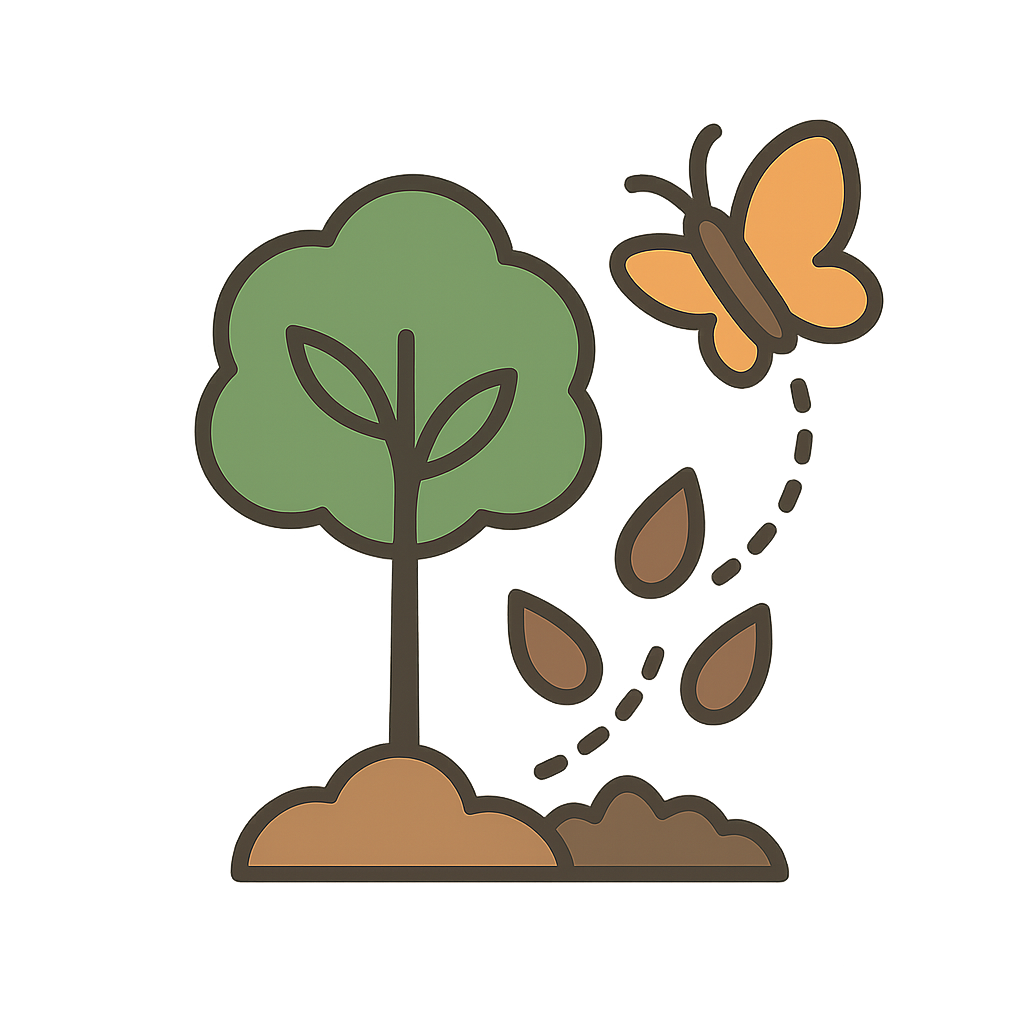
Have you ever watched a fluffy white seed parachute float away from a dandelion, dancing on a puff of wind? Or have you ever pulled a prickly burr off your sock after a walk in the woods? Maybe you’ve imagined a coconut bobbing on the ocean waves, a tiny sailor on a big blue sea. You might think these are all separate, random events, but they are all part of my secret work. I am the invisible force, the clever trick, the grand journey that helps life spread across the planet. I am Seed Dispersal, nature’s own moving company for plants. My job is one of the most important in the world. I help baby plants, tucked safely inside their seed coats, find a new place to grow. Can you imagine if every single acorn from a giant oak tree just fell straight down? They would all be stuck in the shadow of their parent, fighting for sunlight, water, and space. I give them a chance for their own adventure.
For thousands of years, you humans have been learning my tricks. At first, you didn’t even know my name. Around 10,000 BCE, during what you call the Neolithic Revolution, early farmers noticed that if they saved the seeds from the best plants and put them in the ground, they could grow their own food. They became my first partners, carefully carrying my precious cargo from one place to another. They were the first to truly understand my power to create fields of wheat and gardens of vegetables. Much later, around 300 BCE, a thoughtful man in ancient Greece named Theophrastus, who is now called the 'Father of Botany,' watched the world very closely. He was one of the first people to write down his observations, describing how some seeds had wings to fly on the wind and others had hooks to catch a ride on passing animals. He was starting to figure out my secrets. My biggest adventures came during the Age of Exploration, from the 15th to the 17th centuries. Explorers sailed across oceans, and I hitched a ride. They brought corn from the Americas to Europe and wheat from Europe to the Americas. Sometimes seeds traveled on purpose, but other times they were stowaways, hidden in the mud on a boot or mixed in with other cargo. Then, a very curious scientist with a wonderful beard, named Charles Darwin, put my skills to the test. In his famous book 'On the Origin of Species,' published on November 24th, 1859, he wrote about his experiments. He proved that seeds could survive floating in saltwater for weeks, meaning they could cross an entire ocean to start a new life on a faraway island.
The Seed's Great Escape
Have you ever watched a fluffy white seed parachute float away from a dandelion, dancing on a puff of wind? Or have you ever pulled a prickly burr off your sock after a walk in the woods? Maybe you’ve imagined a coconut bobbing on the ocean waves, a tiny sailor on a big blue sea. You might think these are all separate, random events, but they are all part of my secret work. I am the invisible force, the clever trick, the grand journey that helps life spread across the planet. I am Seed Dispersal, nature’s own moving company for plants. My job is one of the most important in the world. I help baby plants, tucked safely inside their seed coats, find a new place to grow. Can you imagine if every single acorn from a giant oak tree just fell straight down? They would all be stuck in the shadow of their parent, fighting for sunlight, water, and space. I give them a chance for their own adventure.
For thousands of years, you humans have been learning my tricks. At first, you didn’t even know my name. Around 10,000 BCE, during what you call the Neolithic Revolution, early farmers noticed that if they saved the seeds from the best plants and put them in the ground, they could grow their own food. They became my first partners, carefully carrying my precious cargo from one place to another. They were the first to truly understand my power to create fields of wheat and gardens of vegetables. Much later, around 300 BCE, a thoughtful man in ancient Greece named Theophrastus, who is now called the 'Father of Botany,' watched the world very closely. He was one of the first people to write down his observations, describing how some seeds had wings to fly on the wind and others had hooks to catch a ride on passing animals. He was starting to figure out my secrets. My biggest adventures came during the Age of Exploration, from the 15th to the 17th centuries. Explorers sailed across oceans, and I hitched a ride. They brought corn from the Americas to Europe and wheat from Europe to the Americas. Sometimes seeds traveled on purpose, but other times they were stowaways, hidden in the mud on a boot or mixed in with other cargo. Then, a very curious scientist with a wonderful beard, named Charles Darwin, put my skills to the test. In his famous book 'On the Origin of Species,' published on November 24th, 1859, he wrote about his experiments. He proved that seeds could survive floating in saltwater for weeks, meaning they could cross an entire ocean to start a new life on a faraway island.
My work is more important today than ever before. When a forest is burned by a fire, I am the one who helps it regrow. Birds carry berries filled with seeds to the empty land, and the wind blows in the light, fluffy seeds of the first new trees. I help keep the whole world green and full of life. But my story also holds a warning. For my work to be successful, I often need my animal partners. On an island called Mauritius, there was a large, flightless bird called the dodo. In the 17th century, the dodo went extinct. Scientists later discovered a tree, now called the dodo tree, whose seeds were so tough they might have needed to pass through a dodo's tummy to be able to sprout. With the dodos gone, the trees were in trouble. It’s a sad story, but it teaches us how connected everything is. I am that connection, a quiet promise of a new beginning. I am always at work, in a gust of wind, in the fur of a squirrel, in the belly of a bird. The next time you see a maple seed spinning like a helicopter, think of me. And remember, you can spread seeds, too—not just seeds for plants, but seeds of kindness, curiosity, and new ideas.
Wow facts
About
Seed dispersal is the movement or transport of seeds away from the parent plant, a crucial process for plant survival, colonization of new areas, and maintaining biodiversity.
Take a Quiz
Question 1 of 5
In the story, I call myself 'nature’s own moving company for plants!' What does this phrase mean?
Explore next




Want to do even more?
Go beyond exploring. Unlock tools that turn every story into real learning.

Storypie Plus for families
Full stories, quizzes, and printables. Nights and car rides, sorted.
- Unlimited audio stories
- Create Mode: your child stars in the story
- Offline downloads
- Printable worksheets & coloring pages

Why Storypie for Schools
Students engaged. Prep in seconds. Evenings back to you.
- Worksheets & Quizzes
- Classroom Management
- Formative Assessment
- Custom Curriculum & Lesson Plans
- 27 Languages

Why Storypie for Homeschool
Curriculum done. They'll ask for more. Hours back in your day.
- Worksheet Generator
- First-Person Audio Stories
- Built-in Comprehension Quizzes
- Custom Curriculum & Lesson Plans
- Print & Go Activities