English

Symbiosis
Symbiosis is a close and long-term biological interaction between two different species…
Reads at Grades 3–5 Listens at Grades 1–5
Print & create
Answer keys·No prep·Free with an account
28 worksheets · answer keys · full story · quiz · Ages 8-10 · CEFR B1
Plus adds 208,000+ more stories in 27 languages, audio for every one, and printables for all of them.
Just want Symbiosis?
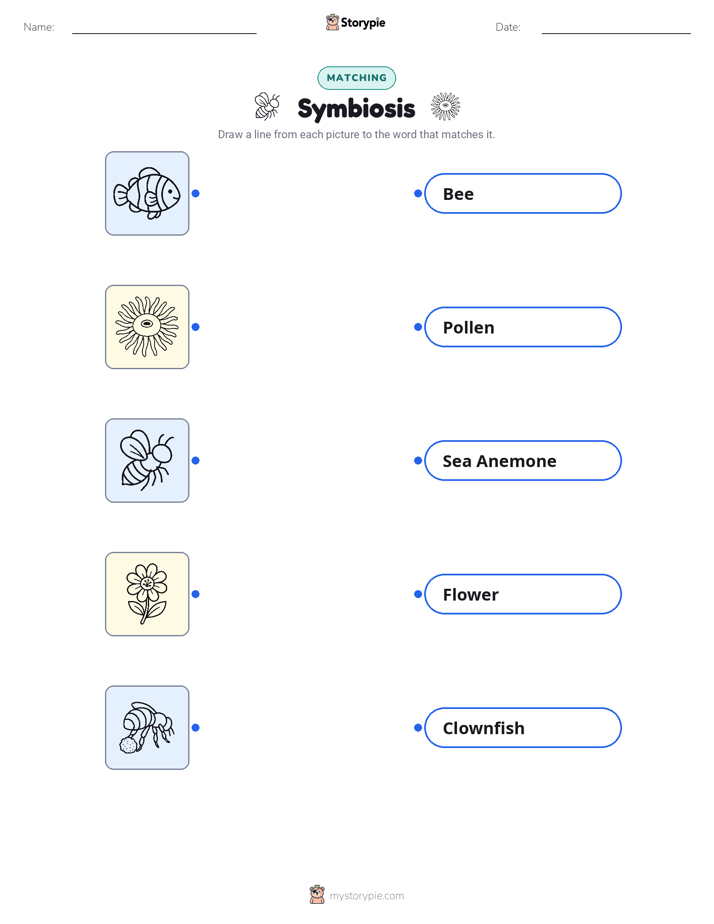
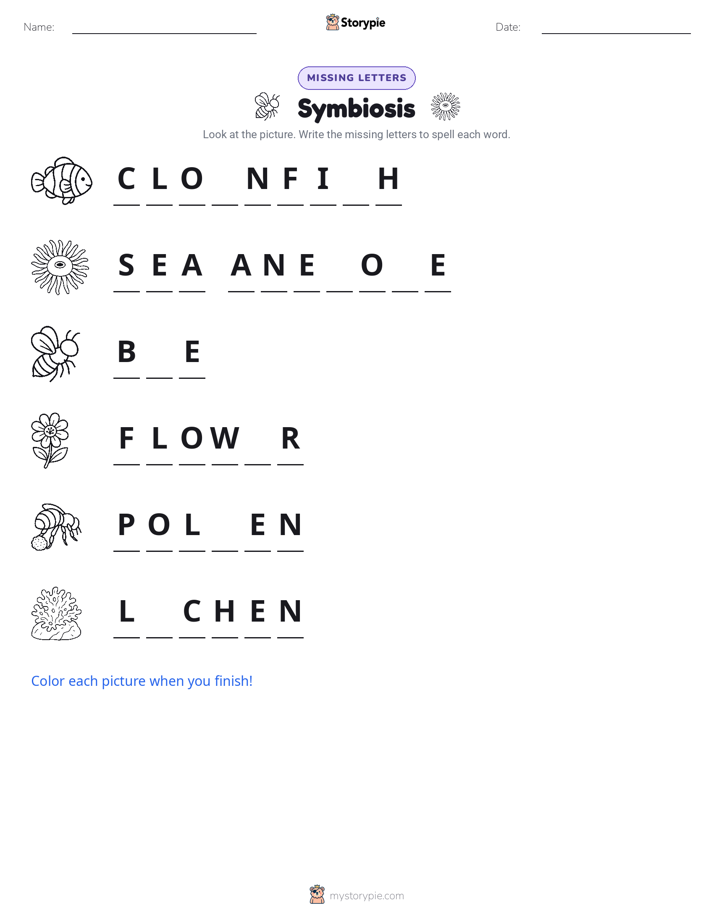
Have you ever seen a bright orange clownfish peeking out from the wavy tentacles of a sea anemone? It darts in and out, perfectly safe from bigger fish, while the anemone doesn't seem to mind at all. Or maybe you've watched a fuzzy bee buzz from one colorful flower to another. It sips sweet nectar for its lunch, and without even knowing it, carries tiny grains of pollen that help the flowers make new seeds. These aren't just accidents. They are special partnerships, secret handshakes happening all over nature. For thousands of years, people saw these amazing connections but didn't have a special name for them. They saw me at work but didn't know what to call me. I am the invisible agreement that helps so many living things survive and grow stronger together. I am the secret agreement that helps life thrive. I am Symbiosis, and my name means 'living together'.
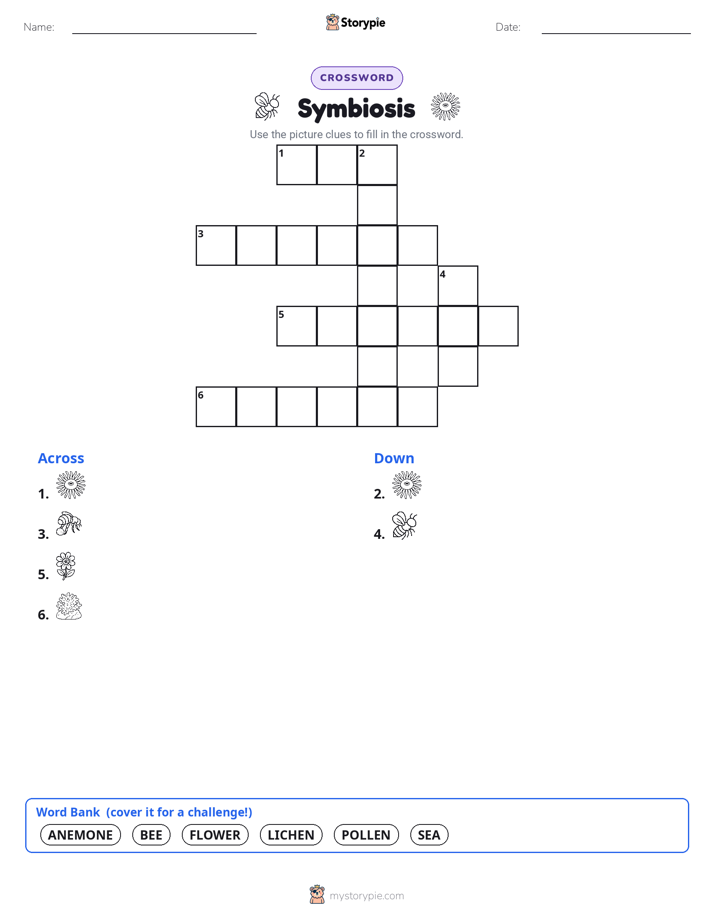
For centuries, I was a mystery that everyone could see but no one could name. People watched the tiny bird that cleans a crocodile’s teeth and the vines that climb up tall trees to reach the sunlight. They knew these were special relationships, but they were just seen as oddities of nature. Then, in the year 1877, a curious German scientist who studied plants, a botanist named Albert Bernhard Frank, looked closer than anyone had before. He was fascinated by lichen, the colorful, crusty patches you see growing on rocks and tree bark. Most people thought lichen was just one type of strange, flat plant. But Albert looked through his microscope and saw something incredible. He saw that lichen wasn't one thing at all. It was two completely different living things working as a perfect team. There was a fungus, which created a safe, cozy house. And living inside that house was an alga, a tiny plant-like organism that used sunlight to make food for both of them. One provided a home, and the other provided the food. They couldn't live without each other. Albert realized this amazing 'living together' deserved a special name to help other scientists understand it. He combined two Greek words, 'syn' meaning 'together' and 'biosis' meaning 'living', and in 1877, he officially named me Symbiosis. Suddenly, scientists had a key to unlock secrets all over the natural world.
The Secret Handshake of Nature
Have you ever seen a bright orange clownfish peeking out from the wavy tentacles of a sea anemone? It darts in and out, perfectly safe from bigger fish, while the anemone doesn't seem to mind at all. Or maybe you've watched a fuzzy bee buzz from one colorful flower to another. It sips sweet nectar for its lunch, and without even knowing it, carries tiny grains of pollen that help the flowers make new seeds. These aren't just accidents. They are special partnerships, secret handshakes happening all over nature. For thousands of years, people saw these amazing connections but didn't have a special name for them. They saw me at work but didn't know what to call me. I am the invisible agreement that helps so many living things survive and grow stronger together. I am the secret agreement that helps life thrive. I am Symbiosis, and my name means 'living together'.
For centuries, I was a mystery that everyone could see but no one could name. People watched the tiny bird that cleans a crocodile’s teeth and the vines that climb up tall trees to reach the sunlight. They knew these were special relationships, but they were just seen as oddities of nature. Then, in the year 1877, a curious German scientist who studied plants, a botanist named Albert Bernhard Frank, looked closer than anyone had before. He was fascinated by lichen, the colorful, crusty patches you see growing on rocks and tree bark. Most people thought lichen was just one type of strange, flat plant. But Albert looked through his microscope and saw something incredible. He saw that lichen wasn't one thing at all. It was two completely different living things working as a perfect team. There was a fungus, which created a safe, cozy house. And living inside that house was an alga, a tiny plant-like organism that used sunlight to make food for both of them. One provided a home, and the other provided the food. They couldn't live without each other. Albert realized this amazing 'living together' deserved a special name to help other scientists understand it. He combined two Greek words, 'syn' meaning 'together' and 'biosis' meaning 'living', and in 1877, he officially named me Symbiosis. Suddenly, scientists had a key to unlock secrets all over the natural world.
Now that I had a name, scientists realized I come in many different shapes and sizes. I am not just one kind of relationship; I have many different faces. The first and most famous is called Mutualism. This is the 'super-team' where everybody wins, like the bee getting food and the flower getting its pollen spread. The clownfish gets a safe home, and it helps clean the anemone and chase away fish that might try to eat it. It’s a win-win. Then there is Commensalism. This is the 'it's cool' relationship, where one partner gets a benefit, and the other isn't really helped or hurt. Think of a bird that builds its nest high up in the branches of a mighty oak tree. The bird gets a safe place to raise its babies, but the tree is so big it doesn't even notice the little nest. One benefits, and the other is neutral. Finally, there is the 'uh-oh' relationship, called Parasitism. This is when one organism, the parasite, benefits by living on or in another organism, the host, and harms it. A mosquito landing on your arm for a bite is a perfect example. The mosquito gets a meal, but you get an itchy bump. These aren't 'good' or 'bad' ways of living; they are all just different strategies I use to keep nature in a delicate and interesting balance.
Once you know what to look for, you can see me everywhere. I am at work in the darkest depths of the ocean, where glowing bacteria live inside of fish, helping them to see. I am in the tallest rainforests, where fungi on tree roots help them soak up nutrients from the soil. I am even working inside your own body right now. Millions of helpful bacteria live in your gut, helping you digest your food and stay healthy. You give them a safe place to live, and they help you get energy from your meals. In the 20th century, a brilliant scientist named Lynn Margulis showed the world that I am even more important than anyone imagined. She proved that the tiny power-packs inside your very own cells started as a symbiotic partnership billions of years ago. I am proof that connection is powerful. I show that by working together, living things can do amazing things they could never do on their own. And I am a reminder that no one in this big, beautiful world is ever truly alone.
Wow facts
About
Symbiosis is a close and long-term biological interaction between two different species, which can be mutualistic, commensalistic, parasitic, or amensalistic.
Take a Quiz
Question 1 of 5
Why did the scientist Albert Bernhard Frank choose the name 'Symbiosis'?
Explore next

Want to do even more?
Go beyond exploring. Unlock tools that turn every story into real learning.

Storypie Plus for families
Full stories, quizzes, and printables. Nights and car rides, sorted.
- Unlimited audio stories
- Create Mode: your child stars in the story
- Offline downloads
- Printable worksheets & coloring pages

Why Storypie for Schools
Students engaged. Prep in seconds. Evenings back to you.
- Worksheets & Quizzes
- Classroom Management
- Formative Assessment
- Custom Curriculum & Lesson Plans
- 27 Languages

Why Storypie for Homeschool
Curriculum done. They'll ask for more. Hours back in your day.
- Worksheet Generator
- First-Person Audio Stories
- Built-in Comprehension Quizzes
- Custom Curriculum & Lesson Plans
- Print & Go Activities