English

Symbiosis
Symbiosis is a close and long-term biological interaction between two different species…
Reads at Grades K-2 Listens at K–3
Print & create
Answer keys·No prep·Free with an account
28 worksheets · answer keys · full story · quiz · Ages 6-8 · CEFR A2
Plus adds 208,000+ more stories in 27 languages, audio for every one, and printables for all of them.
Just want Symbiosis?
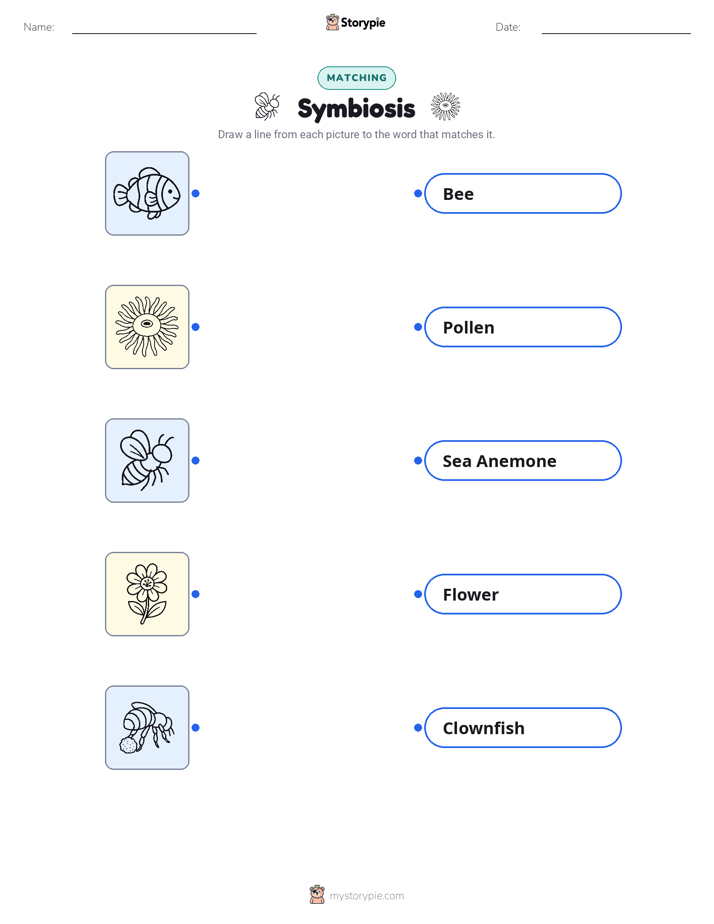
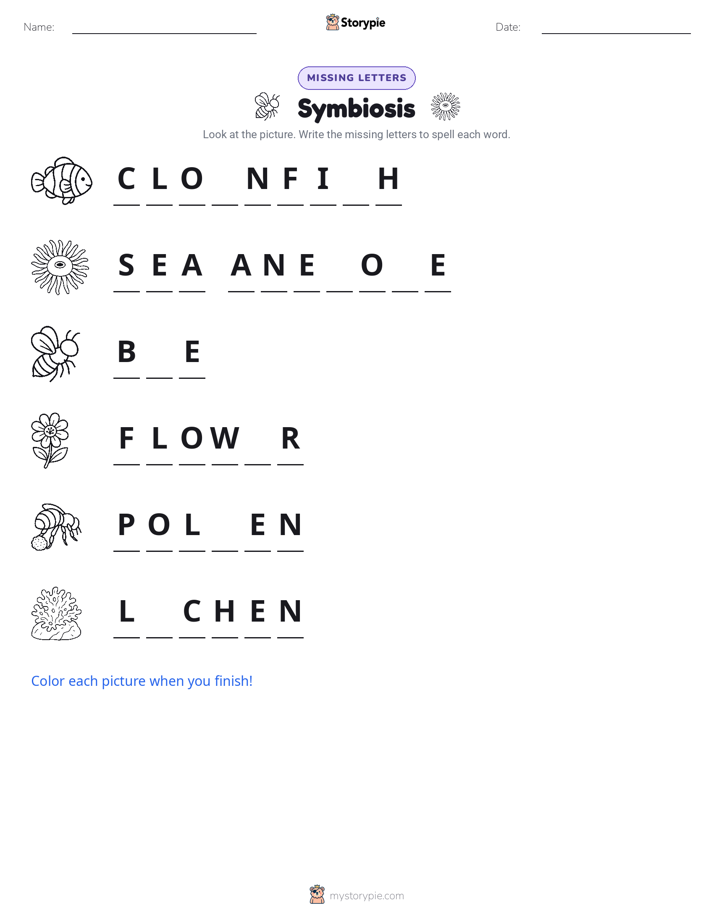
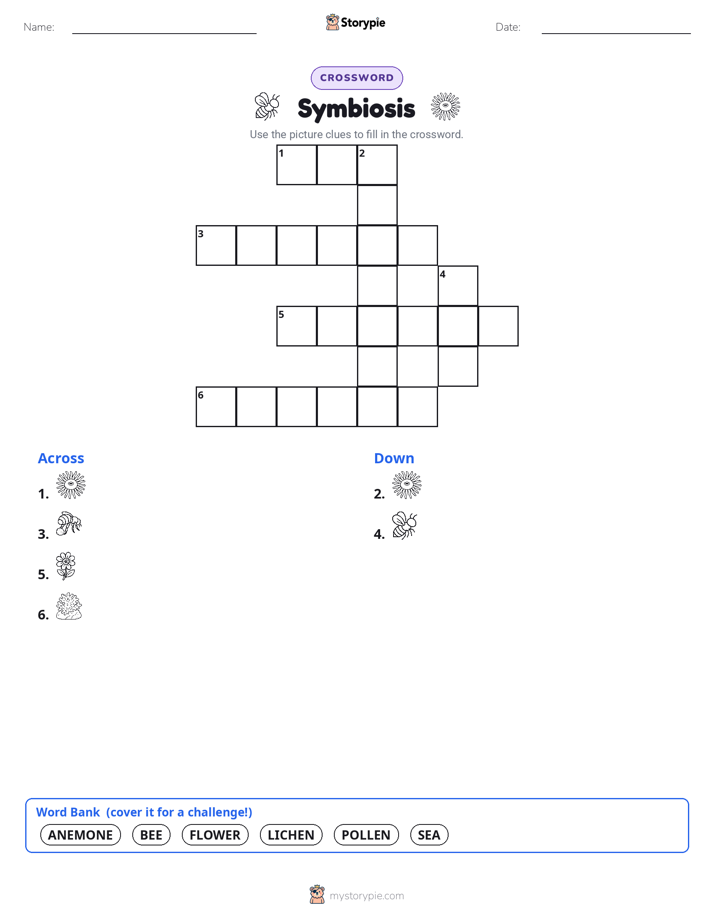
Have you ever seen a little clownfish, all bright orange and white, darting into the wavy arms of a sea anemone? The anemone’s arms can sting other fish, but they keep the little clownfish safe from bigger, scarier fish. In return, the clownfish chases away fish that might try to nibble on the anemone and helps keep it clean. Or maybe you’ve watched a fuzzy bumblebee buzz from one colorful flower to another? The bee gets to drink sweet nectar, which it uses to make honey. While it drinks, it gets covered in yellow dust called pollen. When it flies to the next flower, it shares that pollen, which helps the flower make new seeds. They are secret friends, helping each other without ever saying a word. I am the helper, the teammate, the secret connection between them all. You can call me Symbiosis.
For a very, very long time, I was a secret that everyone could see but nobody had a word for. People saw big rhinos letting little birds ride on their backs to eat pesky bugs, but they just thought it was neat. That all changed because of a curious scientist in a country called Germany. His name was Albert Bernhard Frank. He was a very patient man who loved looking at the tiniest details of nature. On one of his walks in the year 1877, he picked up a piece of lichen. It looked like a flaky, gray-green patch stuck to a rock. To most people, it was not very exciting. But to Mr. Frank, it was a mystery. He took it back to his laboratory and put it under his powerful microscope. What he saw amazed him. It was not one thing at all, but two different living things working as a single team. A fungus was creating a cozy, safe house, and inside, a tiny alga was making food for both of them using sunlight, just like a little chef. He realized this partnership was a special way of life. He decided to give this amazing teamwork a name. He called it Symbiosis, which is a big word that simply means ‘living together.’ A couple of years later, in 1879, another smart scientist named Heinrich Anton de Bary helped everyone understand that my name could be used for any kind of partnership in nature, not just lichens.
The Story of Symbiosis
Have you ever seen a little clownfish, all bright orange and white, darting into the wavy arms of a sea anemone? The anemone’s arms can sting other fish, but they keep the little clownfish safe from bigger, scarier fish. In return, the clownfish chases away fish that might try to nibble on the anemone and helps keep it clean. Or maybe you’ve watched a fuzzy bumblebee buzz from one colorful flower to another? The bee gets to drink sweet nectar, which it uses to make honey. While it drinks, it gets covered in yellow dust called pollen. When it flies to the next flower, it shares that pollen, which helps the flower make new seeds. They are secret friends, helping each other without ever saying a word. I am the helper, the teammate, the secret connection between them all. You can call me Symbiosis.
For a very, very long time, I was a secret that everyone could see but nobody had a word for. People saw big rhinos letting little birds ride on their backs to eat pesky bugs, but they just thought it was neat. That all changed because of a curious scientist in a country called Germany. His name was Albert Bernhard Frank. He was a very patient man who loved looking at the tiniest details of nature. On one of his walks in the year 1877, he picked up a piece of lichen. It looked like a flaky, gray-green patch stuck to a rock. To most people, it was not very exciting. But to Mr. Frank, it was a mystery. He took it back to his laboratory and put it under his powerful microscope. What he saw amazed him. It was not one thing at all, but two different living things working as a single team. A fungus was creating a cozy, safe house, and inside, a tiny alga was making food for both of them using sunlight, just like a little chef. He realized this partnership was a special way of life. He decided to give this amazing teamwork a name. He called it Symbiosis, which is a big word that simply means ‘living together.’ A couple of years later, in 1879, another smart scientist named Heinrich Anton de Bary helped everyone understand that my name could be used for any kind of partnership in nature, not just lichens.
Did you know that I am working inside you right now? It’s true. Inside your tummy, there are billions of tiny helpers called bacteria. Don’t worry, they’re the good guys. They are your secret team. You give them a warm, safe place to live inside your belly, and in return, they help you break down your food so you can get all the energy you need to run and play. That’s me, Symbiosis, making sure you and your tummy team work together perfectly. I show that teamwork makes everything better, from the biggest animals in the ocean to the tiniest helpers inside you. So next time you see a bee on a flower or a bird cleaning an alligator's teeth, give a little wave. You will know you are seeing me at work, making the world a friendlier place. Look around, and you will find me everywhere.
Wow facts
About
Symbiosis is a close and long-term biological interaction between two different species, which can be mutualistic, commensalistic, parasitic, or amensalistic.
Take a Quiz
Question 1 of 4
Why did the scientist Albert Bernhard Frank give the name Symbiosis to what he saw?
Explore next



Want to do even more?
Go beyond exploring. Unlock tools that turn every story into real learning.

Storypie Plus for families
Full stories, quizzes, and printables. Nights and car rides, sorted.
- Unlimited audio stories
- Create Mode: your child stars in the story
- Offline downloads
- Printable worksheets & coloring pages

Why Storypie for Schools
Students engaged. Prep in seconds. Evenings back to you.
- Worksheets & Quizzes
- Classroom Management
- Formative Assessment
- Custom Curriculum & Lesson Plans
- 27 Languages

Why Storypie for Homeschool
Curriculum done. They'll ask for more. Hours back in your day.
- Worksheet Generator
- First-Person Audio Stories
- Built-in Comprehension Quizzes
- Custom Curriculum & Lesson Plans
- Print & Go Activities