English

Symbiosis
Symbiosis is a close and long-term biological interaction between two different species…
Reads at Grades 6–8 Listens at Grades 4–8
Print & create
Answer keys·No prep·Free with an account
28 worksheets · answer keys · full story · quiz · Ages 10-12 · CEFR B2
Plus adds 208,000+ more stories in 27 languages, audio for every one, and printables for all of them.
Just want Symbiosis?
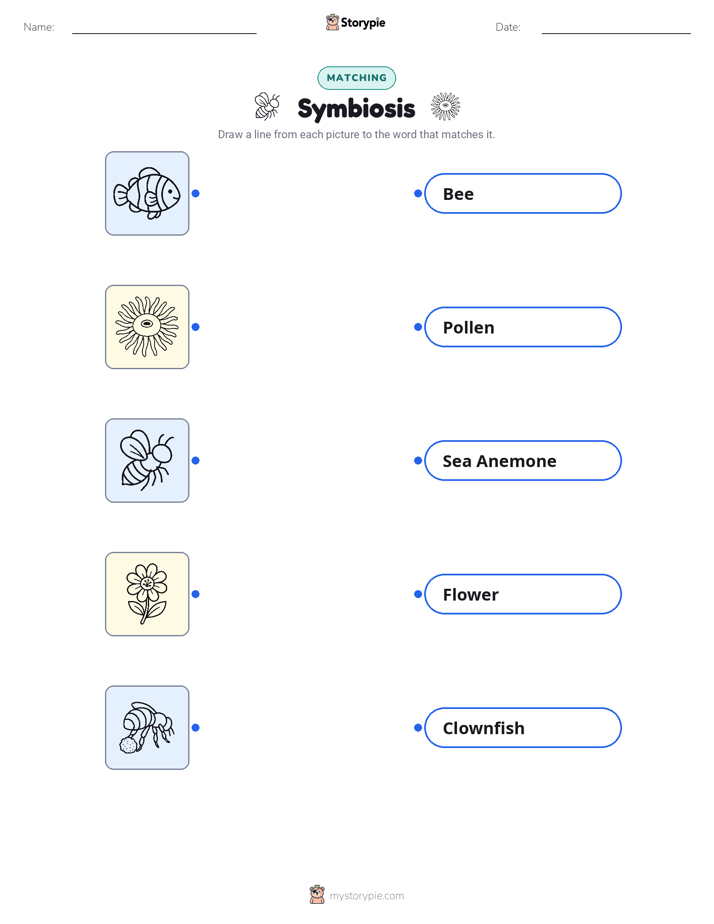
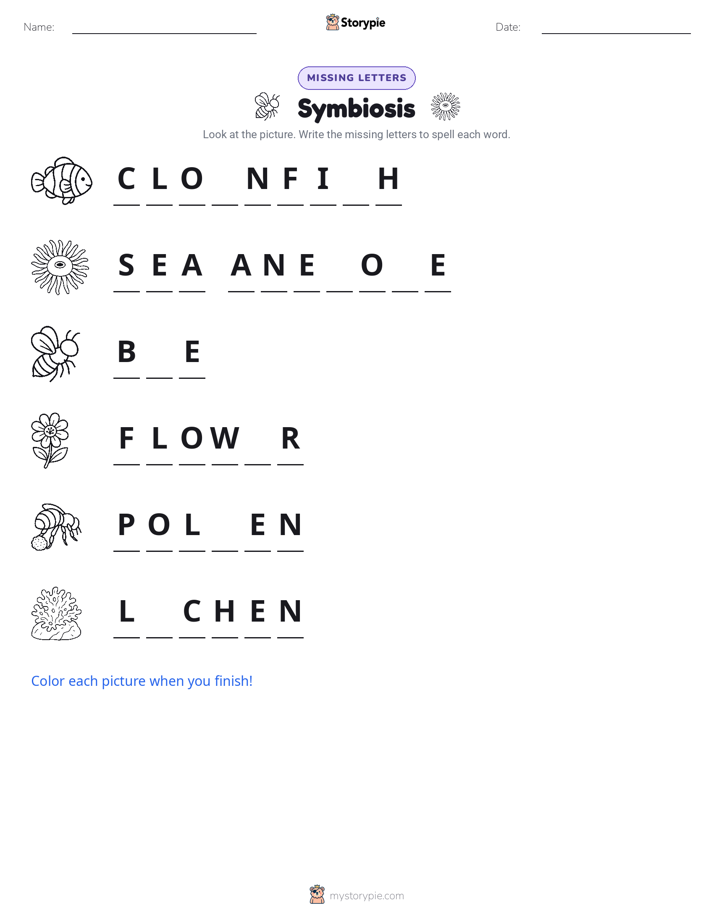
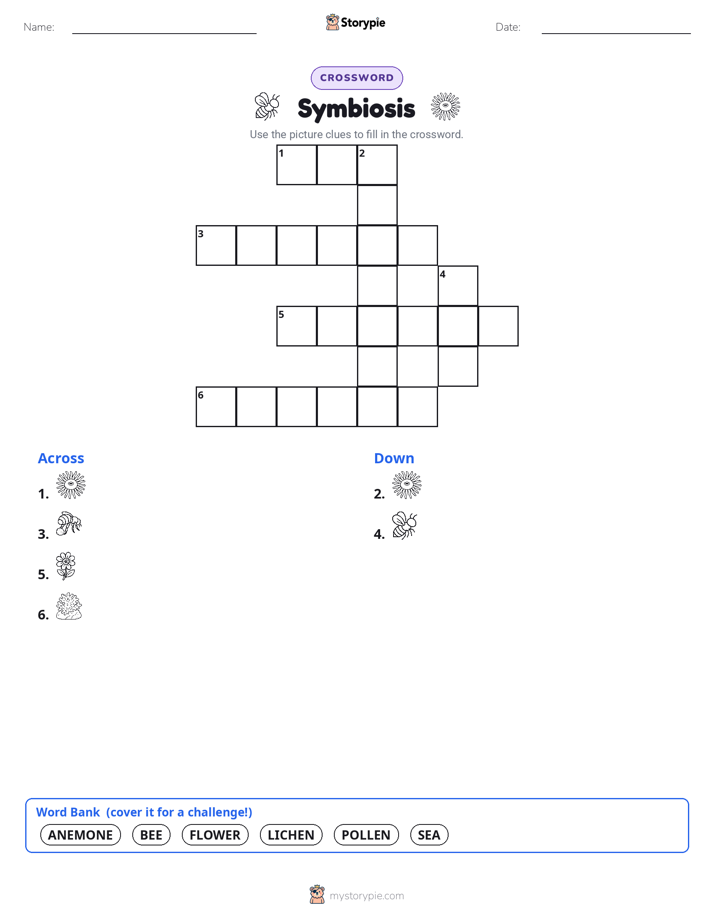
Have you ever watched a bright orange clownfish dart playfully among the ghostly, waving arms of a sea anemone, completely safe from their powerful sting. Have you seen a fuzzy bee, dusted in gold, dive into a flower for a sweet drink of nectar, unknowingly carrying life-giving pollen to the next blossom. Perhaps you’ve seen a tough, colorful patch of lichen clinging to a bare rock, a living map of greens and grays where nothing else seems to grow. These partnerships look very different, but they share a deep secret. They are all examples of my work, a quiet agreement that helps life flourish in the most unexpected ways. For thousands of years, I have been the invisible thread connecting creatures big and small, the silent promise that helping another can also mean helping yourself. I am the art of living together. My name is Symbiosis.
For most of human history, people saw my handiwork everywhere but had no single word to describe me. They saw the fungus and the root, the bird and the crocodile, the flower and the bee, and they simply called it nature. My own story of being discovered, of getting a name, begins with that tough little lichen on the rock. For a long time, scientists thought it was just a single, very strange plant. But in 1867, a curious Swiss botanist named Simon Schwendener decided to look closer. He placed a slice of lichen under his microscope and saw something that amazed him. He realized he wasn't looking at one organism, but two. A fungus provided a safe, structured home, while a tiny alga, nestled inside, performed photosynthesis, creating food for them both. When he proposed this radical idea, many other scientists scoffed. An organism made of two different beings. It seemed impossible. But the evidence was there. A decade later, on a day in 1877, a German botanist named Albert Bernhard Frank was studying this very relationship. He knew it needed a name. He reached into the ancient Greek language and pulled two words together: 'sym,' which means 'together,' and 'bios,' which means 'life.' Living together. Symbiosis. Suddenly, I had a name. And once scientists had a word for me, they began to see me everywhere, realizing I could describe all kinds of relationships, from mutually helpful ones to those where one benefits while the other is harmed.
The Secret of Living Together
Have you ever watched a bright orange clownfish dart playfully among the ghostly, waving arms of a sea anemone, completely safe from their powerful sting. Have you seen a fuzzy bee, dusted in gold, dive into a flower for a sweet drink of nectar, unknowingly carrying life-giving pollen to the next blossom. Perhaps you’ve seen a tough, colorful patch of lichen clinging to a bare rock, a living map of greens and grays where nothing else seems to grow. These partnerships look very different, but they share a deep secret. They are all examples of my work, a quiet agreement that helps life flourish in the most unexpected ways. For thousands of years, I have been the invisible thread connecting creatures big and small, the silent promise that helping another can also mean helping yourself. I am the art of living together. My name is Symbiosis.
For most of human history, people saw my handiwork everywhere but had no single word to describe me. They saw the fungus and the root, the bird and the crocodile, the flower and the bee, and they simply called it nature. My own story of being discovered, of getting a name, begins with that tough little lichen on the rock. For a long time, scientists thought it was just a single, very strange plant. But in 1867, a curious Swiss botanist named Simon Schwendener decided to look closer. He placed a slice of lichen under his microscope and saw something that amazed him. He realized he wasn't looking at one organism, but two. A fungus provided a safe, structured home, while a tiny alga, nestled inside, performed photosynthesis, creating food for them both. When he proposed this radical idea, many other scientists scoffed. An organism made of two different beings. It seemed impossible. But the evidence was there. A decade later, on a day in 1877, a German botanist named Albert Bernhard Frank was studying this very relationship. He knew it needed a name. He reached into the ancient Greek language and pulled two words together: 'sym,' which means 'together,' and 'bios,' which means 'life.' Living together. Symbiosis. Suddenly, I had a name. And once scientists had a word for me, they began to see me everywhere, realizing I could describe all kinds of relationships, from mutually helpful ones to those where one benefits while the other is harmed.
Once I had a name, you might think my biggest secrets were out. But my most profound and important secret was still hidden, not on a rock or in the sea, but inside almost every complex living thing, including you. For a century after I was named, another mystery puzzled biologists: where did the complicated machinery inside our cells come from. The answer came from an American biologist named Lynn Margulis. In 1967, she proposed a theory so bold it changed biology forever: the theory of endosymbiosis. She imagined a scene from billions of years ago in the Earth's ancient oceans. A simple, single-celled organism swallowed a much smaller bacterium, one that was an expert at converting nutrients into energy. But instead of being digested, the little bacterium survived. It found a safe home inside the larger cell, and in return, it paid its rent with a constant supply of energy. Over millions of years, this tiny guest became what we now know as the mitochondrion, the power plant of the cell. A similar event with a photosynthesizing bacterium led to the chloroplast, the solar panel inside every plant cell. Just like with the lichen, many scientists doubted her at first. But today, her theory is accepted as one of the most important in all of biology. It means that I, Symbiosis, am not just a curious strategy for survival. I am the architect of the very cells that make up all animals, plants, and fungi on Earth.
My story is not just ancient history; it is happening inside you right now. The energy you are using to read these words, the power that lets you run across a field or swim in the ocean, is generated by the descendants of that ancient partnership forged billions of years ago. The very oxygen you breathe into your lungs exists in our atmosphere because of the other great partnership, the one that put chloroplasts inside plant cells and allowed them to fill the world with life-giving air. My story is proof that cooperation is one of the most powerful and creative forces in the universe. I show that we are all deeply connected, from the smallest cell to the largest ecosystem. By working together, we can create things far more complex, resilient, and wonderful than we could ever hope to achieve alone. I am the quiet reminder that the secret to a thriving world is, and always has been, living together.
Wow facts
About
Symbiosis is a close and long-term biological interaction between two different species, which can be mutualistic, commensalistic, parasitic, or amensalistic.
Take a Quiz
Question 1 of 5
What is the central theme or main idea of the story told by Symbiosis?
Explore next

Want to do even more?
Go beyond exploring. Unlock tools that turn every story into real learning.

Storypie Plus for families
Full stories, quizzes, and printables. Nights and car rides, sorted.
- Unlimited audio stories
- Create Mode: your child stars in the story
- Offline downloads
- Printable worksheets & coloring pages

Why Storypie for Schools
Students engaged. Prep in seconds. Evenings back to you.
- Worksheets & Quizzes
- Classroom Management
- Formative Assessment
- Custom Curriculum & Lesson Plans
- 27 Languages

Why Storypie for Homeschool
Curriculum done. They'll ask for more. Hours back in your day.
- Worksheet Generator
- First-Person Audio Stories
- Built-in Comprehension Quizzes
- Custom Curriculum & Lesson Plans
- Print & Go Activities