English

Volcanology
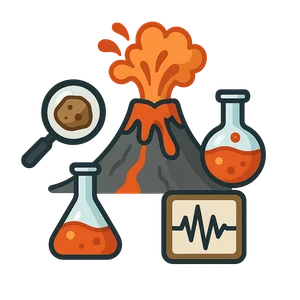
Volcanology is the scientific study of volcanoes, lava, magma, and related geological, geophysical…
Reads at Grades 6–8 Listens at Grades 4–8
Print & create
Answer keys·No prep·Free with an account
28 worksheets · answer keys · full story · quiz · Ages 10-12 · CEFR B2
Plus adds 164,000+ more stories in 27 languages, audio for every one, and printables for all of them.
Just want Volcanology?
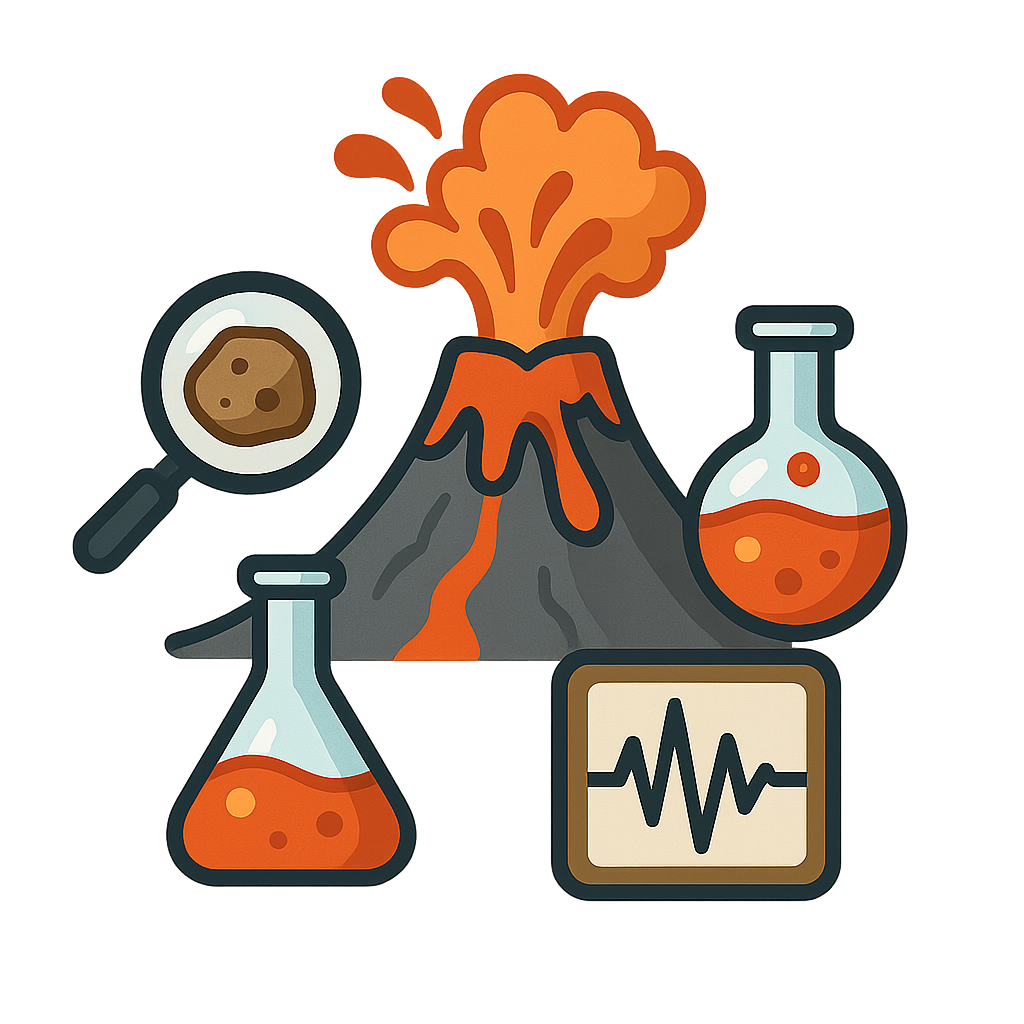
Have you ever felt the ground give a deep, low rumble, as if a giant were waking up from a nap? Imagine a mountain that isn't just cold rock and silent snow. It's a gateway to the very center of the Earth, a place of incredible heat and pressure. Sometimes, that pressure needs to escape. The mountain's peak might tremble, then burst open with a roar that shakes the sky, sending a tower of ash and smoke miles high. Glowing rivers of molten rock, red-hot and unstoppable, might spill down its sides, building new land where there was none before. It’s a sight that is both terrifying and beautiful, a reminder of the raw power churning just beneath your feet. For most of human history, this was a terrifying mystery. But it’s not magic, and it's not a monster. It’s the planet’s way of breathing, of creating, of changing itself from the inside out. I am the science that dares to get close, to listen, to measure, and to understand. Hello, I am Volcanology.
For thousands of years, when a mountain exploded, people looked for someone to blame. They imagined powerful gods living deep inside the Earth. The ancient Greeks told tales of Hephaestus, the god of fire and metalworking, whose underground forge sent smoke and sparks flying from volcanoes. The Romans called him Vulcan, and the fiery mountain island of Vulcano is where my name comes from! These stories were their way of explaining something they couldn't understand. But slowly, people started observing instead of just believing. One of the first and most important moments for me happened on August 24th, 79 CE. On that day, a huge mountain in Italy called Mount Vesuvius erupted violently. It buried the bustling Roman cities of Pompeii and Herculaneum in a thick blanket of hot ash and pumice. A brave young man named Pliny the Younger watched the whole thing from a safe distance across the bay. He didn't write about angry gods. Instead, he wrote detailed letters to a historian, describing the enormous, dark cloud that rose from the mountain, shaped like a pine tree. He wrote about the tremors, the falling ash, and the sky turning black as night. His letters are famous because they represent one of the very first times someone tried to record the details of an eruption with a scientific eye.
I Am Volcanology
Have you ever felt the ground give a deep, low rumble, as if a giant were waking up from a nap? Imagine a mountain that isn't just cold rock and silent snow. It's a gateway to the very center of the Earth, a place of incredible heat and pressure. Sometimes, that pressure needs to escape. The mountain's peak might tremble, then burst open with a roar that shakes the sky, sending a tower of ash and smoke miles high. Glowing rivers of molten rock, red-hot and unstoppable, might spill down its sides, building new land where there was none before. It’s a sight that is both terrifying and beautiful, a reminder of the raw power churning just beneath your feet. For most of human history, this was a terrifying mystery. But it’s not magic, and it's not a monster. It’s the planet’s way of breathing, of creating, of changing itself from the inside out. I am the science that dares to get close, to listen, to measure, and to understand. Hello, I am Volcanology.
For thousands of years, when a mountain exploded, people looked for someone to blame. They imagined powerful gods living deep inside the Earth. The ancient Greeks told tales of Hephaestus, the god of fire and metalworking, whose underground forge sent smoke and sparks flying from volcanoes. The Romans called him Vulcan, and the fiery mountain island of Vulcano is where my name comes from! These stories were their way of explaining something they couldn't understand. But slowly, people started observing instead of just believing. One of the first and most important moments for me happened on August 24th, 79 CE. On that day, a huge mountain in Italy called Mount Vesuvius erupted violently. It buried the bustling Roman cities of Pompeii and Herculaneum in a thick blanket of hot ash and pumice. A brave young man named Pliny the Younger watched the whole thing from a safe distance across the bay. He didn't write about angry gods. Instead, he wrote detailed letters to a historian, describing the enormous, dark cloud that rose from the mountain, shaped like a pine tree. He wrote about the tremors, the falling ash, and the sky turning black as night. His letters are famous because they represent one of the very first times someone tried to record the details of an eruption with a scientific eye.
Even after Pliny's amazing account, I didn't grow up overnight. For more than 1,500 years, volcanoes remained sources of fear and wonder. But during the Scientific Revolution in the 17th and 18th centuries, thinkers began searching for natural causes for the world's great events. Geologists like James Hutton, working in the late 1700s, argued that the Earth's interior was a hot, molten place, and that this heat was the engine for creating mountains and rocks. People began to climb volcanoes not just to pray, but to investigate. They chipped off rocks, looked into craters, and felt the heat of steaming vents. The biggest step forward came in 1841, when the Vesuvius Observatory was built right on the slopes of the famous volcano. For the first time, scientists had a permanent post to watch a volcano's every move. Then, on August 27th, 1883, the world felt my power in a new way. The volcanic island of Krakatoa, in what is now Indonesia, exploded with one of the loudest sounds in recorded history. It sent giant waves across the ocean and blasted so much ash into the atmosphere that it created brilliantly colored sunsets all around the globe for years. Scientists everywhere studied these effects, realizing that a single eruption could impact the entire planet. My work had gone global.
The 20th century brought my biggest 'Aha!' moment. For a long time, scientists were puzzled about why most volcanoes appear in specific lines and arcs, like the famous 'Ring of Fire' around the Pacific Ocean. A scientist named Alfred Wegener first proposed in 1912 that the continents were drifting around, but it wasn't until the 1960s that the theory of plate tectonics was fully developed. This was the key! I helped scientists see that the Earth's crust is made of giant, slowly moving plates. Where these plates collide or pull apart, magma from below can find a path to the surface. Suddenly, it all made sense! I could finally explain where and why volcanoes form. My predictive powers got a huge test on May 18th, 1980. Mount St. Helens, a beautiful, cone-shaped volcano in Washington state, erupted sideways in a massive blast. But this time, scientists were watching closely. For weeks, they had used seismometers to detect earthquakes and lasers to measure the growing bulge on the mountain's north side. They warned officials to clear the area. While the eruption was still tragic, this event showed the world that I could be used to save lives. I had become a science of prediction and protection.
Today, I am a team of brave scientists all over the world. We use incredible tools that Pliny the Younger could never have imagined. We use seismometers to listen for the tiny earthquakes that signal magma on the move. We use GPS to measure the ground swelling by just a few millimeters, like a balloon slowly inflating. We fly drones and use satellites in space to peek into fiery craters and analyze the gases volcanoes breathe out. All this data helps us create forecasts, much like a weather forecast, to warn people when a volcano is becoming restless. My purpose isn't just to watch destruction. It's to understand the life force of our planet. Volcanoes create new islands, like Hawaii and Iceland. Their ash makes soil incredibly fertile for growing food. The heat they release can even be used to generate clean energy. I am a science of respect—respect for the power of our planet and for the people who live in its shadow. The Earth is always rumbling, always changing, and I will always be here, listening to its story.
Wow facts
About
Volcanology is the scientific study of volcanoes, lava, magma, and related geological, geophysical, and geochemical phenomena. It aims to understand how volcanoes work, predict eruptions, and assess their impact.
Take a Quiz
Question 1 of 5
What is the main idea of this story?
Explore next


Want to do even more?
Go beyond exploring. Unlock tools that turn every story into real learning.

Storypie Plus for families
Full stories, quizzes, and printables. Nights and car rides, sorted.
- Unlimited audio stories
- Create Mode: your child stars in the story
- Offline downloads
- Printable worksheets & coloring pages

Why Storypie for Schools
Students engaged. Prep in seconds. Evenings back to you.
- Worksheets & Quizzes
- Classroom Management
- Formative Assessment
- Custom Curriculum & Lesson Plans
- 27 Languages

Why Storypie for Homeschool
Curriculum done. They'll ask for more. Hours back in your day.
- Worksheet Generator
- First-Person Audio Stories
- Built-in Comprehension Quizzes
- Custom Curriculum & Lesson Plans
- Print & Go Activities