English

Volcanology
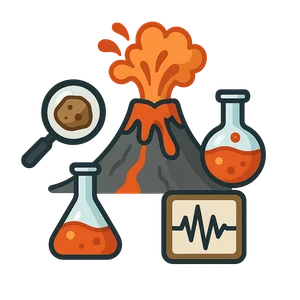
Volcanology is the scientific study of volcanoes, lava, magma, and related geological, geophysical…
Reads at Grades 3–5 Listens at Grades 1–5
Print & create
Answer keys·No prep·Free with an account
28 worksheets · answer keys · full story · quiz · Ages 8-10 · CEFR B1
Plus adds 164,000+ more stories in 27 languages, audio for every one, and printables for all of them.
Just want Volcanology?
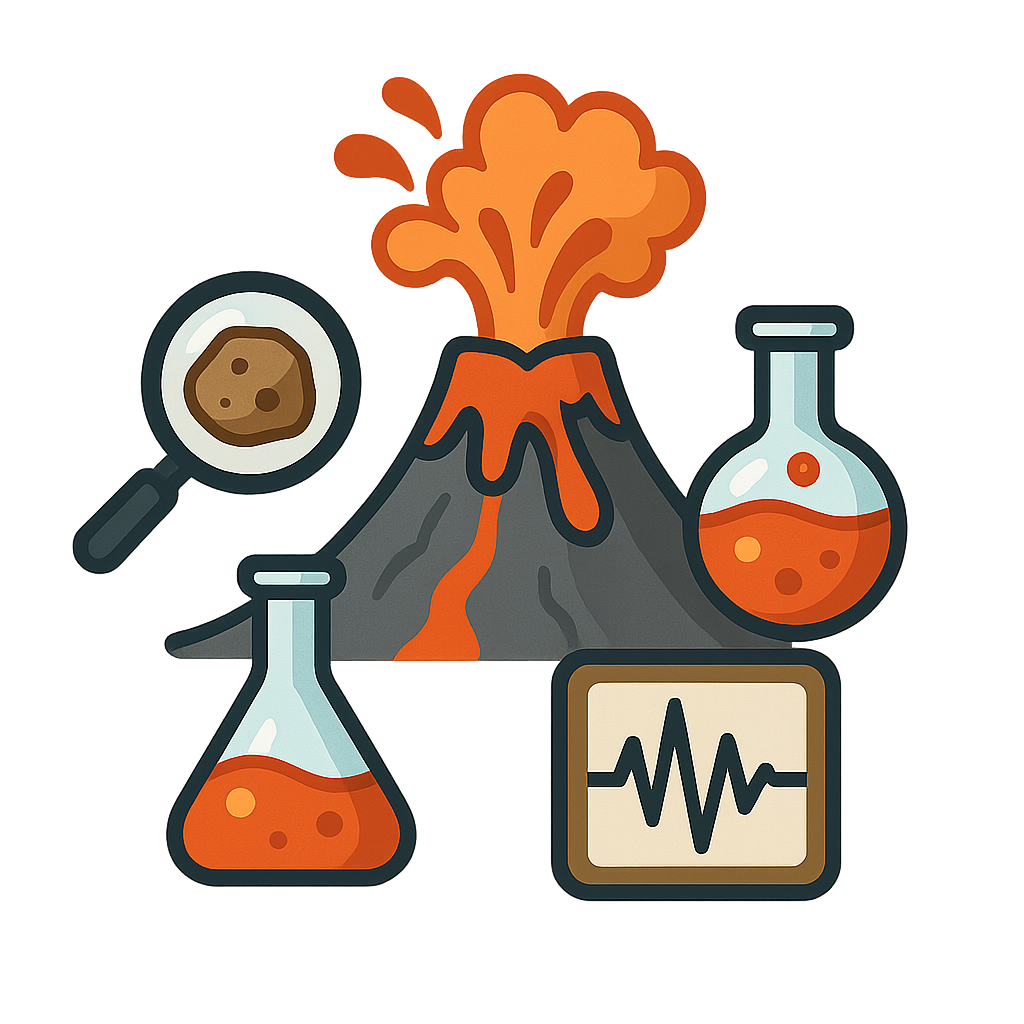
Have you ever felt the ground beneath your feet give a little shake? Or seen pictures of a mountain breathing out a giant cloud of smoke and ash? That’s me, waking up. I am the power that sleeps deep inside the Earth. Sometimes I am quiet for hundreds of years, and other times I burst out to say hello with a spectacular show of glowing, red-hot lava that flows like a river of fire. I can build new islands in the middle of the ocean or reshape a mountain in a single day. For thousands of years, people have watched me, wondered about me, and even told stories about gods living inside my fiery mountains. They felt my power but didn't have a name for the study of it. Hello. I am Volcanology, and I am the science of understanding the incredible, fiery heart of your world.
A long, long time ago, people didn’t understand me at all. The ancient Romans who lived in Italy thought a powerful god lived inside the mountains—Vulcan, the god of fire. When a mountain rumbled, they believed Vulcan was busy in his workshop, making thunderbolts for the king of the gods. The very word 'volcano' comes from his name. Can you imagine thinking a grumpy god was the reason for all that noise? Then, on August 24th, 79 CE, a huge mountain named Mount Vesuvius exploded. It was one of the most famous eruptions in history. A brave Roman man named Pliny the Younger watched from across a bay and wrote down everything he saw. He described the giant cloud of ash that looked like a pine tree, the sky turning dark as night, and the ground shaking violently. His letters are famous because they were one of the very first times someone tried to carefully observe and describe one of my big moments instead of just being scared. For many centuries after that, people still looked at my fiery mountains with fear and wonder. They knew I was powerful, but the real reasons for my fiery breath were still a deep mystery waiting to be solved.
The Story of Volcanology
Have you ever felt the ground beneath your feet give a little shake? Or seen pictures of a mountain breathing out a giant cloud of smoke and ash? That’s me, waking up. I am the power that sleeps deep inside the Earth. Sometimes I am quiet for hundreds of years, and other times I burst out to say hello with a spectacular show of glowing, red-hot lava that flows like a river of fire. I can build new islands in the middle of the ocean or reshape a mountain in a single day. For thousands of years, people have watched me, wondered about me, and even told stories about gods living inside my fiery mountains. They felt my power but didn't have a name for the study of it. Hello. I am Volcanology, and I am the science of understanding the incredible, fiery heart of your world.
A long, long time ago, people didn’t understand me at all. The ancient Romans who lived in Italy thought a powerful god lived inside the mountains—Vulcan, the god of fire. When a mountain rumbled, they believed Vulcan was busy in his workshop, making thunderbolts for the king of the gods. The very word 'volcano' comes from his name. Can you imagine thinking a grumpy god was the reason for all that noise? Then, on August 24th, 79 CE, a huge mountain named Mount Vesuvius exploded. It was one of the most famous eruptions in history. A brave Roman man named Pliny the Younger watched from across a bay and wrote down everything he saw. He described the giant cloud of ash that looked like a pine tree, the sky turning dark as night, and the ground shaking violently. His letters are famous because they were one of the very first times someone tried to carefully observe and describe one of my big moments instead of just being scared. For many centuries after that, people still looked at my fiery mountains with fear and wonder. They knew I was powerful, but the real reasons for my fiery breath were still a deep mystery waiting to be solved.
As people got more curious, they stopped only telling stories and started asking questions. The big change began when they decided to watch me up close. In 1841, scientists built the Vesuvius Observatory right on the side of that famous volcano in Italy. It was the very first place in the world built just to study a volcano. Scientists, who you call volcanologists, could now measure my rumbles and watch my every move. They invented amazing tools to help them. They created seismographs, special machines that can feel tiny shakes in the ground that are too small for you to notice. They used special cameras that can see heat, so they could tell when hot magma was moving deep underground. But the biggest clue of all came in the 1960s with a giant idea called plate tectonics. Scientists realized that the Earth's surface is like a cracked eggshell, made of huge pieces that are always slowly moving. I get to work where these giant pieces push together or pull apart, creating pathways for magma from deep inside the Earth to rush to the surface. Finally, the puzzle was coming together.
Today, I am more important than ever. I help volcanologists understand the warning signs before an eruption, so they can warn people to move to safety. I show them how my lava flows create new land and how my ash makes the soil incredibly rich and good for farming. I am a reminder that the Earth is a living, breathing planet that is always changing. I am the exciting science of listening to the planet's heartbeat, and I hope I inspire you to stay curious about the amazing, powerful, and beautiful world right under your feet.
Wow facts
About
Volcanology is the scientific study of volcanoes, lava, magma, and related geological, geophysical, and geochemical phenomena. It aims to understand how volcanoes work, predict eruptions, and assess their impact.
Take a Quiz
Question 1 of 5
In the story, it says Pliny the Younger 'tried to carefully observe and describe one of my big moments.' What is another word for 'observe'?
Explore next

Want to do even more?
Go beyond exploring. Unlock tools that turn every story into real learning.

Storypie Plus for families
Full stories, quizzes, and printables. Nights and car rides, sorted.
- Unlimited audio stories
- Create Mode: your child stars in the story
- Offline downloads
- Printable worksheets & coloring pages

Why Storypie for Schools
Students engaged. Prep in seconds. Evenings back to you.
- Worksheets & Quizzes
- Classroom Management
- Formative Assessment
- Custom Curriculum & Lesson Plans
- 27 Languages

Why Storypie for Homeschool
Curriculum done. They'll ask for more. Hours back in your day.
- Worksheet Generator
- First-Person Audio Stories
- Built-in Comprehension Quizzes
- Custom Curriculum & Lesson Plans
- Print & Go Activities