English

Brooklyn Bridge
The Brooklyn Bridge is primarily a suspension bridge with features of cable-stayed design in New York City…
Reads at Grades 6–8 Listens at Grades 4–8
Print & create
Answer keys·No prep·Free with an account
28 worksheets · answer keys · full story · quiz · Ages 10-12 · CEFR B2
Plus adds 102,000+ more stories in 27 languages, audio for every one, and printables for all of them.
Just want Brooklyn Bridge?
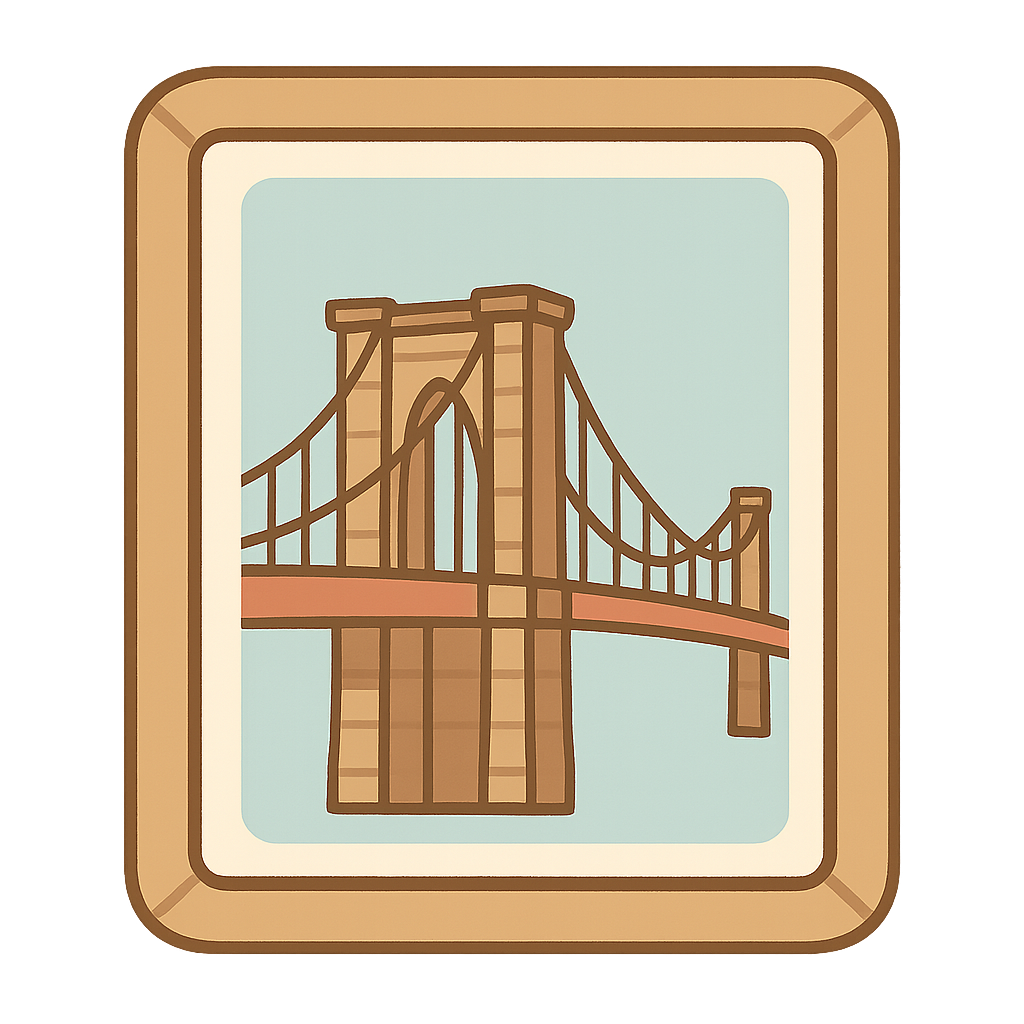
I feel the salty kiss of the wind from the East River every morning, a constant companion for over a century. Below me, the water churns, and above, the sky shifts from the soft pink of dawn to the deep blue of night. I feel the steady rumble of thousands of cars and the rhythmic footsteps of people walking my elevated promenade, all of them crossing from one world to another. On one side, I see the endless, electric energy of the Manhattan skyline; on the other, I watch over the proud, historic heart of Brooklyn. I am a web of steel wire and granite stone, stretching over a mile to connect two great cities that were once separated by a wide, swirling river. My creators dreamed of me as a pathway, a link between people and their dreams. They built me to last, to stand against time and tide. I am the Brooklyn Bridge.
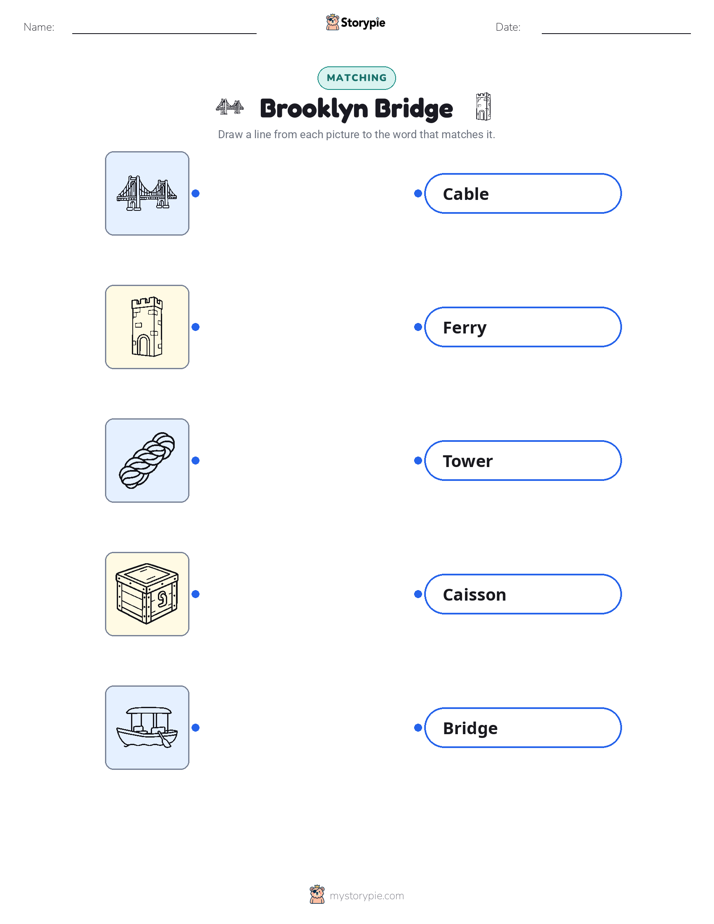
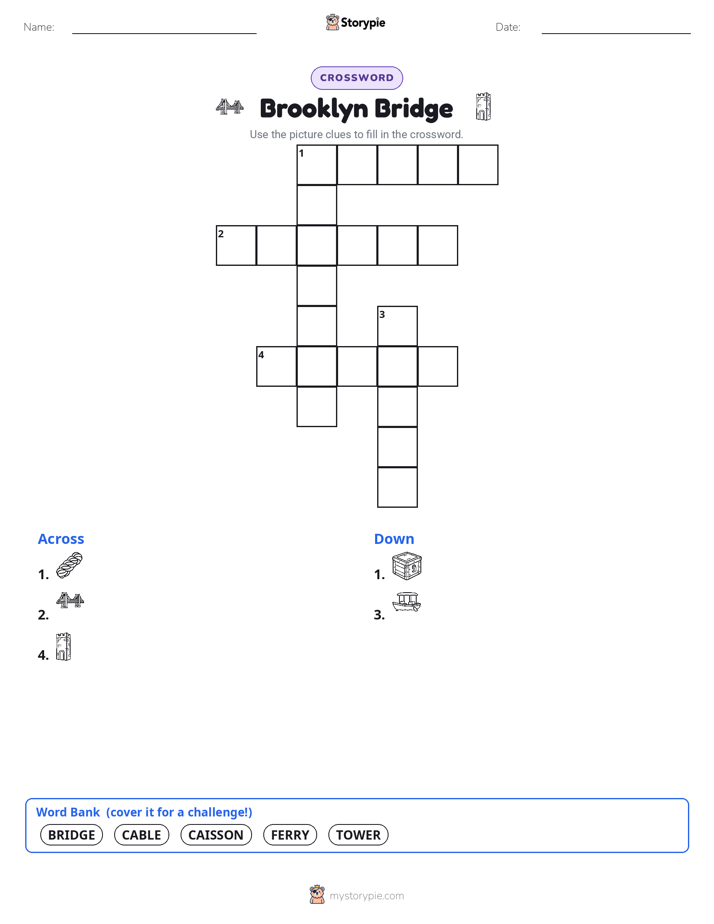
My story begins not with stone, but with a dream inside the mind of a brilliant engineer named John A. Roebling. In the 1860s, he looked at the busy East River, with its fleet of ferries struggling to carry people back and forth, and envisioned something revolutionary. He imagined a suspension bridge, longer and stronger than any the world had ever seen, held aloft by two magnificent stone towers and a revolutionary web of steel-wire cables. His design was a marvel of engineering and artistry, a promise of a connected future. But just as his dream was about to become a reality, tragedy struck. In the summer of 1869, while surveying the location for my Brooklyn tower, a ferry crushed his foot, and he died from a resulting infection. The city mourned, and it seemed my story had ended before it began. But his son, Washington Roebling, also a gifted engineer, vowed that his father’s vision would not die with him. He took up the monumental task, and on January 3rd, 1870, the first pieces of my foundation were laid.
The Story of the Brooklyn Bridge
I feel the salty kiss of the wind from the East River every morning, a constant companion for over a century. Below me, the water churns, and above, the sky shifts from the soft pink of dawn to the deep blue of night. I feel the steady rumble of thousands of cars and the rhythmic footsteps of people walking my elevated promenade, all of them crossing from one world to another. On one side, I see the endless, electric energy of the Manhattan skyline; on the other, I watch over the proud, historic heart of Brooklyn. I am a web of steel wire and granite stone, stretching over a mile to connect two great cities that were once separated by a wide, swirling river. My creators dreamed of me as a pathway, a link between people and their dreams. They built me to last, to stand against time and tide. I am the Brooklyn Bridge.
My story begins not with stone, but with a dream inside the mind of a brilliant engineer named John A. Roebling. In the 1860s, he looked at the busy East River, with its fleet of ferries struggling to carry people back and forth, and envisioned something revolutionary. He imagined a suspension bridge, longer and stronger than any the world had ever seen, held aloft by two magnificent stone towers and a revolutionary web of steel-wire cables. His design was a marvel of engineering and artistry, a promise of a connected future. But just as his dream was about to become a reality, tragedy struck. In the summer of 1869, while surveying the location for my Brooklyn tower, a ferry crushed his foot, and he died from a resulting infection. The city mourned, and it seemed my story had ended before it began. But his son, Washington Roebling, also a gifted engineer, vowed that his father’s vision would not die with him. He took up the monumental task, and on January 3rd, 1870, the first pieces of my foundation were laid.
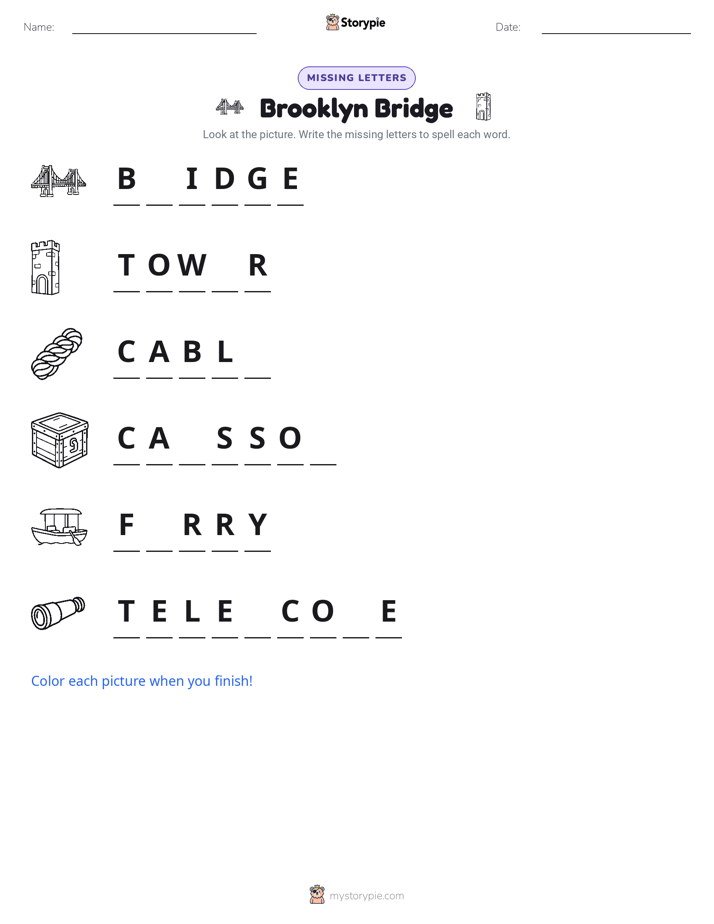
Rising from the riverbed was the most difficult and dangerous part of my birth. To build my massive tower foundations on the river floor, the workers had to dig inside enormous, airtight wooden boxes called caissons. These boxes were sunk deep into the mud and rock, and air was pumped in to keep the water out. The pressure inside was immense, and the men who worked there faced a mysterious and crippling illness they called “caisson disease,” which we now know as decompression sickness or “the bends.” It caused terrible pain and paralysis, and sadly, it afflicted my new chief engineer. Washington Roebling was struck down by the disease, left unable to walk or even speak clearly. Confined to his apartment in Brooklyn Heights, he could only watch my slow progress through a telescope. Once again, it seemed my journey was over. But then, a new hero emerged. Washington’s wife, Emily Warren Roebling, became his voice, his legs, and his brilliant partner. For over a decade, she became the project’s chief field engineer. She studied advanced mathematics, stress analysis, and cable construction, mastering every complex detail of my design. Every day, she would visit the construction site, delivering her husband’s instructions, answering questions from the foremen, and ensuring every stone and every wire was placed with perfect precision. Without her, I would never have been completed.
After thirteen long years of struggle and sacrifice, my day of triumph finally arrived. On May 24th, 1883, I was officially opened to the world. The cities of New York and Brooklyn declared it a holiday, and enormous crowds gathered to watch the celebration. There were speeches, parades, and a spectacular fireworks display that lit up the sky above my towers. The very first person to cross me in a carriage was Emily Warren Roebling. She carried a rooster with her as a symbol of victory, a quiet but powerful tribute to the woman whose intelligence and determination had guided me into existence. Even with the celebration, some people were still afraid I wasn't strong enough to hold the city's weight. So, in May of 1884, the famous showman P.T. Barnum came to my rescue. To prove my stability and promote his circus, he led a parade of twenty-one elephants, including the legendary Jumbo, across my wooden deck. As they made their steady, heavy journey from one side to the other, the city’s fears vanished. I had proven I was strong enough for anything.
For more than 140 years, I have stood here, a silent witness to history. I have felt the clip-clop of horse-drawn carriages give way to the hum of electric cars. I watched as the skyscrapers of Manhattan grew taller and taller, reaching for the clouds and dwarfing my own towers, yet I have never lost my place in the heart of this city. I am more than just a pathway of steel and stone; I am a monument to the Roebling family’s incredible legacy. I represent John’s brilliant vision, Washington’s unwavering sacrifice, and Emily’s unbreakable will. I continue to connect millions of people, not just between two boroughs, but between the past and the future. I inspire artists, poets, and dreamers who look at my soaring cables and believe that with enough ingenuity, courage, and heart, even the most impossible dreams can be built to last forever.
Wow facts
About
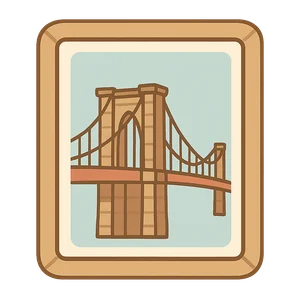
The Brooklyn Bridge is primarily a suspension bridge with features of cable-stayed design in New York City, connecting the boroughs of Manhattan and Brooklyn. Completed in 1883, it was a groundbreaking feat of 19th-century engineering and remains one of the world's most iconic landmarks.
Take a Quiz
Question 1 of 5
Which of the following best retells the main events of the Brooklyn Bridge's construction?
Explore next






Want to do even more?
Go beyond exploring. Unlock tools that turn every story into real learning.

Storypie Plus for families
Full stories, quizzes, and printables. Nights and car rides, sorted.
- Unlimited audio stories
- Create Mode: your child stars in the story
- Offline downloads
- Printable worksheets & coloring pages

Why Storypie for Schools
Students engaged. Prep in seconds. Evenings back to you.
- Worksheets & Quizzes
- Classroom Management
- Formative Assessment
- Custom Curriculum & Lesson Plans
- 27 Languages

Why Storypie for Homeschool
Curriculum done. They'll ask for more. Hours back in your day.
- Worksheet Generator
- First-Person Audio Stories
- Built-in Comprehension Quizzes
- Custom Curriculum & Lesson Plans
- Print & Go Activities