English

Brooklyn Bridge
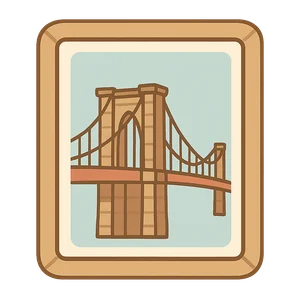
The Brooklyn Bridge is primarily a suspension bridge with features of cable-stayed design in New York City…
Reads at Grades 3–5 Listens at Grades 1–5
Print & create
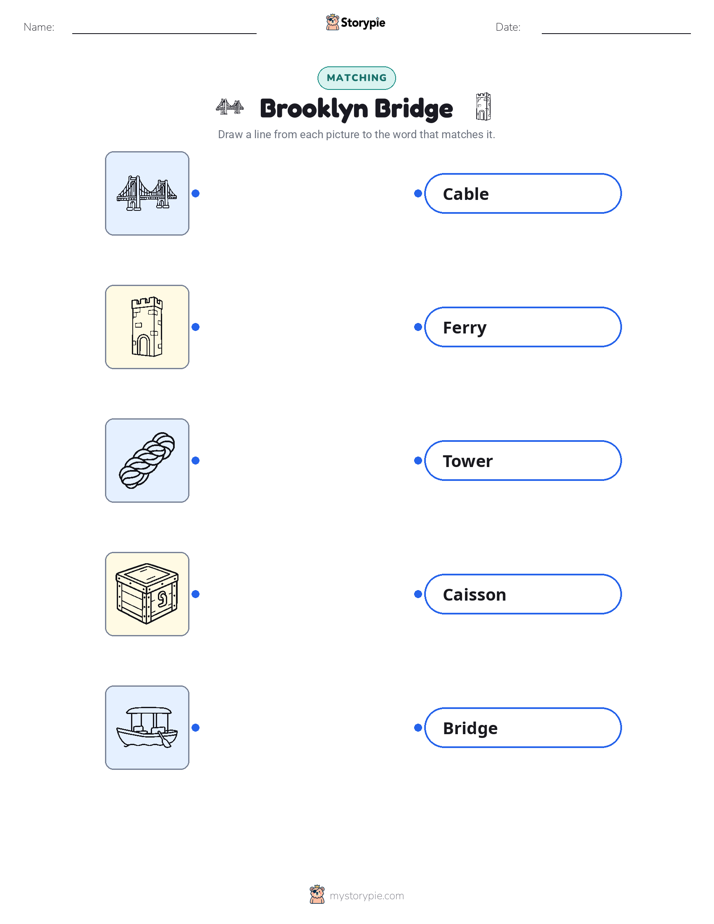
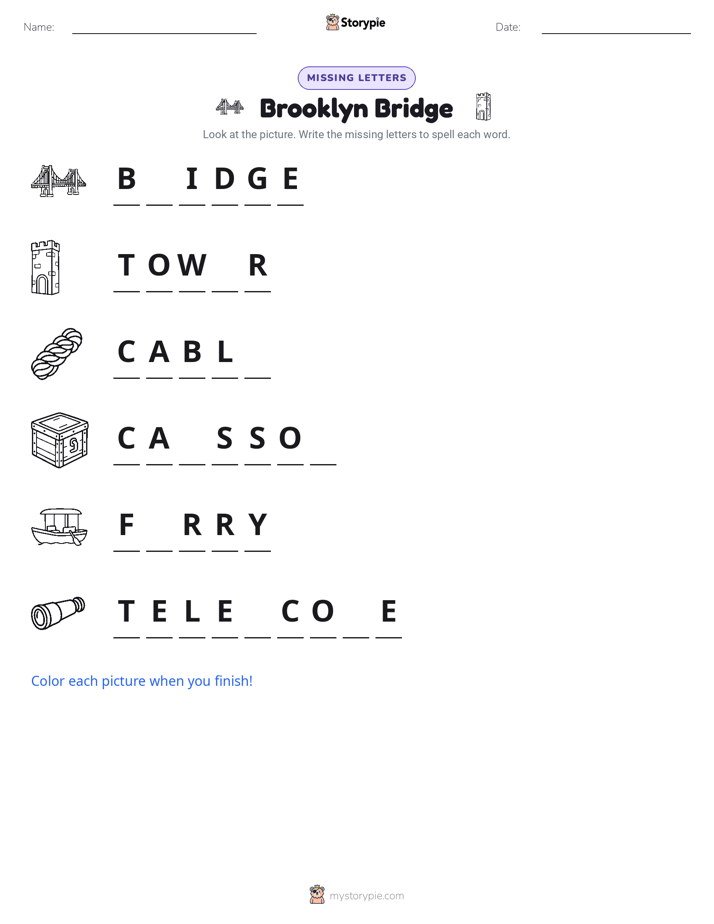
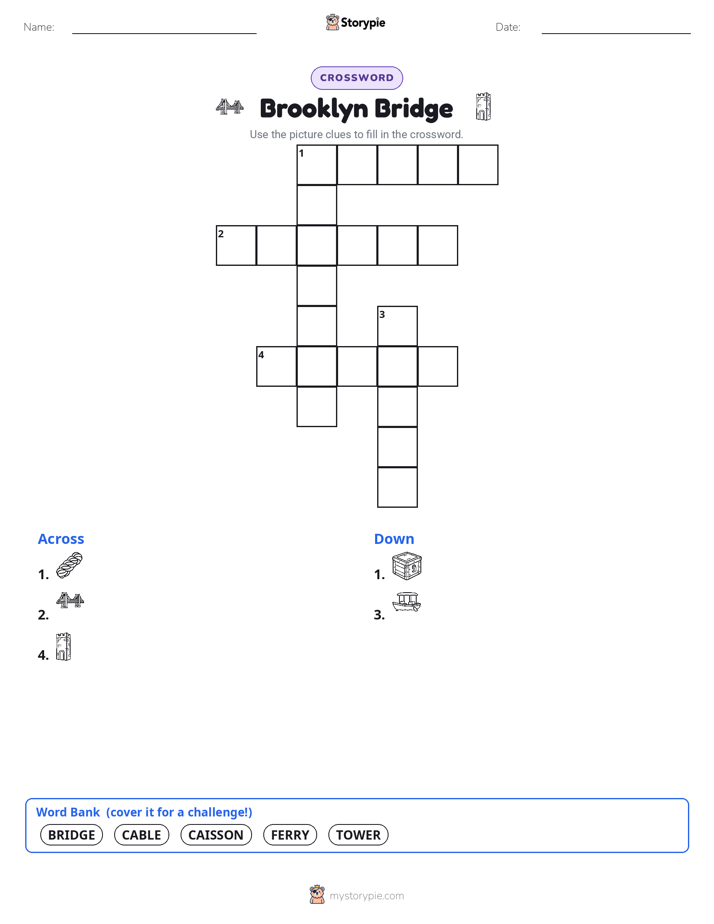
Answer keys·No prep·Free with an account
28 worksheets · answer keys · full story · quiz · Ages 8-10 · CEFR B1
Plus adds 102,000+ more stories in 27 languages, audio for every one, and printables for all of them.
Just want Brooklyn Bridge?
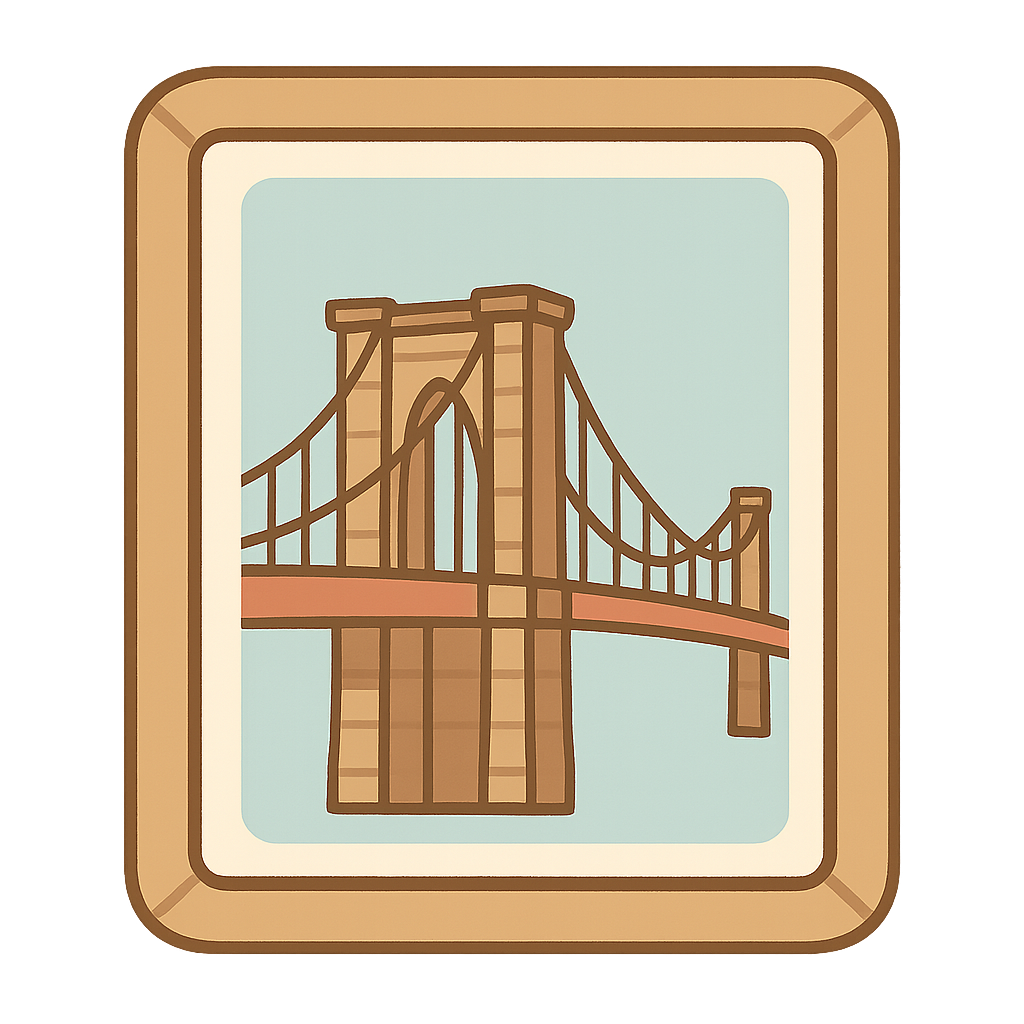
Even before I had a name, I could feel the city buzzing around me. Below, the busy waters of the East River churn and flow, carrying boats of all sizes on their way to the great sea. Above, the sun warms my two giant stone towers, and the wind hums a special song as it rushes through my web of steel cables. I feel the gentle rumble of footsteps as people walk across my wooden planks and the rattle of trains on their tracks. I am a pathway built in the sky, a giant harp for the wind to play. For over a hundred years, I have stretched from one shore to the other, a steady and strong connection for millions of people. Can you guess who I am. I am the Brooklyn Bridge.
My story begins with a dream inside the mind of a brilliant engineer named John A. Roebling. In the 1860s, he looked across the wide East River and imagined a magnificent bridge that would connect the two growing cities of Brooklyn and Manhattan. It was a bold, almost impossible idea. But his dream was so powerful that on January 3rd, 1869, the work began. Building me was one of the biggest challenges anyone had ever attempted. Can you imagine stacking stones taller than a skyscraper without modern machines. Workers had to go deep under the river in giant, airtight wooden boxes called caissons to dig the foundations for my towers. It was dangerous and difficult work. Sadly, just before construction started, John Roebling had an accident and died. His dream could have died with him, but his son, Washington Roebling, bravely took over. But then, he too fell terribly ill from working in the caissons and could no longer leave his room. That’s when a true hero emerged. His wife, Emily Warren Roebling, stepped up. For more than ten years, she became the project manager, carrying her husband’s instructions to the engineers and making sure every single piece of me was built perfectly. She was the one who made sure my strong steel cables, spun one thin wire at a time, were woven together to be unbreakable.
The Brooklyn Bridge: A Story of Steel and Stone
Even before I had a name, I could feel the city buzzing around me. Below, the busy waters of the East River churn and flow, carrying boats of all sizes on their way to the great sea. Above, the sun warms my two giant stone towers, and the wind hums a special song as it rushes through my web of steel cables. I feel the gentle rumble of footsteps as people walk across my wooden planks and the rattle of trains on their tracks. I am a pathway built in the sky, a giant harp for the wind to play. For over a hundred years, I have stretched from one shore to the other, a steady and strong connection for millions of people. Can you guess who I am. I am the Brooklyn Bridge.
My story begins with a dream inside the mind of a brilliant engineer named John A. Roebling. In the 1860s, he looked across the wide East River and imagined a magnificent bridge that would connect the two growing cities of Brooklyn and Manhattan. It was a bold, almost impossible idea. But his dream was so powerful that on January 3rd, 1869, the work began. Building me was one of the biggest challenges anyone had ever attempted. Can you imagine stacking stones taller than a skyscraper without modern machines. Workers had to go deep under the river in giant, airtight wooden boxes called caissons to dig the foundations for my towers. It was dangerous and difficult work. Sadly, just before construction started, John Roebling had an accident and died. His dream could have died with him, but his son, Washington Roebling, bravely took over. But then, he too fell terribly ill from working in the caissons and could no longer leave his room. That’s when a true hero emerged. His wife, Emily Warren Roebling, stepped up. For more than ten years, she became the project manager, carrying her husband’s instructions to the engineers and making sure every single piece of me was built perfectly. She was the one who made sure my strong steel cables, spun one thin wire at a time, were woven together to be unbreakable.
After fourteen long and difficult years, I was finally complete. My opening day, May 24th, 1883, was a day of incredible celebration. The sun shone brightly on my new cables, and thousands of people gathered on both sides of the river, cheering and waving flags. Schools and businesses closed so everyone could be part of the historic moment. And who do you think was the very first person to ride across me in a carriage. It was Emily Warren Roebling. She held a rooster in her lap, which was a symbol of victory and good luck. I was the longest suspension bridge in the entire world, a true wonder of engineering. Some people were still a little nervous about my strength, though. So, a year later, in 1884, the famous showman P.T. Barnum had an idea. He led a parade of 21 of his largest elephants, including the famous Jumbo, right across my deck. As the massive animals calmly walked from one side to the other, everyone knew for sure that I was as strong and safe as could be.
For more than a century, I have stood here, connecting the heart of Brooklyn to the island of Manhattan. I have watched New York City grow into the amazing metropolis it is today. I’ve seen the world change from the slow clip-clop of horse-drawn carriages to the whir of electric cars. I am more than just stone and steel; I am a landmark and a symbol of strength, determination, and connection. Artists paint me, poets write about me, and every day, people walk across my planks just to see the beautiful view. I am proof that with a big dream, hard work, and the courage to never give up, humans can build incredible things that bring us all closer together.
Wow facts
About
The Brooklyn Bridge is primarily a suspension bridge with features of cable-stayed design in New York City, connecting the boroughs of Manhattan and Brooklyn. Completed in 1883, it was a groundbreaking feat of 19th-century engineering and remains one of the world's most iconic landmarks.
Take a Quiz
Question 1 of 5
The story says the bridge's cables were spun 'like a giant spiderweb.' What does this comparison tell you about the cables?
Explore next






Want to do even more?
Go beyond exploring. Unlock tools that turn every story into real learning.

Storypie Plus for families
Full stories, quizzes, and printables. Nights and car rides, sorted.
- Unlimited audio stories
- Create Mode: your child stars in the story
- Offline downloads
- Printable worksheets & coloring pages

Why Storypie for Schools
Students engaged. Prep in seconds. Evenings back to you.
- Worksheets & Quizzes
- Classroom Management
- Formative Assessment
- Custom Curriculum & Lesson Plans
- 27 Languages

Why Storypie for Homeschool
Curriculum done. They'll ask for more. Hours back in your day.
- Worksheet Generator
- First-Person Audio Stories
- Built-in Comprehension Quizzes
- Custom Curriculum & Lesson Plans
- Print & Go Activities