English

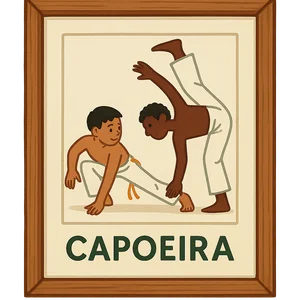
Capoeira
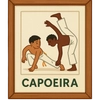
Capoeira is an Afro-Brazilian martial art that combines elements of dance, acrobatics, and music.
Reads at Grades 3–5 Listens at Grades 1–5
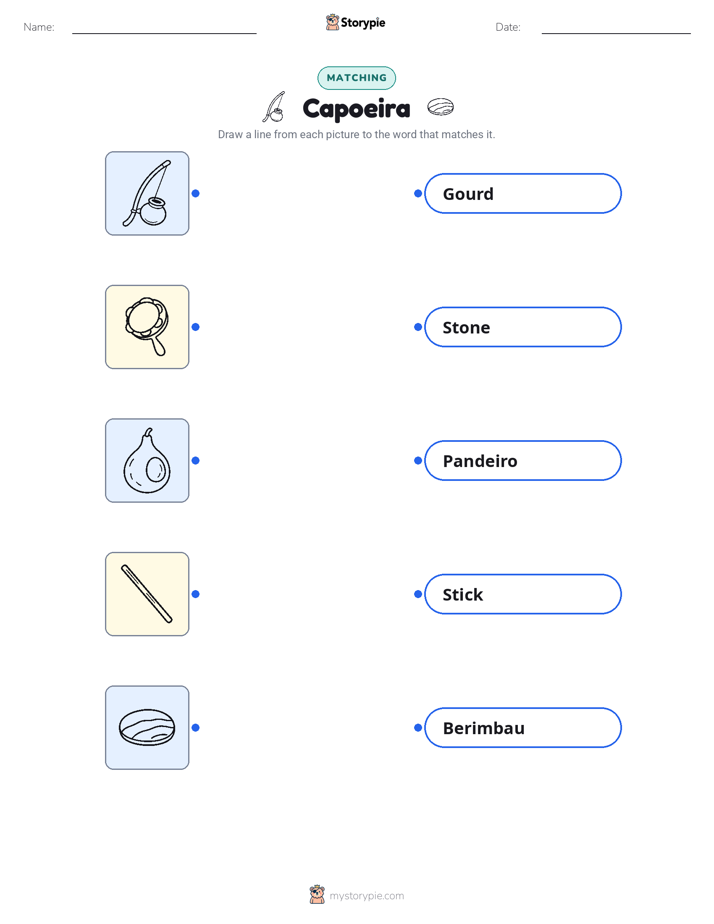
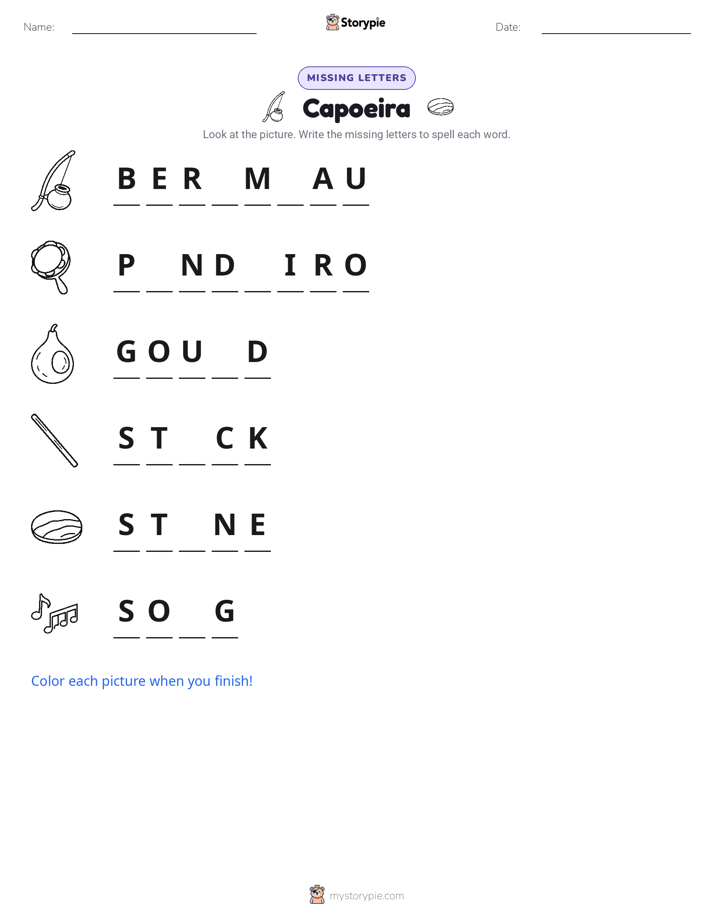
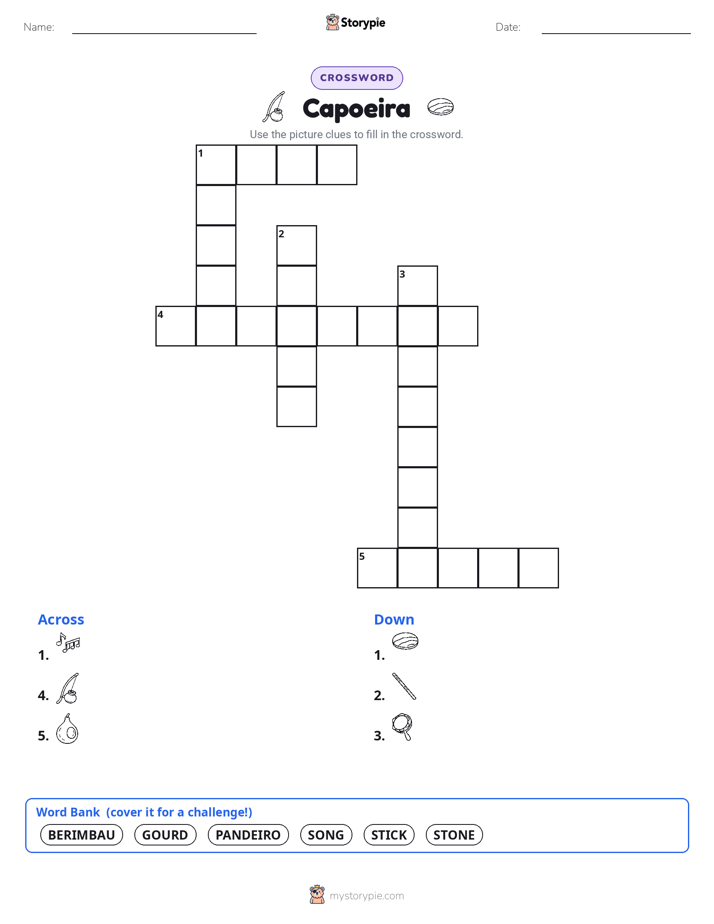
Print & create
Answer keys·No prep·Free with an account
28 worksheets · answer keys · full story · quiz · Ages 8-10 · CEFR B1
Plus adds 164,000+ more stories in 27 languages, audio for every one, and printables for all of them.
Just want Capoeira?
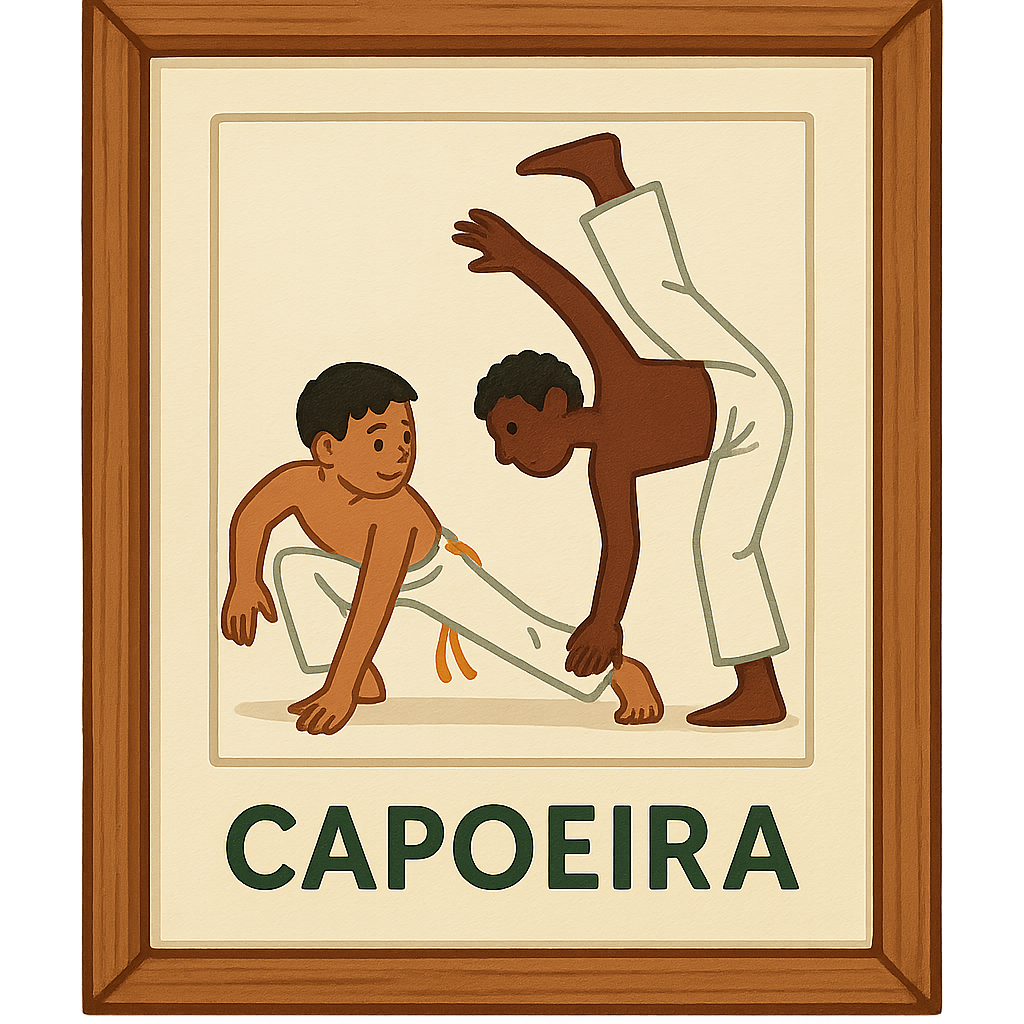
Listen. Can you hear it? It’s the deep, twanging sound of a single string on a bowed instrument, the berimbau. It calls to you. Now, hear the rhythmic clapping of hands, creating a circle of energy. Inside that circle, bodies are in constant motion. They spin like tops, cartwheel like falling stars, and duck and weave in a flowing conversation. It looks like a playful dance and feels like a clever game, but hidden within its graceful moves is a secret power, a history of strength. I am not just a dance, and I am not just a fight. I am a conversation written in motion, a story told with kicks and escapes. I am Capoeira.
My story begins a long, long time ago, back in the 16th century, in the beautiful and vast land of Brazil. But my birth was during a time of great sadness and hardship. People were taken from their homes across Africa and brought to Brazil as enslaved workers. They were forced to work on huge farms, called plantations, and were forbidden from practicing their own traditions, especially anything that looked like fighting. Can you imagine needing to defend yourself but not being allowed to practice? They were clever. They disguised their powerful kicks, sweeping leg movements, and quick escapes with the joy of music and dance. I became their secret, a way to train their bodies and spirits, a way to keep their culture alive and hold on to hope. I was born from their resilience in the 1500s, a beautiful secret of survival.
A truly wonderful day arrived on May 13th, 1888, when the law was passed to abolish slavery in Brazil. The people who practiced me were finally free. You would think this would be a time for me to be celebrated out in the open, wouldn't you? But it was more complicated than that. Many people in power were afraid of me. They saw my powerful movements not as culture or a game, but as something dangerous used by criminals. So, in the year 1890, the government made it illegal to practice me. My followers, the brave capoeiristas, had to go back into hiding. They would practice on quiet streets, always watching for the police. If they were caught, they could be sent to jail. This was a difficult time, but it made those who loved me even more determined to keep me alive. I became a precious secret once again.
I Am Capoeira: A Story of Resilience and Rhythm
Listen. Can you hear it? It’s the deep, twanging sound of a single string on a bowed instrument, the berimbau. It calls to you. Now, hear the rhythmic clapping of hands, creating a circle of energy. Inside that circle, bodies are in constant motion. They spin like tops, cartwheel like falling stars, and duck and weave in a flowing conversation. It looks like a playful dance and feels like a clever game, but hidden within its graceful moves is a secret power, a history of strength. I am not just a dance, and I am not just a fight. I am a conversation written in motion, a story told with kicks and escapes. I am Capoeira.
My story begins a long, long time ago, back in the 16th century, in the beautiful and vast land of Brazil. But my birth was during a time of great sadness and hardship. People were taken from their homes across Africa and brought to Brazil as enslaved workers. They were forced to work on huge farms, called plantations, and were forbidden from practicing their own traditions, especially anything that looked like fighting. Can you imagine needing to defend yourself but not being allowed to practice? They were clever. They disguised their powerful kicks, sweeping leg movements, and quick escapes with the joy of music and dance. I became their secret, a way to train their bodies and spirits, a way to keep their culture alive and hold on to hope. I was born from their resilience in the 1500s, a beautiful secret of survival.
A truly wonderful day arrived on May 13th, 1888, when the law was passed to abolish slavery in Brazil. The people who practiced me were finally free. You would think this would be a time for me to be celebrated out in the open, wouldn't you? But it was more complicated than that. Many people in power were afraid of me. They saw my powerful movements not as culture or a game, but as something dangerous used by criminals. So, in the year 1890, the government made it illegal to practice me. My followers, the brave capoeiristas, had to go back into hiding. They would practice on quiet streets, always watching for the police. If they were caught, they could be sent to jail. This was a difficult time, but it made those who loved me even more determined to keep me alive. I became a precious secret once again.
For many years, I had to live in the shadows. But then, two incredible men, two great masters, helped bring me into the light for all to see. In the 1930s, a man named Mestre Bimba saw my potential to be more than just a hidden practice. He created a new, faster style called Capoeira Regional. He wanted to show everyone that I was a true martial art and an important part of Brazilian culture. In 1932, he opened the very first official academy to teach me. Around the same time, another master named Mestre Pastinha worked hard to protect my traditional roots, a style called Capoeira Angola. He wanted to make sure my history and music were never forgotten. Because of the hard work of these two masters, the government finally saw my value. The ban was lifted in 1937, and I was finally free to be shared with the world.
So, what do I look like today, now that I am free? Imagine a circle of people, the ‘roda,’ clapping and singing together. This circle is my home. Inside, musicians play the berimbau, tambourines, and drums, creating an electrifying energy. The songs they sing are often call-and-response, where one person sings a line and everyone else sings it back. Then, two capoeiristas enter the circle. They don't fight; they play. They have a physical conversation, using their bodies to ask questions and give answers. One will launch a graceful, spinning kick, and the other will flow underneath it in a clever escape. The goal is to outsmart your partner, not to hurt them. This beautiful tradition became so important that on November 26th, 2014, I was officially recognized by UNESCO as a priceless cultural treasure for the entire world to protect and celebrate.
I began as a secret whispered through dance, a tool for survival for people who dreamed of freedom. Now, I am shared openly across the globe, from Brazil to Japan, from Europe to the United States. I teach people about history, rhythm, and the amazing human ability to turn struggle into something beautiful and powerful. When you see my spinning kicks, my acrobatic escapes, and my joyful energy inside the roda, you are not just watching a game. You are seeing a living story of resilience, creativity, and liberty. I connect people and continue to inspire them to be strong in body and spirit.
Wow facts
About
Capoeira is an Afro-Brazilian martial art that combines elements of dance, acrobatics, and music. It was developed by enslaved Africans in Brazil, with the term 'Capoeiragem' first documented in 1789 as a means of self-defense disguised as a dance.
Take a Quiz
Question 1 of 5
In the story, Capoeira says it was 'born from their resilience.' What does the word 'resilience' mean here?
Explore next




Want to do even more?
Go beyond exploring. Unlock tools that turn every story into real learning.

Storypie Plus for families
Full stories, quizzes, and printables. Nights and car rides, sorted.
- Unlimited audio stories
- Create Mode: your child stars in the story
- Offline downloads
- Printable worksheets & coloring pages

Why Storypie for Schools
Students engaged. Prep in seconds. Evenings back to you.
- Worksheets & Quizzes
- Classroom Management
- Formative Assessment
- Custom Curriculum & Lesson Plans
- 27 Languages

Why Storypie for Homeschool
Curriculum done. They'll ask for more. Hours back in your day.
- Worksheet Generator
- First-Person Audio Stories
- Built-in Comprehension Quizzes
- Custom Curriculum & Lesson Plans
- Print & Go Activities