English

Declaration of the Rights of Man and of the Citizen
A foundational document of the French Revolution, adopted in 1789…
Reads at Grades 6–8 Listens at Grades 4–8
Print & create
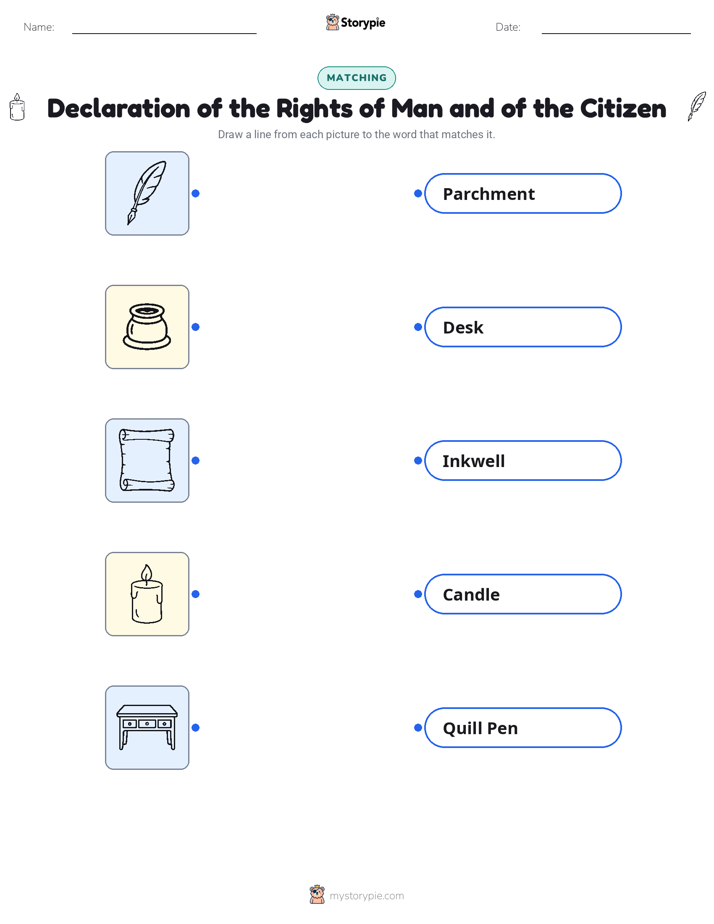
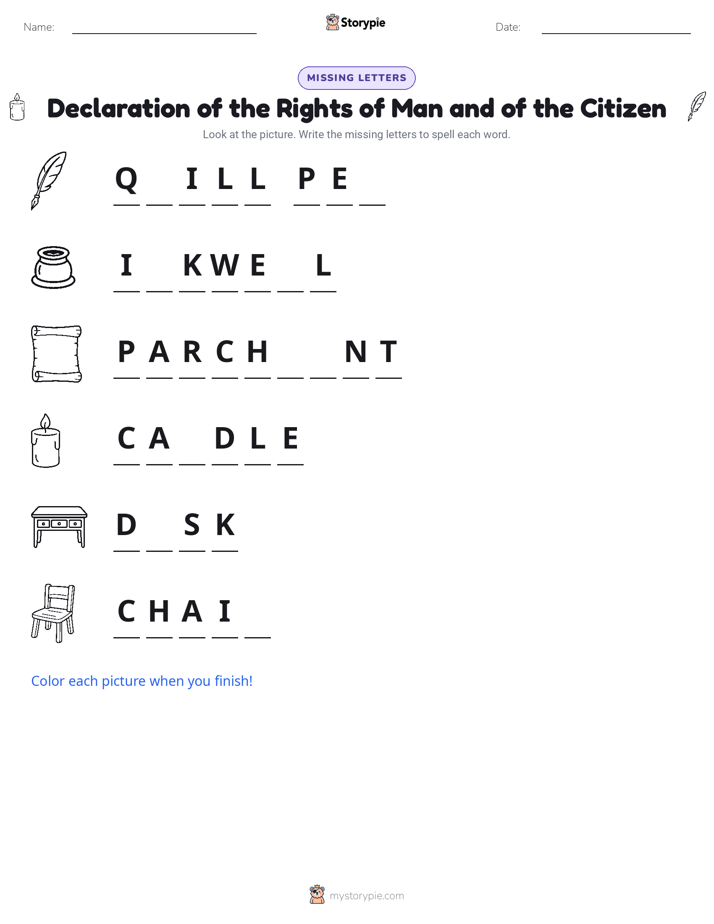
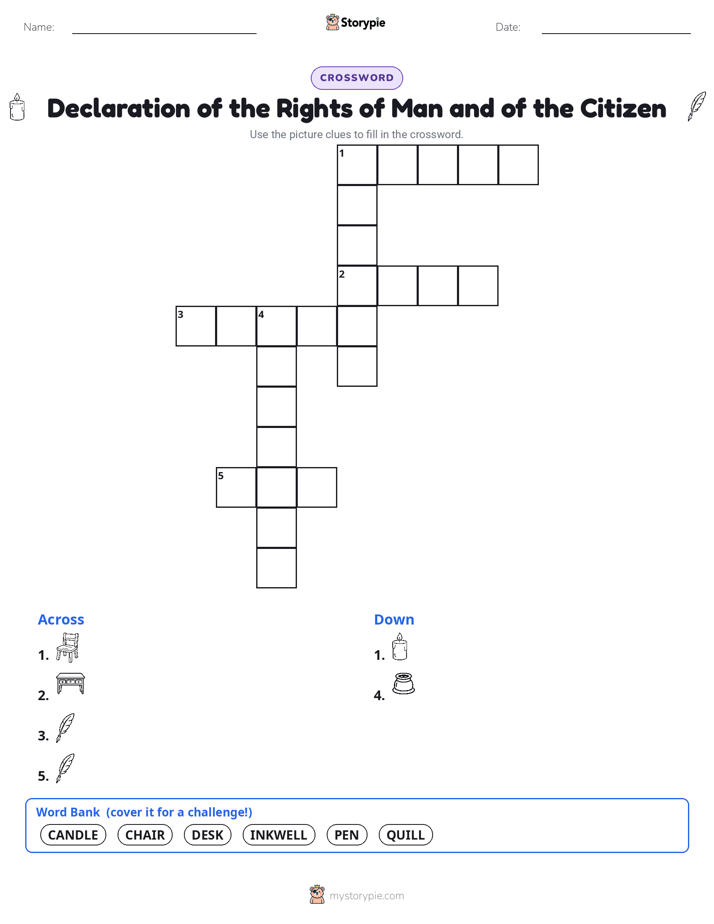
Answer keys·No prep·Free with an account
28 worksheets · answer keys · full story · quiz · Ages 10-12 · CEFR B2
Plus adds 244,000+ more stories in 27 languages, audio for every one, and printables for all of them.
Just want Declaration of the Rights of Man and of the Citizen?
A Whisper of a New World
Imagine the summer of 1789 in France. The air in Paris crackles with a strange, powerful energy, a mix of simmering frustration and electrifying hope. For centuries, the people had lived under the rule of kings who believed their power came directly from God. Society was divided into rigid classes, and most people had no voice in the laws that governed their lives. But ideas, once planted, can grow into mighty forests. Philosophers of an era called the Enlightenment had been writing for decades about reason, liberty, and the rights of every individual. Their words crossed borders and found fertile ground in the minds of ordinary people who were tired of injustice and inequality. I was not yet ink on paper, but I was there. I was the idea buzzing in crowded cafes, the argument debated on cobblestone streets, and the dream whispered in homes by people who yearned for fairness. I was the feeling that every person, no matter their birth, possesses an inherent dignity. I was the promise of a world turned right-side up, a murmur of freedom that was about to become a roar that would shake the foundations of a kingdom.
I Am Given a Voice
My transformation from a feeling into a formal text happened within the opulent walls of the Palace of Versailles, a place that symbolized the very power being challenged. In a grand hall, a group of determined men calling themselves the National Assembly gathered to give me a voice. They knew that for their revolution to have meaning, it needed a foundation of principles. From August 20th to August 26th, 1789, they debated, drafted, and revised, carefully choosing each word to capture the spirit of the age. A key figure among them was the Marquis de Lafayette. He had fought alongside the Americans in their revolution and was deeply inspired by their Declaration of Independence. He helped guide the creation of a French version, a document that would speak for his people. These men drew from the wells of Enlightenment thought, channeling the ideas of thinkers who argued that governments should serve the people, not the other way around. After days of intense work, they agreed on seventeen articles, seventeen powerful statements of principle. On August 26th, 1789, they formally adopted the text, and I was born. I am the Declaration of the Rights of Man and of the Citizen.
The Declaration's Echo
A Whisper of a New World
Imagine the summer of 1789 in France. The air in Paris crackles with a strange, powerful energy, a mix of simmering frustration and electrifying hope. For centuries, the people had lived under the rule of kings who believed their power came directly from God. Society was divided into rigid classes, and most people had no voice in the laws that governed their lives. But ideas, once planted, can grow into mighty forests. Philosophers of an era called the Enlightenment had been writing for decades about reason, liberty, and the rights of every individual. Their words crossed borders and found fertile ground in the minds of ordinary people who were tired of injustice and inequality. I was not yet ink on paper, but I was there. I was the idea buzzing in crowded cafes, the argument debated on cobblestone streets, and the dream whispered in homes by people who yearned for fairness. I was the feeling that every person, no matter their birth, possesses an inherent dignity. I was the promise of a world turned right-side up, a murmur of freedom that was about to become a roar that would shake the foundations of a kingdom.
I Am Given a Voice
My transformation from a feeling into a formal text happened within the opulent walls of the Palace of Versailles, a place that symbolized the very power being challenged. In a grand hall, a group of determined men calling themselves the National Assembly gathered to give me a voice. They knew that for their revolution to have meaning, it needed a foundation of principles. From August 20th to August 26th, 1789, they debated, drafted, and revised, carefully choosing each word to capture the spirit of the age. A key figure among them was the Marquis de Lafayette. He had fought alongside the Americans in their revolution and was deeply inspired by their Declaration of Independence. He helped guide the creation of a French version, a document that would speak for his people. These men drew from the wells of Enlightenment thought, channeling the ideas of thinkers who argued that governments should serve the people, not the other way around. After days of intense work, they agreed on seventeen articles, seventeen powerful statements of principle. On August 26th, 1789, they formally adopted the text, and I was born. I am the Declaration of the Rights of Man and of the Citizen.
A Beacon for the Ages
My words were simple but revolutionary. I declared that “men are born and remain free and equal in rights.” I spoke of liberty, property, security, and the right to resist oppression. I insisted that law should be an expression of the general will, that all citizens have a right to participate in its formation, and that no one could be arrested without just cause. I protected the freedom to speak, write, and publish your thoughts. When I was printed and posted on walls across France, I was a key unlocking centuries of silence. I gave people the language to demand their freedom. The years that followed were turbulent and complex for France, a time of great upheaval and change. Yet, even through the storm, my ideas could not be erased. I became a model for freedom-seekers everywhere. My words traveled across borders and oceans, inspiring people in other nations to demand their own rights and create their own constitutions. My voice echoed over 150 years later when the world, recovering from devastating wars, came together to form the United Nations. In 1948, leaders and thinkers, including Eleanor Roosevelt from the United States, helped draft the Universal Declaration of Human Rights, and many of my core principles were woven into its fabric, this time for every human being on the planet.
An Idea That Never Fades
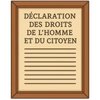
Today, I am a historical document, preserved carefully in the French National Archives. You might see me as just old ink on parchment. But my spirit is not confined to a museum. It is alive and active in the world. I live in the constitutions of democratic nations, in the passionate speeches of activists fighting for justice, and in every classroom where students learn about fairness and civic responsibility. I am a timeless reminder that the most powerful forces in human history are not armies or crowns, but ideas. The idea that all people have rights is one that continues to light up the world, connecting us across time and distance in our shared hope for a better, more just future for everyone.
Wow facts
About
A foundational document of the French Revolution, adopted in 1789, that defines the individual and collective rights of all men as universal, influencing human rights law worldwide.
Take a Quiz
Question 1 of 5
Why does the narrator use the metaphor 'a key unlocking a door' to describe its effect on the French people?
Explore next




Want to do even more?
Go beyond exploring. Unlock tools that turn every story into real learning.

Storypie Plus for families
Full stories, quizzes, and printables. Nights and car rides, sorted.
- Unlimited audio stories
- Create Mode: your child stars in the story
- Offline downloads
- Printable worksheets & coloring pages

Why Storypie for Schools
Students engaged. Prep in seconds. Evenings back to you.
- Worksheets & Quizzes
- Classroom Management
- Formative Assessment
- Custom Curriculum & Lesson Plans
- 27 Languages

Why Storypie for Homeschool
Curriculum done. They'll ask for more. Hours back in your day.
- Worksheet Generator
- First-Person Audio Stories
- Built-in Comprehension Quizzes
- Custom Curriculum & Lesson Plans
- Print & Go Activities