English

Declaration of the Rights of Man and of the Citizen
A foundational document of the French Revolution, adopted in 1789…
Reads at Grades 3–5 Listens at Grades 1–5
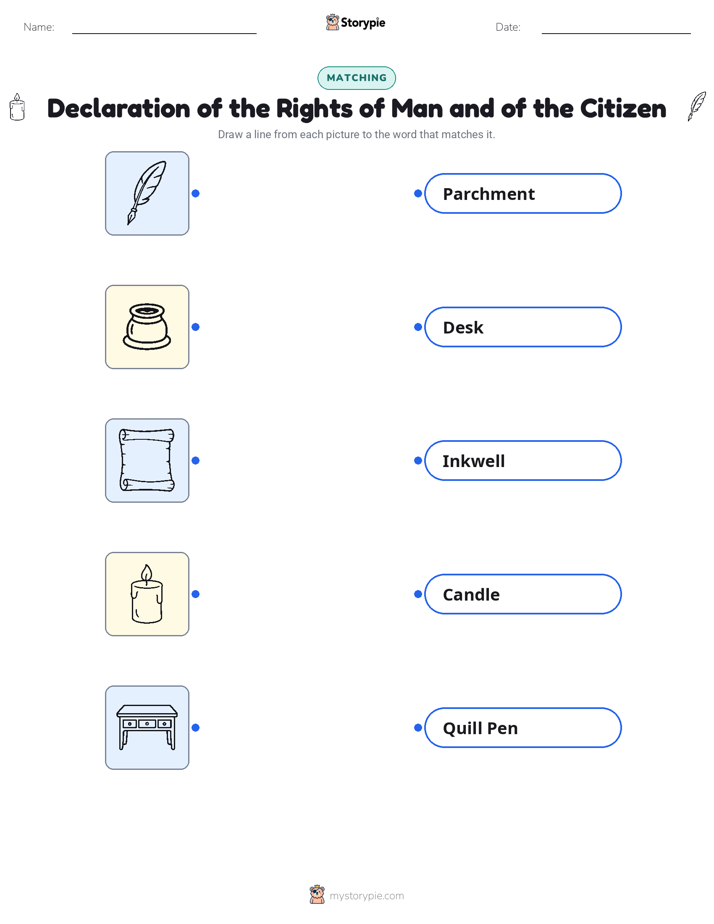
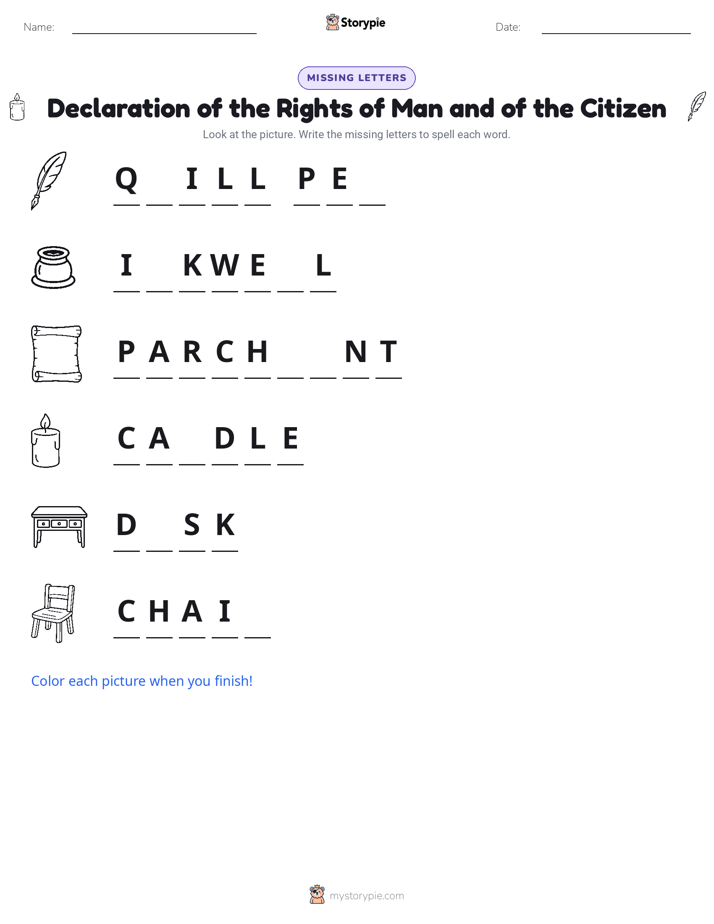
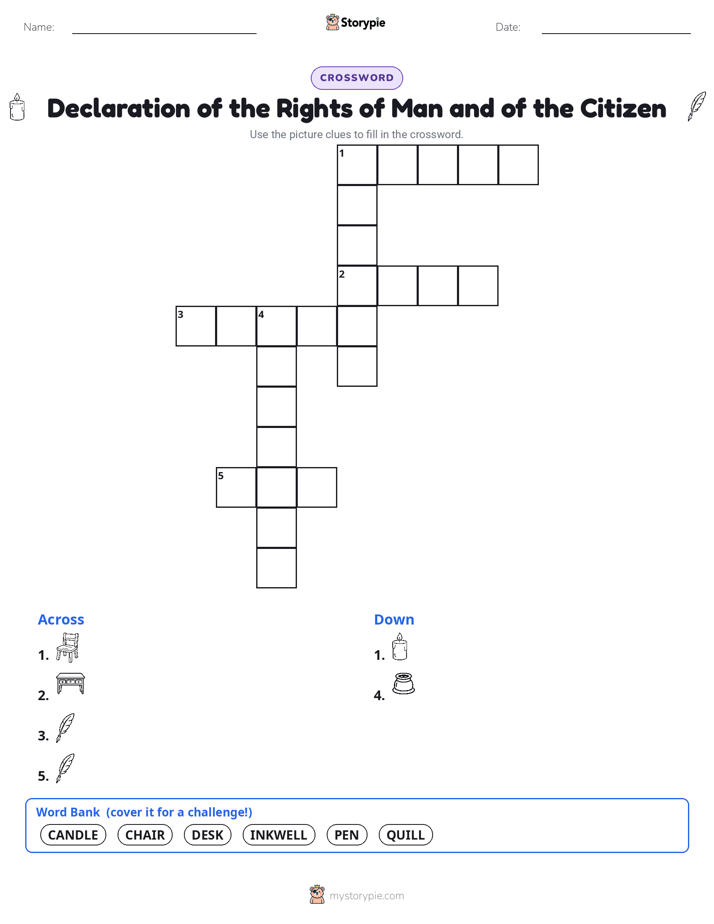
Print & create
Answer keys·No prep·Free with an account
28 worksheets · answer keys · full story · quiz · Ages 8-10 · CEFR B1
Plus adds 244,000+ more stories in 27 languages, audio for every one, and printables for all of them.
Just want Declaration of the Rights of Man and of the Citizen?
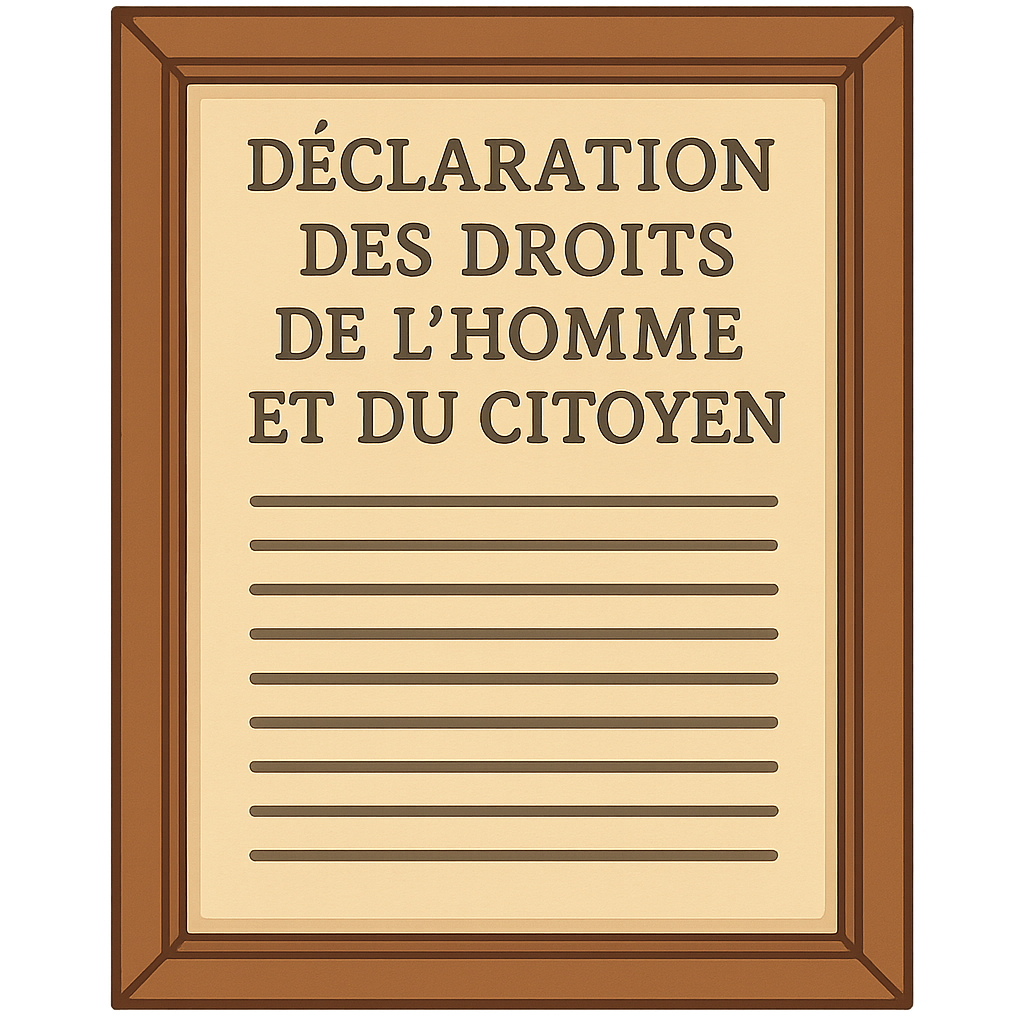
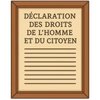
Can you imagine a city buzzing like a beehive, not with bees, but with ideas. That was Paris, France, in the year 1789. The air crackled with excitement and the clatter of horse-drawn carriages on cobblestone streets mixed with the loud voices of people dreaming of change. For centuries, kings and queens had made all the rules, but now, people were beginning to ask big questions. They wondered if everyone, not just the rich and powerful, deserved to be treated fairly. I was born in the middle of this noisy, hopeful, and confusing time. I am not a tall stone building or a beautiful painting you can hang on a wall. I am made of ink and parchment, but my real strength comes from the words I carry. I am the Declaration of the Rights of Man and of the Citizen, a promise of freedom, fairness, and respect for everyone.
My creation wasn't simple. It took many brilliant minds and heated debates. During the hot summer of 1789, a group of leaders called the National Constituent Assembly gathered together in a grand hall. Their mission was to write down a new set of rules for their country. Can you imagine trying to get a whole room of people to agree on the most important ideas for an entire nation. They argued, they wrote, and they rewrote my sentences again and again, wanting each word to be perfect. A famous nobleman, the Marquis de Lafayette, who had just returned from helping America with its own revolution, was the first to present a draft of what I should say. He believed deeply that all people had certain rights that no government should ever take away. Between August 20th and August 26th, 1789, the assembly worked tirelessly. They finally agreed on my seventeen articles, which are like special rules for liberty. I was born from their powerful hope for a fairer world, a world where the government had to follow rules, just like its citizens.
The Declaration of the Rights of Man and of the Citizen
Can you imagine a city buzzing like a beehive, not with bees, but with ideas. That was Paris, France, in the year 1789. The air crackled with excitement and the clatter of horse-drawn carriages on cobblestone streets mixed with the loud voices of people dreaming of change. For centuries, kings and queens had made all the rules, but now, people were beginning to ask big questions. They wondered if everyone, not just the rich and powerful, deserved to be treated fairly. I was born in the middle of this noisy, hopeful, and confusing time. I am not a tall stone building or a beautiful painting you can hang on a wall. I am made of ink and parchment, but my real strength comes from the words I carry. I am the Declaration of the Rights of Man and of the Citizen, a promise of freedom, fairness, and respect for everyone.
My creation wasn't simple. It took many brilliant minds and heated debates. During the hot summer of 1789, a group of leaders called the National Constituent Assembly gathered together in a grand hall. Their mission was to write down a new set of rules for their country. Can you imagine trying to get a whole room of people to agree on the most important ideas for an entire nation. They argued, they wrote, and they rewrote my sentences again and again, wanting each word to be perfect. A famous nobleman, the Marquis de Lafayette, who had just returned from helping America with its own revolution, was the first to present a draft of what I should say. He believed deeply that all people had certain rights that no government should ever take away. Between August 20th and August 26th, 1789, the assembly worked tirelessly. They finally agreed on my seventeen articles, which are like special rules for liberty. I was born from their powerful hope for a fairer world, a world where the government had to follow rules, just like its citizens.
Once my final words were written, I didn't stay locked away in a fancy room. I was printed on thousands of pieces of paper and sent all across France. My pages were posted on walls in villages and read aloud in busy cafes and town squares where people gathered. For many, it was the first time they had ever heard such amazing ideas spoken out loud. Imagine hearing the words, 'men are born and remain free and equal in rights.' This simple sentence was revolutionary. It meant that a farmer had the same basic rights as a prince. I became a shield for ordinary people, protecting them from unfair treatment, and I was a rulebook for the government, telling them what they could and could not do. But my journey was just beginning. My ideas were like seeds that traveled on the wind. They crossed oceans on ships and were shared in letters, inspiring people in other countries from Haiti to Poland to stand up and demand their own rights. I became a model for freedom around the globe.
Even though I am more than two hundred years old, I am not just a dusty old document. My voice is not a whisper from the past; I am a living idea. The promises I hold within my seventeen articles have continued to inspire people for generations. My words helped lay the foundation for many other important promises, including the Universal Declaration of Human Rights, which was created in 1948 to protect people all over the world. I hang in museums now, a reminder for everyone that fairness, liberty, and respect are not just old-fashioned words. They are precious treasures that we must protect and practice every single day. I show the world that a few powerful words, carefully chosen and written on paper, truly can change the world for the better and give everyone a chance to live a free and happy life.
Wow facts
About
A foundational document of the French Revolution, adopted in 1789, that defines the individual and collective rights of all men as universal, influencing human rights law worldwide.
Take a Quiz
Question 1 of 5
According to the story, who presented the first draft of ideas for the Declaration?
Explore next



Want to do even more?
Go beyond exploring. Unlock tools that turn every story into real learning.

Storypie Plus for families
Full stories, quizzes, and printables. Nights and car rides, sorted.
- Unlimited audio stories
- Create Mode: your child stars in the story
- Offline downloads
- Printable worksheets & coloring pages

Why Storypie for Schools
Students engaged. Prep in seconds. Evenings back to you.
- Worksheets & Quizzes
- Classroom Management
- Formative Assessment
- Custom Curriculum & Lesson Plans
- 27 Languages

Why Storypie for Homeschool
Curriculum done. They'll ask for more. Hours back in your day.
- Worksheet Generator
- First-Person Audio Stories
- Built-in Comprehension Quizzes
- Custom Curriculum & Lesson Plans
- Print & Go Activities