English

Emancipation Proclamation
A presidential proclamation and executive order issued by United States President Abraham Lincoln during the…
Reads at Grades 6–8 Listens at Grades 4–8
Print & create
Answer keys·No prep·Free with an account
28 worksheets · answer keys · full story · quiz · Ages 10-12 · CEFR B2
Plus adds 102,000+ more stories in 27 languages, audio for every one, and printables for all of them.
Just want Emancipation Proclamation?
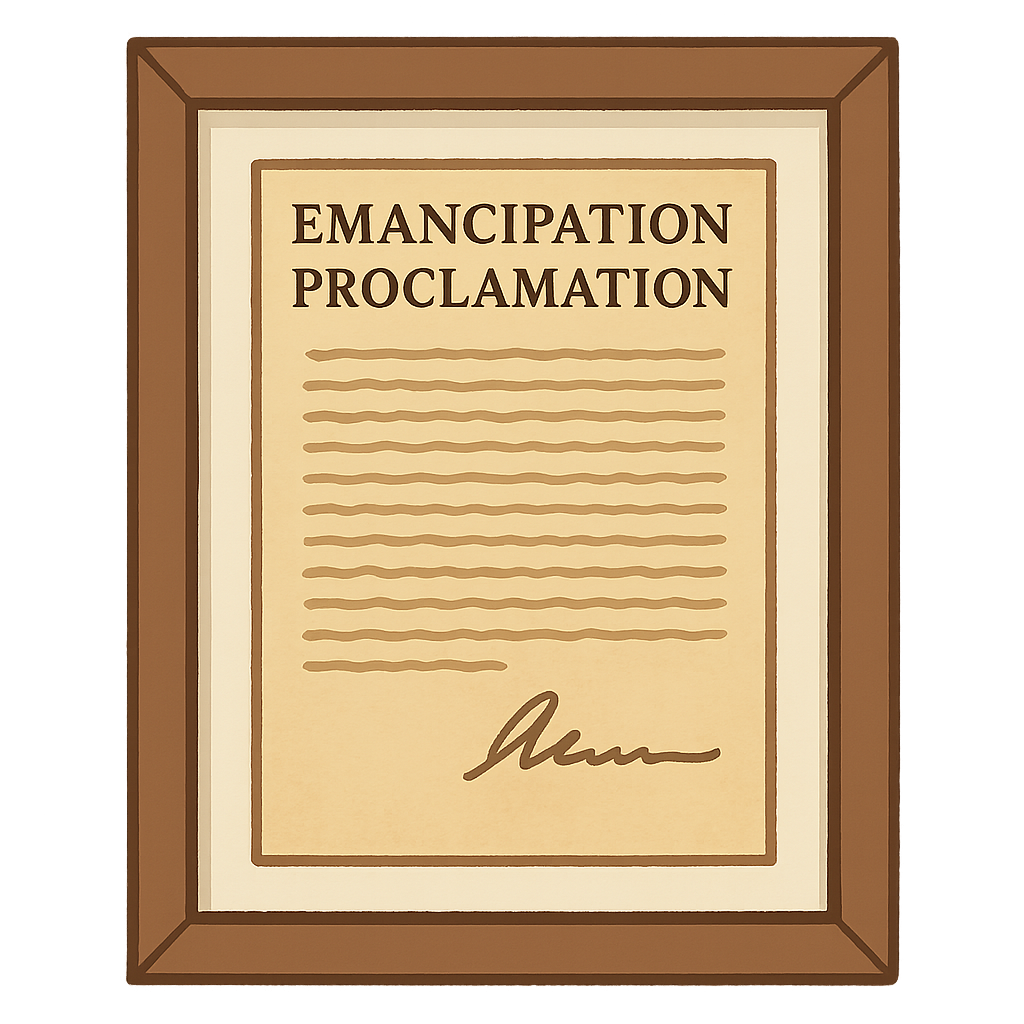
Before I was a document, I was an idea, a powerful whisper in a time of great noise and conflict. Imagine the feeling of being written—the scratch of a steel-nib pen, the dark weight of the ink soaking into thick paper, and the gravity of the words being formed one by one. I was born in a nation torn apart by a terrible war, the American Civil War, which had begun in 1861. I wasn't just words; I was a promise, a declaration that carried the hopes of millions of enslaved people who dreamed of a life of their own. For a long time, I was a secret held in the mind and heart of a president, a tool he hoped could heal his broken country and bring about a new kind of dawn for humanity. I am not a person or a place, but a piece of paper that changed the course of history. I am the Emancipation Proclamation.
My voice was given to me by President Abraham Lincoln, a man facing an impossible task. He was leading a country that was no longer united. The nation had split in two: the Union in the North was fighting to preserve the country, while the Confederacy in the South had seceded, or left the Union, primarily to protect its ability to keep people as property through the institution of slavery. For the first part of the war, Lincoln's main goal was simply to save the nation from collapsing. But he personally believed that slavery was a moral evil and knew that a country could not truly be a beacon of freedom if it held millions of its people in bondage. He waited for the right moment, a time when a bold move would strengthen the Union's cause, not weaken it. That moment came after a crucial Union victory at the Battle of Antietam on September 17th, 1862. Five days later, on September 22nd, 1862, Lincoln issued a preliminary version of me. I was a warning shot, a final offer to the Confederate states: rejoin the Union by the new year, or all enslaved people in your territories will be declared free.
The Emancipation Proclamation's Story
Before I was a document, I was an idea, a powerful whisper in a time of great noise and conflict. Imagine the feeling of being written—the scratch of a steel-nib pen, the dark weight of the ink soaking into thick paper, and the gravity of the words being formed one by one. I was born in a nation torn apart by a terrible war, the American Civil War, which had begun in 1861. I wasn't just words; I was a promise, a declaration that carried the hopes of millions of enslaved people who dreamed of a life of their own. For a long time, I was a secret held in the mind and heart of a president, a tool he hoped could heal his broken country and bring about a new kind of dawn for humanity. I am not a person or a place, but a piece of paper that changed the course of history. I am the Emancipation Proclamation.
My voice was given to me by President Abraham Lincoln, a man facing an impossible task. He was leading a country that was no longer united. The nation had split in two: the Union in the North was fighting to preserve the country, while the Confederacy in the South had seceded, or left the Union, primarily to protect its ability to keep people as property through the institution of slavery. For the first part of the war, Lincoln's main goal was simply to save the nation from collapsing. But he personally believed that slavery was a moral evil and knew that a country could not truly be a beacon of freedom if it held millions of its people in bondage. He waited for the right moment, a time when a bold move would strengthen the Union's cause, not weaken it. That moment came after a crucial Union victory at the Battle of Antietam on September 17th, 1862. Five days later, on September 22nd, 1862, Lincoln issued a preliminary version of me. I was a warning shot, a final offer to the Confederate states: rejoin the Union by the new year, or all enslaved people in your territories will be declared free.
The day my words officially rang out across the nation was January 1st, 1863. I was not a magic spell that instantly broke every chain. My power was specific and strategic. I declared that all enslaved people within the rebellious Confederate states were 'then, thenceforward, and forever free.' This meant I did not apply to the border states that had slavery but remained loyal to the Union. Some people were confused by this, but Lincoln's goal was to weaken the Confederacy's ability to fight the war while keeping the fragile Union together. Despite my limitations, my impact was enormous and immediate. I completely transformed the meaning of the war. It was no longer just a fight to preserve a nation; it was now officially a fight for human freedom. I also made another powerful change: I formally declared that African American men could enlist and fight in the Union Army and Navy. This was monumental. Nearly 200,000 Black soldiers and sailors would go on to serve, fighting with incredible bravery for their own liberation and for the soul of the country.
I was a giant leap forward, but I was only the first step on a very long road to justice. For my words to have full power, the Union still had to win the war. The people I declared free were in territory controlled by the Confederacy, so their freedom had to be secured by the Union Army's advance. But I gave them, and abolitionists everywhere, a concrete reason to hope. On New Year's Eve of 1862, thousands of Black Americans, both enslaved and free, gathered for prayer meetings called 'Watch Night' services. They stayed up late into the night, waiting and praying for midnight to strike, the moment when I would officially take effect. I was the promise, but the nation's laws needed to be changed forever to make that promise permanent. My existence paved the way for something stronger: the Thirteenth Amendment to the Constitution. Passed by Congress on January 31st, 1865, and officially ratified on December 6th, 1865, the amendment made slavery illegal everywhere in the United States, for all time. I was the key that unlocked the door, and the Thirteenth Amendment threw that door wide open.
Today, I am carefully preserved in the National Archives, but I am so much more than an old piece of paper. I am a symbol of liberty, a monument to the idea that a nation can change and correct its deepest flaws. My words echo through time, reminding every generation that progress is possible, that even in the darkest and most divided of times, a courageous idea can change the world. I stand as proof that a single voice, armed with conviction and a pen, can declare a new future into existence. I continue to inspire people to stand up for what is right, to challenge injustice, and to keep working toward the dream of a world where every single person is, and will always be, truly and forever free.
Wow facts
About
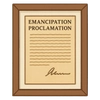
A presidential proclamation and executive order issued by United States President Abraham Lincoln during the American Civil War, which declared that all enslaved individuals in the Confederate states were to be freed, but it did not apply to those in border states loyal to the Union.
Take a Quiz
Question 1 of 5
In your own words, what was the main purpose of the Emancipation Proclamation when it was issued?
Explore next





Want to do even more?
Go beyond exploring. Unlock tools that turn every story into real learning.

Storypie Plus for families
Full stories, quizzes, and printables. Nights and car rides, sorted.
- Unlimited audio stories
- Create Mode: your child stars in the story
- Offline downloads
- Printable worksheets & coloring pages

Why Storypie for Schools
Students engaged. Prep in seconds. Evenings back to you.
- Worksheets & Quizzes
- Classroom Management
- Formative Assessment
- Custom Curriculum & Lesson Plans
- 27 Languages

Why Storypie for Homeschool
Curriculum done. They'll ask for more. Hours back in your day.
- Worksheet Generator
- First-Person Audio Stories
- Built-in Comprehension Quizzes
- Custom Curriculum & Lesson Plans
- Print & Go Activities