English

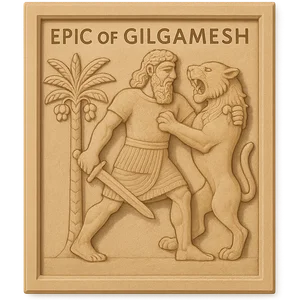
Epic of Gilgamesh
The Epic of Gilgamesh is among the earliest surviving epic poems, originating in ancient Mesopotamia.
Reads at Grades 6–8 Listens at Grades 4–8
Print & create
Answer keys·No prep·Free with an account
28 worksheets · answer keys · full story · quiz · Ages 10-12 · CEFR B2
Plus adds 102,000+ more stories in 27 languages, audio for every one, and printables for all of them.
Just want Epic of Gilgamesh?
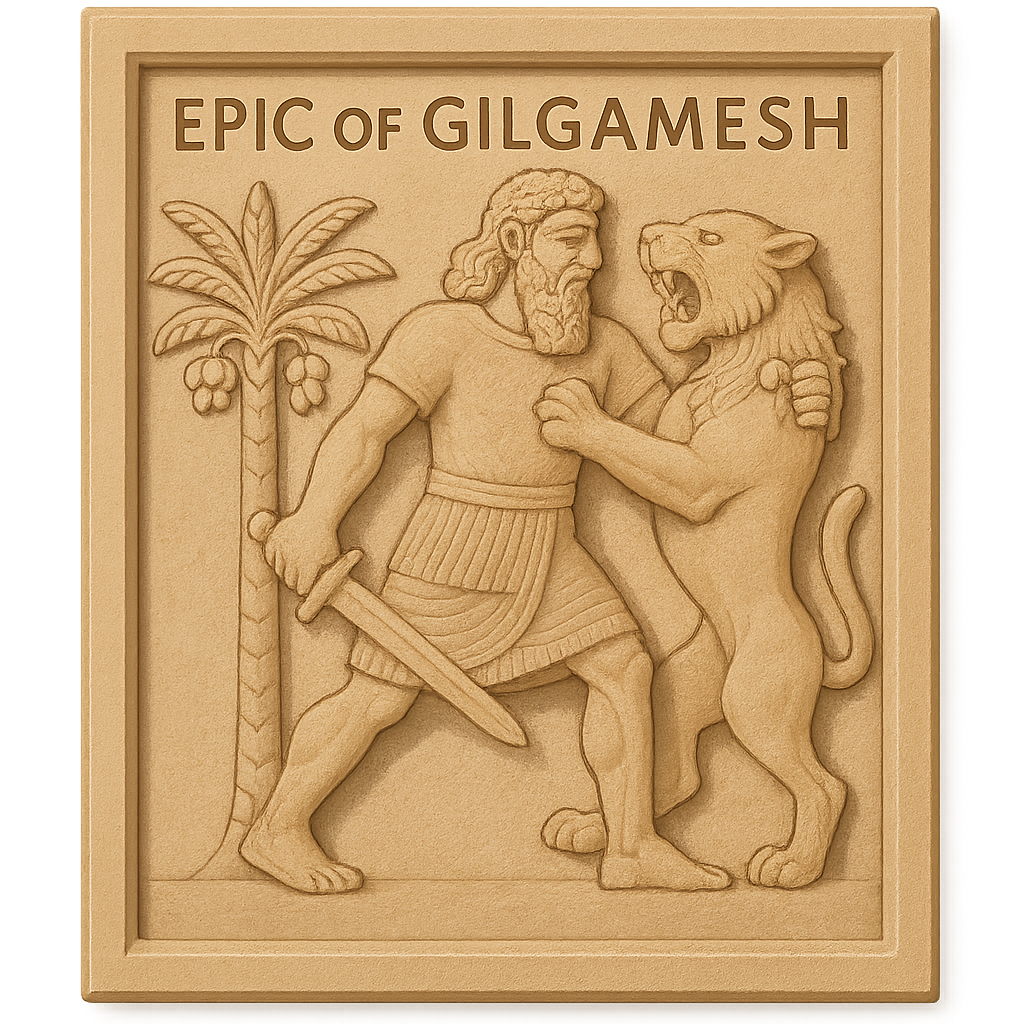
Before you know my name, understand that I am not made of paper and ink. I am made of river clay and the whispers of ages. Picture a time long, long ago, in a sun-drenched land nestled between two flowing rivers, the Tigris and the Euphrates. This fertile crescent was known as Mesopotamia, a place where the first cities rose toward the sky. Here, in these bustling cities, skilled scribes would take soft, wet clay and press sharpened reeds into its surface. They left behind a symphony of intricate, wedge-shaped marks called cuneiform. These marks were my voice, my very essence. I am a story, baked hard by the relentless sun and later buried in the shifting sands, waiting patiently for thousands of years. I am the tale of a great king, powerful and proud, who was two-thirds god and one-third man. My words speak of his adventures with a wild-hearted friend, their battles against terrifying monsters, and their encounters with the gods themselves. Most of all, I tell of the king's heartbreaking journey to find the one secret no mortal can possess: the gift of eternal life. My clay tablets were scattered, my language was forgotten, and my heroes turned to dust, but my story endured. It is a story of what it means to be human. I am the Epic of Gilgamesh, the oldest great adventure story in the world.
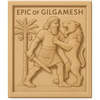
My story revolves around a real king who reigned over the great walled city of Uruk around the year 2700 BCE. His name was Gilgamesh. He was a figure of immense power, a builder of magnificent temples and towering walls, and a warrior without equal. But his divine heritage made him arrogant. He was a harsh ruler, taking what he wanted and demanding absolute obedience from his people, who cried out to the gods for relief. In their wisdom, the gods decided Gilgamesh needed not an enemy, but an equal—a companion to temper his wild spirit and channel his energy toward nobler pursuits. So they created Enkidu, a man born of the wilderness itself. He lived among the gazelles, his hair was long and matted, and he knew nothing of civilization, cities, or kings. When a trapper's son lured Enkidu to the city of Uruk, he and Gilgamesh finally met in a furious clash of strength. They wrestled in the city streets, shaking the very foundations of the buildings. In Enkidu, Gilgamesh met his match. But their epic struggle did not end in hatred; it forged an unbreakable bond of friendship. They became inseparable, like brothers. Together, their ambition knew no bounds. They decided to embark on a perilous journey to the legendary Cedar Forest, a sacred place forbidden to mortals, to slay its monstrous guardian, Humbaba. This quest was not just about fame or felling a fearsome beast. It was about Gilgamesh learning to rely on another, to feel loyalty, and to face fear with a friend. With Enkidu by his side, Gilgamesh transformed from a tyrant into a true hero. Their victory was celebrated throughout Uruk, and their names were sung as legends. Their friendship showed how a deep connection with another person can change you, making you braver, wiser, and more complete than you ever could be alone.
A Story Written in Clay
Before you know my name, understand that I am not made of paper and ink. I am made of river clay and the whispers of ages. Picture a time long, long ago, in a sun-drenched land nestled between two flowing rivers, the Tigris and the Euphrates. This fertile crescent was known as Mesopotamia, a place where the first cities rose toward the sky. Here, in these bustling cities, skilled scribes would take soft, wet clay and press sharpened reeds into its surface. They left behind a symphony of intricate, wedge-shaped marks called cuneiform. These marks were my voice, my very essence. I am a story, baked hard by the relentless sun and later buried in the shifting sands, waiting patiently for thousands of years. I am the tale of a great king, powerful and proud, who was two-thirds god and one-third man. My words speak of his adventures with a wild-hearted friend, their battles against terrifying monsters, and their encounters with the gods themselves. Most of all, I tell of the king's heartbreaking journey to find the one secret no mortal can possess: the gift of eternal life. My clay tablets were scattered, my language was forgotten, and my heroes turned to dust, but my story endured. It is a story of what it means to be human. I am the Epic of Gilgamesh, the oldest great adventure story in the world.
My story revolves around a real king who reigned over the great walled city of Uruk around the year 2700 BCE. His name was Gilgamesh. He was a figure of immense power, a builder of magnificent temples and towering walls, and a warrior without equal. But his divine heritage made him arrogant. He was a harsh ruler, taking what he wanted and demanding absolute obedience from his people, who cried out to the gods for relief. In their wisdom, the gods decided Gilgamesh needed not an enemy, but an equal—a companion to temper his wild spirit and channel his energy toward nobler pursuits. So they created Enkidu, a man born of the wilderness itself. He lived among the gazelles, his hair was long and matted, and he knew nothing of civilization, cities, or kings. When a trapper's son lured Enkidu to the city of Uruk, he and Gilgamesh finally met in a furious clash of strength. They wrestled in the city streets, shaking the very foundations of the buildings. In Enkidu, Gilgamesh met his match. But their epic struggle did not end in hatred; it forged an unbreakable bond of friendship. They became inseparable, like brothers. Together, their ambition knew no bounds. They decided to embark on a perilous journey to the legendary Cedar Forest, a sacred place forbidden to mortals, to slay its monstrous guardian, Humbaba. This quest was not just about fame or felling a fearsome beast. It was about Gilgamesh learning to rely on another, to feel loyalty, and to face fear with a friend. With Enkidu by his side, Gilgamesh transformed from a tyrant into a true hero. Their victory was celebrated throughout Uruk, and their names were sung as legends. Their friendship showed how a deep connection with another person can change you, making you braver, wiser, and more complete than you ever could be alone.
But even the greatest triumphs can be followed by sorrow. My story takes a dark and tragic turn. After their return from the Cedar Forest, Gilgamesh and Enkidu defy the gods once more by slaying the Bull of Heaven, sent to punish them. For this act of defiance, the gods decree that one of them must die. It is Enkidu who falls ill with a divine curse. For twelve days, he suffers, and then he dies, leaving Gilgamesh utterly alone and heartbroken. The death of his beloved friend shatters the mighty king. For the first time, Gilgamesh confronts a terror greater than any monster: his own mortality. He cannot bear the thought that he, too, will one day turn to dust like Enkidu. Consumed by grief and fear, he abandons his throne and his city, wandering the wilderness in search of the one thing that can save him: the secret to eternal life. His desperate quest leads him to the very ends of the earth, across treacherous mountains and the Waters of Death, to find a man named Utnapishtim. Utnapishtim and his wife were the sole survivors of a Great Flood that had once wiped out humanity, and the gods had granted them immortality as a reward. From this ancient man, Gilgamesh learns the story of the flood, a tale that would echo in other cultures for millennia. But Utnapishtim offers no easy answers. He teaches Gilgamesh that immortality is a gift for the gods, not for humankind. The true meaning of life, he explains, is not to live forever, but to live well, to create things that last, and to leave behind a legacy—a great city, a good story, a life filled with purpose.
After my many stories were compiled, they were eventually standardized on twelve clay tablets by a scribe named Sîn-lēqi-unninni between 1300 and 1000 BCE. My new home became one of the greatest libraries of the ancient world, located in the Assyrian capital city of Nineveh. It belonged to the powerful king Ashurbanipal, who reigned in the 7th century BCE and gathered knowledge from all over his empire. I was one of his prized possessions. But even great empires fall. In the year 612 BCE, Nineveh was conquered and destroyed. Its grand palaces and libraries were buried, and I was shattered into thousands of pieces, sleeping for over two millennia beneath a mound of earth. My language was lost and my heroes forgotten. Then, in the 1850s, archaeologists began excavating the ruins of Nineveh. They uncovered Ashurbanipal's library and shipped tens of thousands of my cuneiform fragments to the British Museum in London. It was there, in 1872, that a self-taught scholar named George Smith painstakingly pieced me back together. As he deciphered the script, he was stunned to read about a great flood and a man who built a boat to save his family—a story remarkably similar to one he knew, but written a thousand years earlier. His discovery caused a worldwide sensation, and my voice was finally heard again.
Today, you can see my original clay fragments in museums around the world, carefully preserved behind glass. But my true home is in the hearts and minds of those who read my story. I am the first great hero's journey ever written down, a blueprint for countless adventures that would follow. Gilgamesh’s quest set the stage for heroes from Odysseus to Luke Skywalker. The profound questions he asked on his journey—What does it mean to be a good friend? How do we face our greatest fears? What do we do with the short time we have to live?—are the very same questions people still ask today. I am a bridge across time, a reminder that though civilizations rise and fall, the core human experience of love, loss, and the search for meaning remains unchanged. My clay may be cracked and my language ancient, but the adventure, the friendship, and the wisdom I hold are timeless. I am a story that connects the world’s first great city to your modern world, proving that a great tale, shared and remembered, can truly achieve a kind of immortality.
Wow facts
About
The Epic of Gilgamesh is among the earliest surviving epic poems, originating in ancient Mesopotamia. It tells the story of Gilgamesh, the king of Uruk, and his adventures with his friend Enkidu, exploring themes of friendship, fame, and the human search for meaning.
Take a Quiz
Question 1 of 5
What is the central lesson Gilgamesh learns on his journey after Enkidu's death?
Explore next




Want to do even more?
Go beyond exploring. Unlock tools that turn every story into real learning.

Storypie Plus for families
Full stories, quizzes, and printables. Nights and car rides, sorted.
- Unlimited audio stories
- Create Mode: your child stars in the story
- Offline downloads
- Printable worksheets & coloring pages

Why Storypie for Schools
Students engaged. Prep in seconds. Evenings back to you.
- Worksheets & Quizzes
- Classroom Management
- Formative Assessment
- Custom Curriculum & Lesson Plans
- 27 Languages

Why Storypie for Homeschool
Curriculum done. They'll ask for more. Hours back in your day.
- Worksheet Generator
- First-Person Audio Stories
- Built-in Comprehension Quizzes
- Custom Curriculum & Lesson Plans
- Print & Go Activities