English

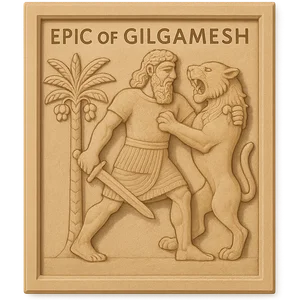
Epic of Gilgamesh
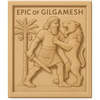
The Epic of Gilgamesh is among the earliest surviving epic poems, originating in ancient Mesopotamia.
Reads at Grades 3–5 Listens at Grades 1–5
Print & create
Answer keys·No prep·Free with an account
28 worksheets · answer keys · full story · quiz · Ages 8-10 · CEFR B1
Plus adds 102,000+ more stories in 27 languages, audio for every one, and printables for all of them.
Just want Epic of Gilgamesh?
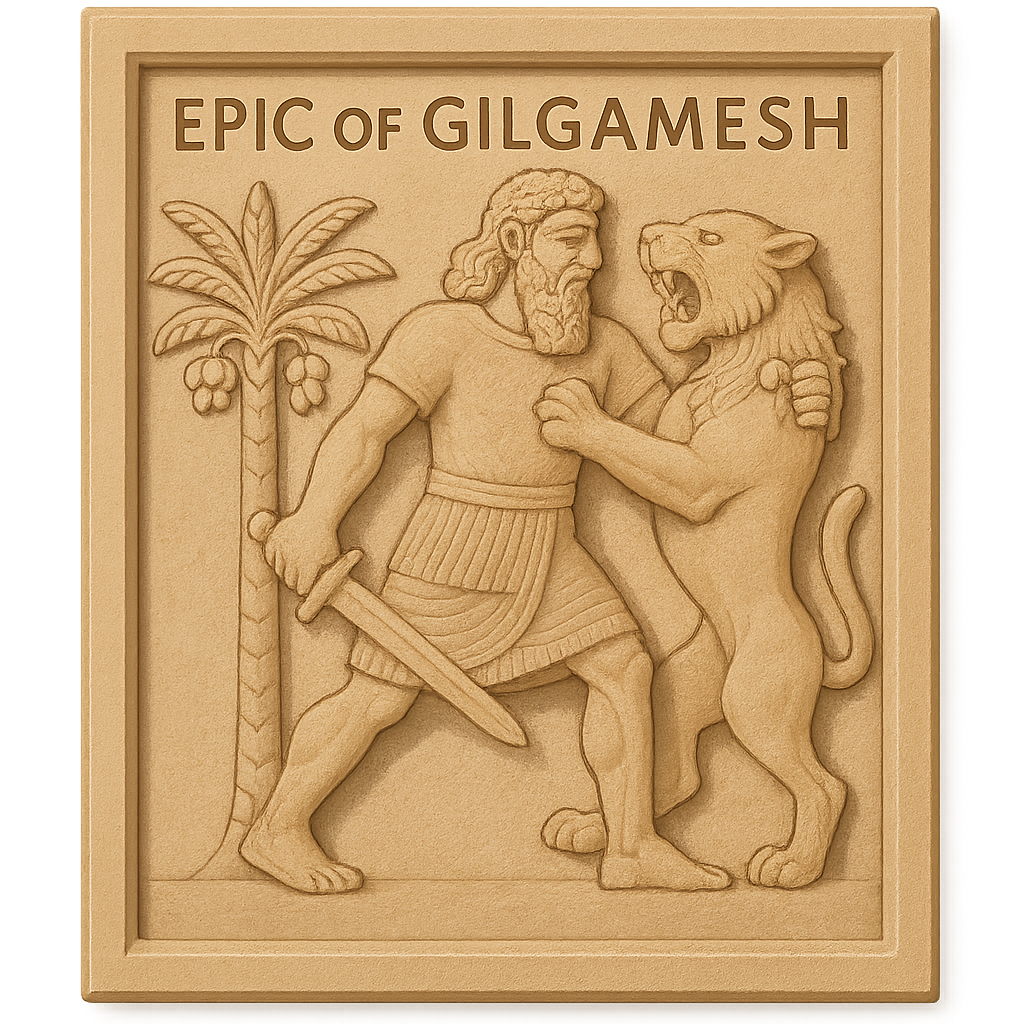
Imagine being cool and hard to the touch, your face covered in thousands of tiny, perfect, wedge-shaped marks. That’s me. For more years than you can count, I slept deep under the warm sands of a land once called Mesopotamia, a silent keeper of a secret story. I held tales of mighty kings, wild friends, fearsome monsters, and a quest for a life that never ends. The marks on my clay skin are not just scratches; they are a language, a memory of a world long gone. I am the Epic of Gilgamesh, one of the oldest stories in the world, etched in a special writing called cuneiform.
My story is about a king named Gilgamesh. He wasn't a fairy-tale king; he was a real person who ruled the great walled city of Uruk way back in the 27th century BCE. Can you imagine a city so old? Gilgamesh was two-thirds god and one-third human, which made him incredibly strong and powerful. But he was also arrogant and lonely, using his power to bully his people. The gods saw this and decided he needed a friend, an equal. So they created Enkidu, a man as wild as the forests he came from. When Enkidu came to Uruk, he and Gilgamesh had a tremendous fight. But when they realized neither could defeat the other, their battle turned into a deep respect, and then into the greatest friendship the world had ever known. Together, they were complete, and Gilgamesh began to change into a better king.
Friendship made Gilgamesh brave in a new way. He and Enkidu decided to go on a grand adventure together to the Cedar Forest to defeat a terrifying monster named Humbaba. It was a long and dangerous journey, but they relied on each other’s strength and courage. Working as a team, they defeated the monster and became famous heroes. But their victory came with a great sadness. The gods were angered by their actions, and soon after, my story tells how Enkidu became sick and passed away. Gilgamesh was completely heartbroken. He wept for his friend for seven days and seven nights. The loss of Enkidu made Gilgamesh face a new fear: his own death. This fear sent him on a second, even greater quest, not for glory or treasure, but for the secret to living forever. My story wasn't just about fighting monsters anymore; it was about understanding what it means to be alive.
The Tablet's Tale: The Epic of Gilgamesh
Imagine being cool and hard to the touch, your face covered in thousands of tiny, perfect, wedge-shaped marks. That’s me. For more years than you can count, I slept deep under the warm sands of a land once called Mesopotamia, a silent keeper of a secret story. I held tales of mighty kings, wild friends, fearsome monsters, and a quest for a life that never ends. The marks on my clay skin are not just scratches; they are a language, a memory of a world long gone. I am the Epic of Gilgamesh, one of the oldest stories in the world, etched in a special writing called cuneiform.
My story is about a king named Gilgamesh. He wasn't a fairy-tale king; he was a real person who ruled the great walled city of Uruk way back in the 27th century BCE. Can you imagine a city so old? Gilgamesh was two-thirds god and one-third human, which made him incredibly strong and powerful. But he was also arrogant and lonely, using his power to bully his people. The gods saw this and decided he needed a friend, an equal. So they created Enkidu, a man as wild as the forests he came from. When Enkidu came to Uruk, he and Gilgamesh had a tremendous fight. But when they realized neither could defeat the other, their battle turned into a deep respect, and then into the greatest friendship the world had ever known. Together, they were complete, and Gilgamesh began to change into a better king.
Friendship made Gilgamesh brave in a new way. He and Enkidu decided to go on a grand adventure together to the Cedar Forest to defeat a terrifying monster named Humbaba. It was a long and dangerous journey, but they relied on each other’s strength and courage. Working as a team, they defeated the monster and became famous heroes. But their victory came with a great sadness. The gods were angered by their actions, and soon after, my story tells how Enkidu became sick and passed away. Gilgamesh was completely heartbroken. He wept for his friend for seven days and seven nights. The loss of Enkidu made Gilgamesh face a new fear: his own death. This fear sent him on a second, even greater quest, not for glory or treasure, but for the secret to living forever. My story wasn't just about fighting monsters anymore; it was about understanding what it means to be alive.
For centuries, my story was so important that scribes in Mesopotamia carefully copied my words onto new clay tablets so that more people could read them. The most famous version of my tale was collected by a very skilled scribe named Sîn-lēqi-unninni, sometime between the 13th and 10th centuries BCE. But as time passed, great cities turned to ruins, and the cuneiform language was forgotten. I was buried, along with entire libraries, and I slept for thousands of years. It wasn't until the 19th century CE that archaeologists began digging in the ancient city of Nineveh. In the ruins of King Ashurbanipal's royal library, they found me. In 1872, a brilliant man named George Smith carefully cleaned my clay surface and began to translate my marks. He was shocked and excited to read a story so ancient, it was like hearing a voice from the very beginning of civilization.
Even though I am made of ancient, cracked clay, the story I tell is as fresh and real as your own. It is a story about the incredible power of friendship to change a person for the better. It is about facing your biggest fears and searching for meaning in your life. I show that people who lived thousands of years ago felt the same powerful feelings we do today—love, sadness, joy, and fear. My adventure continues to inspire new books, movies, and games, proving that a great story is a bridge that connects us all across time. I am a reminder that our human hearts have been telling the same important tales since the dawn of history.
Wow facts
About
The Epic of Gilgamesh is among the earliest surviving epic poems, originating in ancient Mesopotamia. It tells the story of Gilgamesh, the king of Uruk, and his adventures with his friend Enkidu, exploring themes of friendship, fame, and the human search for meaning.
Take a Quiz
Question 1 of 5
In the story, the tablet says Gilgamesh was 'arrogant.' What does 'arrogant' mean in this sentence?
Explore next




Want to do even more?
Go beyond exploring. Unlock tools that turn every story into real learning.

Storypie Plus for families
Full stories, quizzes, and printables. Nights and car rides, sorted.
- Unlimited audio stories
- Create Mode: your child stars in the story
- Offline downloads
- Printable worksheets & coloring pages

Why Storypie for Schools
Students engaged. Prep in seconds. Evenings back to you.
- Worksheets & Quizzes
- Classroom Management
- Formative Assessment
- Custom Curriculum & Lesson Plans
- 27 Languages

Why Storypie for Homeschool
Curriculum done. They'll ask for more. Hours back in your day.
- Worksheet Generator
- First-Person Audio Stories
- Built-in Comprehension Quizzes
- Custom Curriculum & Lesson Plans
- Print & Go Activities