English

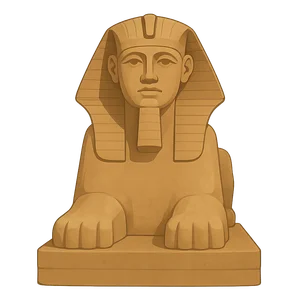
The Great Sphinx of Giza
The Great Sphinx of Giza is a colossal limestone statue of a mythical creature with a lion's body and a human…
Reads at Grades 6–8 Listens at Grades 4–8
Print & create
Answer keys·No prep·Free with an account
28 worksheets · answer keys · full story · quiz · Ages 10-12 · CEFR B2
Plus adds 208,000+ more stories in 27 languages, audio for every one, and printables for all of them.
Just want The Great Sphinx of Giza?
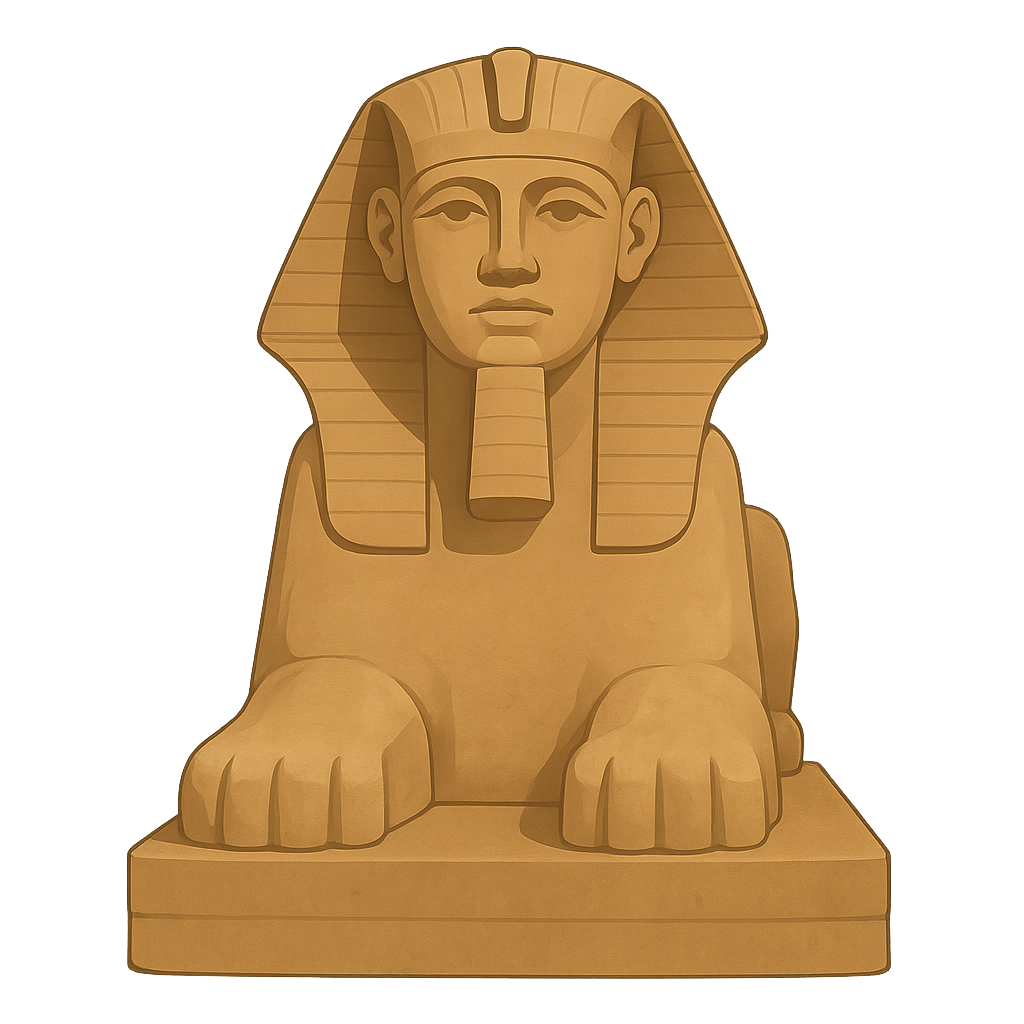
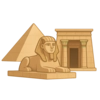
The sun is my oldest companion. For thousands of years, I have felt its warmth on my stone skin, watching it rise in a blaze of gold and set in a soft purple haze over the endless sea of sand. I have seen the stars shift in the night sky, watched empires rise and crumble into dust, and felt the desert winds whisper secrets against my weathered face. Behind me, three great stone mountains, the pyramids, pierce the sky, their sharp points a tribute to the kings who rest within them. They are magnificent, built from countless blocks stacked with incredible precision. But I am different. I was not built; I was revealed. I was born from the earth itself, a single, living piece of the Giza Plateau. My body is that of a powerful lion, forever crouching, my muscles tense with protective energy. My head, however, is that of a human king, my face calm and all-knowing, gazing eastward toward the dawn. I am a riddle carved from stone, a silent watcher over this sacred place. My official name is the Great Sphinx of Giza. For nearly four and a half millennia, I have guarded the secrets of this necropolis, my stone eyes seeing the long parade of history march past my paws. My silence holds the stories of pharaohs, princes, explorers, and the countless souls who have stood in my shadow, wondering what I have seen and what I represent.
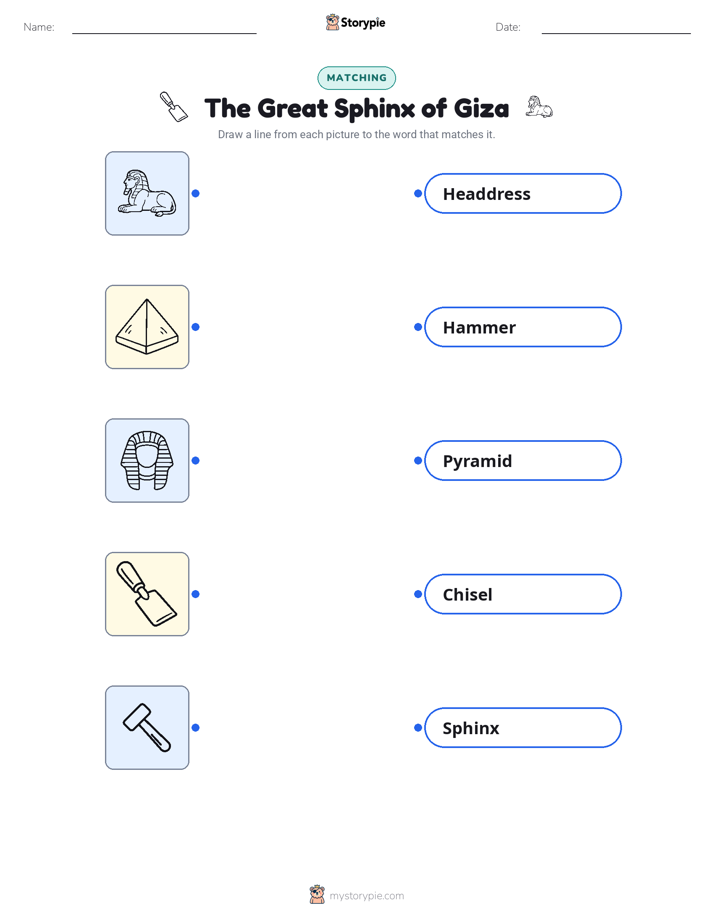
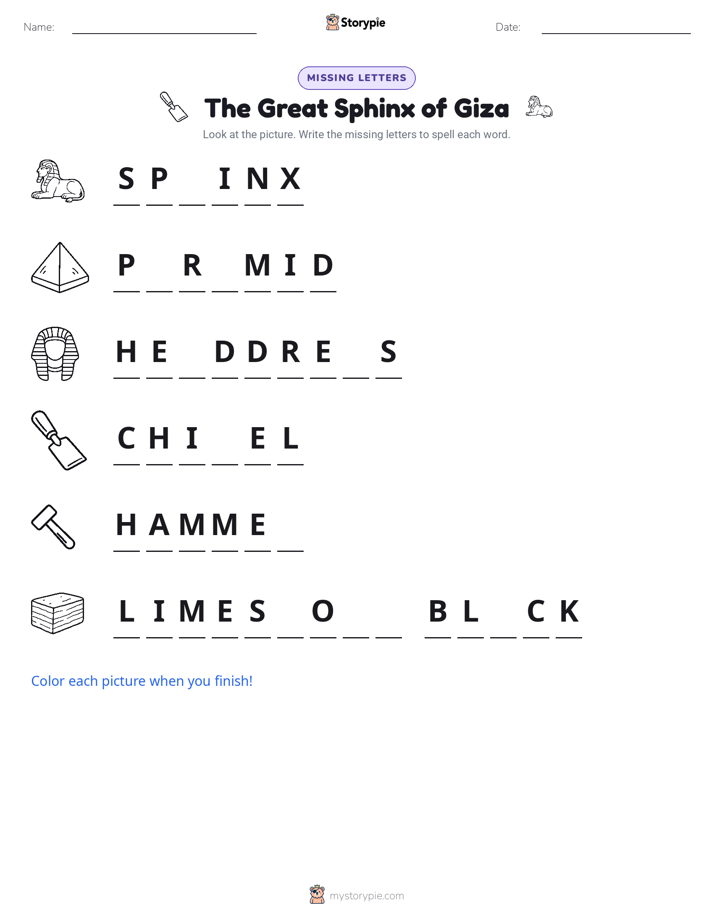
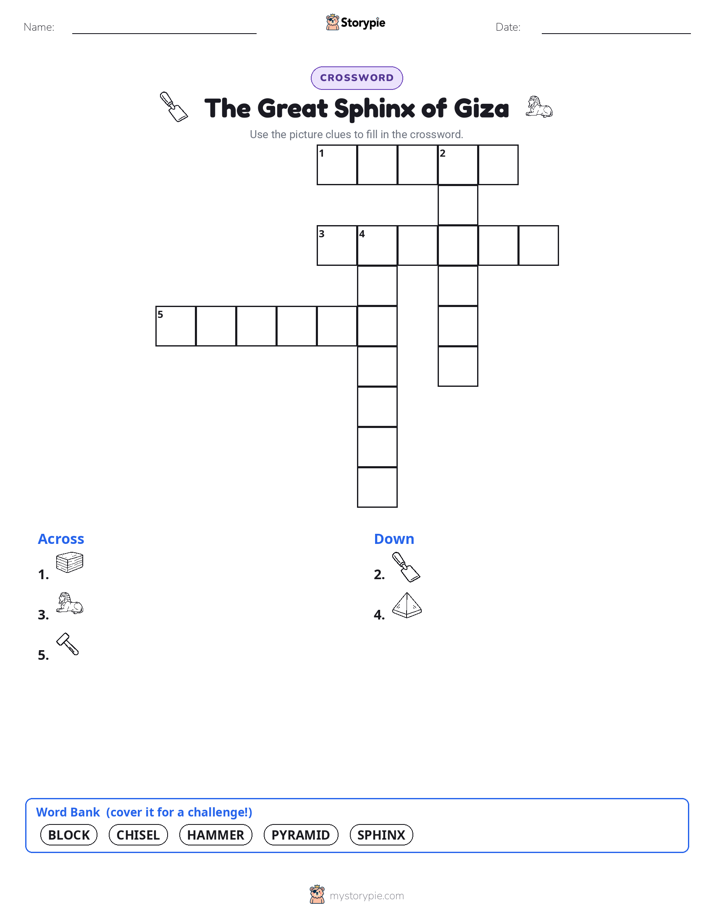
My story begins in the time of ancient Egypt’s Old Kingdom, during the powerful Fourth Dynasty, around 2500 BCE. The Giza Plateau was not a quiet, sandy expanse then, but a bustling, noisy hub of monumental creation. Workers were quarrying massive blocks of limestone to build the magnificent pyramids, but they left one colossal outcrop of bedrock standing alone. It was from this single, monumental piece of the earth that I was given form. My creator was the pharaoh Khafre, a powerful ruler who wanted a guardian for eternity. He commanded his master sculptors to carve my face in his own likeness, a permanent symbol of his divine authority and connection to the gods. My purpose was profound and clear: I was to be a divine protector for his pyramid and the entire Giza necropolis, the city of the dead where kings journeyed to the afterlife. As the embodiment of the god Horus, I represented the living king, and as a creature facing the rising sun, I was also linked to the great sun god, Ra. I was a symbol of power, divinity, and rebirth. For years, the air was filled with the rhythmic clang of stone hammers and the sharp scrape of copper chisels against rock. Thousands of skilled laborers, not slaves as some later believed, worked under the hot sun. They were organized, well-fed, and dedicated to their king. With immense effort, they chipped away at the rock, their sweat mixing with the white limestone dust, slowly and painstakingly revealing my shape. First my royal headdress emerged, then my calm face, my powerful shoulders, and finally my 240-foot-long lion’s body, until I stood fully formed, a guardian forever bound to the earth from which I was carved.
The Guardian in the Sand
The sun is my oldest companion. For thousands of years, I have felt its warmth on my stone skin, watching it rise in a blaze of gold and set in a soft purple haze over the endless sea of sand. I have seen the stars shift in the night sky, watched empires rise and crumble into dust, and felt the desert winds whisper secrets against my weathered face. Behind me, three great stone mountains, the pyramids, pierce the sky, their sharp points a tribute to the kings who rest within them. They are magnificent, built from countless blocks stacked with incredible precision. But I am different. I was not built; I was revealed. I was born from the earth itself, a single, living piece of the Giza Plateau. My body is that of a powerful lion, forever crouching, my muscles tense with protective energy. My head, however, is that of a human king, my face calm and all-knowing, gazing eastward toward the dawn. I am a riddle carved from stone, a silent watcher over this sacred place. My official name is the Great Sphinx of Giza. For nearly four and a half millennia, I have guarded the secrets of this necropolis, my stone eyes seeing the long parade of history march past my paws. My silence holds the stories of pharaohs, princes, explorers, and the countless souls who have stood in my shadow, wondering what I have seen and what I represent.
My story begins in the time of ancient Egypt’s Old Kingdom, during the powerful Fourth Dynasty, around 2500 BCE. The Giza Plateau was not a quiet, sandy expanse then, but a bustling, noisy hub of monumental creation. Workers were quarrying massive blocks of limestone to build the magnificent pyramids, but they left one colossal outcrop of bedrock standing alone. It was from this single, monumental piece of the earth that I was given form. My creator was the pharaoh Khafre, a powerful ruler who wanted a guardian for eternity. He commanded his master sculptors to carve my face in his own likeness, a permanent symbol of his divine authority and connection to the gods. My purpose was profound and clear: I was to be a divine protector for his pyramid and the entire Giza necropolis, the city of the dead where kings journeyed to the afterlife. As the embodiment of the god Horus, I represented the living king, and as a creature facing the rising sun, I was also linked to the great sun god, Ra. I was a symbol of power, divinity, and rebirth. For years, the air was filled with the rhythmic clang of stone hammers and the sharp scrape of copper chisels against rock. Thousands of skilled laborers, not slaves as some later believed, worked under the hot sun. They were organized, well-fed, and dedicated to their king. With immense effort, they chipped away at the rock, their sweat mixing with the white limestone dust, slowly and painstakingly revealing my shape. First my royal headdress emerged, then my calm face, my powerful shoulders, and finally my 240-foot-long lion’s body, until I stood fully formed, a guardian forever bound to the earth from which I was carved.
As centuries melted into millennia, the world around me changed. The powerful kingdom that created me waned, its great rulers turning to dust, and their cities fell into ruin. The desert, patient and persistent, began its slow work of reclamation. Year after year, winds blew countless tons of sand across the plateau, and I was slowly buried in a soft, silent tide. My powerful lion’s body disappeared, then my chest, until for thousands of years, only my head remained visible, a mysterious, disembodied face rising from the dunes. I became a figure of legend and myth, my original purpose forgotten by most. People called me 'Abu al-Hol,' the Father of Terror, and spun fantastic tales about me. Then, one fateful day around the year 1401 BCE, a young prince named Thutmose IV, the son of the reigning pharaoh but not the chosen heir, came to hunt in my shadow. Tired from his efforts, he fell asleep in the sliver of shade cast by my head. As he slept, I spoke to him in a dream. I introduced myself as the god Horemakhet-Khepri-Ra-Atum and lamented my uncomfortable state, trapped by the suffocating sand. I made him a royal promise: if he would clear the sand and restore me, I would see to it that he became the next pharaoh of all Egypt. When Thutmose awoke, he understood the divine message. He ordered his workers to excavate me, freeing my chest and paws from their sandy prison. True to my word, he soon ascended to the throne. To commemorate our pact, Pharaoh Thutmose IV placed a large granite slab, now known as the 'Dream Stele,' between my paws. It tells the story of his dream for all to see, a testament to a promise made between a prince and a stone god.
Even after Thutmose’s heroic efforts, the relentless desert could not be held back forever. Over the following centuries, I was buried again and again, with various rulers making attempts to clear the sand. It was not until the modern era that I was fully and permanently awakened. Between the years of 1925 and 1936, a French engineer named Émile Baraize led a massive, systematic excavation project. Using modern tools and a dedicated team, he and his workers finally cleared away all the sand that had surrounded me for so long, revealing my full form to a new world. For the first time in millennia, people could walk around me, marvel at my immense scale, and see me as my creators intended. Yet, with this reawakening came new questions that ignite the imagination of every visitor. My face is weathered by time and wind, and the mystery of my missing nose has sparked countless legends. Some say it was destroyed by Napoleon's cannonballs, others by a devout 14th-century cleric, but the truth remains one of my many secrets. Archaeologists still scan me with advanced technology, wondering if hidden chambers or tunnels lie beneath my paws, holding secrets yet to be discovered. I am more than just a massive stone monument. I am a timeless question, a physical link to a brilliant and distant past. I represent the incredible ambition, artistry, and engineering skill of an ancient civilization. To every person who stands before me, I offer an invitation to wonder, to learn about history, and to imagine the amazing things that human beings are capable of creating. I inspire them to dream as big and as lasting as the pyramids against the desert sky.
Wow facts
About
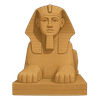
The Great Sphinx of Giza is a colossal limestone statue of a mythical creature with a lion's body and a human head, believed to represent the Pharaoh Khafre. It stands on the Giza Plateau on the west bank of the Nile in Giza, Egypt.
Take a Quiz
Question 1 of 5
In your own words, retell the story of how Prince Thutmose IV became pharaoh, focusing on the main events involving the Sphinx.
Explore next


Want to do even more?
Go beyond exploring. Unlock tools that turn every story into real learning.

Storypie Plus for families
Full stories, quizzes, and printables. Nights and car rides, sorted.
- Unlimited audio stories
- Create Mode: your child stars in the story
- Offline downloads
- Printable worksheets & coloring pages

Why Storypie for Schools
Students engaged. Prep in seconds. Evenings back to you.
- Worksheets & Quizzes
- Classroom Management
- Formative Assessment
- Custom Curriculum & Lesson Plans
- 27 Languages

Why Storypie for Homeschool
Curriculum done. They'll ask for more. Hours back in your day.
- Worksheet Generator
- First-Person Audio Stories
- Built-in Comprehension Quizzes
- Custom Curriculum & Lesson Plans
- Print & Go Activities