English

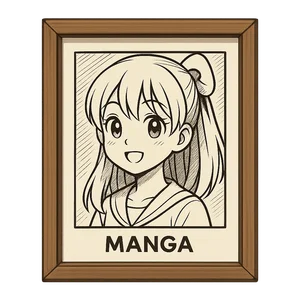
Manga
Manga is a Japanese style of comic books and graphic novels, known for its distinctive art style with large…
Reads at Grades 6–8 Listens at Grades 4–8
Print & create
Answer keys·No prep·Free with an account
28 worksheets · answer keys · full story · quiz · Ages 10-12 · CEFR B2
Plus adds 164,000+ more stories in 27 languages, audio for every one, and printables for all of them.
Just want Manga?
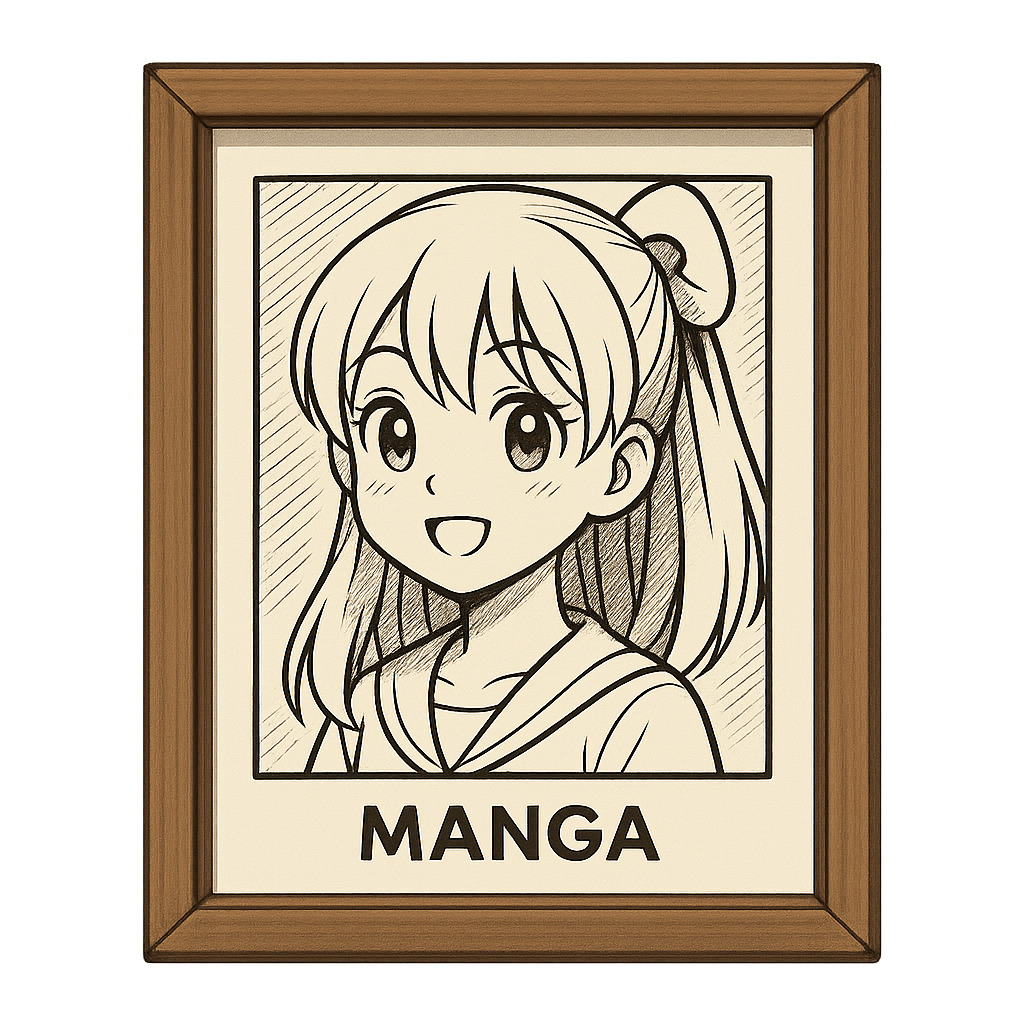
Listen closely. Do you hear the crisp rustle of my pages turning? Can you smell the sharp, clean scent of fresh ink settling into the paper? When you open one of my books, you begin a unique journey. Your eyes travel across my panels from right to left, a direction that might feel like going backward to some, but to me, it is the natural flow of my story. My world is one of bold black lines that define heroes and villains, and dramatic speed lines that make a character’s punch feel like it could fly right off the page. My greatest secret, however, is in the eyes. They are large windows to the soul, designed to show you every flicker of joy, sorrow, or determination. I hold entire universes within my covers—tales of samurai, space explorers, high school friends, and magical creatures. I am a gateway to endless adventure. I am Manga, the stories of Japan drawn for the world.
My soul is far older than you might think. My earliest heartbeat can be traced back to the 12th and 13th centuries in Japan, to a set of scrolls known as the Chōjū-jinbutsu-giga, or the 'Scrolls of Frolicking Animals.' Imagine monks with brushes and ink, carefully painting rabbits and frogs engaged in a sumo wrestling match, or monkeys stealing from a temple. These scrolls told stories through a sequence of images, a flowing narrative without words—the very first spark of my existence. Centuries later, during the bustling Edo period between 1603 and 1868, artists created beautiful woodblock prints called ukiyo-e, showing scenes of city life and nature. It was during this time that a brilliant artist named Katsushika Hokusai, famous for his print 'The Great Wave off Kanagawa,' gave me my name. In 1814, he began publishing collections of his sketches—lively, dynamic drawings of people, animals, and spirits. He called them 'Hokusai Manga,' which translates to 'Hokusai’s whimsical pictures.' He didn't know what I would become, but he gave me a name that promised freedom, fun, and boundless imagination.
The Story of Manga
Listen closely. Do you hear the crisp rustle of my pages turning? Can you smell the sharp, clean scent of fresh ink settling into the paper? When you open one of my books, you begin a unique journey. Your eyes travel across my panels from right to left, a direction that might feel like going backward to some, but to me, it is the natural flow of my story. My world is one of bold black lines that define heroes and villains, and dramatic speed lines that make a character’s punch feel like it could fly right off the page. My greatest secret, however, is in the eyes. They are large windows to the soul, designed to show you every flicker of joy, sorrow, or determination. I hold entire universes within my covers—tales of samurai, space explorers, high school friends, and magical creatures. I am a gateway to endless adventure. I am Manga, the stories of Japan drawn for the world.
My soul is far older than you might think. My earliest heartbeat can be traced back to the 12th and 13th centuries in Japan, to a set of scrolls known as the Chōjū-jinbutsu-giga, or the 'Scrolls of Frolicking Animals.' Imagine monks with brushes and ink, carefully painting rabbits and frogs engaged in a sumo wrestling match, or monkeys stealing from a temple. These scrolls told stories through a sequence of images, a flowing narrative without words—the very first spark of my existence. Centuries later, during the bustling Edo period between 1603 and 1868, artists created beautiful woodblock prints called ukiyo-e, showing scenes of city life and nature. It was during this time that a brilliant artist named Katsushika Hokusai, famous for his print 'The Great Wave off Kanagawa,' gave me my name. In 1814, he began publishing collections of his sketches—lively, dynamic drawings of people, animals, and spirits. He called them 'Hokusai Manga,' which translates to 'Hokusai’s whimsical pictures.' He didn't know what I would become, but he gave me a name that promised freedom, fun, and boundless imagination.
After the immense challenges of World War II, the people of Japan were searching for new stories of resilience and hope. It was then that a young artist, who had once trained to be a doctor, saw a new future for me. His name was Osamu Tezuka, and he is often called the 'God of Manga.' He was deeply inspired by the fluid motion and emotional storytelling of American animated films and dreamed of creating that same cinematic magic on paper. Beginning in the late 1940s, he completely transformed me. Tezuka taught me to think like a movie director. My pages were no longer just a series of illustrations; they became a film strip. He used panels of different shapes and sizes to control time and focus. A large panel could establish a dramatic scene, like a futuristic city skyline, while a series of small, narrow panels could show a character's rapid-fire actions. Most famously, he gave my characters those large, expressive eyes, believing they could convey complex emotions more powerfully than words alone. In 1947, his groundbreaking work 'New Treasure Island' was published, selling an astonishing 400,000 copies and proving to everyone the power of this new, cinematic style of storytelling. Then, in 1952, one of my most beloved children was born: 'Astro Boy.' He was a powerful robot boy with a human heart, a hero who fought for justice and symbolized a hopeful vision for a peaceful, technological future. He made me a treasured friend to millions of children across Japan and set the stage for my journey to the rest of the world.
My stories could not be contained on one island forever. As more and more artists began to tell tales on my pages, I grew and diversified into countless genres. For readers who craved action, adventure, and the bonds of friendship, there was shōnen. For those who loved stories of romance, emotion, and relationships, there was shōjo. For older audiences looking for more complex and mature themes, there was seinen. I became a vast library with a story for every reader. Around this time, my dazzling sibling, Anime, was born. It was pure magic to see my black-and-white panels burst into vibrant color and fluid motion on television screens, bringing my worlds to life in a new way. Soon, I began a great voyage across the oceans. Translators worked carefully to teach me to speak English, French, Spanish, and many other languages, ensuring the heart of my stories remained intact. I was discovered by new friends in countries all over the globe, people who realized that the feelings of my characters—the courage to face a great foe, the loyalty to a friend, the pain of loss, and the joy of victory—were universal feelings that connected us all.
Ultimately, I am more than just ink and paper; I am a bridge. I connect cultures, artists, and readers across time and distance. My true life is in the hands of the storytellers who dream up my worlds and the readers who turn my pages, their imaginations filling in the space between my panels. I have inspired countless people to pick up a pen or a stylus and tell their own stories, creating heroes and worlds that reflect their own dreams. My story is never truly finished. There is always an empty page, a blank canvas waiting for a new idea, a new adventure, a new voice. The magic I carry is that simple, powerful connection between a storyteller’s heart and a reader’s imagination, a story that continues with every new page you turn.
Wow facts
About
Manga is a Japanese style of comic books and graphic novels, known for its distinctive art style with large, expressive eyes and many different kinds of stories, including action-packed, funny, and sweet tales.
Take a Quiz
Question 1 of 5
According to the story, why did Osamu Tezuka give his characters large, expressive eyes?
Explore next



Want to do even more?
Go beyond exploring. Unlock tools that turn every story into real learning.

Storypie Plus for families
Full stories, quizzes, and printables. Nights and car rides, sorted.
- Unlimited audio stories
- Create Mode: your child stars in the story
- Offline downloads
- Printable worksheets & coloring pages

Why Storypie for Schools
Students engaged. Prep in seconds. Evenings back to you.
- Worksheets & Quizzes
- Classroom Management
- Formative Assessment
- Custom Curriculum & Lesson Plans
- 27 Languages

Why Storypie for Homeschool
Curriculum done. They'll ask for more. Hours back in your day.
- Worksheet Generator
- First-Person Audio Stories
- Built-in Comprehension Quizzes
- Custom Curriculum & Lesson Plans
- Print & Go Activities