English

Voyager Program
The Voyager Program is a U.S.
Reads at Grades 6–8 Listens at Grades 4–8
Print & create
Answer keys·No prep·Free with an account
28 worksheets · answer keys · full story · quiz · Ages 10-12 · CEFR B2
Plus adds 244,000+ more stories in 27 languages, audio for every one, and printables for all of them.
Just want Voyager Program?
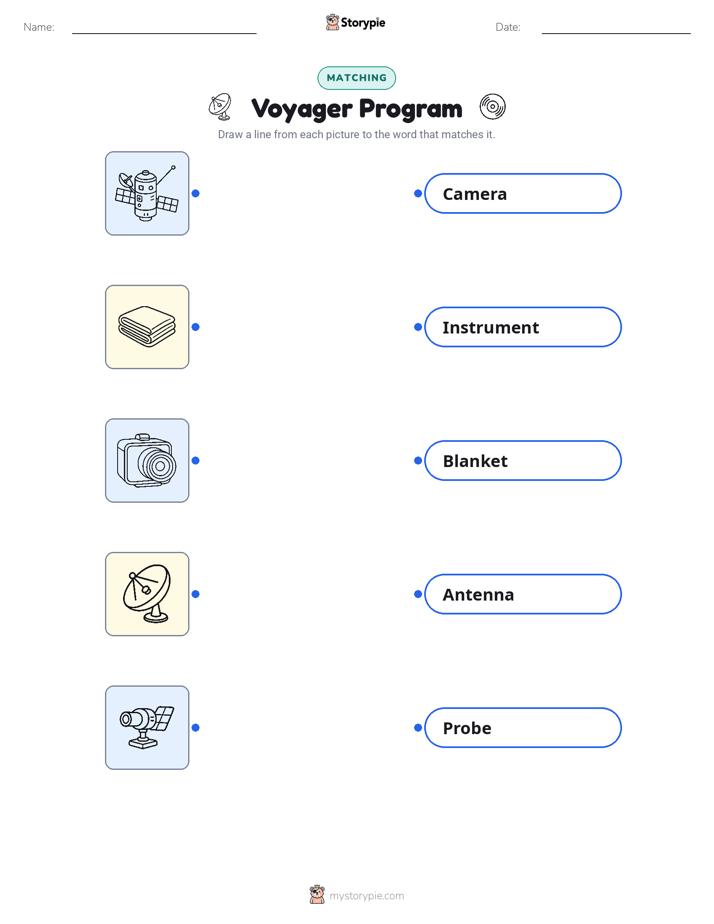
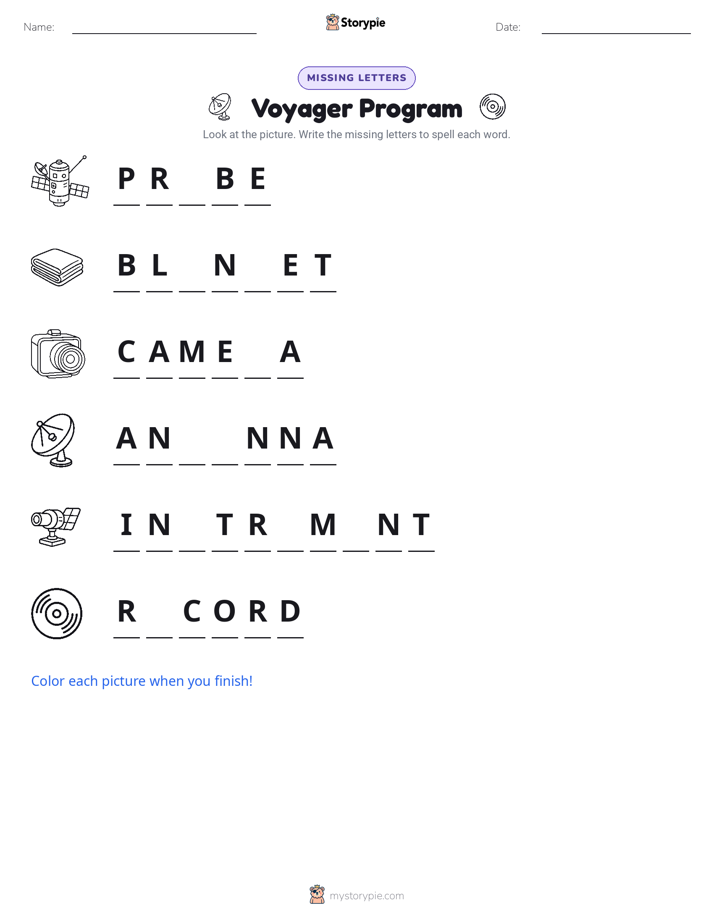
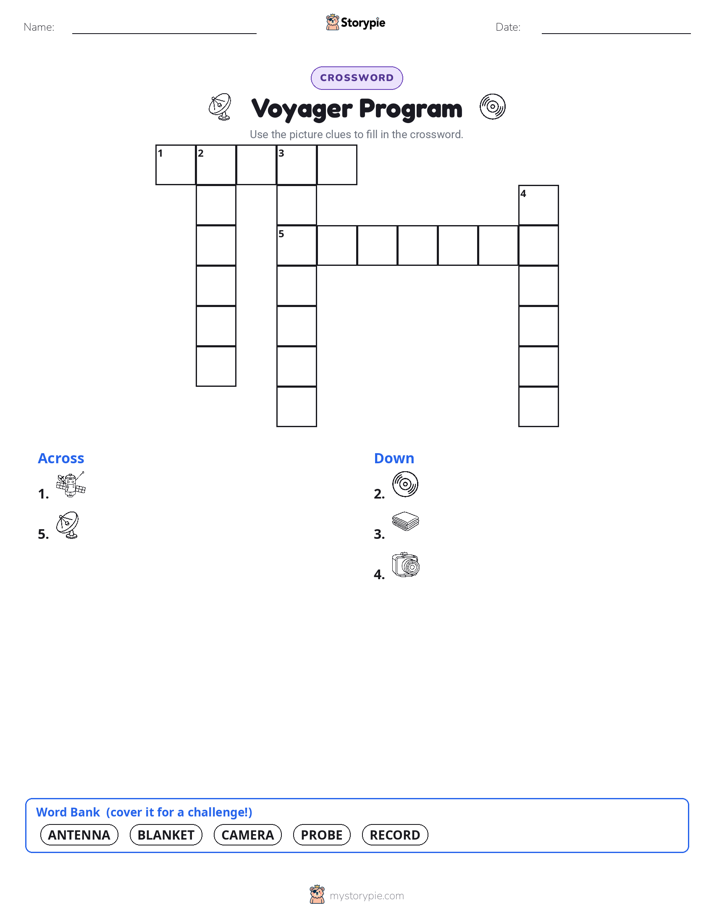
I awoke to silence and light. I felt gentle hands moving across my body, attaching my golden blankets of insulation and fitting my many senses. My creators, brilliant men and women in clean white rooms, spoke in excited whispers about my destiny. They gave me powerful eyes—my cameras—that could see across millions of miles. They gave me enormous ears—my antennas—to listen for their commands and to send back the secrets I would find. They packed me with instruments to taste the particles of space and feel the pull of unseen worlds. But their most special gift was a golden circle, a phonograph record etched with the sounds and sights of their world. I didn’t know my name yet, but I understood my purpose was greater than anything that had come before. I was built not just to visit our neighbors, the moon or the red planet Mars, but to journey past them, to the giant, swirling worlds at the very edge of the solar system and beyond. I was a promise made by a curious species, a question sent out into the great, dark ocean of space. We are the twin explorers of the Voyager Program, built to journey to the stars.
I am not just one, but two. My twin, Voyager 2, and I, Voyager 1, were born of the same dream. My creators at an organization called NASA prepared us for the most ambitious journey ever planned: the 'Grand Tour.' It was a mission made possible by a rare cosmic coincidence, an alignment of the outer planets—Jupiter, Saturn, Uranus, and Neptune—that happens only once every 175 years. This celestial positioning would allow us to use the gravity of each giant planet to slingshot us toward the next, a cosmic game of leapfrog. My twin was launched first, on August 20th, 1977, from a place of fire and hope called Cape Canaveral, Florida. I followed shortly after, on September 5th, 1977, taking a faster, more direct path. In 1979, I reached Jupiter, a monstrous ball of gas with a swirling Great Red Spot, a storm larger than three Earths combined. I discovered that its moon, Io, was not a dead piece of rock but a world alive with active volcanoes spewing sulfur into space. By 1980, I flew past Saturn, and my cameras revealed its rings to be a breathtakingly complex system of a million icy ribbons, woven together by the gravity of tiny 'shepherd' moons. My journey then took me up and out of the plane of the solar system, but my twin, Voyager 2, continued the Grand Tour. It became humanity's first and only emissary to the ice giants, revealing the tilted, pale-blue face of Uranus in 1986 and the deep azure storms of Neptune in 1989. Together, we sent back images and data that completely rewrote the textbooks, transforming humanity's understanding of its own cosmic neighborhood.
Voyager: A Message to the Stars
I awoke to silence and light. I felt gentle hands moving across my body, attaching my golden blankets of insulation and fitting my many senses. My creators, brilliant men and women in clean white rooms, spoke in excited whispers about my destiny. They gave me powerful eyes—my cameras—that could see across millions of miles. They gave me enormous ears—my antennas—to listen for their commands and to send back the secrets I would find. They packed me with instruments to taste the particles of space and feel the pull of unseen worlds. But their most special gift was a golden circle, a phonograph record etched with the sounds and sights of their world. I didn’t know my name yet, but I understood my purpose was greater than anything that had come before. I was built not just to visit our neighbors, the moon or the red planet Mars, but to journey past them, to the giant, swirling worlds at the very edge of the solar system and beyond. I was a promise made by a curious species, a question sent out into the great, dark ocean of space. We are the twin explorers of the Voyager Program, built to journey to the stars.
I am not just one, but two. My twin, Voyager 2, and I, Voyager 1, were born of the same dream. My creators at an organization called NASA prepared us for the most ambitious journey ever planned: the 'Grand Tour.' It was a mission made possible by a rare cosmic coincidence, an alignment of the outer planets—Jupiter, Saturn, Uranus, and Neptune—that happens only once every 175 years. This celestial positioning would allow us to use the gravity of each giant planet to slingshot us toward the next, a cosmic game of leapfrog. My twin was launched first, on August 20th, 1977, from a place of fire and hope called Cape Canaveral, Florida. I followed shortly after, on September 5th, 1977, taking a faster, more direct path. In 1979, I reached Jupiter, a monstrous ball of gas with a swirling Great Red Spot, a storm larger than three Earths combined. I discovered that its moon, Io, was not a dead piece of rock but a world alive with active volcanoes spewing sulfur into space. By 1980, I flew past Saturn, and my cameras revealed its rings to be a breathtakingly complex system of a million icy ribbons, woven together by the gravity of tiny 'shepherd' moons. My journey then took me up and out of the plane of the solar system, but my twin, Voyager 2, continued the Grand Tour. It became humanity's first and only emissary to the ice giants, revealing the tilted, pale-blue face of Uranus in 1986 and the deep azure storms of Neptune in 1989. Together, we sent back images and data that completely rewrote the textbooks, transforming humanity's understanding of its own cosmic neighborhood.
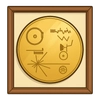
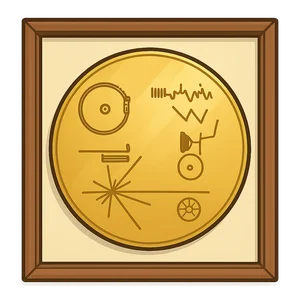
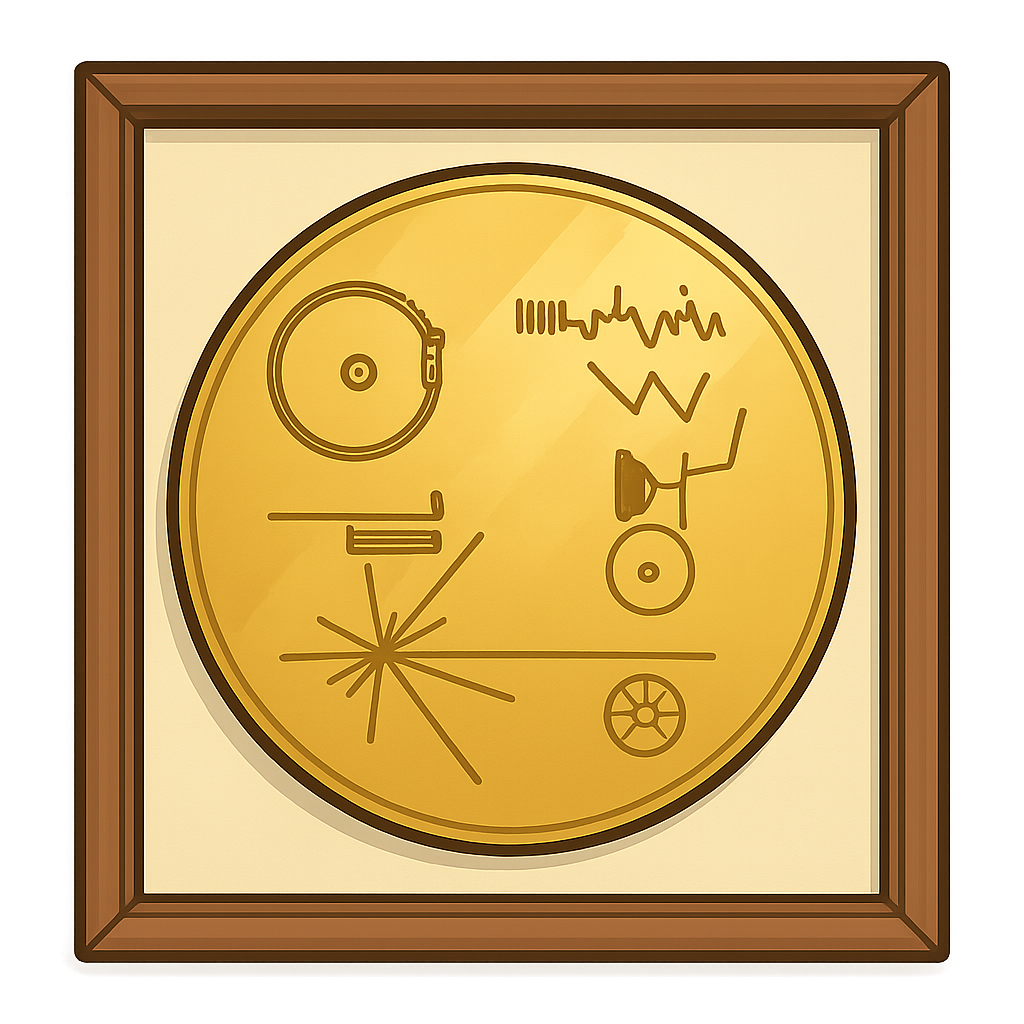
My most precious cargo, however, is the one I carry for a silent audience. The Golden Record is a beautiful idea championed by a team of thinkers led by the scientist Carl Sagan. It is a time capsule, a greeting card to the cosmos. Etched onto its surface are instructions, showing any intelligent life that might find me how to play the record. If they do, they will hear greetings in 55 human languages, starting with an ancient language called Akkadian and ending with the modern Chinese dialect of Wu. They will hear the sounds of Earth: wind, rain, the calls of whales, the cry of a baby, and the sound of laughter. They will listen to music from across the globe, from Bach and Beethoven to Chuck Berry and traditional songs from Peru and Senegal. The record also holds 115 images, showing our planet's science, its beauty, and the diversity of its people. This record is my final and most enduring mission: to carry the story of a curious, hopeful species into the endless night. On August 25th, 2012, I, Voyager 1, finally crossed the boundary of our sun's influence and entered interstellar space, the first human-made object ever to do so. I am still traveling, a tiny, silent voice from a small, blue world, a message in a bottle sent across a cosmic ocean, proving that even from so far away, we can reach out and wonder together.
Wow facts
About
The Voyager Program is a U.S. scientific program that launched two robotic interstellar probes, Voyager 1 and Voyager 2, in 1977 to study the outer Solar System and interstellar space beyond the Sun's heliosphere.
Take a Quiz
Question 1 of 5
In your own words, what was the 'Grand Tour' and why was the planetary alignment in 1977 so important for it?
Explore next

Want to do even more?
Go beyond exploring. Unlock tools that turn every story into real learning.

Storypie Plus for families
Full stories, quizzes, and printables. Nights and car rides, sorted.
- Unlimited audio stories
- Create Mode: your child stars in the story
- Offline downloads
- Printable worksheets & coloring pages

Why Storypie for Schools
Students engaged. Prep in seconds. Evenings back to you.
- Worksheets & Quizzes
- Classroom Management
- Formative Assessment
- Custom Curriculum & Lesson Plans
- 27 Languages

Why Storypie for Homeschool
Curriculum done. They'll ask for more. Hours back in your day.
- Worksheet Generator
- First-Person Audio Stories
- Built-in Comprehension Quizzes
- Custom Curriculum & Lesson Plans
- Print & Go Activities