English

Dust Bowl
A period of severe dust storms in the 1930s that severely damaged the agriculture and ecology of the American…
Reads at Grades 6–8 Listens at Grades 4–8
Print & create
Answer keys·No prep·Free with an account
28 worksheets · answer keys · full story · quiz · Ages 10-12 · CEFR B2
Plus adds 102,000+ more stories in 27 languages, audio for every one, and printables for all of them.
Just want Dust Bowl?
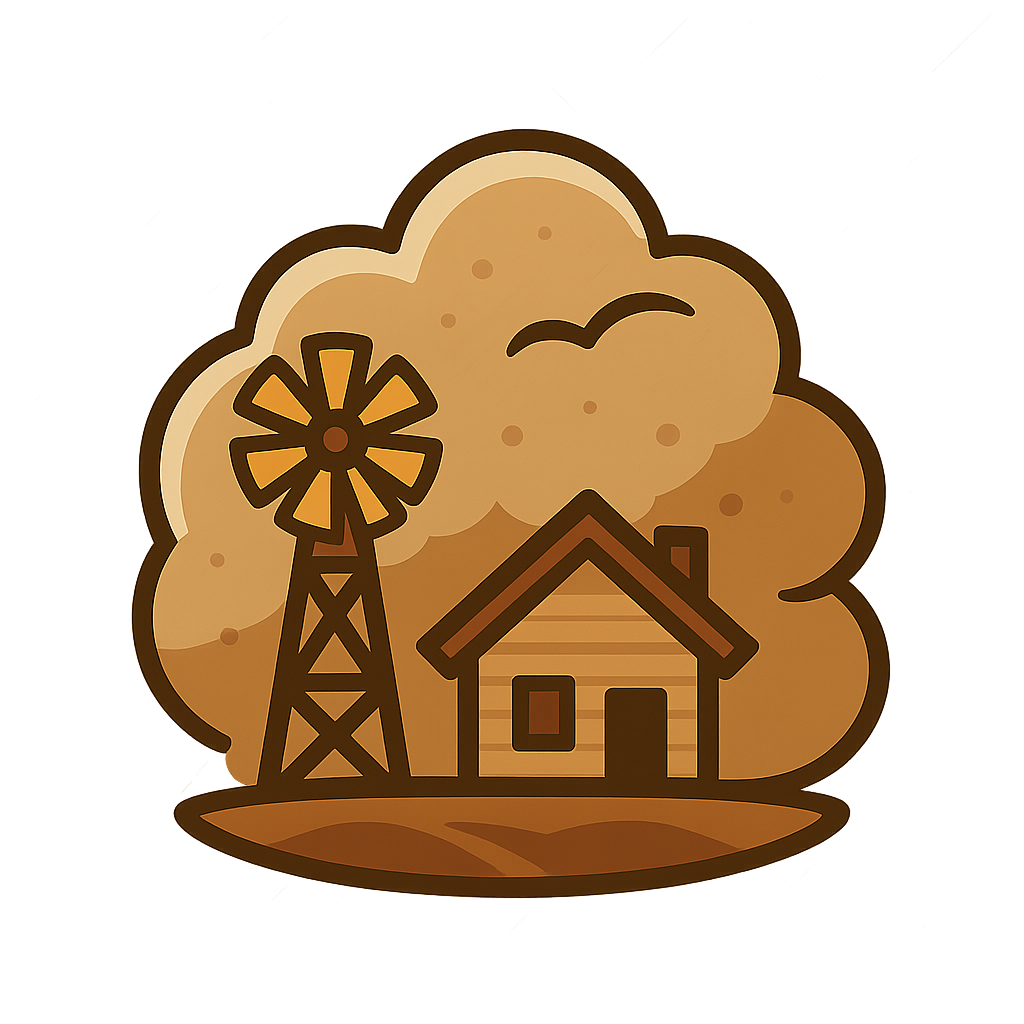
My name is Woody Guthrie, and I grew up with a guitar in my hands and the wide, windy prairie of Oklahoma in my heart. Before the tough times came, back in the 1920s, that land felt like the most hopeful place on Earth. The fields stretched out like a golden ocean, rippling with wheat under a sky so big it seemed to go on forever. My town of Okemah was full of folks who worked hard and believed in the land. We were proud. Farmers had tractors now, and they could plow more land faster than ever before. They tore up the tough, native prairie grass that had held the soil in place for centuries and planted wheat, acre after acre. For a while, it seemed like a miracle. The harvests were huge, and it felt like the good times would never end. We didn't know that by digging up the roots that held our world together, we were setting the stage for it to all blow away.
Then, in the early 1930s, the rain just stopped. The sky that used to promise life now just seemed empty and pale. The years of plowing had turned the rich topsoil into a fine, loose powder, and with no rain to wet it down and no prairie grass to hold it, there was nothing to stop the wind. And oh, that wind. It started to pick up the dust, at first in little whirlwinds, but soon in giant, rolling clouds that blotted out the sun. We called them 'black blizzards.' They would turn a bright afternoon into a terrifying, dark night. You couldn't see, you could barely breathe. The dust was a living thing; it crept through the cracks in the doors and windows, covering our plates as we tried to eat and settling on our pillows as we tried to sleep. The worst I ever saw was on April 14th, 1935. We called it 'Black Sunday.' A wall of dirt, a thousand feet high, came roaring over the plains. It was darker than any night, and the world seemed to be ending. Our crops were buried and dead. Our farm animals choked on the dust. We had nothing left to sell, nothing left to eat, and our homes were being swallowed by the dirt. We faced a terrible choice: stay and slowly starve, or pack up what little we had and leave the only home we'd ever known.
Woody Guthrie and the Dust Bowl
My name is Woody Guthrie, and I grew up with a guitar in my hands and the wide, windy prairie of Oklahoma in my heart. Before the tough times came, back in the 1920s, that land felt like the most hopeful place on Earth. The fields stretched out like a golden ocean, rippling with wheat under a sky so big it seemed to go on forever. My town of Okemah was full of folks who worked hard and believed in the land. We were proud. Farmers had tractors now, and they could plow more land faster than ever before. They tore up the tough, native prairie grass that had held the soil in place for centuries and planted wheat, acre after acre. For a while, it seemed like a miracle. The harvests were huge, and it felt like the good times would never end. We didn't know that by digging up the roots that held our world together, we were setting the stage for it to all blow away.
Then, in the early 1930s, the rain just stopped. The sky that used to promise life now just seemed empty and pale. The years of plowing had turned the rich topsoil into a fine, loose powder, and with no rain to wet it down and no prairie grass to hold it, there was nothing to stop the wind. And oh, that wind. It started to pick up the dust, at first in little whirlwinds, but soon in giant, rolling clouds that blotted out the sun. We called them 'black blizzards.' They would turn a bright afternoon into a terrifying, dark night. You couldn't see, you could barely breathe. The dust was a living thing; it crept through the cracks in the doors and windows, covering our plates as we tried to eat and settling on our pillows as we tried to sleep. The worst I ever saw was on April 14th, 1935. We called it 'Black Sunday.' A wall of dirt, a thousand feet high, came roaring over the plains. It was darker than any night, and the world seemed to be ending. Our crops were buried and dead. Our farm animals choked on the dust. We had nothing left to sell, nothing left to eat, and our homes were being swallowed by the dirt. We faced a terrible choice: stay and slowly starve, or pack up what little we had and leave the only home we'd ever known.
There was only one direction to go: west. We heard stories of California, a place with green fields and plenty of jobs picking fruit. So, we joined thousands of other families, packing our lives onto old, rattling cars and trucks. We headed for U.S. Route 66, a highway that became a river of broken dreams and desperate hopes. The writer John Steinbeck would later call it 'The Mother Road,' the road of flight. I saw it all. I saw cars broken down on the side of the road, families with nowhere to sleep, and the tired, worried faces of parents trying to be strong for their children. When we got further west, people started calling us 'Okies.' At first, it just meant you were from Oklahoma, but it quickly became an insult. It meant you were poor, you were dirty, you were unwanted. During that long, hard trip, I held onto my guitar. At night, in the camps where we'd all gather, I'd pull it out and sing. I sang about the dust storms, about the homes we lost, and about the road we were on. My songs were a way to tell our story, to remind us that we were still good people with dignity, even when the world treated us like we were nothing.
When we finally got to California, it wasn't the paradise we had imagined. There were fields of fruit, yes, but there were far more workers than jobs. We saw signs that said, 'NO Okies.' We were treated like invaders. It was a hard, disappointing reality. But the folks I traveled with were tough. They had survived the black blizzards, and they wouldn't be broken by this. They built new communities, found work where they could, and slowly, painstakingly, started over. Back on the plains, the government realized something had to change. They started the Soil Conservation Service in 1935, which taught farmers new ways to plow and plant, like contour farming, to protect the soil from the wind. They planted millions of trees to create windbreaks. We had learned a hard lesson about taking care of the earth. My journey didn't end in those fields; it was just beginning. I kept writing songs to make sure no one would forget what we went through. I wanted to capture the strength and spirit of the Dust Bowl people. I wrote a song to remind everyone, from the redwood forests to the Gulf Stream waters, that this land belongs to all of us. Our struggle was part of this country's story, a story of hardship, hope, and the unbreakable will to find a home.
Wow facts
About
A period of severe dust storms in the 1930s that severely damaged the agriculture and ecology of the American and Canadian prairies, leading to a significant migration of farming families due to the dust storms and the Great Depression.
Take a Quiz
Question 1 of 5
Summarize the main events of Woody Guthrie's journey from Oklahoma to California.
Explore next




Want to do even more?
Go beyond exploring. Unlock tools that turn every story into real learning.

Storypie Plus for families
Full stories, quizzes, and printables. Nights and car rides, sorted.
- Unlimited audio stories
- Create Mode: your child stars in the story
- Offline downloads
- Printable worksheets & coloring pages

Why Storypie for Schools
Students engaged. Prep in seconds. Evenings back to you.
- Worksheets & Quizzes
- Classroom Management
- Formative Assessment
- Custom Curriculum & Lesson Plans
- 27 Languages

Why Storypie for Homeschool
Curriculum done. They'll ask for more. Hours back in your day.
- Worksheet Generator
- First-Person Audio Stories
- Built-in Comprehension Quizzes
- Custom Curriculum & Lesson Plans
- Print & Go Activities