English

Dust Bowl
A period of severe dust storms in the 1930s that severely damaged the agriculture and ecology of the American…
Reads at Grades 3–5 Listens at Grades 1–5
Print & create
Answer keys·No prep·Free with an account
28 worksheets · answer keys · full story · quiz · Ages 8-10 · CEFR B1
Plus adds 102,000+ more stories in 27 languages, audio for every one, and printables for all of them.
Just want Dust Bowl?
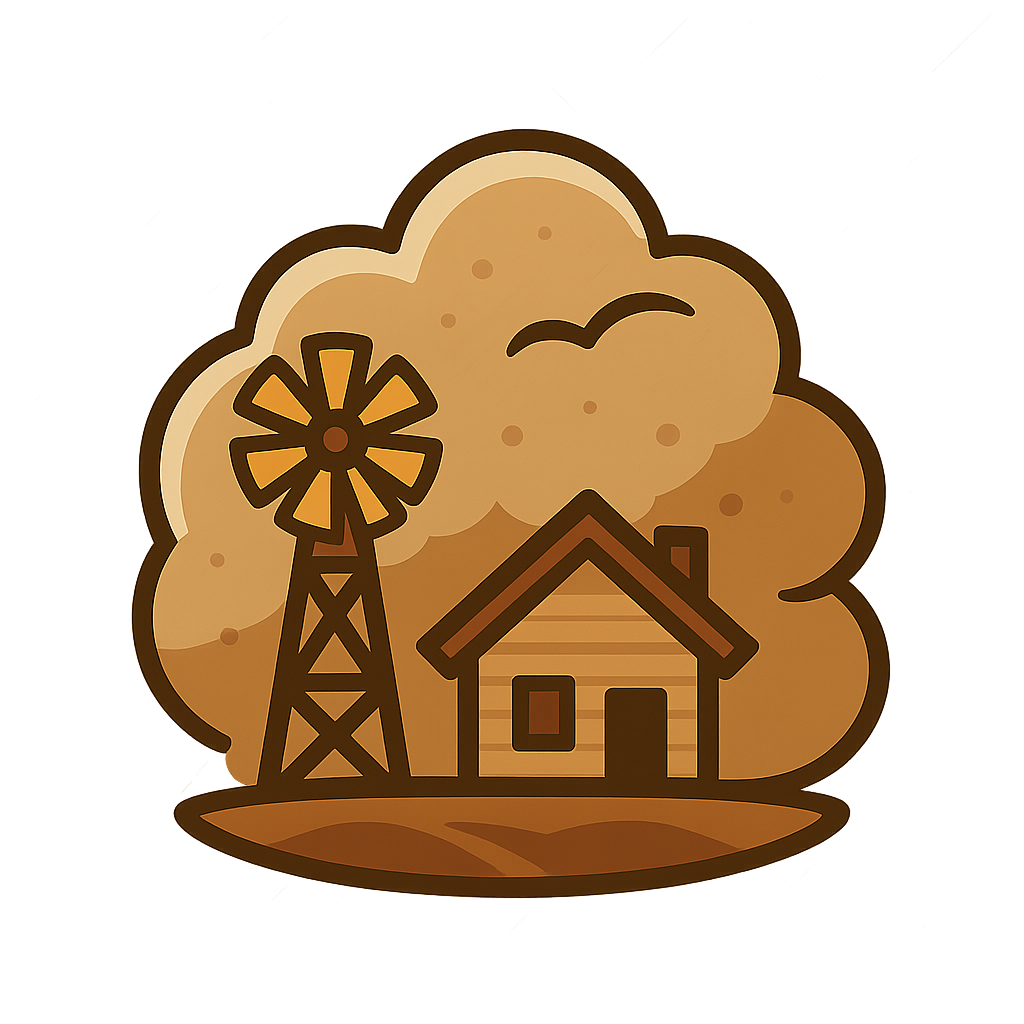
My name is Lily, and my world used to be made of sunshine and golden wheat. I was eight years old in 1930, and my family lived on a farm in Oklahoma. Our house was small, but the land felt as big as the whole world. Every morning, I’d run out onto the porch and see our wheat fields stretching for miles, swaying in the breeze like a golden ocean. My little brother and I would chase grasshoppers in the tall grass, while Ma tended her vegetable garden and Pa worked the fields on his tractor. We didn't have much money, but we had everything we needed. The land gave us our food, our home, and our future. Pa used to say that as long as we had our farm, we were the richest family in the world. I believed him. The prairie was our home, and I couldn't imagine living anywhere else.
Then, the sky forgot how to cry. The rain just stopped coming. The summer of 1931 was hot and dry, and so was the next one. The golden wheat turned brown and brittle, and our garden shriveled up. The ground grew cracked and thirsty, and soon the rich, dark soil turned into a fine, light dust. One afternoon, I saw a dark cloud on the horizon, but it wasn't a rain cloud. It was a giant, rolling wall of dirt, bigger than anything I had ever seen. The wind began to roar, and Pa yelled for us to get inside. The dust storm hit our house like a wave, and suddenly, the middle of the day was as dark as midnight. Dust seeped through every crack, under the doors and around the windows. It coated our plates, got into our water, and made our food taste gritty. Pa said that years of plowing had made the topsoil loose, and without rain or crops to hold it down, the wind could just pick it up and carry it away. The storms kept coming, year after year. The worst was on April 14th, 1935. We called it 'Black Sunday.' The sky turned completely black, and the dust was so thick we couldn't see our hands in front of our faces. We spent hours stuffing wet rags into the cracks of the house, but the dirt still found its way in, covering everything in a thick, brown blanket.
Lily's Dust Bowl Journey
My name is Lily, and my world used to be made of sunshine and golden wheat. I was eight years old in 1930, and my family lived on a farm in Oklahoma. Our house was small, but the land felt as big as the whole world. Every morning, I’d run out onto the porch and see our wheat fields stretching for miles, swaying in the breeze like a golden ocean. My little brother and I would chase grasshoppers in the tall grass, while Ma tended her vegetable garden and Pa worked the fields on his tractor. We didn't have much money, but we had everything we needed. The land gave us our food, our home, and our future. Pa used to say that as long as we had our farm, we were the richest family in the world. I believed him. The prairie was our home, and I couldn't imagine living anywhere else.
Then, the sky forgot how to cry. The rain just stopped coming. The summer of 1931 was hot and dry, and so was the next one. The golden wheat turned brown and brittle, and our garden shriveled up. The ground grew cracked and thirsty, and soon the rich, dark soil turned into a fine, light dust. One afternoon, I saw a dark cloud on the horizon, but it wasn't a rain cloud. It was a giant, rolling wall of dirt, bigger than anything I had ever seen. The wind began to roar, and Pa yelled for us to get inside. The dust storm hit our house like a wave, and suddenly, the middle of the day was as dark as midnight. Dust seeped through every crack, under the doors and around the windows. It coated our plates, got into our water, and made our food taste gritty. Pa said that years of plowing had made the topsoil loose, and without rain or crops to hold it down, the wind could just pick it up and carry it away. The storms kept coming, year after year. The worst was on April 14th, 1935. We called it 'Black Sunday.' The sky turned completely black, and the dust was so thick we couldn't see our hands in front of our faces. We spent hours stuffing wet rags into the cracks of the house, but the dirt still found its way in, covering everything in a thick, brown blanket.
Our farm, our beautiful home, was disappearing under mountains of dust. One evening, I saw Ma crying as she swept a pile of dirt out the front door, only to have the wind blow it right back in. Pa looked at her, his face tired and sad, and said, 'We can't fight it anymore. There's nothing left for us here.' The decision was made. We were going to California, a place we heard had green fields and jobs for farmers. Packing was the hardest part. We could only take what fit in our old truck. I had to leave my favorite doll and the wooden horse Pa had carved for me. We loaded up blankets, pots and pans, a little food, and the toolbox. Looking back at our house, half-buried in sand-like drifts of soil, made my heart ache. We got onto a long road called Route 66, and we weren't alone. The road was like a slow parade of families just like ours, their cars and trucks piled high with their belongings. Everyone was headed west, searching for a glimmer of hope. I was sad to leave everything I had ever known, but as I watched Oklahoma shrink in the distance, I held onto the little bit of hope Pa kept talking about.
When we finally arrived in California, it wasn't the paradise we had imagined. There were green fields, but there were also thousands of other families looking for work. We became migrant farmers, moving from farm to farm to pick fruit and vegetables. The work was hard, and the pay was very little. We lived in a tent by the side of a field, and some days we were very hungry. But even in the hardest times, we had each other. We met other families from Oklahoma and shared what little food we had, telling stories about the homes we missed. We were poor, but we were resilient. Back in the plains states, the government was helping the farmers who stayed. They started programs to teach people how to protect the soil. They planted millions of trees in long rows called shelterbelts to block the wind. They taught farmers new plowing methods that kept the soil from blowing away. People learned a very hard lesson from the Dust Bowl. It taught us that we have to be caretakers of the earth. My family eventually found a small town to settle in, but I never forgot the golden fields of Oklahoma or the dark, rolling clouds of dust. It taught me that even when you lose everything, hope and family can help you plant new roots.
Wow facts
About
A period of severe dust storms in the 1930s that severely damaged the agriculture and ecology of the American and Canadian prairies, leading to a significant migration of farming families due to the dust storms and the Great Depression.
Take a Quiz
Question 1 of 5
In the story, what does Lily mean when she says the wheat fields 'swayed like an ocean'?
Explore next




Want to do even more?
Go beyond exploring. Unlock tools that turn every story into real learning.

Storypie Plus for families
Full stories, quizzes, and printables. Nights and car rides, sorted.
- Unlimited audio stories
- Create Mode: your child stars in the story
- Offline downloads
- Printable worksheets & coloring pages

Why Storypie for Schools
Students engaged. Prep in seconds. Evenings back to you.
- Worksheets & Quizzes
- Classroom Management
- Formative Assessment
- Custom Curriculum & Lesson Plans
- 27 Languages

Why Storypie for Homeschool
Curriculum done. They'll ask for more. Hours back in your day.
- Worksheet Generator
- First-Person Audio Stories
- Built-in Comprehension Quizzes
- Custom Curriculum & Lesson Plans
- Print & Go Activities