English

Dust Bowl
A period of severe dust storms in the 1930s that severely damaged the agriculture and ecology of the American…
Reads at Grades K-2 Listens at K–3
Print & create
Answer keys·No prep·Free with an account
28 worksheets · answer keys · full story · quiz · Ages 6-8 · CEFR A2
Plus adds 102,000+ more stories in 27 languages, audio for every one, and printables for all of them.
Just want Dust Bowl?
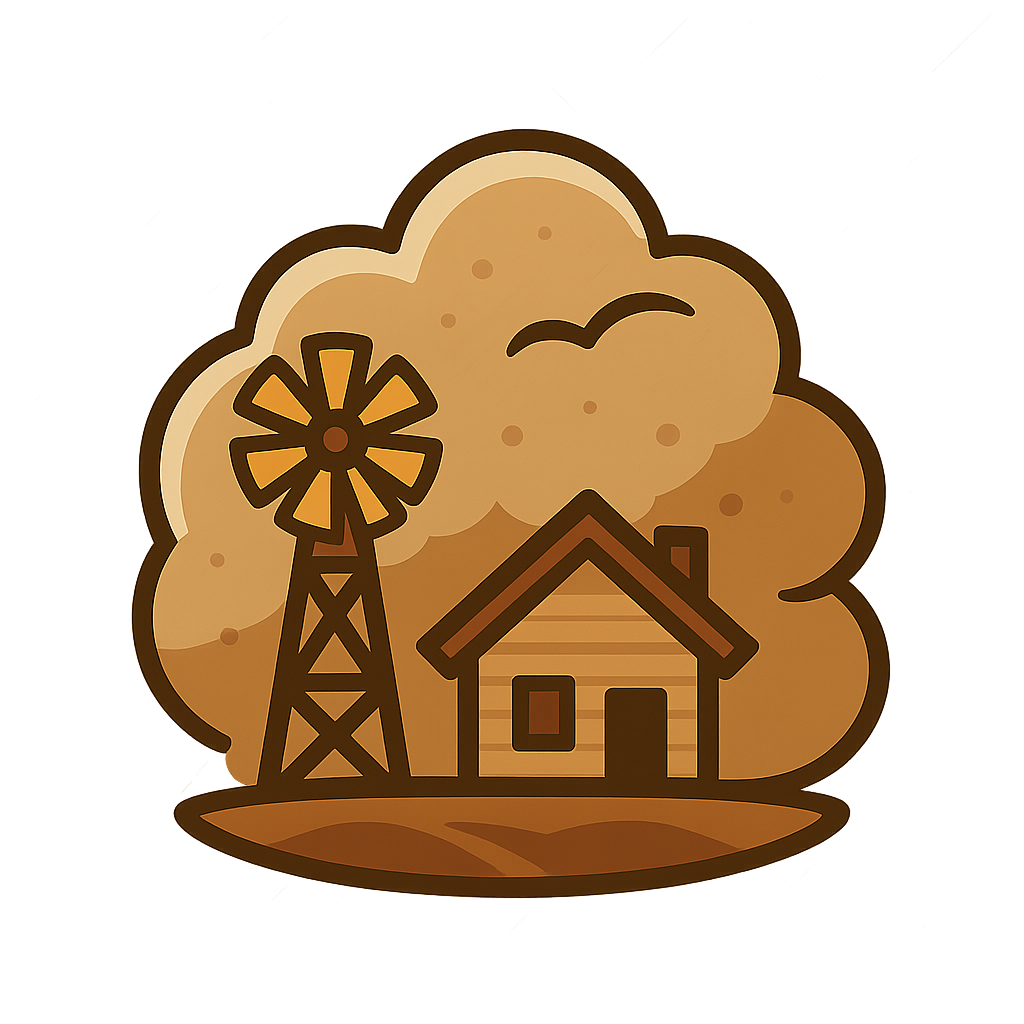
My name is Lily, and my home was a big farm in Oklahoma. This was a long time ago, back in the 1920s. Our life was full of sunshine. When I looked out our window, I saw a golden ocean. It wasn't real water, of course. It was our wheat, fields and fields of it, swaying in the gentle breeze. My father said the land gave us everything we needed. The sun felt warm on my skin as I helped my mother in the garden, and the sky was the biggest, bluest blanket you have ever seen. We loved our farm. It felt like the ground itself was a part of our family, happy and strong. My brother and I would race through the tall wheat stalks, pretending we were explorers on a great sea. We thought the warm sun and the golden fields would last forever, and we felt safe and happy in our little corner of the world.
But then, in the 1930s, things started to change. The rain just stopped coming. The big blue sky turned a hazy, dusty gray. Our beautiful golden ocean of wheat dried up and turned into a brown, crackly desert. Then the wind began to blow. It wasn't a gentle breeze anymore. It was a howling monster that picked up all the dry dirt. Sometimes, the sky would turn completely black in the middle of the day. We called these storms 'black blizzards.' I remember one day especially, it was April 14th, 1935. People later called it 'Black Sunday.' A giant wall of black dust rolled toward our house, bigger than any building I had ever seen. My mother shouted, 'Inside, quickly.'. We stuffed wet rags in the cracks of the windows and doors, but the dust still snuck in. It was like a sneaky powder that covered our plates, our beds, and even got in our mouths, tasting gritty and dry. We huddled together in the dim light, listening to the wind roar outside. It was scary, but being together made me feel a little bit safer. We held on tight, hoping our little house was strong enough.
The Girl Who Lived in the Dust Bowl
My name is Lily, and my home was a big farm in Oklahoma. This was a long time ago, back in the 1920s. Our life was full of sunshine. When I looked out our window, I saw a golden ocean. It wasn't real water, of course. It was our wheat, fields and fields of it, swaying in the gentle breeze. My father said the land gave us everything we needed. The sun felt warm on my skin as I helped my mother in the garden, and the sky was the biggest, bluest blanket you have ever seen. We loved our farm. It felt like the ground itself was a part of our family, happy and strong. My brother and I would race through the tall wheat stalks, pretending we were explorers on a great sea. We thought the warm sun and the golden fields would last forever, and we felt safe and happy in our little corner of the world.
But then, in the 1930s, things started to change. The rain just stopped coming. The big blue sky turned a hazy, dusty gray. Our beautiful golden ocean of wheat dried up and turned into a brown, crackly desert. Then the wind began to blow. It wasn't a gentle breeze anymore. It was a howling monster that picked up all the dry dirt. Sometimes, the sky would turn completely black in the middle of the day. We called these storms 'black blizzards.' I remember one day especially, it was April 14th, 1935. People later called it 'Black Sunday.' A giant wall of black dust rolled toward our house, bigger than any building I had ever seen. My mother shouted, 'Inside, quickly.'. We stuffed wet rags in the cracks of the windows and doors, but the dust still snuck in. It was like a sneaky powder that covered our plates, our beds, and even got in our mouths, tasting gritty and dry. We huddled together in the dim light, listening to the wind roar outside. It was scary, but being together made me feel a little bit safer. We held on tight, hoping our little house was strong enough.
The dusty years were very hard. Many of our neighbors packed up their cars and left, looking for a new place to live where the rain fell. My family decided to stay. We were not going to give up on our home. Soon, people came to help us. They showed my father and other farmers new ways to take care of the land. We learned to plant long rows of trees to make a wall against the wind. These 'shelterbelts,' they called them, acted like a giant fence to keep the soil from blowing away. We also learned to plow our fields in special ways that helped the ground hold on to water. It took a long, long time, but slowly, things got better. Near the end of the 1930s, the rains finally came back. The first time I saw a fat raindrop hit the dry ground, I danced outside. The earth drank and drank, and soon, little bits of green grass started to poke through. Our farm started to heal, and so did we. We learned that the land is precious and that by working together, we could make it strong again.
Wow facts
About
A period of severe dust storms in the 1930s that severely damaged the agriculture and ecology of the American and Canadian prairies, leading to a significant migration of farming families due to the dust storms and the Great Depression.
Take a Quiz
Question 1 of 4
Why did the sky turn dark in the middle of the day during the 1930s?
Explore next




Want to do even more?
Go beyond exploring. Unlock tools that turn every story into real learning.

Storypie Plus for families
Full stories, quizzes, and printables. Nights and car rides, sorted.
- Unlimited audio stories
- Create Mode: your child stars in the story
- Offline downloads
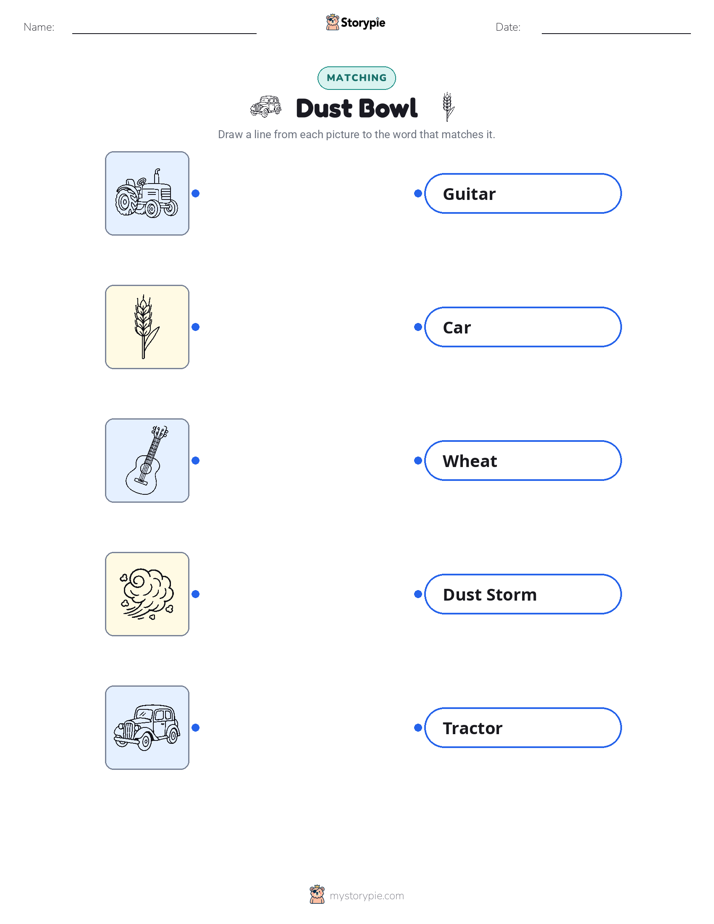
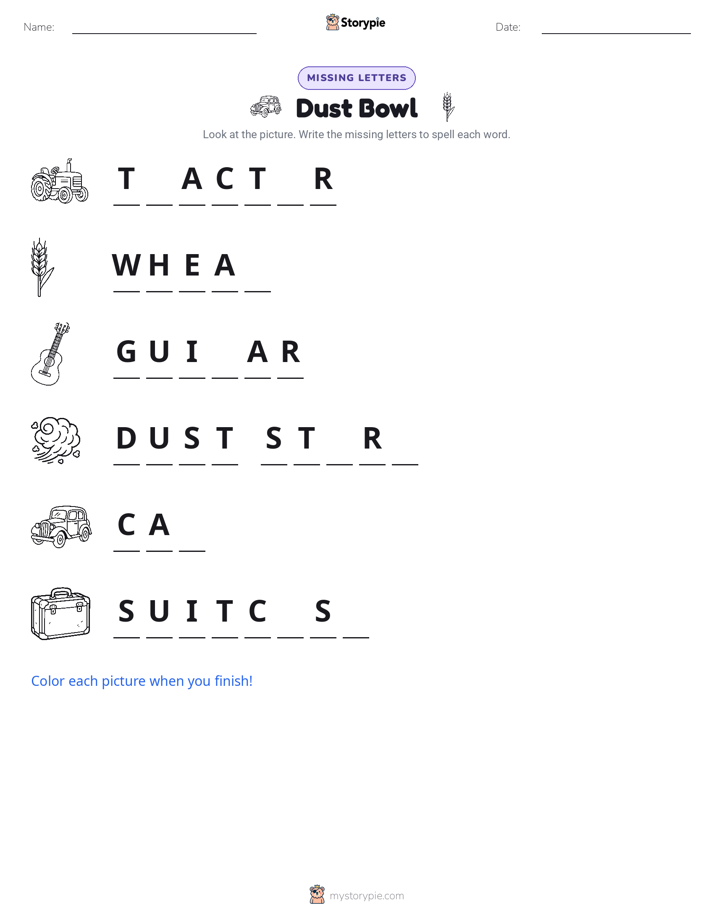
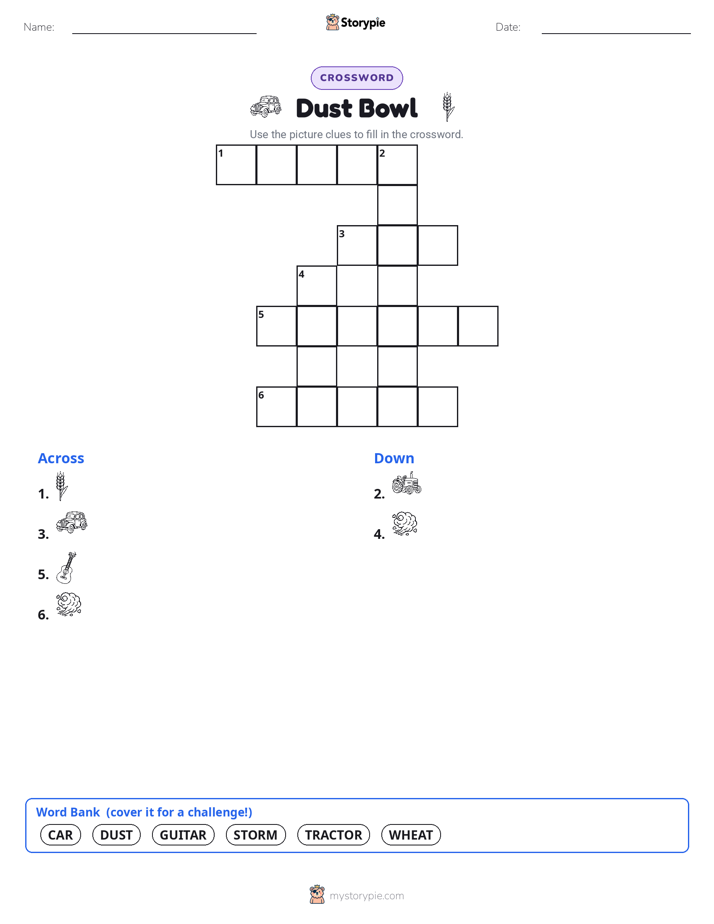
- Printable worksheets & coloring pages

Why Storypie for Schools
Students engaged. Prep in seconds. Evenings back to you.
- Worksheets & Quizzes
- Classroom Management
- Formative Assessment
- Custom Curriculum & Lesson Plans
- 27 Languages

Why Storypie for Homeschool
Curriculum done. They'll ask for more. Hours back in your day.
- Worksheet Generator
- First-Person Audio Stories
- Built-in Comprehension Quizzes
- Custom Curriculum & Lesson Plans
- Print & Go Activities