English

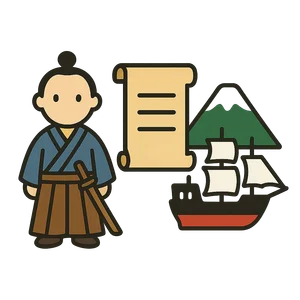
Edo Period
The Edo Period (1603–1868) was a time of over 250 years of peace and stability in Japan under the rule of the…
Reads at Grades 3–5 Listens at Grades 1–5
Tokugawa Ieyasu: The Shogun of Peace
My name is Tokugawa Ieyasu, and I lived in a time when Japan felt like it was tearing itself apart. For more than a century, my home was caught in what historians now call the Sengoku period, or the 'Age of Warring States'. Imagine a country with no single leader, where powerful lords called daimyo were constantly fighting one another for land and power. Everywhere you looked, there was smoke from burning castles and the clang of swords. It was a sad and frightening time, especially for ordinary people who just wanted to raise their families in safety. I grew up in this world of endless battles, and I saw firsthand how much suffering it caused. From a young age, I held a dream in my heart that was different from the dreams of the other lords. While they dreamed of conquest, I dreamed of something greater: a unified Japan, where the fighting would finally stop. I wanted to build a nation where people could live their lives without fear, where a farmer could tend his fields and a craftsman could perfect his art. This dream of lasting peace became the mission of my entire life.
My journey to unite Japan was long and full of challenges, but the most important moment came on a foggy morning, October 21st, 1600. This was the day of the Battle of Sekigahara. Armies from the east and west of Japan gathered on that field, and the outcome of this single battle would decide the country's future. The fighting was fierce, but my forces were victorious. This victory was the key that unlocked the door to peace. A few years later, on March 24th, 1603, the Emperor gave me the title of shogun. This meant I was now the supreme military leader of all of Japan. My first big decision was where to build my government. I chose a small, quiet fishing village called Edo. It might not have seemed like much then, but I had a vision that it would become the heart of our new, peaceful nation. And it did. Edo grew and grew, eventually becoming the great city you now know as Tokyo. To make sure the peace would last, I created a new set of rules. One of the most important was that all the daimyo had to spend every other year in Edo, and their families had to live there all the time. This way, I could build relationships with them, and they were less likely to start rebellions back in their home provinces. With the constant threat of war gone, Japan began to change in wonderful ways. Towns grew into bustling cities, merchants traveled safely on the roads, and a new world of art and culture began to bloom. People had the time and safety to create beautiful things. Theaters opened for exciting kabuki plays with dramatic stories, and artists created colorful woodblock prints called ukiyo-e, showing scenes from city life.
Looking back, the thing I am most proud of is not a single battle I won, but the lasting peace that followed. The system I put in place allowed my family, the Tokugawa clan, to rule as shoguns for over 250 years. This long era of quiet and stability is now called the Edo period. During this time, Japan was like a peaceful garden, protected from the storms of war. It was in this garden that our unique culture could truly flourish. Our poetry, our theater, our art, and our way of life developed without outside interruption. We became a nation of artists, thinkers, and builders, not just warriors. My dream had come true. The fighting had stopped, and the people of Japan were able to build a rich and beautiful society. My story shows that true strength isn't just about winning on the battlefield. It's about building something that lasts. I hope you remember that peace is the soil where the best things can grow—creativity, community, and happiness. Working to create a better, more peaceful world is one of the most important goals anyone can have.
Wow facts
About
The Edo Period (1603–1868) was a time of over 250 years of peace and stability in Japan under the rule of the Tokugawa shogunate. It was characterized by strict social order, economic growth, flourishing arts and culture, and a policy of national isolation.
Take a Quiz
Question 1 of 5
Why did Tokugawa Ieyasu make the other lords (daimyo) spend every other year in Edo?
Explore next

Want to do even more?
Go beyond exploring. Unlock tools that turn every story into real learning.

Storypie Plus for families
Full stories, quizzes, and printables. Nights and car rides, sorted.
- Unlimited audio stories
- Create Mode: your child stars in the story
- Offline downloads
- Printable worksheets & coloring pages

Why Storypie for Schools
Students engaged. Prep in seconds. Evenings back to you.
- Worksheets & Quizzes
- Classroom Management
- Formative Assessment
- Custom Curriculum & Lesson Plans
- 27 Languages

Why Storypie for Homeschool
Curriculum done. They'll ask for more. Hours back in your day.
- Worksheet Generator
- First-Person Audio Stories
- Built-in Comprehension Quizzes
- Custom Curriculum & Lesson Plans
- Print & Go Activities