English

Festa Junina
Festa Junina, or the 'June Festival…
Reads at Grades 3–5 Listens at Grades 1–5
Print & create
Answer keys·No prep·Free with an account
28 worksheets · answer keys · full story · quiz · Ages 8-10 · CEFR B1
Plus adds 116,000+ more stories in 27 languages, audio for every one, and printables for all of them.
Just want Festa Junina?
Hello there, little one. You can call me Vovô João. That means Grandpa João in my language, Portuguese. I have lived my whole life here, in my small town in the Northeast of Brazil, where the sun is warm and the soil is rich. I am a farmer, and my hands know the story of every season. But my favorite story begins when the air starts to cool just a little, and the month of June arrives. It’s a special time for us. The corn in my fields stands tall and golden, and we know it is time for the Festa Junina, the June Festival. This isn't just any party. For hundreds of years, ever since the Portuguese brought the tradition to our shores, we have celebrated this time to give thanks. We thank the saints who watch over our crops—Saint Anthony, Saint John, and Saint Peter—for sending the rain and giving us a bountiful harvest. It is a tradition that warms our souls like a bonfire on a cool night, a thread connecting my generation to my parents, my grandparents, and all the ancestors who worked this land before me. The smell of roasting corn and burning wood from the bonfires fills the air, and my heart fills with joy.
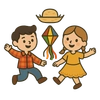
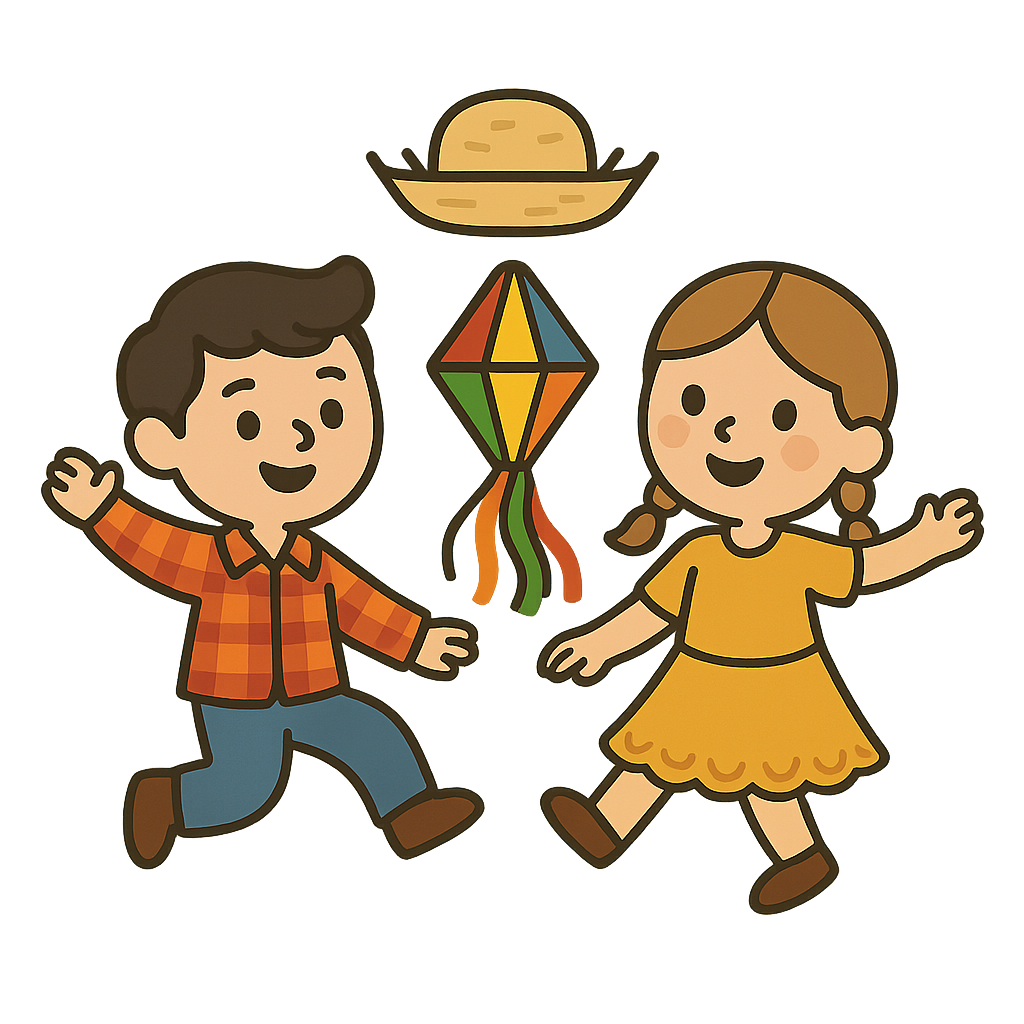
When the night of the festival finally arrives, our town square transforms into a wonderland of color and sound. Above our heads, hundreds of colorful paper flags, which we call *bandeirinhas*, are strung from one end of the square to the other, crisscrossing the sky like a paper rainbow. In the center, a giant bonfire, the *fogueira*, crackles and spits sparks towards the stars, its warm glow lighting up everyone's smiling faces. And the food. Oh, the food is a celebration all on its own. Everything is made from corn, the gift of our harvest. There’s corn on the cob roasted right over hot coals, sweet and sticky *canjica*, which is a kind of corn pudding, and *pamonha*, a delicious corn paste cooked inside a corn husk. But the heart of the party is the *quadrilha*. This is our traditional dance. Everyone dresses up like country folk, or *caipiras*. The boys wear plaid shirts with patches and straw hats, and the girls wear pigtails, bright dresses, and paint funny freckles on their cheeks. I love to watch the dance begin. A caller shouts out instructions, and the couples weave and twirl in patterns, telling the story of a silly country wedding. 'Look at the rain.' he might shout, and everyone will put their hands on their heads and run for cover. 'It's a lie.' he calls next, and the dancing continues. All of this happens to the cheerful rhythm of *forró* music. You can hear the happy notes of an accordion, the steady *ching-ching* of a triangle, and the deep beat of a drum called the *zabumba*. The music makes you want to tap your feet and join in, no matter how old you are. I may be a Vovô, but I can still dance a little when I hear it.
Vovô João and the June Festival
Hello there, little one. You can call me Vovô João. That means Grandpa João in my language, Portuguese. I have lived my whole life here, in my small town in the Northeast of Brazil, where the sun is warm and the soil is rich. I am a farmer, and my hands know the story of every season. But my favorite story begins when the air starts to cool just a little, and the month of June arrives. It’s a special time for us. The corn in my fields stands tall and golden, and we know it is time for the Festa Junina, the June Festival. This isn't just any party. For hundreds of years, ever since the Portuguese brought the tradition to our shores, we have celebrated this time to give thanks. We thank the saints who watch over our crops—Saint Anthony, Saint John, and Saint Peter—for sending the rain and giving us a bountiful harvest. It is a tradition that warms our souls like a bonfire on a cool night, a thread connecting my generation to my parents, my grandparents, and all the ancestors who worked this land before me. The smell of roasting corn and burning wood from the bonfires fills the air, and my heart fills with joy.
When the night of the festival finally arrives, our town square transforms into a wonderland of color and sound. Above our heads, hundreds of colorful paper flags, which we call bandeirinhas, are strung from one end of the square to the other, crisscrossing the sky like a paper rainbow. In the center, a giant bonfire, the fogueira, crackles and spits sparks towards the stars, its warm glow lighting up everyone's smiling faces. And the food. Oh, the food is a celebration all on its own. Everything is made from corn, the gift of our harvest. There’s corn on the cob roasted right over hot coals, sweet and sticky canjica, which is a kind of corn pudding, and pamonha, a delicious corn paste cooked inside a corn husk. But the heart of the party is the quadrilha. This is our traditional dance. Everyone dresses up like country folk, or caipiras. The boys wear plaid shirts with patches and straw hats, and the girls wear pigtails, bright dresses, and paint funny freckles on their cheeks. I love to watch the dance begin. A caller shouts out instructions, and the couples weave and twirl in patterns, telling the story of a silly country wedding. 'Look at the rain.' he might shout, and everyone will put their hands on their heads and run for cover. 'It's a lie.' he calls next, and the dancing continues. All of this happens to the cheerful rhythm of forró music. You can hear the happy notes of an accordion, the steady ching-ching of a triangle, and the deep beat of a drum called the zabumba. The music makes you want to tap your feet and join in, no matter how old you are. I may be a Vovô, but I can still dance a little when I hear it.
As I sit by the fire, watching the children play games and the adults dance the quadrilha, I realize this festival is about so much more than just food and music. The fogueira is more than just a bonfire to keep us warm; it is a fire in our hearts. It represents our shared joy, our connection to the land, and our love for our community. Each colorful bandeirinha is like a prayer of thanks fluttering in the wind. Festa Junina reminds us that we are all part of one big family, helping each other through the seasons of planting and harvesting, and celebrating our successes together. It teaches our children about the traditions of their ancestors and the importance of being grateful for what the earth provides. This celebration is a promise we make to each other every year to keep our culture alive and our community strong. The warmth you feel is not just from the fire, but from the smiles and laughter all around you. It’s a feeling I hope you get to experience in your own celebrations, wherever you are.
Wow facts
About
Festa Junina, or the 'June Festival,' is a traditional Brazilian celebration held in June to honor Catholic saints and celebrate the rural harvest, featuring bonfires, folk music, dancing, and typical foods.
Take a Quiz
Question 1 of 5
According to Vovô João, why do the people in his town celebrate Festa Junina?
Want to do even more?
Go beyond exploring. Unlock tools that turn every story into real learning.

Storypie Plus for families
Full stories, quizzes, and printables. Nights and car rides, sorted.
- Unlimited audio stories
- Create Mode: your child stars in the story
- Offline downloads
- Printable worksheets & coloring pages

Why Storypie for Schools
Students engaged. Prep in seconds. Evenings back to you.
- Worksheets & Quizzes
- Classroom Management
- Formative Assessment
- Custom Curriculum & Lesson Plans
- 27 Languages

Why Storypie for Homeschool
Curriculum done. They'll ask for more. Hours back in your day.
- Worksheet Generator
- First-Person Audio Stories
- Built-in Comprehension Quizzes
- Custom Curriculum & Lesson Plans
- Print & Go Activities