English

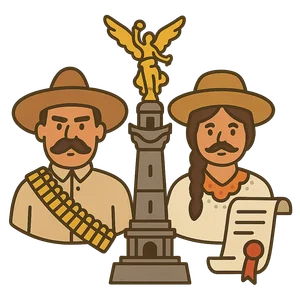
Mexican Revolution
The Mexican Revolution was a decade-long civil war from 1910 to 1920 that radically transformed Mexican…
Reads at Grades 6–8 Listens at Grades 4–8
Print & create
Answer keys·No prep·Free with an account
28 worksheets · answer keys · full story · quiz · Ages 10-12 · CEFR B2
Plus adds 164,000+ more stories in 27 languages, audio for every one, and printables for all of them.
Just want Mexican Revolution?
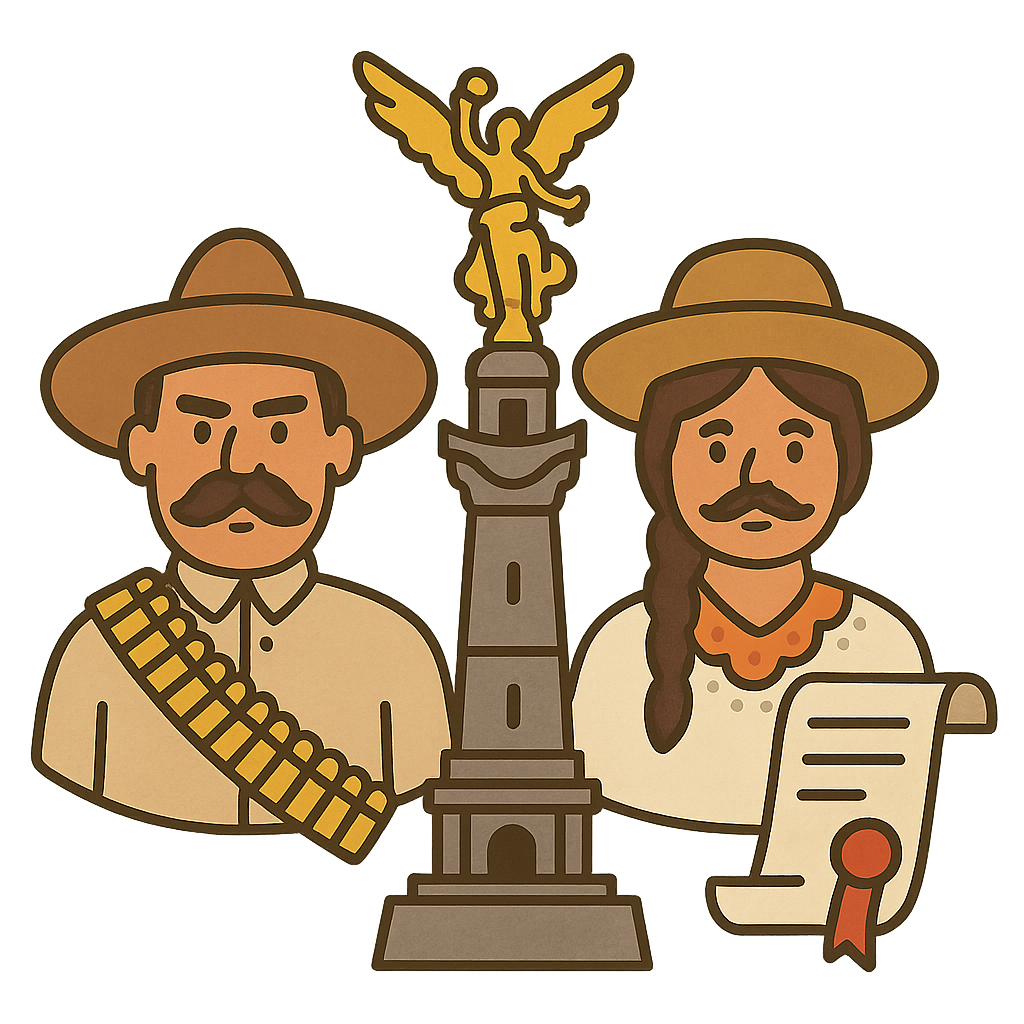
My name is Emiliano Zapata, and my story is tied to the soil of my home, Anenecuilco, in the state of Morelos, Mexico. Since I was a boy, I learned the language of the earth. I knew the rhythm of the seasons, the feel of the dirt in my hands, and the smell of the cornfields after a summer rain. My people, the farmers and peasants of the south, lived by this rhythm. For centuries, our villages had owned land together, in what we called ejidos. This land was our lifeblood. It was where we grew our food, raised our families, and buried our ancestors. It was more than just property; it was our identity. But by the time I was a young man, a deep sadness had settled over our land. A long-ruling president, Porfirio Díaz, had allowed wealthy families, the hacendados, to create enormous estates by taking over our ejidos. They put up fences and claimed deeds to land that had been ours for generations. We were left with nothing. To survive, we had to work for pennies on the very fields that once belonged to us. We were treated not as free men, but as servants. I saw the tired look in my father’s eyes and the hunger in the faces of my neighbors. The land itself seemed to cry out for justice, and I knew in my heart that I could not stay silent while my people suffered.
Then, a new voice began to echo through the mountains and valleys. In 1910, a man named Francisco Madero called for a revolution against the government of Porfirio Díaz. He promised a return to justice and democracy, and for us, that meant a return of our lands. Hope, a feeling we had nearly forgotten, sparked in our hearts. On November 20th, 1910, the revolution began, and I joined the cause. My neighbors, my friends, farmers armed with old tools and a burning desire for fairness, formed the Liberation Army of the South. We were not professional soldiers, but we had a powerful purpose. Our slogan was simple but held all of our dreams: 'Tierra y Libertad'—Land and Liberty. We fought hard, and together with other revolutionary forces in the north, we succeeded in forcing President Díaz from power in 1911. It was a great victory. But our celebration was short-lived. Francisco Madero became president, but the promises he made to the farmers of the south were forgotten. The wealthy landowners kept our fields, and the injustice continued. I felt a profound disappointment. We had not risked our lives just to change the man sitting in the presidential palace. We fought for fundamental change. So, on November 28th, 1911, I gathered my commanders and we wrote a new plan, the Plan of Ayala. It was a declaration that we would not put down our weapons until the land was returned to the people who worked it. We declared Madero a traitor to the revolution and vowed to continue our struggle, no matter who was in power. For years, we fought on. We fought against Madero, then against the generals who followed him. The fight was long and difficult, but the spirit of my people never broke. We knew what we were fighting for. We were fighting for our homes, our future, and the soul of Mexico.
A Story of Land and Liberty
My name is Emiliano Zapata, and my story is tied to the soil of my home, Anenecuilco, in the state of Morelos, Mexico. Since I was a boy, I learned the language of the earth. I knew the rhythm of the seasons, the feel of the dirt in my hands, and the smell of the cornfields after a summer rain. My people, the farmers and peasants of the south, lived by this rhythm. For centuries, our villages had owned land together, in what we called ejidos. This land was our lifeblood. It was where we grew our food, raised our families, and buried our ancestors. It was more than just property; it was our identity. But by the time I was a young man, a deep sadness had settled over our land. A long-ruling president, Porfirio Díaz, had allowed wealthy families, the hacendados, to create enormous estates by taking over our ejidos. They put up fences and claimed deeds to land that had been ours for generations. We were left with nothing. To survive, we had to work for pennies on the very fields that once belonged to us. We were treated not as free men, but as servants. I saw the tired look in my father’s eyes and the hunger in the faces of my neighbors. The land itself seemed to cry out for justice, and I knew in my heart that I could not stay silent while my people suffered.
Then, a new voice began to echo through the mountains and valleys. In 1910, a man named Francisco Madero called for a revolution against the government of Porfirio Díaz. He promised a return to justice and democracy, and for us, that meant a return of our lands. Hope, a feeling we had nearly forgotten, sparked in our hearts. On November 20th, 1910, the revolution began, and I joined the cause. My neighbors, my friends, farmers armed with old tools and a burning desire for fairness, formed the Liberation Army of the South. We were not professional soldiers, but we had a powerful purpose. Our slogan was simple but held all of our dreams: 'Tierra y Libertad'—Land and Liberty. We fought hard, and together with other revolutionary forces in the north, we succeeded in forcing President Díaz from power in 1911. It was a great victory. But our celebration was short-lived. Francisco Madero became president, but the promises he made to the farmers of the south were forgotten. The wealthy landowners kept our fields, and the injustice continued. I felt a profound disappointment. We had not risked our lives just to change the man sitting in the presidential palace. We fought for fundamental change. So, on November 28th, 1911, I gathered my commanders and we wrote a new plan, the Plan of Ayala. It was a declaration that we would not put down our weapons until the land was returned to the people who worked it. We declared Madero a traitor to the revolution and vowed to continue our struggle, no matter who was in power. For years, we fought on. We fought against Madero, then against the generals who followed him. The fight was long and difficult, but the spirit of my people never broke. We knew what we were fighting for. We were fighting for our homes, our future, and the soul of Mexico.
A seed, once planted, will always find a way to grow, even if the person who planted it is no longer there to see it blossom. I did not live to see the final peace settle over Mexico. My fight ended in an ambush in 1919. But the ideas we fought for, the principles of the Plan of Ayala, took deep root in the nation’s soil. The leaders who came after me could not ignore the cries for 'Tierra y Libertad' that echoed across the country. In 1917, while the revolution still raged, a new Mexican Constitution was written. Within that great document was Article 27, a direct result of our struggle. It declared that the land, waters, and resources of Mexico ultimately belonged to the nation, which could then return them to the people. It was the legal foundation for breaking up the massive haciendas and restoring the ejidos to the villages. It was the Plan of Ayala, written into the highest law of the land. My life was given for a cause, and that cause lived on. The struggle for justice is a long one, but our fight showed that a small group of determined people, united by a just cause, can change a nation. My story is a reminder that you must always stand up for what is right, for the land that sustains you, and for the community that supports you.
Wow facts
About
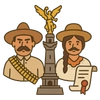
The Mexican Revolution was a decade-long civil war from 1910 to 1920 that radically transformed Mexican politics and society, leading to a new constitution and significant land reforms.
Take a Quiz
Question 1 of 5
In your own words, retell the main events of Emiliano Zapata's story.
Explore next


Want to do even more?
Go beyond exploring. Unlock tools that turn every story into real learning.

Storypie Plus for families
Full stories, quizzes, and printables. Nights and car rides, sorted.
- Unlimited audio stories
- Create Mode: your child stars in the story
- Offline downloads
- Printable worksheets & coloring pages

Why Storypie for Schools
Students engaged. Prep in seconds. Evenings back to you.
- Worksheets & Quizzes
- Classroom Management
- Formative Assessment
- Custom Curriculum & Lesson Plans
- 27 Languages

Why Storypie for Homeschool
Curriculum done. They'll ask for more. Hours back in your day.
- Worksheet Generator
- First-Person Audio Stories
- Built-in Comprehension Quizzes
- Custom Curriculum & Lesson Plans
- Print & Go Activities