English

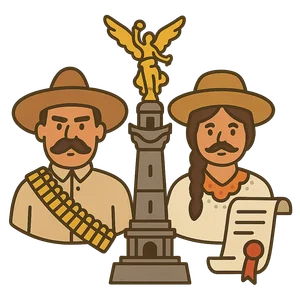
Mexican Revolution
The Mexican Revolution was a decade-long civil war from 1910 to 1920 that radically transformed Mexican…
Reads at Grades 3–5 Listens at Grades 1–5
Print & create
Answer keys·No prep·Free with an account
28 worksheets · answer keys · full story · quiz · Ages 8-10 · CEFR B1
Plus adds 164,000+ more stories in 27 languages, audio for every one, and printables for all of them.
Just want Mexican Revolution?
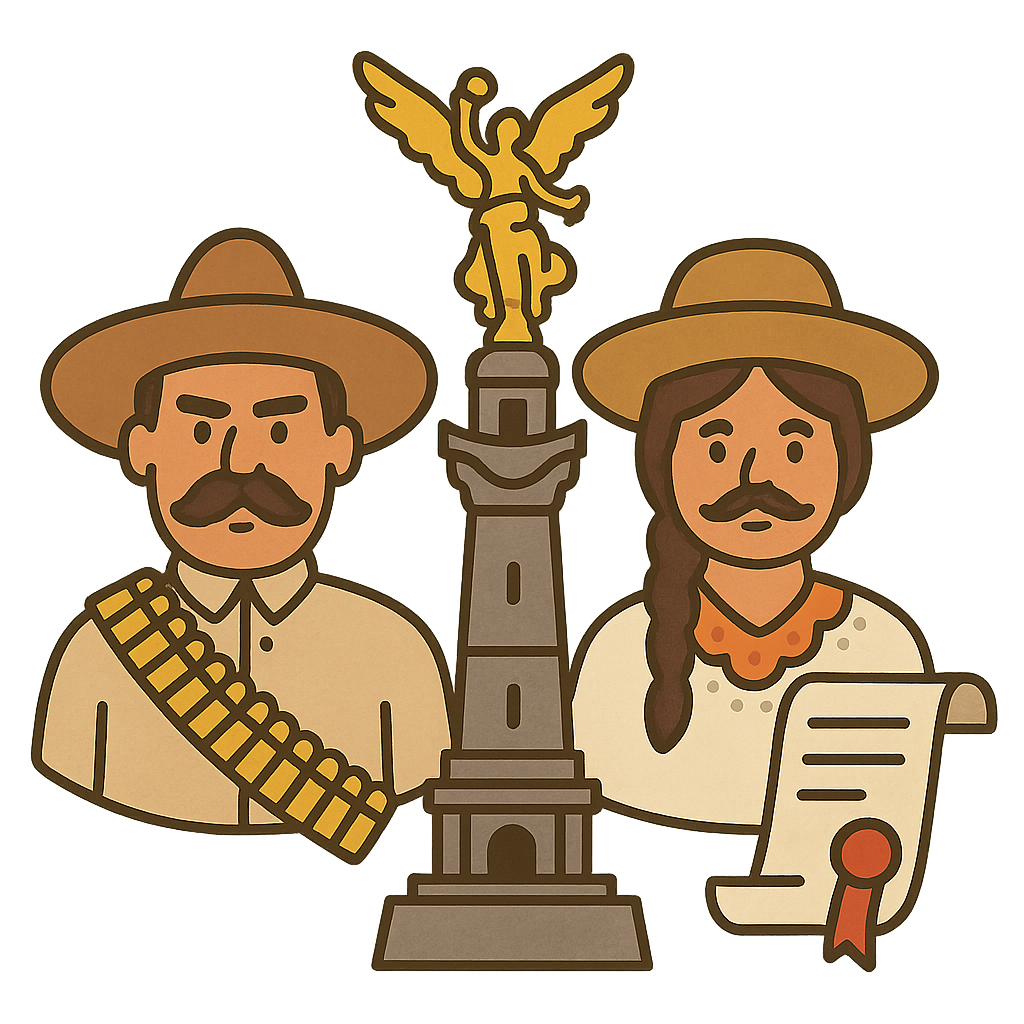
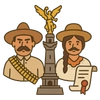
Hello. My name is Emiliano Zapata, and I come from a small village in Mexico called Anenecuilco. I have always been a farmer, a campesino, just like my father and his father before him. Our land in the state of Morelos is beautiful, with warm sun and rich soil that can grow sweet corn, hearty beans, and juicy watermelons. But for a long time, the land was not truly ours. It felt like it was crying out in sadness. Under the very long rule of President Porfirio Díaz, a few very wealthy families owned almost all of Mexico. They lived in giant houses, called haciendas, and their fields stretched farther than the eye could see. Meanwhile, my people worked day after day on land that had belonged to our ancestors for generations, but we were treated like strangers on our own soil. I remember as a boy, I saw my father looking so sad because a wealthy landowner had taken our fields, showing papers we couldn't even read. I placed my hand on his and promised him, 'When I grow up, I will make them give it back to us.' That promise stayed in my heart. It was a fire that burned inside me, a promise not just to my father, but to all the farmers who had lost their homes and their hope. It was the beginning of my fight for justice for my people.
For years, the feeling of unfairness grew heavier, like a storm cloud ready to burst. The wealthy got wealthier, and the poor had less and less. We tried to ask for our land back peacefully, but no one in the government would listen to simple farmers. Then, a new voice of hope echoed across the country. His name was Francisco Madero, and he believed that President Díaz's rule had gone on for too long and had become unjust. He called for a change. On November 20th, 1910, Madero’s call for revolution reached us. It was like a spark landing on dry grass. Finally, someone was saying what we all felt. Hope spread through my village and all the villages around us. I knew I could not just stand by and watch. My promise to my father was ringing in my ears. I gathered my friends and neighbors, other farmers who were tired of being poor and powerless. We didn't have fancy uniforms or powerful weapons, but we had courage and a shared dream. We formed our own army in the south, the Liberation Army of the South. We were fighting for our homes, for our families, and for a Mexico where everyone was treated fairly. The time for asking was over. The time for fighting for our rights had begun.
Emiliano Zapata and the Fight for Mexico's Land
Hello. My name is Emiliano Zapata, and I come from a small village in Mexico called Anenecuilco. I have always been a farmer, a campesino, just like my father and his father before him. Our land in the state of Morelos is beautiful, with warm sun and rich soil that can grow sweet corn, hearty beans, and juicy watermelons. But for a long time, the land was not truly ours. It felt like it was crying out in sadness. Under the very long rule of President Porfirio Díaz, a few very wealthy families owned almost all of Mexico. They lived in giant houses, called haciendas, and their fields stretched farther than the eye could see. Meanwhile, my people worked day after day on land that had belonged to our ancestors for generations, but we were treated like strangers on our own soil. I remember as a boy, I saw my father looking so sad because a wealthy landowner had taken our fields, showing papers we couldn't even read. I placed my hand on his and promised him, 'When I grow up, I will make them give it back to us.' That promise stayed in my heart. It was a fire that burned inside me, a promise not just to my father, but to all the farmers who had lost their homes and their hope. It was the beginning of my fight for justice for my people.
For years, the feeling of unfairness grew heavier, like a storm cloud ready to burst. The wealthy got wealthier, and the poor had less and less. We tried to ask for our land back peacefully, but no one in the government would listen to simple farmers. Then, a new voice of hope echoed across the country. His name was Francisco Madero, and he believed that President Díaz's rule had gone on for too long and had become unjust. He called for a change. On November 20th, 1910, Madero’s call for revolution reached us. It was like a spark landing on dry grass. Finally, someone was saying what we all felt. Hope spread through my village and all the villages around us. I knew I could not just stand by and watch. My promise to my father was ringing in my ears. I gathered my friends and neighbors, other farmers who were tired of being poor and powerless. We didn't have fancy uniforms or powerful weapons, but we had courage and a shared dream. We formed our own army in the south, the Liberation Army of the South. We were fighting for our homes, for our families, and for a Mexico where everyone was treated fairly. The time for asking was over. The time for fighting for our rights had begun.
Our fight helped force President Díaz to leave the country, and Francisco Madero became president. We were filled with joy, thinking our struggle was over and our lands would be returned. But our happiness did not last long. The new government was slow to act, and some of the new leaders were just as greedy as the old ones. They did not understand that for us, the land was everything. It was our life. I felt a deep disappointment, but not defeat. If the government would not keep its promises, then we would have to make our own plan. So, on November 28th, 1911, my followers and I created a document we called the Plan of Ayala. It was a simple but powerful plan. It declared that the land, waters, and forests that had been stolen should be returned to the villages and people who were their rightful owners. Our motto became our battle cry: '¡Tierra y Libertad!'. which means 'Land and Liberty!'. For many years, we, the Zapatistas, continued to fight. We fought against different presidents and generals who came to power. They called us bandits, but we knew what we were: we were farmers fighting for the right to plant our own corn on our own land. We were not fighting for money or power for ourselves. We were fighting for the very soul of Mexico, for a future where a person's hard work meant they could feed their family and live with dignity. Our spirit was strong because our cause was just.
The Mexican Revolution was a long and difficult time, with many years of struggle. Many brave people were lost along the way. But our fight, and the fights of others across Mexico, eventually led to a very important change. In 1917, a new constitution for Mexico was written. A constitution is the highest law of a country, a set of rules that everyone must follow. And within that new constitution was Article 27, a part that spoke directly to our dream. It said that the land of Mexico ultimately belonged to the nation and that it could be given to the people to work. It was the beginning of land reform, the very thing we had been fighting for. Our voices had finally been heard. Though the changes took a long time to happen, our fight was not in vain. We had planted a seed. I learned that when you stand up for what is right, even when it seems impossible, you can change the future. My life was for my people and for the land, and my hope is that the seed of 'Tierra y Libertad' continues to grow, reminding everyone that justice is always worth fighting for.
Wow facts
About
The Mexican Revolution was a decade-long civil war from 1910 to 1920 that radically transformed Mexican politics and society, leading to a new constitution and significant land reforms.
Take a Quiz
Question 1 of 5
In the story, Zapata's motto was '¡Tierra y Libertad!'. What does this mean in English?
Explore next


Want to do even more?
Go beyond exploring. Unlock tools that turn every story into real learning.

Storypie Plus for families
Full stories, quizzes, and printables. Nights and car rides, sorted.
- Unlimited audio stories
- Create Mode: your child stars in the story
- Offline downloads
- Printable worksheets & coloring pages

Why Storypie for Schools
Students engaged. Prep in seconds. Evenings back to you.
- Worksheets & Quizzes
- Classroom Management
- Formative Assessment
- Custom Curriculum & Lesson Plans
- 27 Languages

Why Storypie for Homeschool
Curriculum done. They'll ask for more. Hours back in your day.
- Worksheet Generator
- First-Person Audio Stories
- Built-in Comprehension Quizzes
- Custom Curriculum & Lesson Plans
- Print & Go Activities