English

Neolithic Revolution
A period of major change in human history, beginning around 10,000 BCE…
Reads at Grades 6–8 Listens at Grades 4–8
Print & create
Answer keys·No prep·Free with an account
28 worksheets · answer keys · full story · quiz · Ages 10-12 · CEFR B2
Plus adds 102,000+ more stories in 27 languages, audio for every one, and printables for all of them.
Just want Neolithic Revolution?
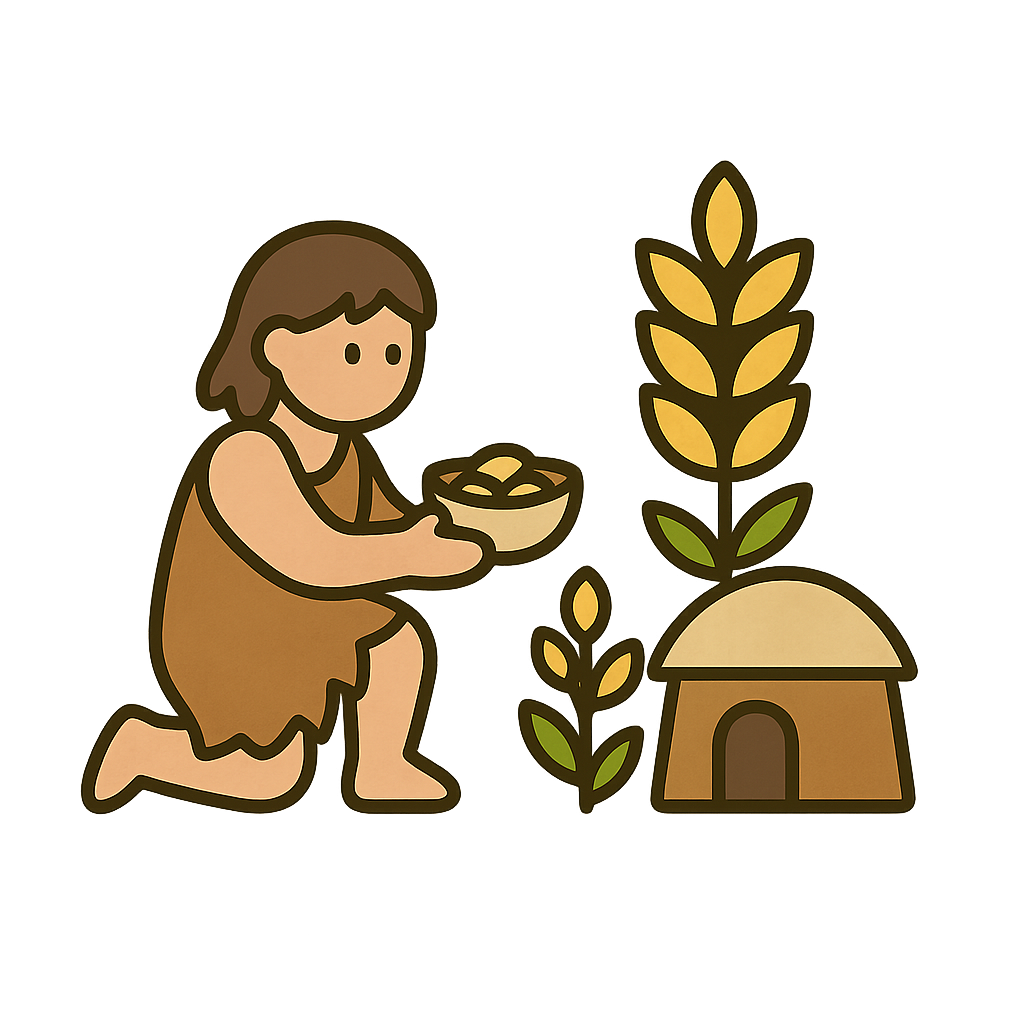
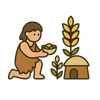
My name is Elara, and for as long as I can remember, my world was always moving. My family and I were nomads, which is a word for people who never stay in one place for long. We lived around 10,000 BCE in a wide, green valley known as the Fertile Crescent. Our home was the horizon, and our lives were shaped by the seasons and the great herds of gazelle and wild cattle. When the herds moved, we packed our hide tents and followed. When the berries ripened in a distant valley, we walked for days to gather them. Every morning was a question: would we find food today? Some days were full of luck. My father and the other hunters would return with a catch, and we would feast around a crackling fire. But many other days were hungry ones. I remember the sharp pang in my stomach when the hunt failed or when a cold snap withered the edible plants. We were strong, but we lived at the mercy of the world, following its rhythm without any say of our own. The elders told stories of generations who had lived this way, and I thought it was the only way to live. But deep down, I often wondered if there could be a life with a little less wandering and a little more certainty.
Everything began to change in the spring, near the banks of a wide, lazy river where we had made camp. Months before, during the last harvest season, we had gathered wild wheat and barley, grinding the grains to make a flat, gritty bread. Some of the grains had spilled near our camp, and we thought nothing of them. But now, as the sun grew warmer, I noticed something incredible. Tiny green shoots were pushing up from the exact spot where the seeds had fallen. They looked just like the wild grains we searched for. I showed my mother, and soon the whole clan was whispering. Could we make the plants grow where we wanted them to? It seemed like a wild idea. The spirits of the land decided where things grew. But our wisest elder, a woman named Mara, said, “The land is showing us a new path. We should try to walk it.” So we did. We cleared a small patch of earth, turned the soil with sharp sticks, and carefully planted the best seeds we had saved. The waiting was the hardest part. Every day we watched, protecting our little garden from hungry birds. We also had another experiment. A hunting party had found a baby wild goat whose mother was gone. Instead of eating it, we brought it back and fed it. The goat, which we named Flicker, grew tame and followed us like a dog. It was then we realized we might not always have to hunt animals; perhaps we could raise them, too.
The Whispers of the Grain
My name is Elara, and for as long as I can remember, my world was always moving. My family and I were nomads, which is a word for people who never stay in one place for long. We lived around 10,000 BCE in a wide, green valley known as the Fertile Crescent. Our home was the horizon, and our lives were shaped by the seasons and the great herds of gazelle and wild cattle. When the herds moved, we packed our hide tents and followed. When the berries ripened in a distant valley, we walked for days to gather them. Every morning was a question: would we find food today? Some days were full of luck. My father and the other hunters would return with a catch, and we would feast around a crackling fire. But many other days were hungry ones. I remember the sharp pang in my stomach when the hunt failed or when a cold snap withered the edible plants. We were strong, but we lived at the mercy of the world, following its rhythm without any say of our own. The elders told stories of generations who had lived this way, and I thought it was the only way to live. But deep down, I often wondered if there could be a life with a little less wandering and a little more certainty.
Everything began to change in the spring, near the banks of a wide, lazy river where we had made camp. Months before, during the last harvest season, we had gathered wild wheat and barley, grinding the grains to make a flat, gritty bread. Some of the grains had spilled near our camp, and we thought nothing of them. But now, as the sun grew warmer, I noticed something incredible. Tiny green shoots were pushing up from the exact spot where the seeds had fallen. They looked just like the wild grains we searched for. I showed my mother, and soon the whole clan was whispering. Could we make the plants grow where we wanted them to? It seemed like a wild idea. The spirits of the land decided where things grew. But our wisest elder, a woman named Mara, said, “The land is showing us a new path. We should try to walk it.” So we did. We cleared a small patch of earth, turned the soil with sharp sticks, and carefully planted the best seeds we had saved. The waiting was the hardest part. Every day we watched, protecting our little garden from hungry birds. We also had another experiment. A hunting party had found a baby wild goat whose mother was gone. Instead of eating it, we brought it back and fed it. The goat, which we named Flicker, grew tame and followed us like a dog. It was then we realized we might not always have to hunt animals; perhaps we could raise them, too.
That autumn, our small field of grain turned a beautiful gold. The harvest was more bountiful than we could have ever imagined. We had done it. We had worked with the land to create our own food. For the first time, we had a surplus—more grain than we could eat or carry. This led to the most monumental discussion our clan ever had. Do we pack up and follow the herds as we always have, or do we stay with our grain? It was a frightening choice. To stay put felt like giving up the freedom of the hunt, the life our ancestors had known for thousands of years. But the memory of hungry winters was strong. The sight of our full grain baskets was stronger. We chose to stay. Our first task was to build permanent homes. We learned to mix mud from the riverbank with straw and form it into hard bricks that baked in the sun. Slowly, house by house, we built a small village. It was incredible to have a solid wall around me and a sturdy roof over my head. With a permanent home, we needed new tools. We shaped clay into pots and baked them in the fire, creating strong jars to store our surplus grain, safe from rain and pests. We learned to grind and polish stone to make sharper, more durable axes for clearing more land and chopping wood. Our lives began to follow a new rhythm, not of the hunt, but of the seasons of planting and harvesting. We were no longer just wanderers; we were builders.
Years passed, and I watched our world transform. Our small collection of mud-brick houses grew into a bustling village. Babies were born who had never known the hardship of a life on the move. They thought it was normal to have a full belly every day. The security of a stable food supply changed everything. Not everyone had to spend their days farming anymore. My friend Arlo, who had always been clumsy with a planting stick, discovered he had a talent for shaping clay. He became our potter, and his beautiful, sturdy pots were better than anyone else’s. My aunt, who was skilled with her hands, spent her days weaving the wool from our growing flock of sheep and goats into warm cloth. We had farmers, builders, potters, and weavers. We learned to depend on each other's skills. Life was still hard, filled with its own challenges, but it was a life we were building together. Looking out from my doorway, I no longer saw an empty horizon we had to chase. I saw fields we had planted, homes we had built, and a community we had created. Our decision to listen to the whispers of the grain, to take a chance on a new idea, didn't just change our clan. It was the beginning of a new way for all people. It was the first step in building the world that was to come, all starting with a single, hopeful seed.
Wow facts
About
A period of major change in human history, beginning around 10,000 BCE, when people shifted from a nomadic hunter-gatherer lifestyle to settled agriculture and farming.
Take a Quiz
Question 1 of 5
What is the main idea of Elara's story?
Explore next



Want to do even more?
Go beyond exploring. Unlock tools that turn every story into real learning.

Storypie Plus for families
Full stories, quizzes, and printables. Nights and car rides, sorted.
- Unlimited audio stories
- Create Mode: your child stars in the story
- Offline downloads
- Printable worksheets & coloring pages

Why Storypie for Schools
Students engaged. Prep in seconds. Evenings back to you.
- Worksheets & Quizzes
- Classroom Management
- Formative Assessment
- Custom Curriculum & Lesson Plans
- 27 Languages

Why Storypie for Homeschool
Curriculum done. They'll ask for more. Hours back in your day.
- Worksheet Generator
- First-Person Audio Stories
- Built-in Comprehension Quizzes
- Custom Curriculum & Lesson Plans
- Print & Go Activities