English


Epiphany - French
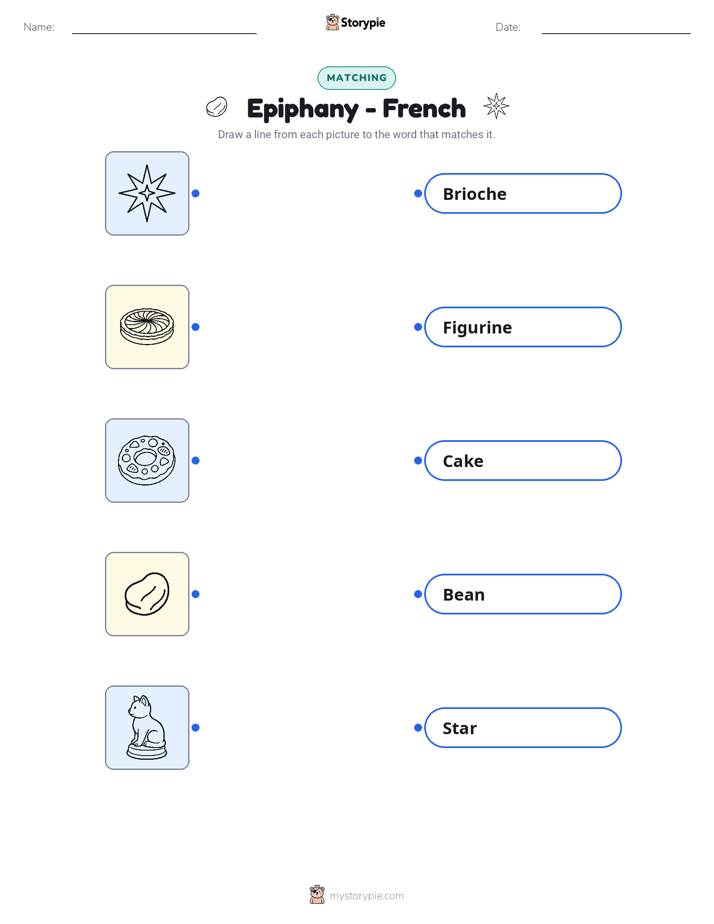
A Christian feast day celebrated in France on January 6th…
Reads at Grades K-2 Listens at K–3
Print & create
Answer keys·No prep·Free with an account
28 worksheets · answer keys · full story · quiz · Ages 6-8 · CEFR A2
Plus adds 279,000+ more stories in 27 languages, audio for every one, and printables for all of them.
Just want Epiphany - French?
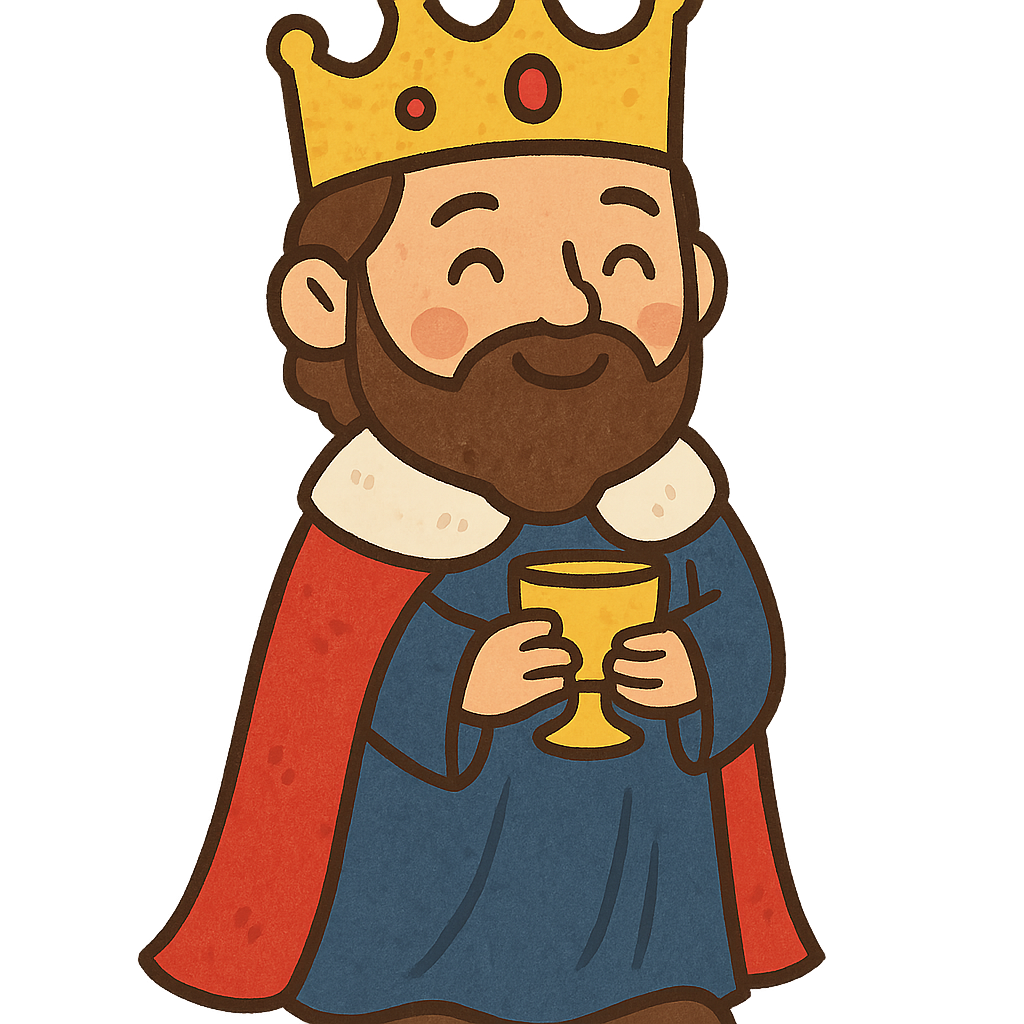
Hello! I am a French holiday, and my name is L'Épiphanie, which is Epiphany in English. In France, people observe me every year on a fixed date: January 6th. My purpose is to mark a special moment from Christian stories. I commemorate the day that three wise kings, who are also known as the Magi, are said to have traveled from far away to visit the baby Jesus with gifts.
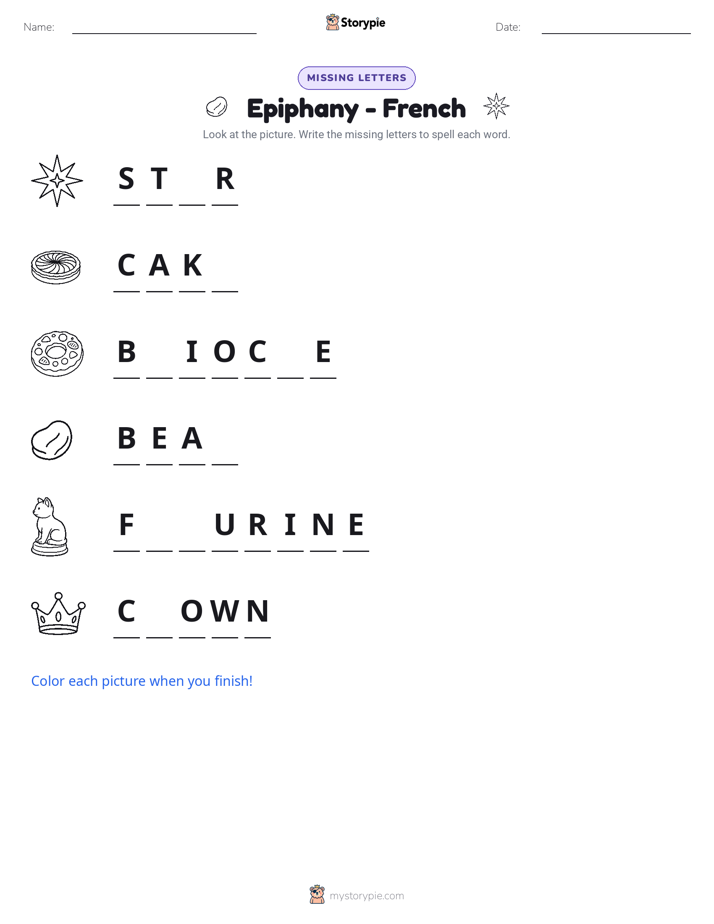
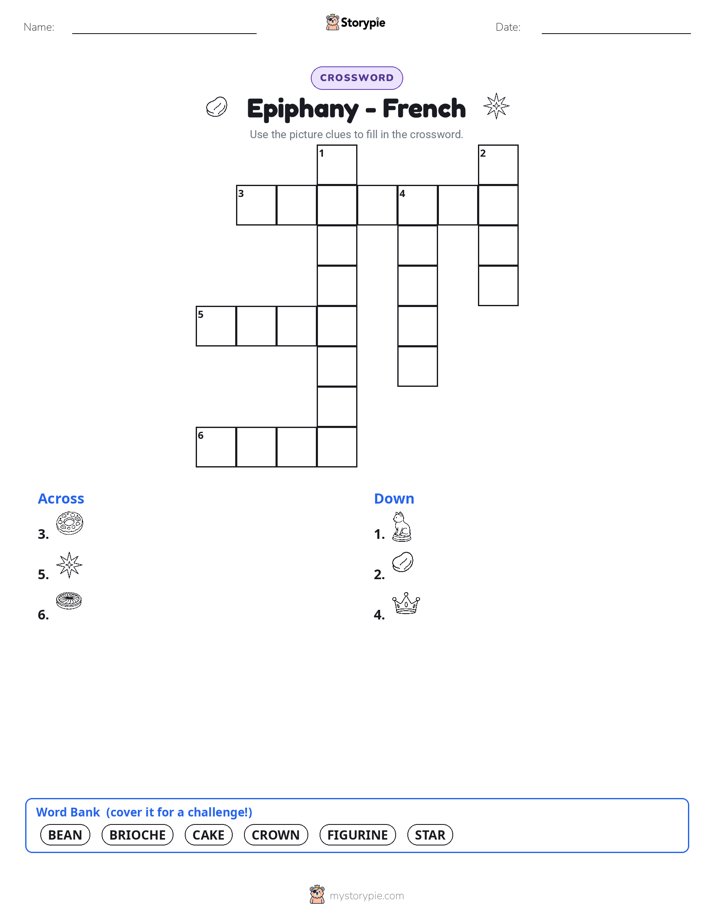
While my history is connected to this ancient story, the most famous way people in France celebrate me today is with a delicious and exciting tradition. It involves a special cake called the 'galette des rois.' In English, this name means 'king's cake.' It isn't a tall, fluffy cake like one you might see at a birthday party. Instead, the galette des rois is a round, flat cake made from many thin layers of puffy pastry. This pastry turns a beautiful golden-brown color when it is baked. Many of these cakes have a sweet, creamy filling made from almonds called frangipane. To honor the story of the three kings, bakers sometimes score a lovely pattern on top of the pastry that looks like a crown.
However, the galette des rois is more than just a tasty dessert. It holds a secret inside! Before the cake is baked, a small charm called a 'fève' is hidden deep within the pastry or filling. Long ago, the fève was simply a dried bean. The French word 'fève' actually means 'bean.' But over time, this tradition changed. Now, the fève is usually a tiny, beautifully made figure made of porcelain or plastic. It could be a little animal, a cartoon character, or a tiny person. There is a very important rule that comes with this cake: whoever finds the fève in their slice of cake gets a special honor. That person is crowned the king or queen for the rest of the day!
I Am Epiphany in France
Hello! I am a French holiday, and my name is L'Épiphanie, which is Epiphany in English. In France, people observe me every year on a fixed date: January 6th. My purpose is to mark a special moment from Christian stories. I commemorate the day that three wise kings, who are also known as the Magi, are said to have traveled from far away to visit the baby Jesus with gifts.
While my history is connected to this ancient story, the most famous way people in France celebrate me today is with a delicious and exciting tradition. It involves a special cake called the 'galette des rois.' In English, this name means 'king's cake.' It isn't a tall, fluffy cake like one you might see at a birthday party. Instead, the galette des rois is a round, flat cake made from many thin layers of puffy pastry. This pastry turns a beautiful golden-brown color when it is baked. Many of these cakes have a sweet, creamy filling made from almonds called frangipane. To honor the story of the three kings, bakers sometimes score a lovely pattern on top of the pastry that looks like a crown.
However, the galette des rois is more than just a tasty dessert. It holds a secret inside! Before the cake is baked, a small charm called a 'fève' is hidden deep within the pastry or filling. Long ago, the fève was simply a dried bean. The French word 'fève' actually means 'bean.' But over time, this tradition changed. Now, the fève is usually a tiny, beautifully made figure made of porcelain or plastic. It could be a little animal, a cartoon character, or a tiny person. There is a very important rule that comes with this cake: whoever finds the fève in their slice of cake gets a special honor. That person is crowned the king or queen for the rest of the day!
To make sure that finding the fève is a true surprise and no one can cheat by picking a slice they think has the charm, families in France have a fun and fair tradition. When it is time to serve the cake, the youngest child in the family is asked to hide under the table. An adult carefully cuts the cake into slices. Then, for each slice, the adult will ask, “Who is this piece for?” From under the table, the hidden child calls out the name of a family member. This continues until every person has a slice. This game makes it completely random, so no one knows who will find the fève until they take a bite. The moment someone shouts, “I found it!” is always full of excitement and laughter, making my day a memorable one for everyone gathered together.
Wow facts
About
A Christian feast day celebrated in France on January 6th, and many people also celebrate it on the first Sunday of January, commemorating the visit of the Magi to the infant Jesus. It is famously marked by eating a special cake called 'galette des rois'.
Take a Quiz
Question 1 of 4
What does the French name for the special cake, 'galette des rois,' mean in English?
Want to do even more?
Go beyond exploring. Unlock tools that turn every story into real learning.

Storypie Plus for families
Full stories, quizzes, and printables. Nights and car rides, sorted.
- Unlimited audio stories
- Create Mode: your child stars in the story
- Offline downloads
- Printable worksheets & coloring pages

Why Storypie for Schools
Students engaged. Prep in seconds. Evenings back to you.
- Worksheets & Quizzes
- Classroom Management
- Formative Assessment
- Custom Curriculum & Lesson Plans
- 27 Languages

Why Storypie for Homeschool
Curriculum done. They'll ask for more. Hours back in your day.
- Worksheet Generator
- First-Person Audio Stories
- Built-in Comprehension Quizzes
- Custom Curriculum & Lesson Plans
- Print & Go Activities