English

Nyepi - Balinese
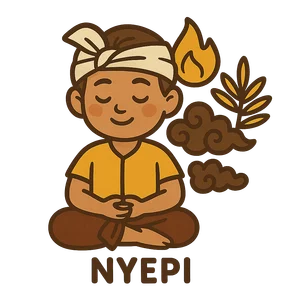
Nyepi is the Balinese Hindu New Year, a 24-hour period of silence, fasting, and meditation observed in Bali…
Reads at Grades 6–8 Listens at Grades 4–8
Print & create
Answer keys·No prep·Free with an account
28 worksheets · answer keys · full story · quiz · Ages 10-12 · CEFR B2
Plus adds 279,000+ more stories in 27 languages, audio for every one, and printables for all of them.
Just want Nyepi - Balinese?
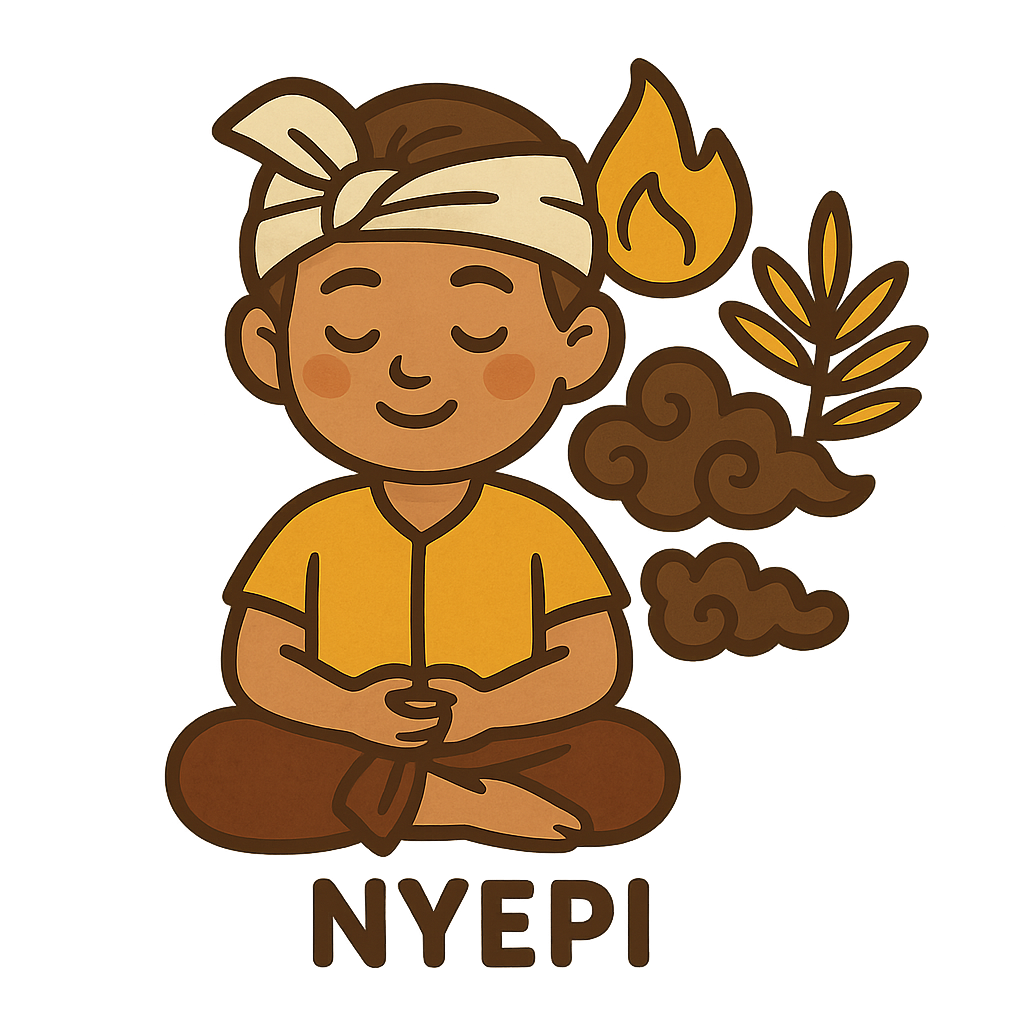
I am Nyepi, the Balinese Day of Silence. I arrive each year to mark a new beginning for the people of Bali, an island in Indonesia. My date is determined by the Saka calendar, a special calendar that follows the cycles of the moon. Unlike many new year celebrations that are filled with fireworks and parties, my purpose is to offer a day of complete quiet. I am a time for fasting, meditation, and deep reflection. During my 24 hours of stillness, people are given a chance to look back on the year that has passed. They think about their actions and choices, and they prepare for the new year with a pure heart and a clear mind. My observance is about starting fresh, both inwardly and in the world outside.
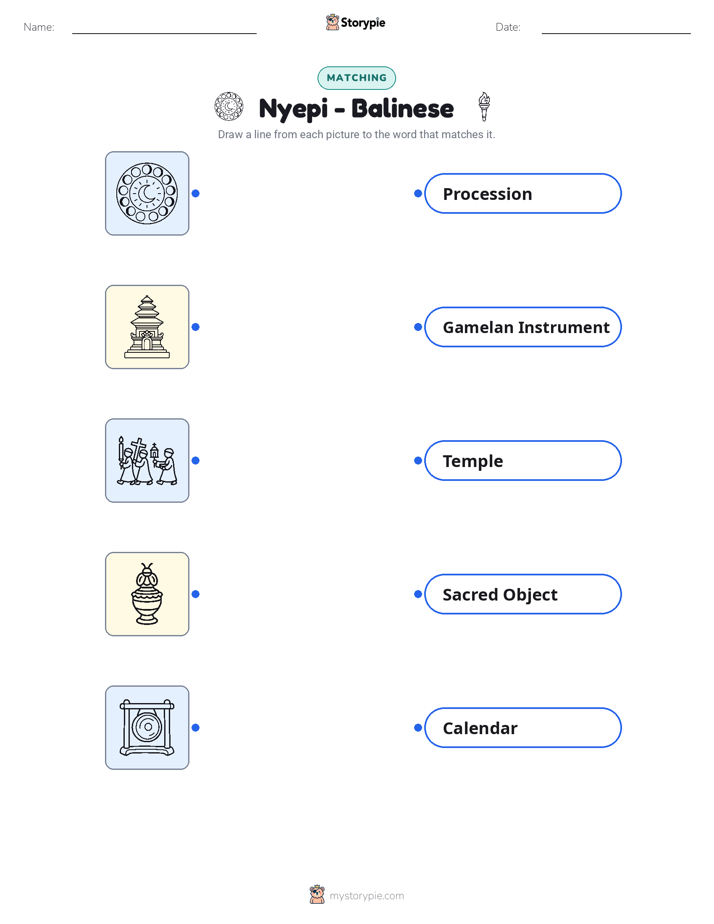
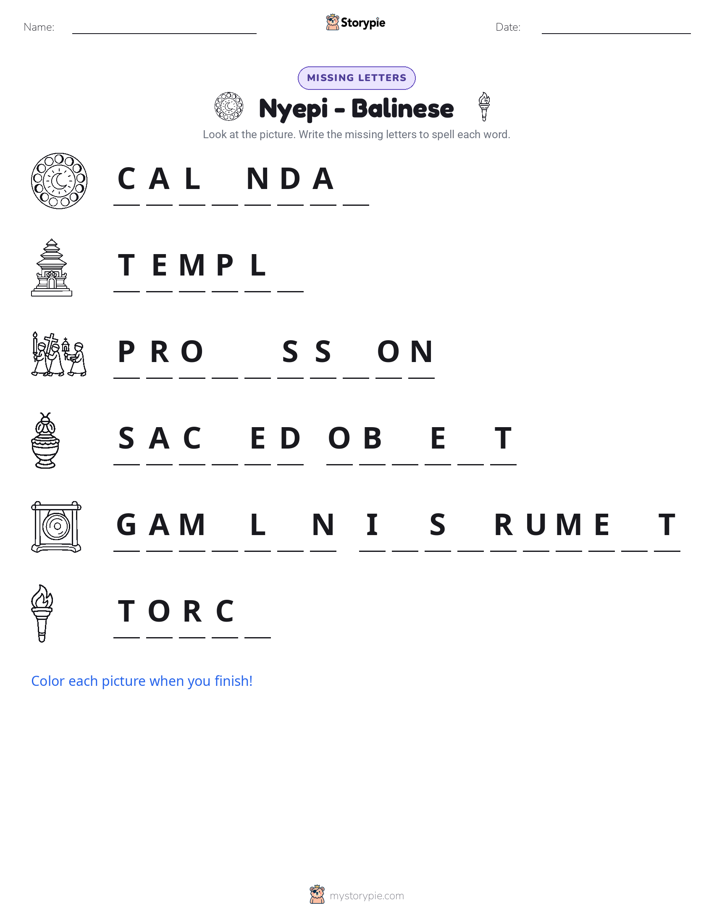
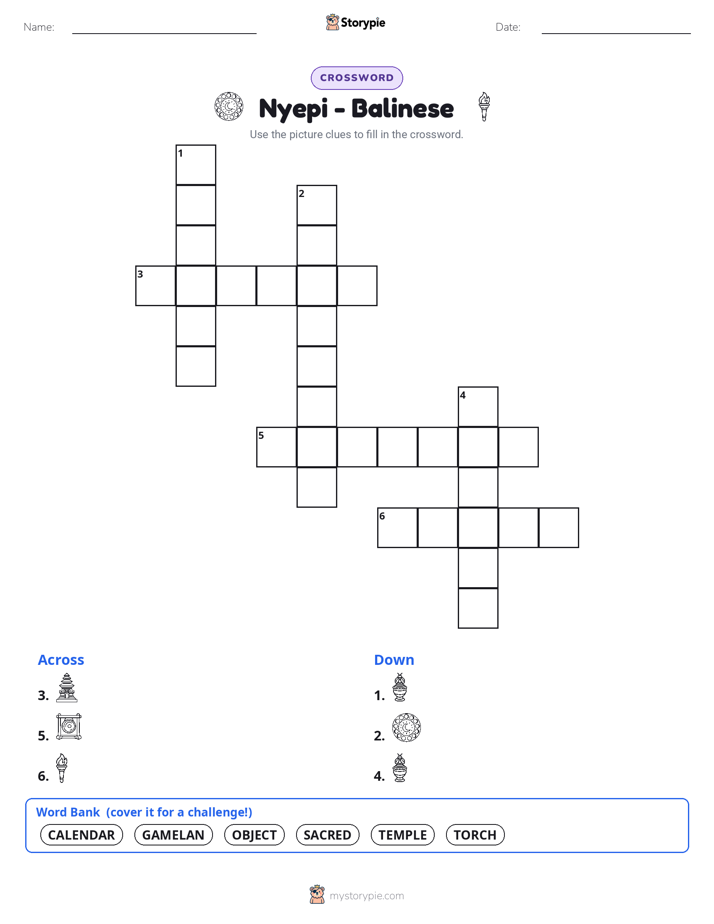
Although I am known as the Day of Silence, the days that lead up to me are some of the most vibrant and noisy of the entire year. My arrival is preceded by a series of important rituals designed to cleanse and purify. Several days before the silence begins, communities perform the Melasti ceremony. This is a beautiful procession where people, often dressed in white, carry sacred objects from their village temples down to the sea. They believe the ocean holds great power to wash away impurities, so they perform rituals at the water’s edge to cleanse these important items, restoring their spiritual energy. The activities build until the evening right before my silent day. This is the time for the Tawur Kesanga ceremony, a loud and exciting event that culminates in a grand parade featuring giant, handmade statues called Ogoh-ogoh.
Nyepi: The Balinese Day of Silence
I am Nyepi, the Balinese Day of Silence. I arrive each year to mark a new beginning for the people of Bali, an island in Indonesia. My date is determined by the Saka calendar, a special calendar that follows the cycles of the moon. Unlike many new year celebrations that are filled with fireworks and parties, my purpose is to offer a day of complete quiet. I am a time for fasting, meditation, and deep reflection. During my 24 hours of stillness, people are given a chance to look back on the year that has passed. They think about their actions and choices, and they prepare for the new year with a pure heart and a clear mind. My observance is about starting fresh, both inwardly and in the world outside.
Although I am known as the Day of Silence, the days that lead up to me are some of the most vibrant and noisy of the entire year. My arrival is preceded by a series of important rituals designed to cleanse and purify. Several days before the silence begins, communities perform the Melasti ceremony. This is a beautiful procession where people, often dressed in white, carry sacred objects from their village temples down to the sea. They believe the ocean holds great power to wash away impurities, so they perform rituals at the water’s edge to cleanse these important items, restoring their spiritual energy. The activities build until the evening right before my silent day. This is the time for the Tawur Kesanga ceremony, a loud and exciting event that culminates in a grand parade featuring giant, handmade statues called Ogoh-ogoh.
These Ogoh-ogoh are incredible works of art created by the youth and artists in local communities. They are massive, often frightening statues made to look like evil spirits and negative forces from the Balinese Hindu underworld. Building an Ogoh-ogoh can take weeks, and it is a project that brings the whole neighborhood together. On the eve of my silence, the parade begins. People carry their giant Ogoh-ogoh through the streets, accompanied by the powerful, rhythmic sound of gamelan music and the flickering light of torches. The atmosphere is energetic and loud, designed to draw out all the negative forces from the environment. At the end of the parade, in a powerful symbolic act, the Ogoh-ogoh are often taken to a cemetery or an open field and burned in a large bonfire. This act represents the total destruction of evil and negativity, ensuring that the new year can begin on a clean slate.
Then, as the sun rises at 6 a.m., everything changes. The noise and activity of the previous night vanish, and a profound stillness descends upon the entire island of Bali. For the next 24 hours, people observe me through a set of four rules, which together are called the Catur Brata Penyepian. The first rule is Amati Geni, which means 'no fire or light.' This means no cooking and no turning on electric lights, plunging homes into darkness after sunset. The second rule is Amati Karya, or 'no working.' All shops, offices, and businesses close, freeing people from their daily obligations. The third is Amati Lelunganan, meaning 'no traveling.' The streets become completely empty, with no cars or motorcycles. Even Bali's busy international airport shuts down completely for the day—no planes land or take off. The final rule is Amati Lelanguan, or 'no entertainment or pleasure,' which means no parties, music, or other forms of amusement. These rules create an environment free from all distraction.
The deep silence I bring has two very important meanings for the Balinese people who observe me. The first purpose is personal and spiritual. Without the distractions of daily life—work, travel, light, and entertainment—people have a unique opportunity for deep self-reflection. It is a time to meditate, to look inward, and to contemplate one's values, thoughts, and behaviors. It is a chance to reconnect with oneself and with the divine. The second purpose is rooted in a traditional belief about the spirit world. Many Balinese Hindus believe that the loud Ogoh-ogoh parade is meant to attract all the evil spirits to the island. When I arrive and the island becomes completely silent and dark, these spirits are tricked into thinking that Bali has been deserted. Believing there is nothing left for them, they leave the island, which is thought to ensure peace and harmony for all its inhabitants in the coming year.
When the 24 hours of silence end the following morning, a new day called Ngembak Geni begins. The name means 'relighting the fire,' and it symbolizes the return of normal life and activity, but with a renewed sense of spirit. After a day of introspection, people emerge from their homes to reconnect with their community. On this day, families and friends visit one another to exchange greetings for the new year. It is also a very important time for forgiveness. People sincerely ask for pardon from their loved ones for any wrongdoings or hurtful words from the past year, strengthening their relationships and washing away old grievances. It is a day filled with peace, togetherness, and the shared hope of a positive and harmonious year ahead, marking a true new beginning for everyone.
Wow facts
About
Nyepi is the Balinese Hindu New Year, a 24-hour period of silence, fasting, and meditation observed in Bali, Indonesia, to promote self-reflection and cleanse the island of evil spirits.
Take a Quiz
Question 1 of 5
What is the main contrast described between the days leading up to Nyepi and Nyepi day itself?
Want to do even more?
Go beyond exploring. Unlock tools that turn every story into real learning.

Storypie Plus for families
Full stories, quizzes, and printables. Nights and car rides, sorted.
- Unlimited audio stories
- Create Mode: your child stars in the story
- Offline downloads
- Printable worksheets & coloring pages

Why Storypie for Schools
Students engaged. Prep in seconds. Evenings back to you.
- Worksheets & Quizzes
- Classroom Management
- Formative Assessment
- Custom Curriculum & Lesson Plans
- 27 Languages

Why Storypie for Homeschool
Curriculum done. They'll ask for more. Hours back in your day.
- Worksheet Generator
- First-Person Audio Stories
- Built-in Comprehension Quizzes
- Custom Curriculum & Lesson Plans
- Print & Go Activities