English

Nyepi - Balinese
Nyepi is the Balinese Hindu New Year, a 24-hour period of silence, fasting, and meditation observed in Bali…
Reads at Grades K-2 Listens at K–3
Print & create
Answer keys·No prep·Free with an account
28 worksheets · answer keys · full story · quiz · Ages 6-8 · CEFR A2
Plus adds 279,000+ more stories in 27 languages, audio for every one, and printables for all of them.
Just want Nyepi - Balinese?
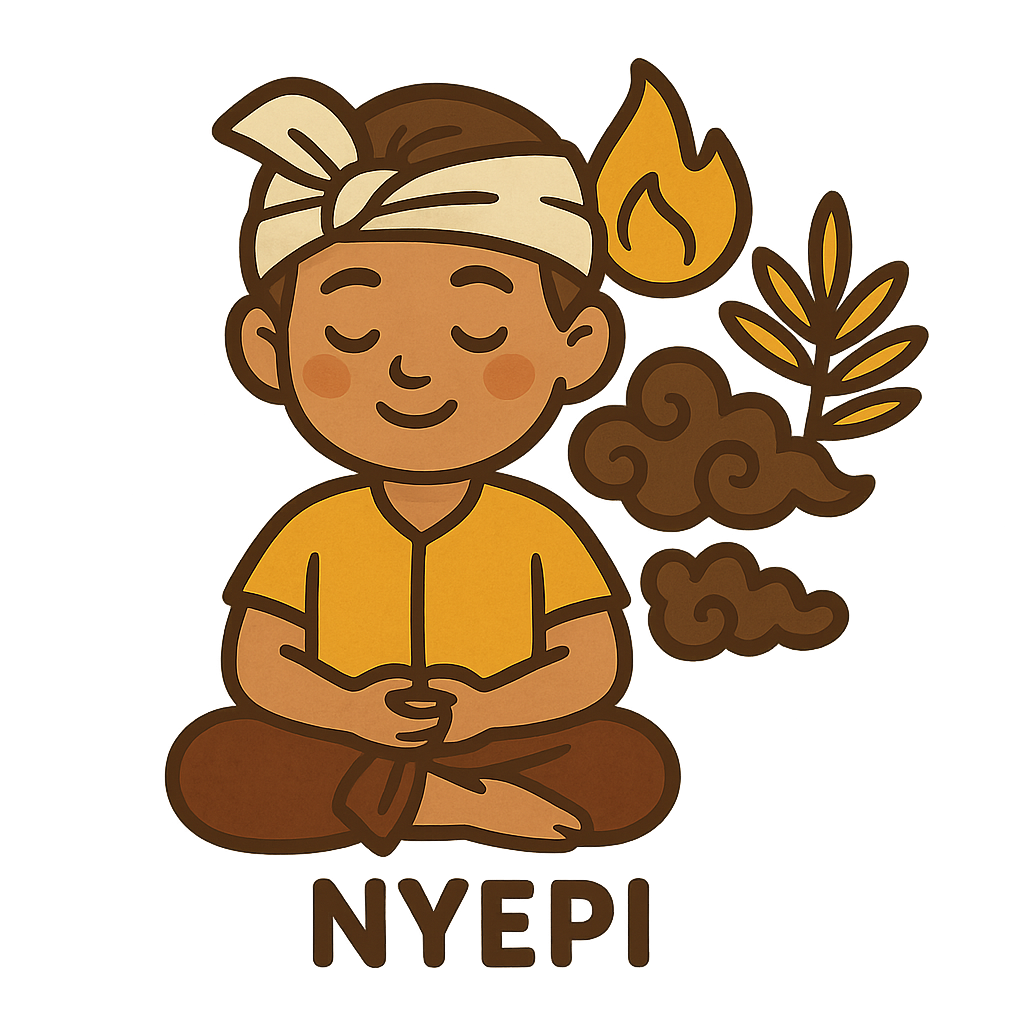
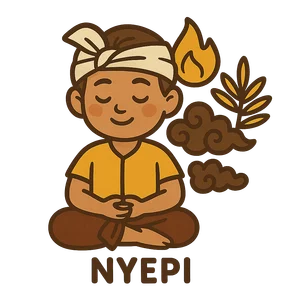
Hello! I am Nyepi, the Balinese Day of Silence. For the Hindu people who live on the beautiful island of Bali in Indonesia, I am their most important holiday. I arrive once a year to mark the beginning of their new year. My purpose is a special one. I provide a whole day of quiet for everyone to rest, think, and prepare their hearts and minds for the year ahead. It is a peaceful time for self-reflection before a fresh start begins.
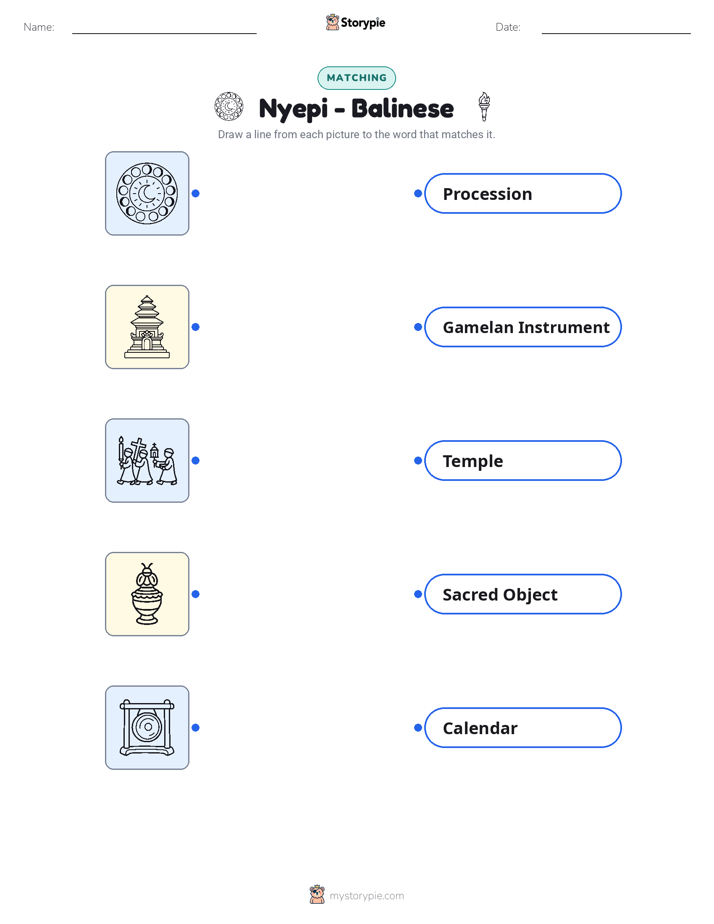
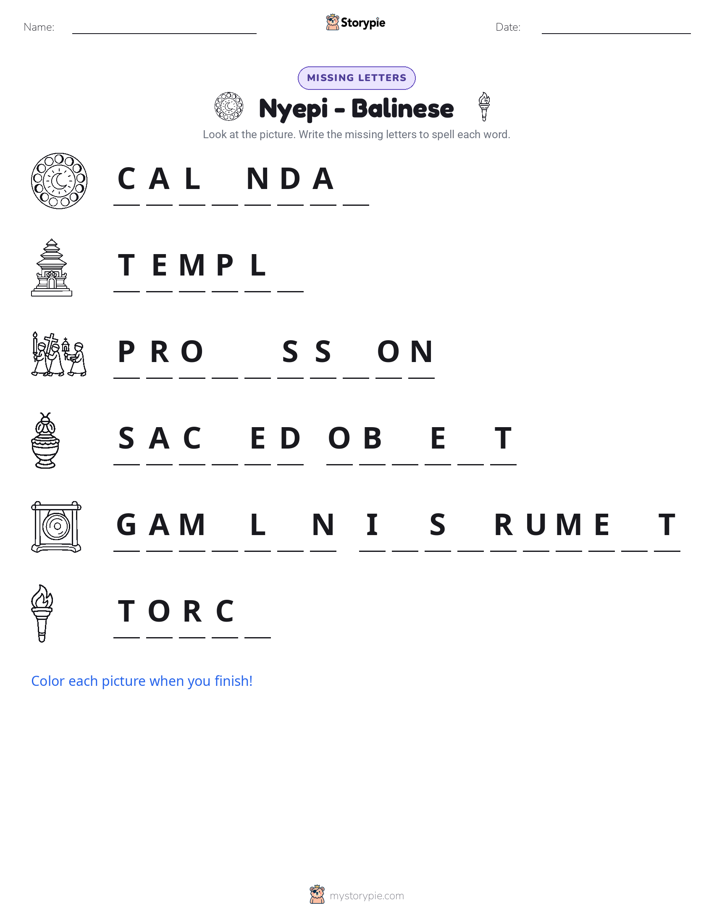
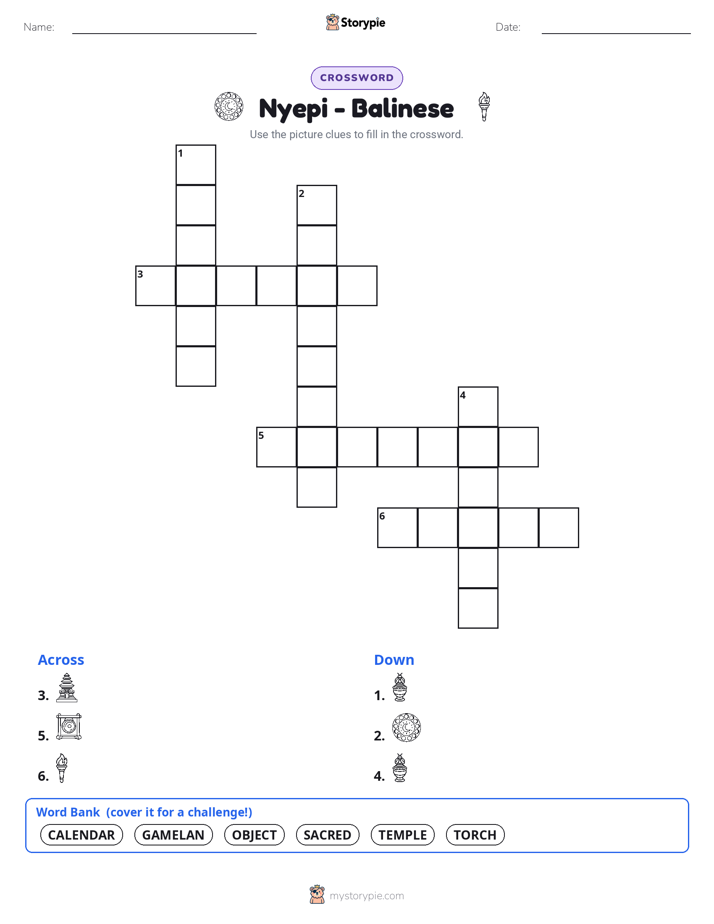
Before I can arrive, people get ready with special ceremonies. These are done to clean and purify themselves, their homes, and their communities. One of the most important ceremonies is called Melasti. For Melasti, people from villages all over Bali form long, beautiful parades. They dress in traditional clothing and walk together to the ocean or to a holy spring. They carry sacred and important objects from their temples so that the water can wash them clean, making everything fresh and ready for the new year.
The night before I begin is the opposite of quiet—it is very loud and exciting! This night is called Tawur Kesanga. In many villages, people hold a huge parade unlike any other. They build giant statues called Ogoh-ogoh, which often look very scary with big eyes and sharp teeth. These statues are meant to represent bad spirits or negative things from the year that is ending. People carry the Ogoh-ogoh through the streets, making lots of noise with music and shouting to scare the spirits away. At the end of the parade, the statues are often burned in a big fire. This symbolizes getting rid of everything bad to make way for the good.
Nyepi, the Day of Silence
Hello! I am Nyepi, the Balinese Day of Silence. For the Hindu people who live on the beautiful island of Bali in Indonesia, I am their most important holiday. I arrive once a year to mark the beginning of their new year. My purpose is a special one. I provide a whole day of quiet for everyone to rest, think, and prepare their hearts and minds for the year ahead. It is a peaceful time for self-reflection before a fresh start begins.
Before I can arrive, people get ready with special ceremonies. These are done to clean and purify themselves, their homes, and their communities. One of the most important ceremonies is called Melasti. For Melasti, people from villages all over Bali form long, beautiful parades. They dress in traditional clothing and walk together to the ocean or to a holy spring. They carry sacred and important objects from their temples so that the water can wash them clean, making everything fresh and ready for the new year.
The night before I begin is the opposite of quiet—it is very loud and exciting! This night is called Tawur Kesanga. In many villages, people hold a huge parade unlike any other. They build giant statues called Ogoh-ogoh, which often look very scary with big eyes and sharp teeth. These statues are meant to represent bad spirits or negative things from the year that is ending. People carry the Ogoh-ogoh through the streets, making lots of noise with music and shouting to scare the spirits away. At the end of the parade, the statues are often burned in a big fire. This symbolizes getting rid of everything bad to make way for the good.
Then, my special day arrives. For 24 hours, the entire island of Bali becomes completely silent and still. This time is called the Catur Brata Penyepian. There are four main rules that people follow. They stay inside their homes and do not use fire or lights, which means no cooking or electricity. They do not work, they do not travel anywhere, and they do not have any parties or entertainment. The whole island stops. Even the airport closes down, and no planes fly in or out. Special security guards in traditional dress, called Pecalang, patrol the empty streets to make sure that the silence is respected by everyone.
After my day of silence is over, the new year can truly begin. The next day is called Ngembak Geni, and it is a time for a fresh start. The quiet is replaced with happy greetings as families and friends visit one another. They use this day to ask for forgiveness for any mistakes or arguments they may have had in the past year. It is a joyful way to begin the new year with a clean slate, feeling close to the people you care about. It is a time filled with hope for the year to come.
Wow facts
About
Nyepi is the Balinese Hindu New Year, a 24-hour period of silence, fasting, and meditation observed in Bali, Indonesia, to promote self-reflection and cleanse the island of evil spirits.
Take a Quiz
Question 1 of 4
What happens to the Ogoh-ogoh statues after they are paraded through the streets?
Want to do even more?
Go beyond exploring. Unlock tools that turn every story into real learning.

Storypie Plus for families
Full stories, quizzes, and printables. Nights and car rides, sorted.
- Unlimited audio stories
- Create Mode: your child stars in the story
- Offline downloads
- Printable worksheets & coloring pages

Why Storypie for Schools
Students engaged. Prep in seconds. Evenings back to you.
- Worksheets & Quizzes
- Classroom Management
- Formative Assessment
- Custom Curriculum & Lesson Plans
- 27 Languages

Why Storypie for Homeschool
Curriculum done. They'll ask for more. Hours back in your day.
- Worksheet Generator
- First-Person Audio Stories
- Built-in Comprehension Quizzes
- Custom Curriculum & Lesson Plans
- Print & Go Activities