English

Sinulog - Filipino
Sinulog is a major cultural and religious festival held in Cebu City, Philippines…
Reads at Grades 6–8 Listens at Grades 4–8
Print & create
Answer keys·No prep·Free with an account
28 worksheets · answer keys · full story · quiz · Ages 10-12 · CEFR B2
Plus adds 279,000+ more stories in 27 languages, audio for every one, and printables for all of them.
Just want Sinulog - Filipino?
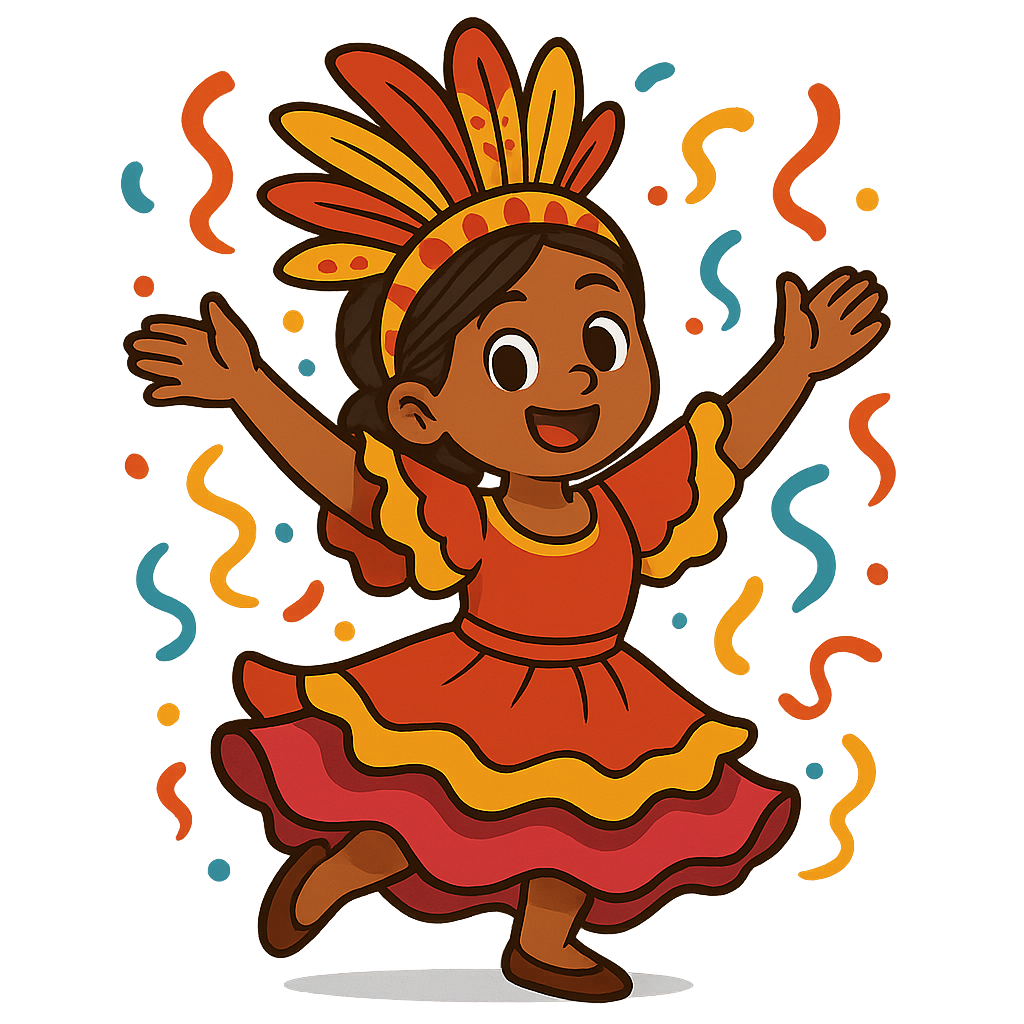
I am the Sinulog Festival, a vibrant and deeply meaningful observance that takes place in Cebu City in the Philippines. Every year, on the third Sunday of January, people gather to participate in my traditions. My identity is a blend of faith and culture, a colorful spectacle and a profound act of devotion. At my very heart, I am an occasion that honors the Santo Niño, a name for the Child Jesus, who is a beloved religious figure for many people in the region. My events, from quiet processions to enormous parades, draw visitors from across the Philippines and around the world, all coming to witness a celebration that has been centuries in the making.
My historical roots reach back to a significant moment in the 16th century. The story of my origin begins in the year 1521, when the European explorer Ferdinand Magellan and his crew arrived on the island of Cebu. This event marked a turning point in the history of the islands. As a gesture of goodwill and to mark a new alliance, Magellan presented a special gift to the local queen, Hara Humamay, upon her baptism into the Christian faith. The gift was a carved statue of the Santo Niño. This act is widely seen as the beginning of Christianity in the Philippines, and the devotion that grew from that single statue planted the seeds for the festival I would one day become. That original statue, a direct link to this history, is still preserved and venerated in Cebu City at a church called the Basilica del Santo Niño.
At the center of my identity is a unique and rhythmic dance. In fact, my name, 'Sinulog,' is derived from a word in the local Cebuano language. The word describes the movement of a river's current, and this imagery perfectly captures the essence of my signature dance step. The dance is a simple but meaningful pattern: two steps forward, followed by one step back. It is a continuous, flowing motion that mimics the push and pull of water. This is not just a performance; for the participants, it is a prayer in motion. Dancers, often holding their own images of the Santo Niño, perform this step as a form of thanksgiving and petition. The rhythm connects the dancer, the prayer, and the history of devotion that flows through my observance like a river.
Sinulog: A Filipino Festival's Story
I am the Sinulog Festival, a vibrant and deeply meaningful observance that takes place in Cebu City in the Philippines. Every year, on the third Sunday of January, people gather to participate in my traditions. My identity is a blend of faith and culture, a colorful spectacle and a profound act of devotion. At my very heart, I am an occasion that honors the Santo Niño, a name for the Child Jesus, who is a beloved religious figure for many people in the region. My events, from quiet processions to enormous parades, draw visitors from across the Philippines and around the world, all coming to witness a celebration that has been centuries in the making.
My historical roots reach back to a significant moment in the 16th century. The story of my origin begins in the year 1521, when the European explorer Ferdinand Magellan and his crew arrived on the island of Cebu. This event marked a turning point in the history of the islands. As a gesture of goodwill and to mark a new alliance, Magellan presented a special gift to the local queen, Hara Humamay, upon her baptism into the Christian faith. The gift was a carved statue of the Santo Niño. This act is widely seen as the beginning of Christianity in the Philippines, and the devotion that grew from that single statue planted the seeds for the festival I would one day become. That original statue, a direct link to this history, is still preserved and venerated in Cebu City at a church called the Basilica del Santo Niño.
At the center of my identity is a unique and rhythmic dance. In fact, my name, 'Sinulog,' is derived from a word in the local Cebuano language. The word describes the movement of a river's current, and this imagery perfectly captures the essence of my signature dance step. The dance is a simple but meaningful pattern: two steps forward, followed by one step back. It is a continuous, flowing motion that mimics the push and pull of water. This is not just a performance; for the participants, it is a prayer in motion. Dancers, often holding their own images of the Santo Niño, perform this step as a form of thanksgiving and petition. The rhythm connects the dancer, the prayer, and the history of devotion that flows through my observance like a river.
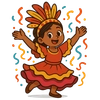
While the devotion to the Santo Niño is nearly five hundred years old, my modern form as a grand festival is much more recent. For centuries, the honoring of the Santo Niño was primarily a local religious practice, observed with reverence but without the massive public scale people see today. That all changed in 1980. In that year, a group of civic and religious organizers in Cebu decided to create an event that would share this deep-rooted tradition with a wider audience. They organized the very first Sinulog street parade. This new event was designed to combine the traditional prayer-dance with the energy and spectacle of a grand fiesta. They introduced elaborate, colorful costumes, lively drum-based music, and a spirit of joyful community celebration. This transformation was incredibly successful, and it is what turned me into the world-renowned festival that now attracts millions of visitors each year.
My observance is not limited to a single day of parading. The festivities span more than a week, building in energy and significance as the main day approaches. The celebration period begins with a series of nine consecutive days of special church services, known as novena masses, which are dedicated to prayer and reflection. As the week progresses, two of my most significant events take place. One is the fluvial procession, a beautiful and solemn ceremony that happens on the water. A decorated boat, acting as a floating shrine, carries the statue of the Santo Niño along the Mactan Channel, accompanied by a fleet of other boats. The other key event is a long, solemn foot procession that winds through the main streets of Cebu City. This procession is a powerful display of faith, drawing hundreds of thousands of people who walk together in a quiet and prayerful journey.
When the day of my Grand Parade arrives, the atmosphere of the city transforms completely. The quiet reverence of the processions gives way to a wave of sound and color. The streets fill with the powerful beat of drums, providing the rhythm for the dancers. Above the music, a single chant can be heard everywhere: 'Pit Señor!' This phrase is a shortened, energetic version of a Cebuano phrase, 'Sangpit sa Señor,' which translates to 'to call upon the Lord.' People shout it with enthusiasm as they dance and watch the parade. For participants, this chant is a form of prayer, a way to ask for help or to express gratitude to the Santo Niño. The parade itself is a breathtaking sight, featuring thousands of dancers organized into different groups, each wearing elaborate and brilliantly colored costumes that reflect various aspects of Filipino culture and history, all moving together to my signature two-steps-forward, one-step-back rhythm. Today, I continue to be a time of deep spiritual meaning and spectacular cultural celebration, linking the past to the present with every drumbeat and every dance step.
Wow facts
About
Sinulog is a major cultural and religious festival held in Cebu City, Philippines, every third Sunday of January to honor the Santo Niño, or the child Jesus. It is famous for its street parades, traditional dance, and vibrant costumes.
Take a Quiz
Question 1 of 5
In your own words, retell the story of how the Sinulog festival's historical roots were established in 1521.
Want to do even more?
Go beyond exploring. Unlock tools that turn every story into real learning.

Storypie Plus for families
Full stories, quizzes, and printables. Nights and car rides, sorted.
- Unlimited audio stories
- Create Mode: your child stars in the story
- Offline downloads
- Printable worksheets & coloring pages

Why Storypie for Schools
Students engaged. Prep in seconds. Evenings back to you.
- Worksheets & Quizzes
- Classroom Management
- Formative Assessment
- Custom Curriculum & Lesson Plans
- 27 Languages

Why Storypie for Homeschool
Curriculum done. They'll ask for more. Hours back in your day.
- Worksheet Generator
- First-Person Audio Stories
- Built-in Comprehension Quizzes
- Custom Curriculum & Lesson Plans
- Print & Go Activities