English

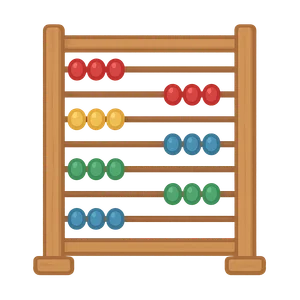
Abacus
An ancient counting tool, considered one of the first calculators…
Reads at Grades 6–8 Listens at Grades 4–8
Print & create
Answer keys·No prep·Free with an account
28 worksheets · answer keys · full story · quiz · Ages 10-12 · CEFR B2
Plus adds 244,000+ more stories in 27 languages, audio for every one, and printables for all of them.
Just want Abacus?
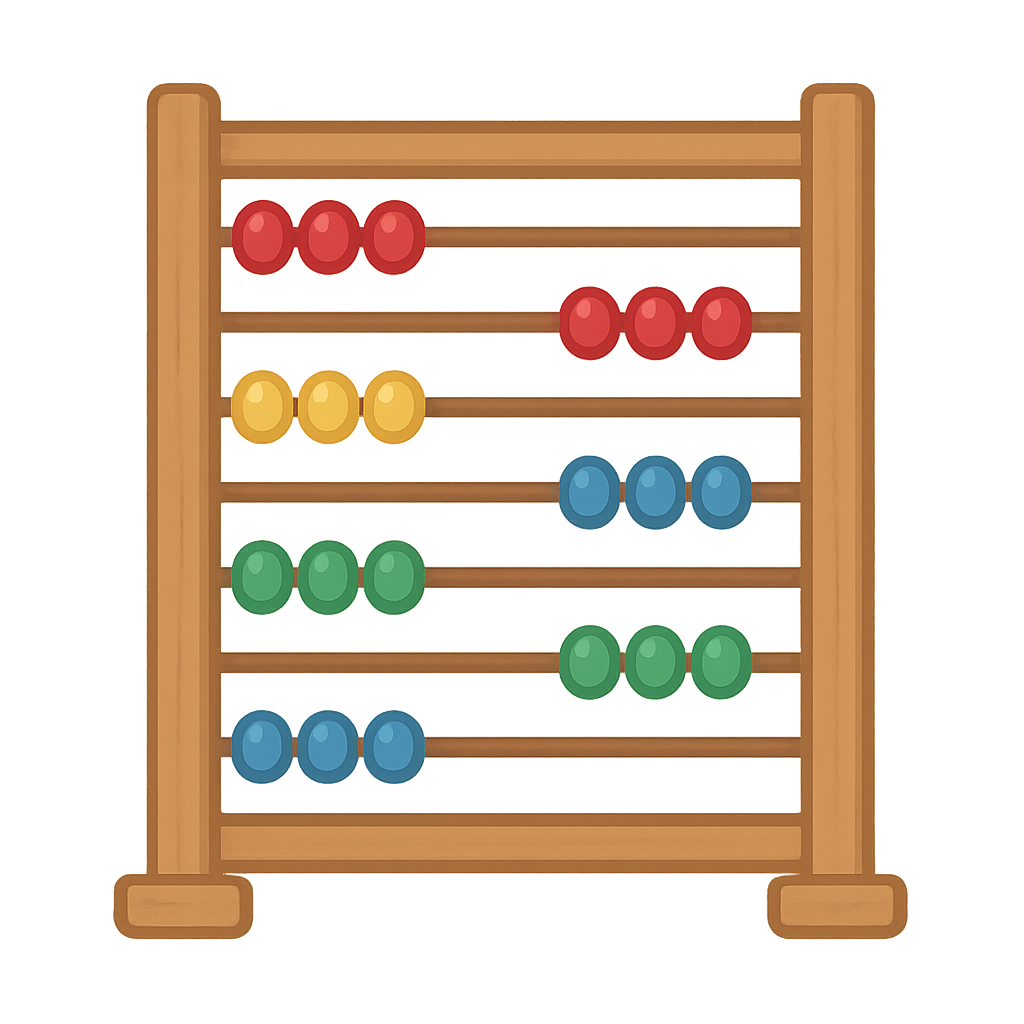
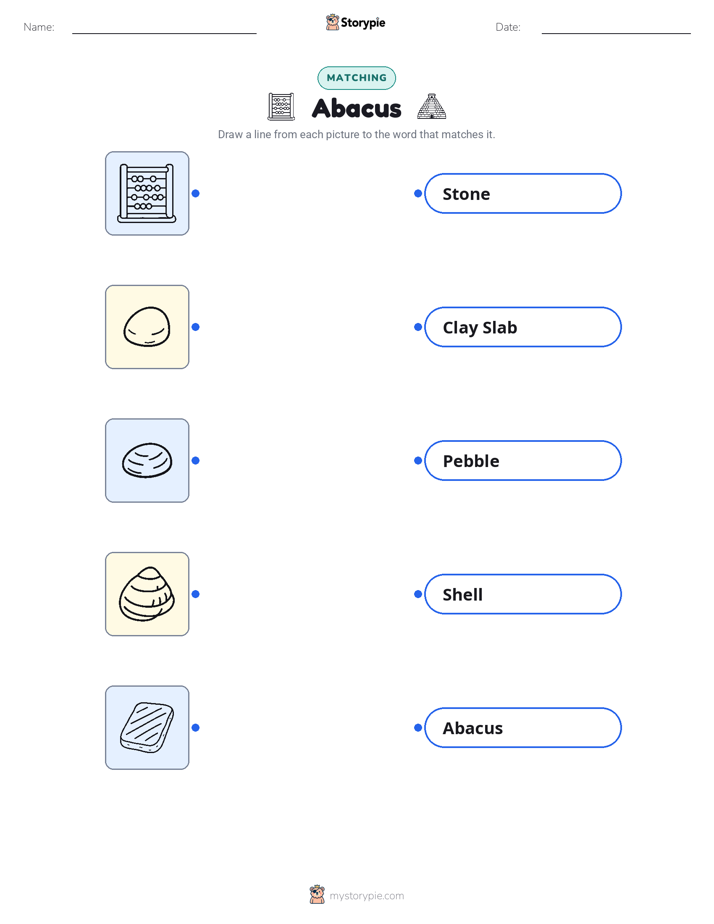
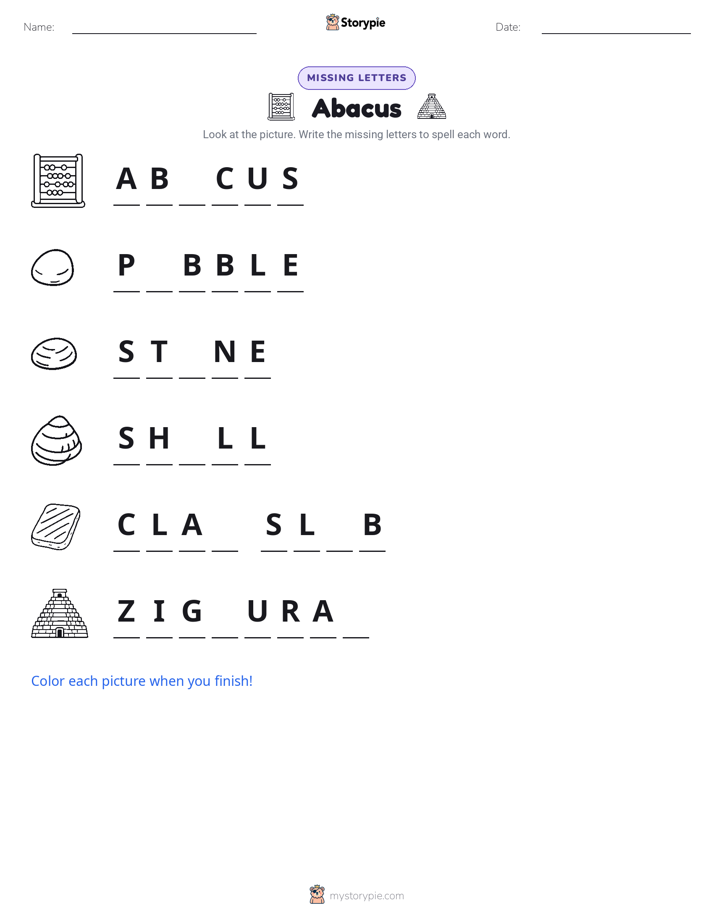
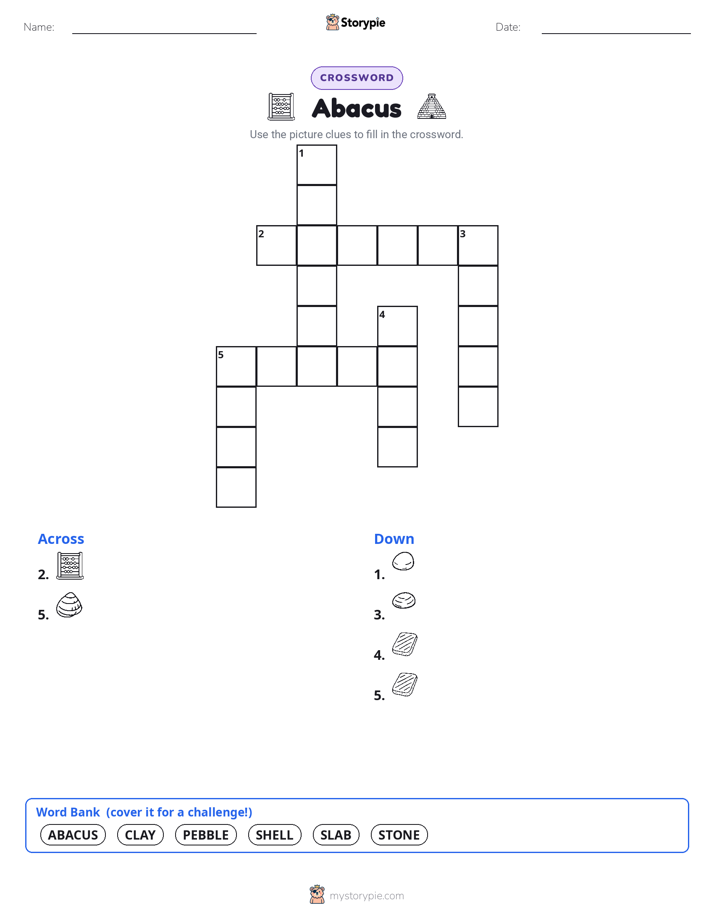
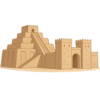
Before your world was filled with glowing screens and buttons that could answer any math problem in an instant, there was just the human mind, a handful of pebbles, and the vast, confusing world of numbers. Imagine being a merchant in the bustling city of Sumer thousands of years ago, around 2700 BCE. You have flocks of sheep and sacks of grain to trade, but how do you keep track of it all? Your fingers can only count to ten. You could scratch marks in the dirt, but a gust of wind could wipe away your records. It was in this world of uncertainty that I was born. I am the Abacus, and my story is one of bringing order to chaos. My first form wasn't the beaded frame you might picture today. I was simpler: a board of wood or a slab of clay with lines etched into its surface. People would place small stones or shells in the columns to represent ones, tens, hundreds, and so on. For the first time, humanity had a reliable way to visualize and manipulate large numbers. I helped builders plan massive temples, called ziggurats, ensuring they had exactly the right number of bricks. I helped tax collectors keep fair records for the king. I was not just a tool; I was a revolution in thinking, the first step in taming the wild world of mathematics.
My simple idea was too powerful to stay in one place. Like a seed on the wind, I traveled across empires and continents, changing and adapting with each new culture that welcomed me. The great Roman engineers, who built magnificent roads and aqueducts, used a version of me with grooves carved into a metal plate. They slid little counters, which they called ‘calculi,’ along these grooves to perform their calculations. In fact, your modern word ‘calculate’ comes from the name for those ancient Roman stones. My most significant transformation, however, took place in China around the 2nd century BCE. There, I was reborn as the suanpan. This was a true masterpiece of design. My body became a sturdy wooden frame, and my counters became beautiful beads strung on rods. This made me portable, durable, and incredibly fast. The Chinese divided my frame with a horizontal beam, creating an upper ‘heaven deck’ and a lower ‘earth deck.’ The beads in heaven were worth five, and the beads on earth were worth one. This brilliant system allowed users to perform not just addition and subtraction, but also multiplication, division, and even complex tasks like finding square roots. I became an essential part of life for scholars, merchants, and officials across the vast Chinese empire. My journey continued, and around 1600 CE, I arrived in Japan. Japanese mathematicians, always seeking perfection and efficiency, refined my design even further. They created the soroban, a sleeker, faster version of me. They decided that the suanpan had more beads than necessary, so they simplified me to one bead on the top deck and four on the bottom. This minimalist design made me lightning-fast in the hands of a skilled user, so quick that for many years I could outperform the first clunky mechanical calculators.
I Am the Abacus
Before your world was filled with glowing screens and buttons that could answer any math problem in an instant, there was just the human mind, a handful of pebbles, and the vast, confusing world of numbers. Imagine being a merchant in the bustling city of Sumer thousands of years ago, around 2700 BCE. You have flocks of sheep and sacks of grain to trade, but how do you keep track of it all? Your fingers can only count to ten. You could scratch marks in the dirt, but a gust of wind could wipe away your records. It was in this world of uncertainty that I was born. I am the Abacus, and my story is one of bringing order to chaos. My first form wasn't the beaded frame you might picture today. I was simpler: a board of wood or a slab of clay with lines etched into its surface. People would place small stones or shells in the columns to represent ones, tens, hundreds, and so on. For the first time, humanity had a reliable way to visualize and manipulate large numbers. I helped builders plan massive temples, called ziggurats, ensuring they had exactly the right number of bricks. I helped tax collectors keep fair records for the king. I was not just a tool; I was a revolution in thinking, the first step in taming the wild world of mathematics.
My simple idea was too powerful to stay in one place. Like a seed on the wind, I traveled across empires and continents, changing and adapting with each new culture that welcomed me. The great Roman engineers, who built magnificent roads and aqueducts, used a version of me with grooves carved into a metal plate. They slid little counters, which they called ‘calculi,’ along these grooves to perform their calculations. In fact, your modern word ‘calculate’ comes from the name for those ancient Roman stones. My most significant transformation, however, took place in China around the 2nd century BCE. There, I was reborn as the suanpan. This was a true masterpiece of design. My body became a sturdy wooden frame, and my counters became beautiful beads strung on rods. This made me portable, durable, and incredibly fast. The Chinese divided my frame with a horizontal beam, creating an upper ‘heaven deck’ and a lower ‘earth deck.’ The beads in heaven were worth five, and the beads on earth were worth one. This brilliant system allowed users to perform not just addition and subtraction, but also multiplication, division, and even complex tasks like finding square roots. I became an essential part of life for scholars, merchants, and officials across the vast Chinese empire. My journey continued, and around 1600 CE, I arrived in Japan. Japanese mathematicians, always seeking perfection and efficiency, refined my design even further. They created the soroban, a sleeker, faster version of me. They decided that the suanpan had more beads than necessary, so they simplified me to one bead on the top deck and four on the bottom. This minimalist design made me lightning-fast in the hands of a skilled user, so quick that for many years I could outperform the first clunky mechanical calculators.
Then came an age of electricity and silicon. In the 20th century, electronic calculators and computers arrived, and they could perform calculations with a speed I could never match. For a time, it seemed my journey was over. Many thought I was obsolete, a relic destined for museums and dusty attics. I watched as children learned to press buttons instead of sliding beads, getting answers without ever seeing the numbers dance. But I am not a relic. I found a new, more profound purpose. People began to realize that while a calculator gives you an answer, I teach you how to think. I became a powerful tool for education. When a child learns to use me, they are not just typing in a problem; they are physically engaging with numbers. They see how ten ‘ones’ become a ‘ten,’ how borrowing and carrying works in a tangible way. This builds something called ‘number sense,’ a deep, intuitive understanding of mathematics. Mastering me, especially my soroban form, also unlocks an amazing skill: mental calculation. Students learn to visualize me in their minds, their fingers flying through the air as they manipulate an imaginary me to solve complex problems faster than most people can use a calculator. So even in your digital world, my quiet, rhythmic clicking continues. I am a bridge from the ancient past to the future, a timeless reminder that the greatest computer of all is the human mind, and my purpose is to help it understand the beautiful, orderly language of numbers.
Wow facts
About
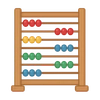
An ancient counting tool, considered one of the first calculators, that uses a frame with beads or stones on rods to perform arithmetic.
Take a Quiz
Question 1 of 5
In your own words, describe the journey of the abacus from its form in ancient Sumer to its refined version in Japan.
Explore next


Want to do even more?
Go beyond exploring. Unlock tools that turn every story into real learning.

Storypie Plus for families
Full stories, quizzes, and printables. Nights and car rides, sorted.
- Unlimited audio stories
- Create Mode: your child stars in the story
- Offline downloads
- Printable worksheets & coloring pages

Why Storypie for Schools
Students engaged. Prep in seconds. Evenings back to you.
- Worksheets & Quizzes
- Classroom Management
- Formative Assessment
- Custom Curriculum & Lesson Plans
- 27 Languages

Why Storypie for Homeschool
Curriculum done. They'll ask for more. Hours back in your day.
- Worksheet Generator
- First-Person Audio Stories
- Built-in Comprehension Quizzes
- Custom Curriculum & Lesson Plans
- Print & Go Activities