English

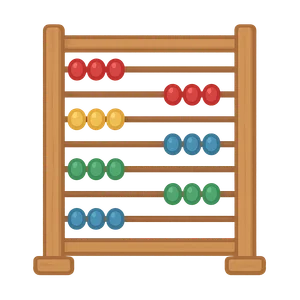
Abacus
An ancient counting tool, considered one of the first calculators…
Reads at Grades 3–5 Listens at Grades 1–5
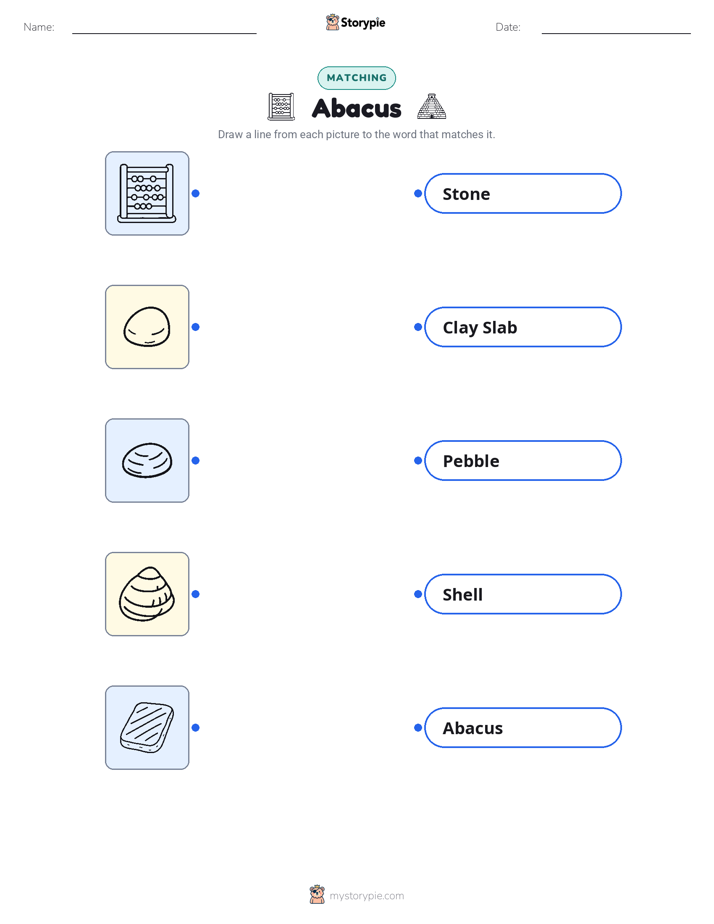
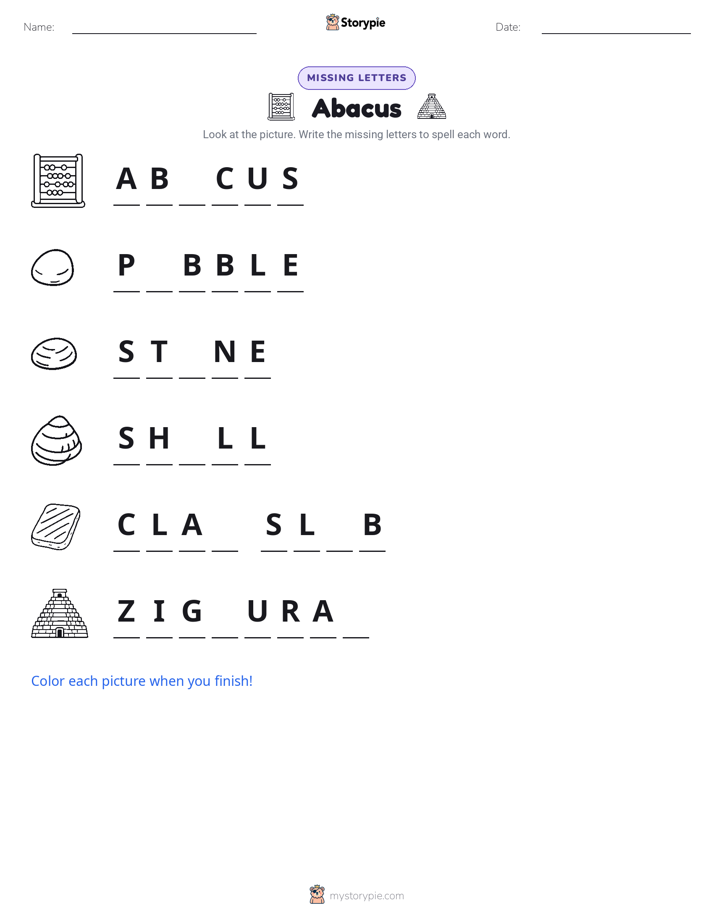
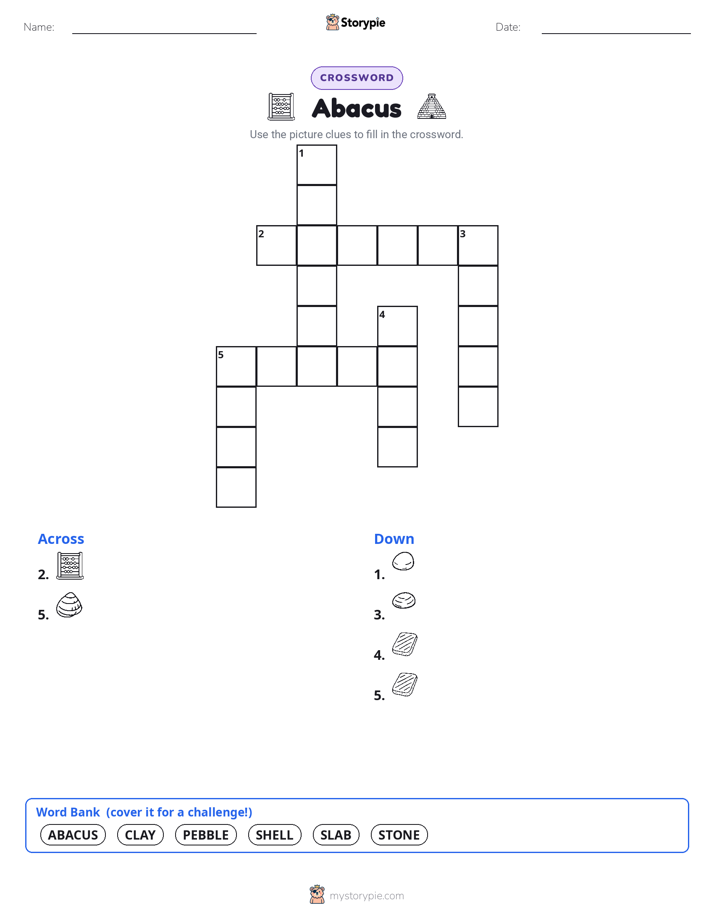
Print & create
Answer keys·No prep·Free with an account
28 worksheets · answer keys · full story · quiz · Ages 8-10 · CEFR B1
Plus adds 244,000+ more stories in 27 languages, audio for every one, and printables for all of them.
Just want Abacus?
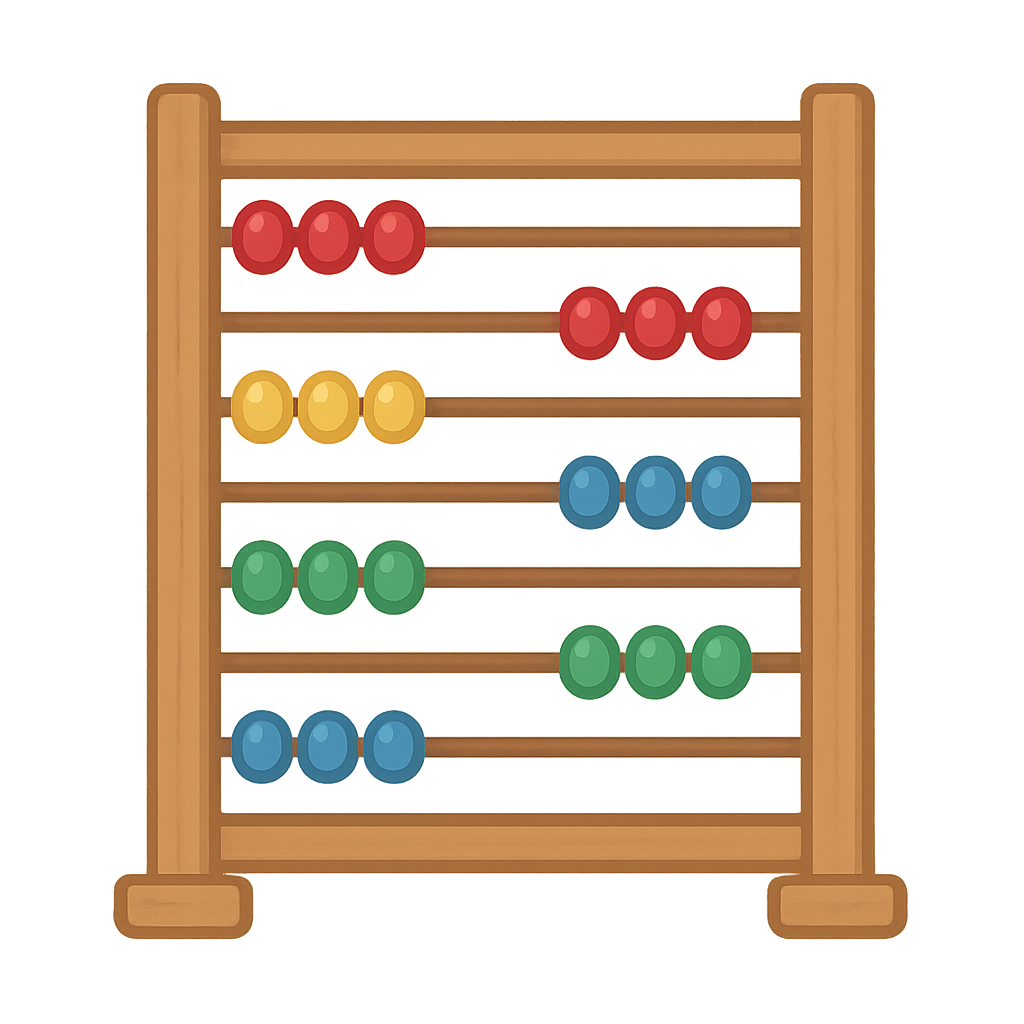
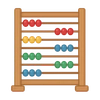
Hello there. I am the Abacus, and I am one of the very first calculating machines in the world. You might think I look simple, and I am. I'm usually a wooden frame holding thin rods, and on those rods are colorful beads that click and clack as they slide back and forth. Each bead, in its own special place, represents a number. Long before smartphones could answer any math problem in a second, people needed a reliable way to count. They had to keep track of crops in their fields, trade goods in bustling markets, and measure materials to build incredible cities. My story began thousands of years ago, around 2700 BCE, in a land called Mesopotamia. My earliest ancestors weren't frames like me, but simple lines drawn in the sand, with pebbles used for counting. It was a humble start. Even my name tells a piece of my history. 'Abacus' comes from the ancient Greek word 'abax,' which means 'flat board.' That’s what I was at my core: a simple, flat surface ready to help humans bring order to the world of numbers.
My life has been a grand adventure, a long journey across continents where I changed and grew. After my simple start, the clever ancient Romans gave me a new design with grooves carved into a board to hold my counting stones, making me more permanent than lines in the dust. My biggest transformation happened when I traveled along the Silk Road. Around the 2nd century BCE, I arrived in China and was welcomed with a new name and a new body. I became the 'Suanpan.' I was a beautiful rectangular frame, divided by a beam. I had two beads on the upper deck and five beads on the lower deck. In the hands of a skilled merchant or scholar, my beads would fly. They would click-clack so quickly, solving problems of addition, subtraction, multiplication, and division faster than someone could think. I was a trusted friend in every shop and government office. Centuries later, around the 14th century CE, my journey continued to Japan. There, I was refined once more and called the 'Soroban.' I became sleeker, with just one bead on top and four on the bottom. This new design was so efficient. I helped engineers plan giant castles, and I helped tax collectors for the emperor make sure everyone’s numbers were correct. I was the silent partner in building empires and running businesses.
The Story of the Abacus
Hello there. I am the Abacus, and I am one of the very first calculating machines in the world. You might think I look simple, and I am. I'm usually a wooden frame holding thin rods, and on those rods are colorful beads that click and clack as they slide back and forth. Each bead, in its own special place, represents a number. Long before smartphones could answer any math problem in a second, people needed a reliable way to count. They had to keep track of crops in their fields, trade goods in bustling markets, and measure materials to build incredible cities. My story began thousands of years ago, around 2700 BCE, in a land called Mesopotamia. My earliest ancestors weren't frames like me, but simple lines drawn in the sand, with pebbles used for counting. It was a humble start. Even my name tells a piece of my history. 'Abacus' comes from the ancient Greek word 'abax,' which means 'flat board.' That’s what I was at my core: a simple, flat surface ready to help humans bring order to the world of numbers.
My life has been a grand adventure, a long journey across continents where I changed and grew. After my simple start, the clever ancient Romans gave me a new design with grooves carved into a board to hold my counting stones, making me more permanent than lines in the dust. My biggest transformation happened when I traveled along the Silk Road. Around the 2nd century BCE, I arrived in China and was welcomed with a new name and a new body. I became the 'Suanpan.' I was a beautiful rectangular frame, divided by a beam. I had two beads on the upper deck and five beads on the lower deck. In the hands of a skilled merchant or scholar, my beads would fly. They would click-clack so quickly, solving problems of addition, subtraction, multiplication, and division faster than someone could think. I was a trusted friend in every shop and government office. Centuries later, around the 14th century CE, my journey continued to Japan. There, I was refined once more and called the 'Soroban.' I became sleeker, with just one bead on top and four on the bottom. This new design was so efficient. I helped engineers plan giant castles, and I helped tax collectors for the emperor make sure everyone’s numbers were correct. I was the silent partner in building empires and running businesses.
Now, I see the world is filled with electronic calculators and powerful computers. You might look at your phone and think that my time of clicking and clacking is over. But I am still very important, and I have a special secret. In many parts of Asia, you can still find me in shops, where merchants use my beads to quickly total a bill. More importantly, I have become a wonderful teacher. All around the world, children learn to use me to train their brains. When you slide my beads, you are not just doing math; you are seeing how numbers work. I help you understand big ideas like place value, and I can make you lightning-fast at mental math, able to solve problems in your head without a screen. So, even in this high-tech age, I am a quiet reminder that great ideas never truly get old. I am proof that a simple tool can be powerful, and that the fun of making numbers dance is a joy that is absolutely timeless.
Wow facts
About
An ancient counting tool, considered one of the first calculators, that uses a frame with beads or stones on rods to perform arithmetic.
Take a Quiz
Question 1 of 5
According to the story, what did the Japanese version of the abacus, the 'Soroban', look like?
Explore next



Want to do even more?
Go beyond exploring. Unlock tools that turn every story into real learning.

Storypie Plus for families
Full stories, quizzes, and printables. Nights and car rides, sorted.
- Unlimited audio stories
- Create Mode: your child stars in the story
- Offline downloads
- Printable worksheets & coloring pages

Why Storypie for Schools
Students engaged. Prep in seconds. Evenings back to you.
- Worksheets & Quizzes
- Classroom Management
- Formative Assessment
- Custom Curriculum & Lesson Plans
- 27 Languages

Why Storypie for Homeschool
Curriculum done. They'll ask for more. Hours back in your day.
- Worksheet Generator
- First-Person Audio Stories
- Built-in Comprehension Quizzes
- Custom Curriculum & Lesson Plans
- Print & Go Activities