English


Hangul
Hangul is the official alphabet and writing system of the Korean language.
Reads at Grades 3–5 Listens at Grades 1–5
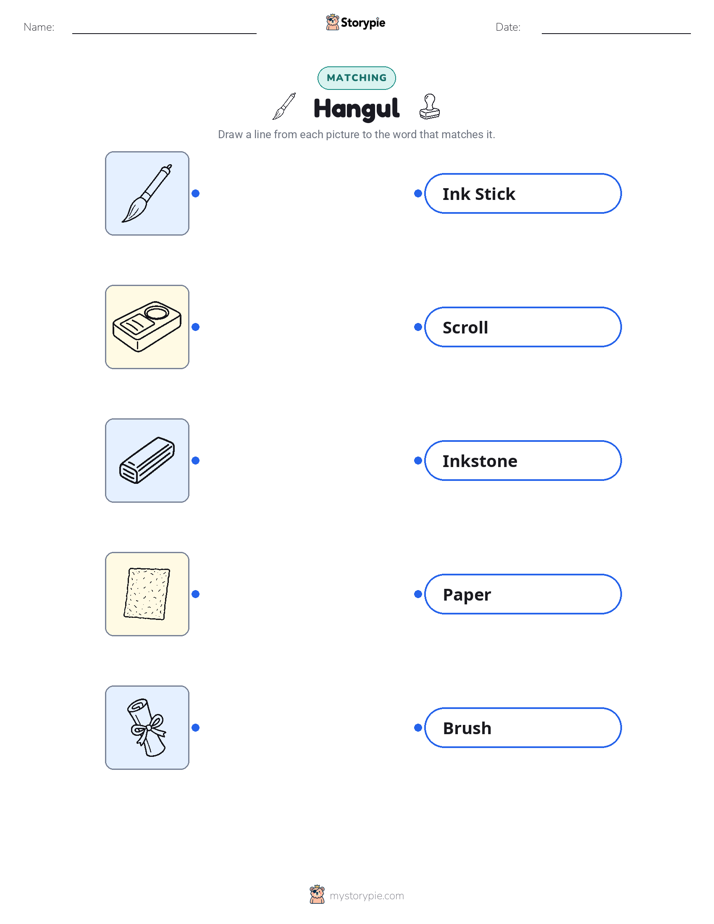
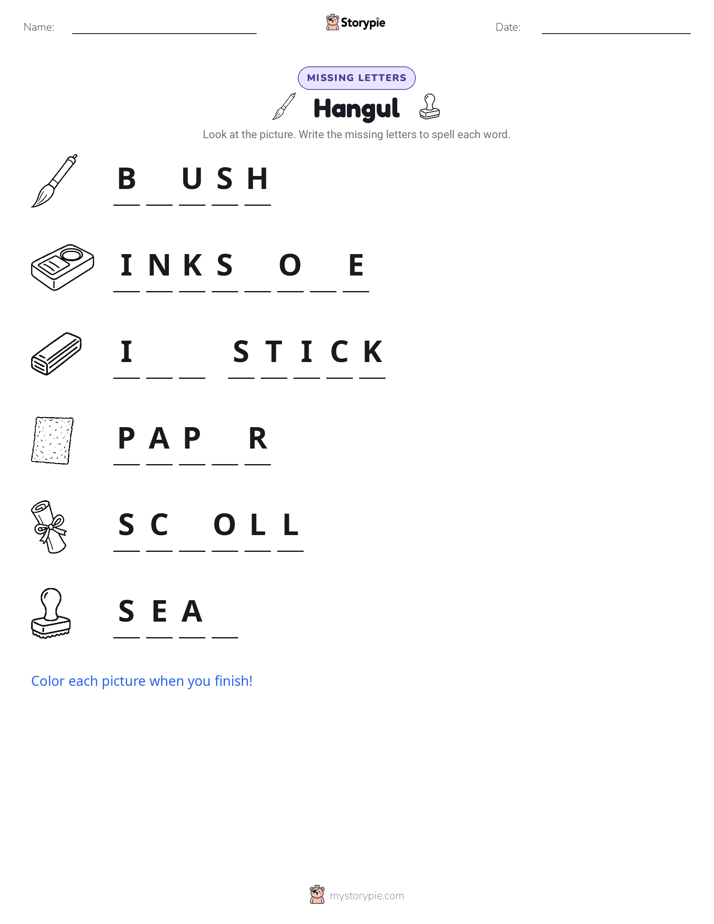
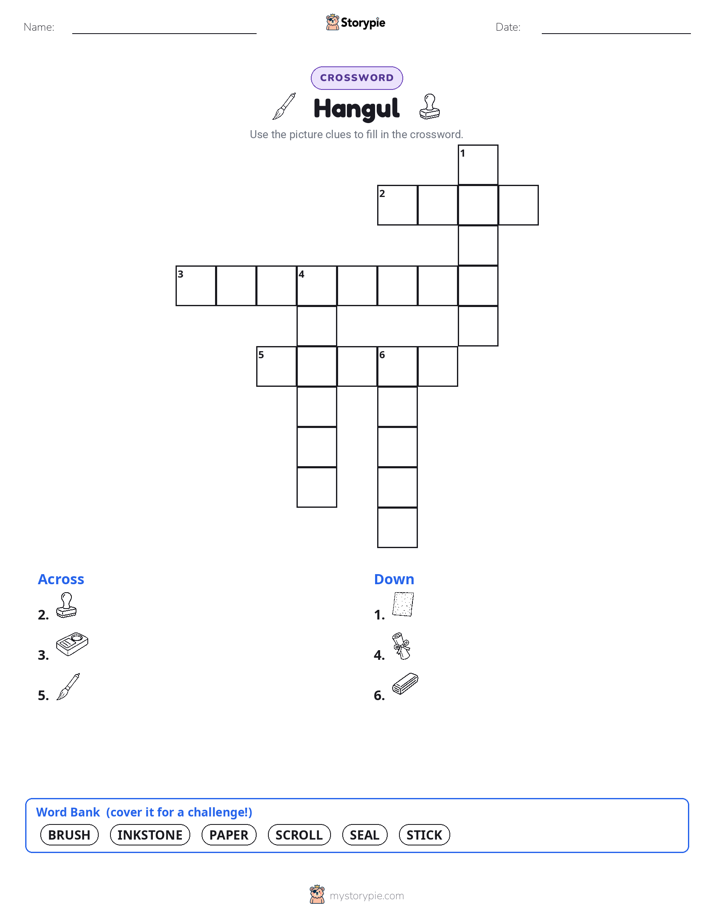
Print & create
Answer keys·No prep·Free with an account
28 worksheets · answer keys · full story · quiz · Ages 8-10 · CEFR B1
Plus adds 208,000+ more stories in 27 languages, audio for every one, and printables for all of them.
Just want Hangul?

Hello. I am an alphabet, a team of letters that works together to make words. My name is Hangul, and I am the proud writing system of the Korean language. Before I was born in the 15th century, during the Joseon Dynasty, my home was filled with the beautiful sounds of the Korean language, but the words people wrote looked very different from how they spoke. They had to use something called Hanja, which were complicated characters from China. Imagine trying to build a castle with thousands of tiny, tricky pieces, each one different. That’s what learning Hanja was like. Only a few wealthy scholars and nobles had the time and money to learn it. This meant that most people—farmers, fishermen, and merchants—could speak their thoughts but could never write them down. A great and kind ruler, King Sejong the Great, saw this and it made him sad. He believed that knowledge should be like sunlight, available to everyone, not just a few. He dreamed of a writing system so simple that anyone could learn it and share their ideas. That dream was me.
My creation was a great secret, whispered about in the halls of the palace. King Sejong gathered his most trusted scholars in the early 1440s, and together they began to design me. They didn't just pick random shapes; they were scientists of sound. They studied the human mouth and throat to understand exactly how sounds were made. My consonants, the letters like 'g' and 'n', were drawn to look like the shape your tongue, lips, and throat make when you say them. For example, the letter for 'g' (ㄱ) looks like the shape of the tongue's root as it blocks the throat to make the sound. It was so logical. My vowels were born from a beautiful idea about the world. They were made from just three simple strokes: a dot (ㆍ) representing the round Sun in the heavens, a flat horizontal line (ㅡ) for the wide Earth, and a straight vertical line (ㅣ) for a person standing tall between them. From these three simple shapes, all my vowels could be created. My first name wasn't Hangul. It was ‘Hunminjeongeum,’ which means ‘The Correct Sounds for the Instruction of the People.’ Not everyone was happy about my birth, though. Some of the powerful nobles who loved the old, difficult Hanja were against me. They worried that if everyone could read and write, they would lose their special power. But King Sejong believed in me and in his people.
I Am Hangul: A King's Gift of Words
Hello. I am an alphabet, a team of letters that works together to make words. My name is Hangul, and I am the proud writing system of the Korean language. Before I was born in the 15th century, during the Joseon Dynasty, my home was filled with the beautiful sounds of the Korean language, but the words people wrote looked very different from how they spoke. They had to use something called Hanja, which were complicated characters from China. Imagine trying to build a castle with thousands of tiny, tricky pieces, each one different. That’s what learning Hanja was like. Only a few wealthy scholars and nobles had the time and money to learn it. This meant that most people—farmers, fishermen, and merchants—could speak their thoughts but could never write them down. A great and kind ruler, King Sejong the Great, saw this and it made him sad. He believed that knowledge should be like sunlight, available to everyone, not just a few. He dreamed of a writing system so simple that anyone could learn it and share their ideas. That dream was me.
My creation was a great secret, whispered about in the halls of the palace. King Sejong gathered his most trusted scholars in the early 1440s, and together they began to design me. They didn't just pick random shapes; they were scientists of sound. They studied the human mouth and throat to understand exactly how sounds were made. My consonants, the letters like 'g' and 'n', were drawn to look like the shape your tongue, lips, and throat make when you say them. For example, the letter for 'g' (ㄱ) looks like the shape of the tongue's root as it blocks the throat to make the sound. It was so logical. My vowels were born from a beautiful idea about the world. They were made from just three simple strokes: a dot (ㆍ) representing the round Sun in the heavens, a flat horizontal line (ㅡ) for the wide Earth, and a straight vertical line (ㅣ) for a person standing tall between them. From these three simple shapes, all my vowels could be created. My first name wasn't Hangul. It was ‘Hunminjeongeum,’ which means ‘The Correct Sounds for the Instruction of the People.’ Not everyone was happy about my birth, though. Some of the powerful nobles who loved the old, difficult Hanja were against me. They worried that if everyone could read and write, they would lose their special power. But King Sejong believed in me and in his people.
Finally, in the year 1446, the secret was over. King Sejong proudly announced my existence to the entire kingdom. I was a gift for everyone. At first, people were amazed. Could writing really be this simple? Soon, they discovered it was true. A wise person could learn me in a single morning, and anyone could learn me in just a few days. For the first time, farmers could write letters, shopkeepers could keep records, and parents could read stories to their children in their own language. I opened up a whole new world of poems, novels, and letters that everyone could share. I helped the Korean people feel a powerful connection to their own language and culture. Today, I am still the heart of writing in Korea. Millions of people use me every single day to text their friends, read the news, and write their dreams. Every year on October 9th, the people of South Korea celebrate Hangul Day in my honor. Looking back, I am so proud that a wise king's thoughtful gift continues to help people connect, learn, and share their voices with the world.
Wow facts
About
Hangul is the official alphabet and writing system of the Korean language. It was created in the 15th century under the direction of King Sejong the Great to promote literacy among the common people.
Take a Quiz
Question 1 of 5
In the story, Hangul says some nobles preferred the 'old, difficult way of writing.' What is another word for 'nobles'?
Explore next


Want to do even more?
Go beyond exploring. Unlock tools that turn every story into real learning.

Storypie Plus for families
Full stories, quizzes, and printables. Nights and car rides, sorted.
- Unlimited audio stories
- Create Mode: your child stars in the story
- Offline downloads
- Printable worksheets & coloring pages

Why Storypie for Schools
Students engaged. Prep in seconds. Evenings back to you.
- Worksheets & Quizzes
- Classroom Management
- Formative Assessment
- Custom Curriculum & Lesson Plans
- 27 Languages

Why Storypie for Homeschool
Curriculum done. They'll ask for more. Hours back in your day.
- Worksheet Generator
- First-Person Audio Stories
- Built-in Comprehension Quizzes
- Custom Curriculum & Lesson Plans
- Print & Go Activities