English

Hindu-Arabic numeral system
The Hindu-Arabic numeral system is the most common system for writing numbers in the world today.
Reads at Grades 6–8 Listens at Grades 4–8
Print & create
Answer keys·No prep·Free with an account
28 worksheets · answer keys · full story · quiz · Ages 10-12 · CEFR B2
Plus adds 208,000+ more stories in 27 languages, audio for every one, and printables for all of them.
Just want Hindu-Arabic numeral system?
I am not a single thing but a family, a team of ten symbols you know very well: 0, 1, 2, 3, 4, 5, 6, 7, 8, and 9. Before I existed, people struggled. Imagine trying to write a very large number, like a thousand, using only tally marks or the letters of an alphabet. It was a messy, confusing business. That is the world I was born into, a world that desperately needed a simpler way to think about numbers. My story begins in ancient India, sometime between the 1st and 4th centuries CE. Scholars and mathematicians there were looking for a better way, and slowly, piece by piece, they created me. I was built on two secret powers that made me different from anything that had come before. The first was 'place value,' the clever idea that a symbol’s position changes its value. A '2' in one spot could mean two, but in another spot, it could mean twenty or two hundred. My second, and most important, power was my hero: the symbol for 'Zero.' Before me, the idea of nothing was just an empty space, a concept that was difficult to write down. I gave 'nothing' a name and a shape: 0. Zero was more than just an absence of value; it was a powerful placeholder, the glue that held my whole system together. Around the year 628 CE, a brilliant Indian mathematician named Brahmagupta wrote down the first clear rules for using Zero in calculations, defining how to add, subtract, and multiply with it. With his work, my identity was complete. I was no longer just a collection of symbols; I was a powerful and logical system, ready to change the world.
The Story of the Hindu-Arabic Numerals
I am not a single thing but a family, a team of ten symbols you know very well: 0, 1, 2, 3, 4, 5, 6, 7, 8, and 9. Before I existed, people struggled. Imagine trying to write a very large number, like a thousand, using only tally marks or the letters of an alphabet. It was a messy, confusing business. That is the world I was born into, a world that desperately needed a simpler way to think about numbers. My story begins in ancient India, sometime between the 1st and 4th centuries CE. Scholars and mathematicians there were looking for a better way, and slowly, piece by piece, they created me. I was built on two secret powers that made me different from anything that had come before. The first was 'place value,' the clever idea that a symbol’s position changes its value. A '2' in one spot could mean two, but in another spot, it could mean twenty or two hundred. My second, and most important, power was my hero: the symbol for 'Zero.' Before me, the idea of nothing was just an empty space, a concept that was difficult to write down. I gave 'nothing' a name and a shape: 0. Zero was more than just an absence of value; it was a powerful placeholder, the glue that held my whole system together. Around the year 628 CE, a brilliant Indian mathematician named Brahmagupta wrote down the first clear rules for using Zero in calculations, defining how to add, subtract, and multiply with it. With his work, my identity was complete. I was no longer just a collection of symbols; I was a powerful and logical system, ready to change the world.
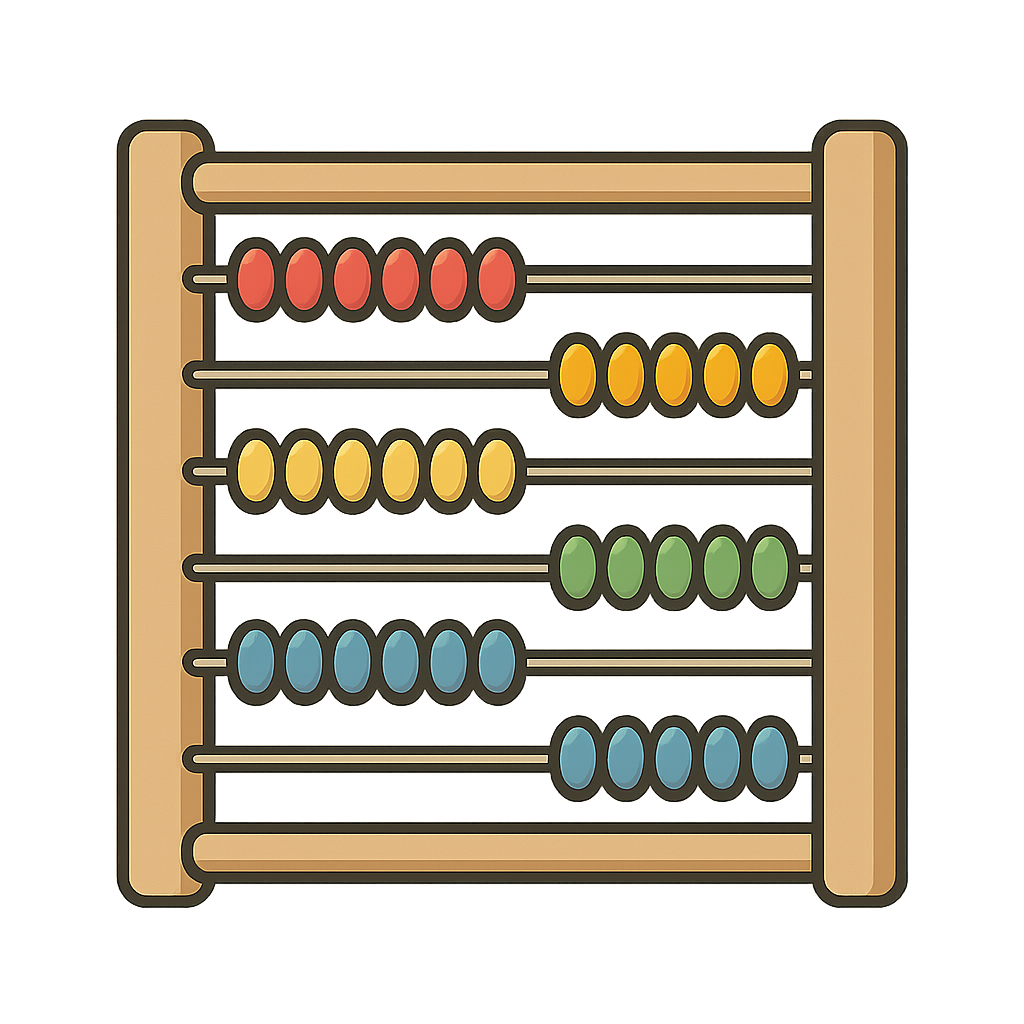
My journey from my birthplace in India was a long and fascinating one, like a message passed carefully from one hand to another across centuries. My first big trip was westward, carried along the bustling trade routes of the Silk Road. Around 825 CE, I caught the attention of a brilliant Persian scholar in Baghdad named Muhammad ibn Musa al-Khwarizmi. He was captivated by my elegance and efficiency. He saw how I could unlock new possibilities in mathematics and science. He wrote an entire book about me, explaining how to use my ten symbols to perform calculations. His book was so influential that it spread my fame throughout the entire Arab world. It was because of his work that I became known as the 'Hindu-Arabic' numeral system, a name that honors both my Indian origins and the Arab scholars who embraced and shared me. My next great adventure was my journey to Europe. At that time, Europeans were still using clunky Roman numerals. Imagine being a merchant trying to add CXXIII and XLVII. It was a slow, difficult process that often required an abacus. They needed a better way, but they didn’t know I existed yet. That changed in 1202 CE, when an Italian mathematician named Leonardo of Pisa, better known as Fibonacci, published a groundbreaking book called 'Liber Abaci.' Fibonacci had traveled widely and encountered me in his journeys. He saw my power immediately and knew he had to introduce me to Europe. In his book, he showed merchants, bookkeepers, and fellow mathematicians how much easier I made everything, from calculating profits to solving complex equations. At first, people were slow to change. They were used to their old ways. But my simplicity and power were undeniable. Slowly but surely, I won them over, and the old Roman numerals began to fade into history.
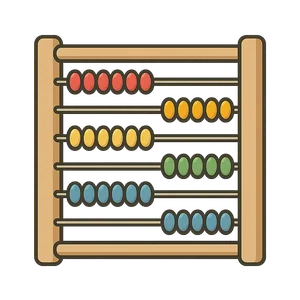
Once I had taken root in Europe, I began to change everything. My arrival was like opening a door into a new world of thought and discovery. Before me, complex arithmetic was a specialized skill that often required a physical tool like an abacus. But with my system of place value and my hero, Zero, difficult calculations could be done with just a pen and paper. This was a revolution. It freed the minds of thinkers to explore more complex ideas. This newfound mathematical freedom helped fuel some of the most important periods in human history, including the Renaissance and the Scientific Revolution. Astronomers could now calculate the movements of the planets with greater precision. Physicists could develop new laws to explain the universe. Engineers and architects could design stronger bridges and taller cathedrals, all because they had a language of numbers that was as powerful as their imagination. My influence is so deep that it’s even embedded in the words we use today. The modern word 'algorithm,' which is the foundation of all computer programming, is derived from the name of the very scholar who introduced me to the Arab world: al-Khwarizmi. I had become more than just a tool for counting; I was the universal language of science, technology, and commerce, a shared system that allowed people from different cultures to collaborate and build the modern world.
Today, my journey continues, though you might not always notice me. I am quiet and humble, but I am everywhere. I am on the face of your clock, the keys of your phone, and the price tags at the store. Every time you measure an ingredient for a recipe, check the score of a game, or send a message to a friend, you are using me. I am the invisible architecture that supports so much of your world. My story is a testament to how a brilliant idea, born in one culture and nurtured by another, can travel across the world and connect all of humanity. It shows that progress is often a team effort, spanning centuries and continents. It all started with ten simple symbols and the revolutionary concept that 'nothing' could be a hero. I am proof that sometimes the simplest ideas are the most powerful, capable of empowering people to achieve the most incredible things.
Wow facts
About
The Hindu-Arabic numeral system is the most common system for writing numbers in the world today. It consists of ten digits (0, 1, 2, 3, 4, 5, 6, 7, 8, 9) and uses a positional base-10 system, which was revolutionary for its inclusion of the number zero.
Take a Quiz
Question 1 of 5
In your own words, describe the numeral system's journey from India to Europe, mentioning the key people who helped it travel.
Explore next






Want to do even more?
Go beyond exploring. Unlock tools that turn every story into real learning.

Storypie Plus for families
Full stories, quizzes, and printables. Nights and car rides, sorted.
- Unlimited audio stories
- Create Mode: your child stars in the story
- Offline downloads
- Printable worksheets & coloring pages

Why Storypie for Schools
Students engaged. Prep in seconds. Evenings back to you.
- Worksheets & Quizzes
- Classroom Management
- Formative Assessment
- Custom Curriculum & Lesson Plans
- 27 Languages

Why Storypie for Homeschool
Curriculum done. They'll ask for more. Hours back in your day.
- Worksheet Generator
- First-Person Audio Stories
- Built-in Comprehension Quizzes
- Custom Curriculum & Lesson Plans
- Print & Go Activities