English

Hindu-Arabic numeral system
The Hindu-Arabic numeral system is the most common system for writing numbers in the world today.
Reads at Grades 3–5 Listens at Grades 1–5
Print & create
Answer keys·No prep·Free with an account
28 worksheets · answer keys · full story · quiz · Ages 8-10 · CEFR B1
Plus adds 208,000+ more stories in 27 languages, audio for every one, and printables for all of them.
Just want Hindu-Arabic numeral system?
Hello! You see me every day. I'm the family of ten digits you use to count, measure, and create: 0, 1, 2, 3, 4, 5, 6, 7, 8, and 9. My official name is the Hindu-Arabic numeral system, and I make math simple. But it wasn’t always this easy. Long ago, people used clumsy systems like Roman numerals. Imagine trying to write a big number like 1,888. You’d have to write MDCCCLXXXVIII. Adding and subtracting was a real headache, and mistakes were easy to make. People knew there had to be a better, smarter way to work with numbers. That's where my story begins.
I was born in a warm, clever land called India, sometime between the 1st and 4th centuries. I started as a family of symbols, but the most important member of my family was the number zero. In the beautiful Sanskrit language, people called it ‘śūnya,’ which means empty. But zero wasn't just ‘nothing.’ It was a powerful and magical idea. Zero is a placeholder. It’s how you can tell the difference between 3, 30, and 300. It gave all my other digits their true power and place. A brilliant Indian mathematician named Brahmagupta saw how important this was. Around the year 628, he wrote down the first complete set of rules for using me, especially zero. He showed everyone how to add, subtract, multiply, and divide with me. At last, I was a complete system, ready to help the world build and discover.
I didn't stay in India forever. Soon, I was going on a grand adventure. Traders who traveled on long, dusty roads and scholars who loved learning carried me with them. My journey took me west, to the great cities of the Arab world. In bustling places like Baghdad, brilliant thinkers welcomed me with open arms. They saw how simple and powerful I was compared to other systems. One of the most important people I met was a Persian mathematician named Al-Khwarizmi. Around the year 825, he wrote a famous book all about me, explaining how to use my digits for all kinds of calculations. His book traveled far and wide. Because of him and other Arab scholars who shared my story, people in other parts of the world started to learn about me. That's how I got my long name: the Hindu-Arabic numeral system. I was born from Hindu minds in India, and my story was shared with the world by Arabic speakers.
The Story of Your Numbers
Hello! You see me every day. I'm the family of ten digits you use to count, measure, and create: 0, 1, 2, 3, 4, 5, 6, 7, 8, and 9. My official name is the Hindu-Arabic numeral system, and I make math simple. But it wasn’t always this easy. Long ago, people used clumsy systems like Roman numerals. Imagine trying to write a big number like 1,888. You’d have to write MDCCCLXXXVIII. Adding and subtracting was a real headache, and mistakes were easy to make. People knew there had to be a better, smarter way to work with numbers. That's where my story begins.
I was born in a warm, clever land called India, sometime between the 1st and 4th centuries. I started as a family of symbols, but the most important member of my family was the number zero. In the beautiful Sanskrit language, people called it ‘śūnya,’ which means empty. But zero wasn't just ‘nothing.’ It was a powerful and magical idea. Zero is a placeholder. It’s how you can tell the difference between 3, 30, and 300. It gave all my other digits their true power and place. A brilliant Indian mathematician named Brahmagupta saw how important this was. Around the year 628, he wrote down the first complete set of rules for using me, especially zero. He showed everyone how to add, subtract, multiply, and divide with me. At last, I was a complete system, ready to help the world build and discover.
I didn't stay in India forever. Soon, I was going on a grand adventure. Traders who traveled on long, dusty roads and scholars who loved learning carried me with them. My journey took me west, to the great cities of the Arab world. In bustling places like Baghdad, brilliant thinkers welcomed me with open arms. They saw how simple and powerful I was compared to other systems. One of the most important people I met was a Persian mathematician named Al-Khwarizmi. Around the year 825, he wrote a famous book all about me, explaining how to use my digits for all kinds of calculations. His book traveled far and wide. Because of him and other Arab scholars who shared my story, people in other parts of the world started to learn about me. That's how I got my long name: the Hindu-Arabic numeral system. I was born from Hindu minds in India, and my story was shared with the world by Arabic speakers.
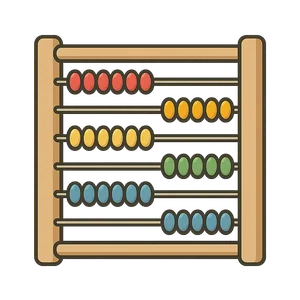
My next big journey was to Europe, but it took a long time for people there to welcome me. They were very used to their old ways of counting with Roman numerals and a tool called an abacus. They looked at me and my strange little zero and were suspicious. At first, they didn't understand how much easier I could make their lives. But then I found a champion, a very smart Italian mathematician named Leonardo of Pisa, who everyone today calls Fibonacci. He had traveled to North Africa and seen me at work, helping merchants and bookkeepers. He knew I was the future. So, in the year 1202, he published a very important book called Liber Abaci. In its pages, he showed all of Europe how I worked. He demonstrated how I could solve business problems, calculate profits, and make all kinds of math much, much faster.
After Fibonacci showed everyone what I could do, I started to become famous all over the world. Slowly but surely, people everywhere began to use me. I helped them build towering cathedrals, design amazing machines, and explore the globe. Can you imagine trying to build a spaceship or program a computer using Roman numerals? It would be nearly impossible. I made big ideas possible. Looking back, I see that I am more than just ten symbols. I am an idea that connects everyone. From your math homework to the phone in your hand to the stars that scientists study, I am there, helping you understand the world. A simple, powerful idea from long ago is still helping you dream big today.
Wow facts
About
The Hindu-Arabic numeral system is the most common system for writing numbers in the world today. It consists of ten digits (0, 1, 2, 3, 4, 5, 6, 7, 8, 9) and uses a positional base-10 system, which was revolutionary for its inclusion of the number zero.
Take a Quiz
Question 1 of 5
In what country was the numeral system first developed?
Explore next






Want to do even more?
Go beyond exploring. Unlock tools that turn every story into real learning.

Storypie Plus for families
Full stories, quizzes, and printables. Nights and car rides, sorted.
- Unlimited audio stories
- Create Mode: your child stars in the story
- Offline downloads
- Printable worksheets & coloring pages

Why Storypie for Schools
Students engaged. Prep in seconds. Evenings back to you.
- Worksheets & Quizzes
- Classroom Management
- Formative Assessment
- Custom Curriculum & Lesson Plans
- 27 Languages

Why Storypie for Homeschool
Curriculum done. They'll ask for more. Hours back in your day.
- Worksheet Generator
- First-Person Audio Stories
- Built-in Comprehension Quizzes
- Custom Curriculum & Lesson Plans
- Print & Go Activities