English


Tooth Fairy
The Tooth Fairy is a figure in modern Western folklore who visits children when they lose a baby tooth…
Reads at Grades 6–8 Listens at Grades 4–8
Print & create
Answer keys·No prep·Free with an account
28 worksheets · answer keys · full story · quiz · Ages 10-12 · CEFR B2
Plus adds 208,000+ more stories in 27 languages, audio for every one, and printables for all of them.
Just want Tooth Fairy?

I move on whispers of wind through the quiet dark, a secret only the moon and sleeping children share. You might feel a tiny breeze as I slip through your window, or see a flicker of silver light, but I am gone before you can be sure. I am a keeper of memories, a collector of tiny treasures, and a witness to the brave goodbyes you say to parts of yourselves as you grow. My name is the Tooth Fairy, and my story is older and more traveled than you might imagine, woven from threads of Viking courage, medieval caution, and the gentle magic of a tiny mouse. I am a patchwork of history, a myth built from many truths, and I have watched over children for centuries, long before I ever had wings.
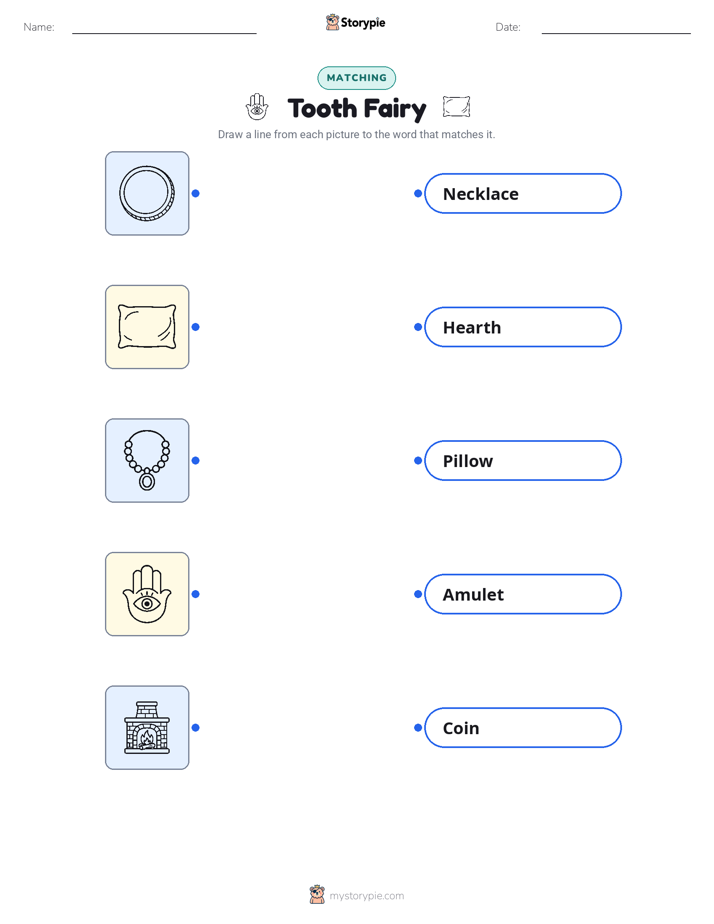
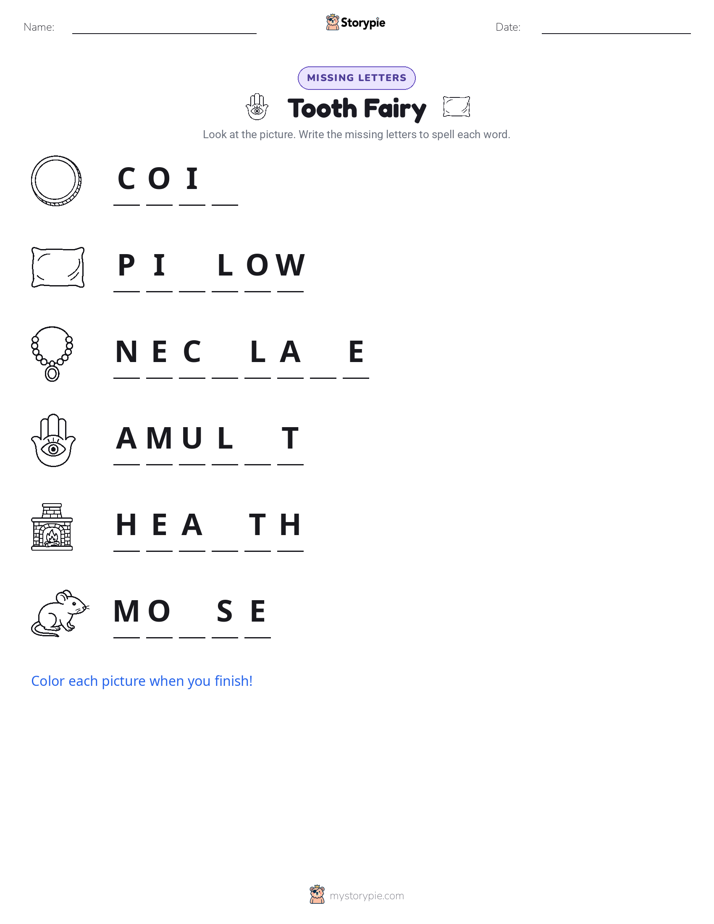
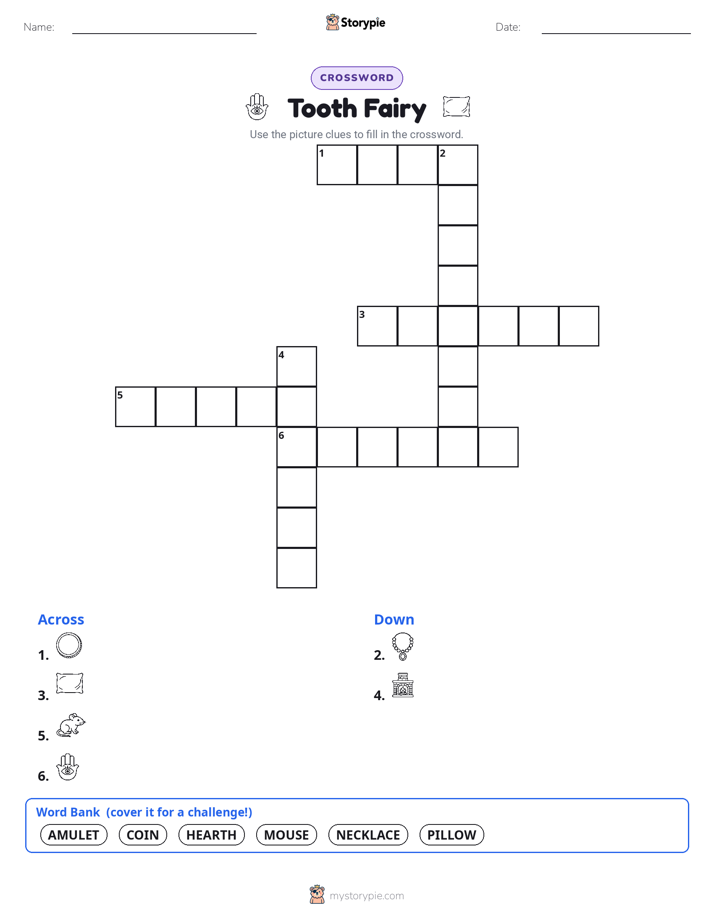
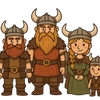
Long before children knew my name, the ritual of losing a tooth was a serious matter, filled with a gravity that might surprise you. In the frosty lands of the North, Viking warriors believed a child’s first tooth was a powerful token of good luck. A lost tooth wasn't just a sign of growing up; it was an amulet. They would pay a 'tand-fé,' or a 'tooth fee,' for this tiny treasure, which they would then string on a necklace and wear into the heart of battle. Imagine, a fierce warrior, clad in leather and steel, carrying something so small and personal for protection against swords and axes. In other parts of medieval Europe, the feeling was very different—not reverence, but fear. People worried that if a witch discovered a lost tooth, she could use its connection to the child to cast a powerful and malevolent curse. So, instead of placing them under pillows for a magical visitor, children and their parents would perform solemn rituals. They would carefully bury the teeth deep in the earth, burn them to ash in the hearth, or even feed them to a pig or dog to keep them safe from dark magic. These weren't just superstitions; they were ways of understanding a dangerous world and protecting what was most precious.
The Secret History of the Tooth Fairy
I move on whispers of wind through the quiet dark, a secret only the moon and sleeping children share. You might feel a tiny breeze as I slip through your window, or see a flicker of silver light, but I am gone before you can be sure. I am a keeper of memories, a collector of tiny treasures, and a witness to the brave goodbyes you say to parts of yourselves as you grow. My name is the Tooth Fairy, and my story is older and more traveled than you might imagine, woven from threads of Viking courage, medieval caution, and the gentle magic of a tiny mouse. I am a patchwork of history, a myth built from many truths, and I have watched over children for centuries, long before I ever had wings.
Long before children knew my name, the ritual of losing a tooth was a serious matter, filled with a gravity that might surprise you. In the frosty lands of the North, Viking warriors believed a child’s first tooth was a powerful token of good luck. A lost tooth wasn't just a sign of growing up; it was an amulet. They would pay a 'tand-fé,' or a 'tooth fee,' for this tiny treasure, which they would then string on a necklace and wear into the heart of battle. Imagine, a fierce warrior, clad in leather and steel, carrying something so small and personal for protection against swords and axes. In other parts of medieval Europe, the feeling was very different—not reverence, but fear. People worried that if a witch discovered a lost tooth, she could use its connection to the child to cast a powerful and malevolent curse. So, instead of placing them under pillows for a magical visitor, children and their parents would perform solemn rituals. They would carefully bury the teeth deep in the earth, burn them to ash in the hearth, or even feed them to a pig or dog to keep them safe from dark magic. These weren't just superstitions; they were ways of understanding a dangerous world and protecting what was most precious.
My story truly began to take a friendlier, more whimsical shape in the cozy homes of France and Spain. There, children didn't wait for a winged fairy but for a small, clever creature with a twitching nose: a mouse. In France, she was known as 'La Petite Souris,' the little mouse, who would silently swap the tooth for a coin. In Spain, he was a dashing and famous little figure named 'Ratoncito Pérez.' But why a mouse? The logic was quite practical. People observed that mice have incredibly strong teeth that never stop growing, a quality everyone admired and wished for their own children. The tale of Pérez became famous across Spain after January 7th, 1894, when a writer named Luis Coloma Roldán was asked by the royal court to create a story for the young King Alfonso XIII, who had just lost a tooth. In the tale, Pérez, who lived in a cookie box in Madrid, visited not only the young king in his palace but also a poor boy in a less fortunate part of the city, showing that this small magic was for everyone, rich or poor. This little mouse scurried across cultures, carrying the wonderful new idea that a lost tooth wasn't something to fear or hide, but something to celebrate with a gift.
As these varied stories traveled across the ocean to America, they began to mingle and change, like ingredients in a melting pot. In the early 20th century, people were completely captivated by tales of fairies, thanks to popular plays like Peter Pan and beautifully illustrated books. It seemed only natural that the magical being who visited children at night should have shimmering wings and a touch of pixie dust. My modern image really began to take flight in 1927, when a short play for children by Esther Watkins Arnold called 'The Tooth Fairy' helped give me the form you know today. A few decades later, a story by Lee Rogow in 1949 pictured me as a busy, organized fairy managing a vast collection of teeth from a fairy castle. And so, I was born from a blend of all these old traditions. I took the Viking 'tooth fee,' the European need for safekeeping, the gift-giving kindness of Pérez the Mouse, and America’s love for all things fairy. I became the official guardian of this important childhood moment, trading a coin not just for a tooth, but for the story of a child growing older, braver, and ready for the next chapter.
Today, the tradition I represent continues all over the world, though it looks a little different everywhere you go. The amount I leave may change with inflation, and sometimes children leave me detailed notes or colorful drawings, which I treasure deeply. What never changes, however, is the profound meaning behind the exchange. Losing a tooth is one of the first ways you learn that growing up means letting go of something to make way for something new and stronger. It’s a small, universal rite of passage that connects you to millions of other children, past and present, who have all stared in the mirror at that funny new gap in their smile. The story of the Tooth Fairy—my story—reminds us that even small moments of change can be filled with magic, history, and wonder. It’s a tale that continues to be told not in ancient books, but in the quiet whispers of every child’s bedroom, every single night.
Wow facts
About
The Tooth Fairy is a figure in modern Western folklore who visits children when they lose a baby tooth, collecting the tooth from under their pillow and leaving a small payment in its place.
Take a Quiz
Question 1 of 5
What is the main lesson or message the story of the Tooth Fairy teaches about growing up?
Explore next




Want to do even more?
Go beyond exploring. Unlock tools that turn every story into real learning.

Storypie Plus for families
Full stories, quizzes, and printables. Nights and car rides, sorted.
- Unlimited audio stories
- Create Mode: your child stars in the story
- Offline downloads
- Printable worksheets & coloring pages

Why Storypie for Schools
Students engaged. Prep in seconds. Evenings back to you.
- Worksheets & Quizzes
- Classroom Management
- Formative Assessment
- Custom Curriculum & Lesson Plans
- 27 Languages

Why Storypie for Homeschool
Curriculum done. They'll ask for more. Hours back in your day.
- Worksheet Generator
- First-Person Audio Stories
- Built-in Comprehension Quizzes
- Custom Curriculum & Lesson Plans
- Print & Go Activities