English


Tooth Fairy
The Tooth Fairy is a figure in modern Western folklore who visits children when they lose a baby tooth…
Reads at Grades 3–5 Listens at Grades 1–5
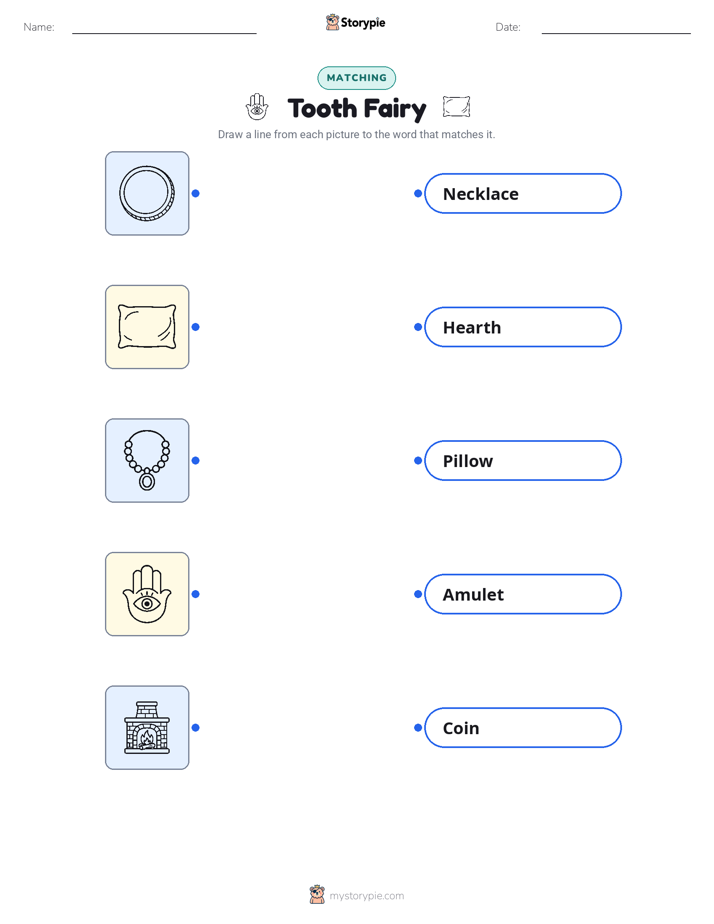
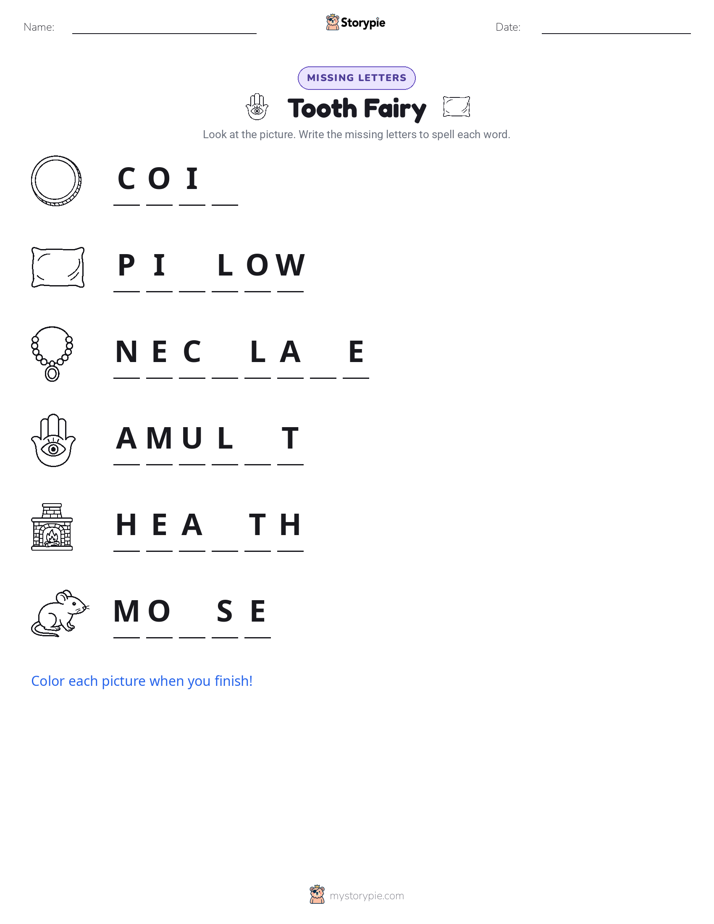
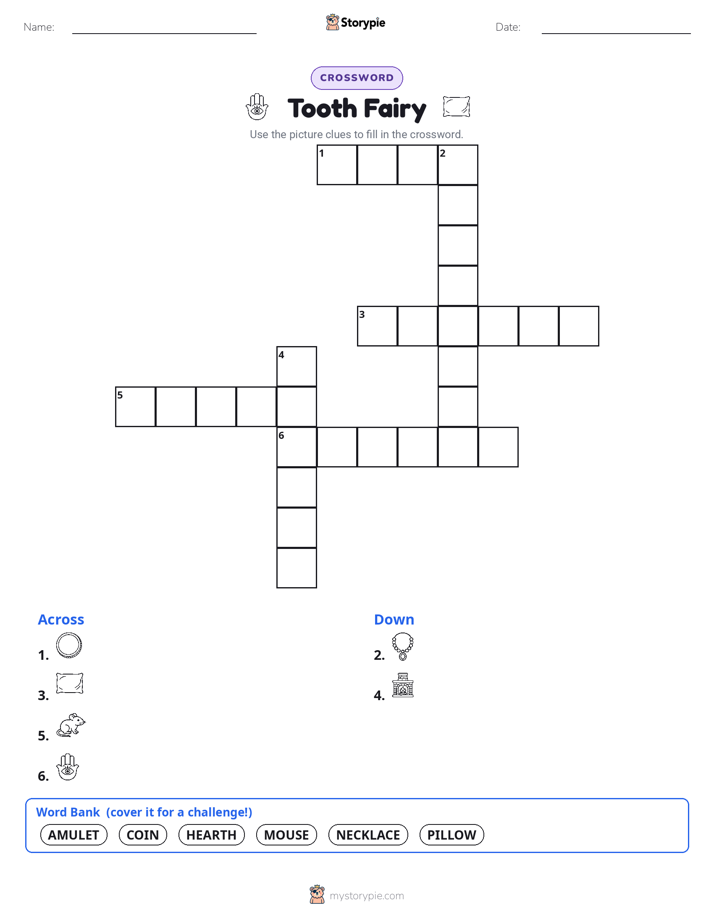
Print & create
Answer keys·No prep·Free with an account
28 worksheets · answer keys · full story · quiz · Ages 8-10 · CEFR B1
Plus adds 208,000+ more stories in 27 languages, audio for every one, and printables for all of them.
Just want Tooth Fairy?

Have you ever felt a tiny shimmer in the air just as you’re drifting off to sleep. Or seen a speck of dust dance in a moonbeam like it has a mind of its own. That’s me, a secret keeper and a collector of small treasures. My name is the Tooth Fairy, and my story is much older than you might think. It didn’t begin with a pillow, a coin, or even a fairy. It began long ago, when the world was full of deep forests and whispered traditions. I’ve watched over children for centuries, even before they knew my name. I felt the hope in a parent’s heart as they buried a child’s first lost tooth in the garden, wishing for a strong and healthy new one to grow in its place. I saw the pride in a Viking warrior who wore a child’s tooth on a necklace, believing it brought good luck in battle. These small, pearly-white treasures have always been seen as magical, a sign of growing up and stepping into a bigger world. My story is woven from these ancient beliefs, a tradition known as the Tooth Fairy myth.
For a very long time, I didn't have wings. In many parts of the world, my work was done by a little mouse. In Spain, children knew of Ratoncito Pérez, a clever mouse who would scurry under their pillows. In France, La Petite Souris, the little mouse, would do the same. Why a mouse, you ask. People believed that mice have very strong teeth that never stop growing, so they thought giving a baby tooth to a mouse would grant their child strong adult teeth in return. It was a trade, a little piece of childhood magic for a wish of strength. I watched these little mice and learned. I saw how they turned a moment that could be a little scary—a wobbly, loose tooth finally falling out—into something exciting. But as time went on, stories changed. People began to fall in love with tales of fairies: magical beings who lived in enchanted forests, granted wishes, and watched over good people. Around the early 20th century, especially in America, the stories of the tooth mouse and the stories of good fairies began to mix and mingle, like two streams flowing into one river. A playwright named Esther Watkins Arnold wrote a play for children on August 3rd, 1927, and it was one of the first times I was given my modern name: the Tooth Fairy. The idea caught on like wildfire. The little mouse became a fairy with shimmering wings, and the simple tradition became a grand, secret exchange in the quiet of the night.
The Tooth Fairy
Have you ever felt a tiny shimmer in the air just as you’re drifting off to sleep. Or seen a speck of dust dance in a moonbeam like it has a mind of its own. That’s me, a secret keeper and a collector of small treasures. My name is the Tooth Fairy, and my story is much older than you might think. It didn’t begin with a pillow, a coin, or even a fairy. It began long ago, when the world was full of deep forests and whispered traditions. I’ve watched over children for centuries, even before they knew my name. I felt the hope in a parent’s heart as they buried a child’s first lost tooth in the garden, wishing for a strong and healthy new one to grow in its place. I saw the pride in a Viking warrior who wore a child’s tooth on a necklace, believing it brought good luck in battle. These small, pearly-white treasures have always been seen as magical, a sign of growing up and stepping into a bigger world. My story is woven from these ancient beliefs, a tradition known as the Tooth Fairy myth.
For a very long time, I didn't have wings. In many parts of the world, my work was done by a little mouse. In Spain, children knew of Ratoncito Pérez, a clever mouse who would scurry under their pillows. In France, La Petite Souris, the little mouse, would do the same. Why a mouse, you ask. People believed that mice have very strong teeth that never stop growing, so they thought giving a baby tooth to a mouse would grant their child strong adult teeth in return. It was a trade, a little piece of childhood magic for a wish of strength. I watched these little mice and learned. I saw how they turned a moment that could be a little scary—a wobbly, loose tooth finally falling out—into something exciting. But as time went on, stories changed. People began to fall in love with tales of fairies: magical beings who lived in enchanted forests, granted wishes, and watched over good people. Around the early 20th century, especially in America, the stories of the tooth mouse and the stories of good fairies began to mix and mingle, like two streams flowing into one river. A playwright named Esther Watkins Arnold wrote a play for children on August 3rd, 1927, and it was one of the first times I was given my modern name: the Tooth Fairy. The idea caught on like wildfire. The little mouse became a fairy with shimmering wings, and the simple tradition became a grand, secret exchange in the quiet of the night.
Today, my job is one of the best in the world. I get to travel on moonbeams and whispers, visiting children all over the globe. The tradition looks a little different everywhere, but the feeling is always the same: wonder. That little tooth you place under your pillow is more than just a tooth. It’s a milestone. It’s proof that you are growing, learning, and becoming the person you are meant to be. And the coin I leave behind. It’s not just payment. It’s a little spark of magic, a reminder that the world is full of mystery and that even small moments of change can be wonderful. This myth helps us celebrate growing up. It gives families a special ritual to share, connecting parents and children in a secret, magical game that has been passed down through generations. My story continues to inspire art, books, and movies, but its real power is in the quiet bedrooms of children like you. It’s in the thrill of discovering that a tooth is gone and a treasure is in its place. So the next time you have a loose tooth, know that you are part of a very old and very special story—a story that keeps wonder alive, one tiny tooth at a time.
Wow facts
About
The Tooth Fairy is a figure in modern Western folklore who visits children when they lose a baby tooth, collecting the tooth from under their pillow and leaving a small payment in its place.
Take a Quiz
Question 1 of 5
In the story, the Tooth Fairy says a lost tooth is a 'milestone.' What does the word 'milestone' mean in this sentence?
Explore next


Want to do even more?
Go beyond exploring. Unlock tools that turn every story into real learning.

Storypie Plus for families
Full stories, quizzes, and printables. Nights and car rides, sorted.
- Unlimited audio stories
- Create Mode: your child stars in the story
- Offline downloads
- Printable worksheets & coloring pages

Why Storypie for Schools
Students engaged. Prep in seconds. Evenings back to you.
- Worksheets & Quizzes
- Classroom Management
- Formative Assessment
- Custom Curriculum & Lesson Plans
- 27 Languages

Why Storypie for Homeschool
Curriculum done. They'll ask for more. Hours back in your day.
- Worksheet Generator
- First-Person Audio Stories
- Built-in Comprehension Quizzes
- Custom Curriculum & Lesson Plans
- Print & Go Activities