English

Royal Society of London
The Royal Society is the independent scientific academy of the United Kingdom…
Reads at Grades 6–8 Listens at Grades 4–8
Print & create
Answer keys·No prep·Free with an account
28 worksheets · answer keys · full story · quiz · Ages 10-12 · CEFR B2
Plus adds 116,000+ more stories in 27 languages, audio for every one, and printables for all of them.
Just want Royal Society of London?
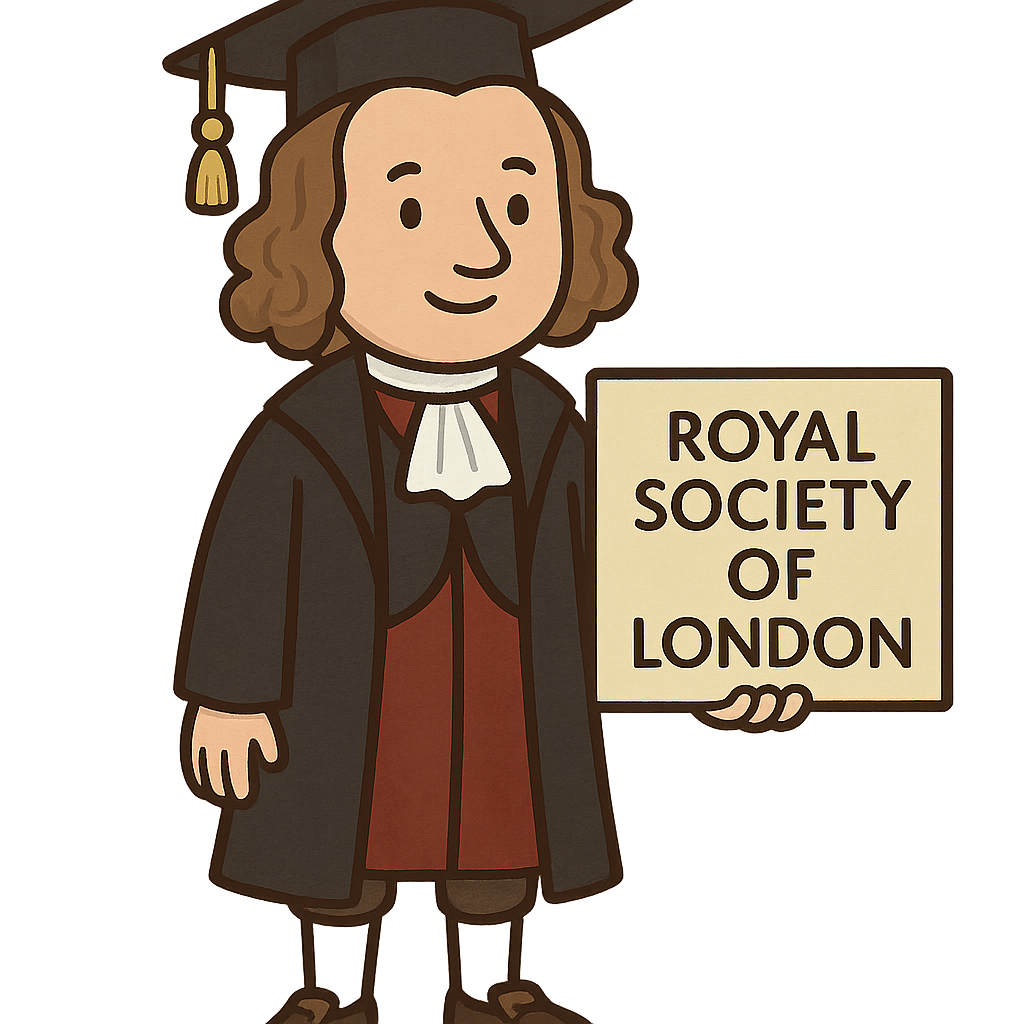
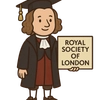
We are the Royal Society of London, the national academy of sciences for the United Kingdom. Our story begins in a time of great change and curiosity. On November 28th, 1660, a group of natural philosophers gathered in London. They shared a bold idea: to create a society dedicated to a new kind of knowledge. Instead of just accepting old ideas from ancient books, they wanted to understand the world by conducting experiments, observing results, and sharing what they learned. Their goal was to improve "natural knowledge" through direct evidence. This was a revolutionary way of thinking at the time, and it laid the foundation for modern science.
Our new society quickly gained attention. Just two years after that first meeting, in 1662, we received a Royal Charter from the reigning monarch, King Charles II. This charter officially recognized us and gave us the authority to operate as a formal institution. It was at this time that we adopted a motto that perfectly captured our core principle: 'Nullius in verba.' This Latin phrase means 'Take nobody's word for it.' It served as a constant reminder to our members, who we call Fellows, that all claims and ideas, no matter who they came from, should be tested and verified through experimentation. Our purpose was not to rely on opinion or authority, but to build a body of knowledge based on carefully observed facts and repeatable evidence.
The early years of our society were a period of incredible discovery, driven by some of the most brilliant minds in history. One of our most famous early Fellows was Isaac Newton. His work fundamentally changed how people understood the universe, particularly his explanation of the laws of motion and universal gravitation. Another key member was Robert Hooke, who used his improved microscope to explore a hidden world of tiny structures in plants and insects. We also counted among our members Christopher Wren, who was not only a gifted astronomer but also the celebrated architect who redesigned many of London's churches after the Great Fire. These individuals, and many others, used our society as a place to present their findings and debate ideas.
The Royal Society: Take Nobody's Word for It
We are the Royal Society of London, the national academy of sciences for the United Kingdom. Our story begins in a time of great change and curiosity. On November 28th, 1660, a group of natural philosophers gathered in London. They shared a bold idea: to create a society dedicated to a new kind of knowledge. Instead of just accepting old ideas from ancient books, they wanted to understand the world by conducting experiments, observing results, and sharing what they learned. Their goal was to improve "natural knowledge" through direct evidence. This was a revolutionary way of thinking at the time, and it laid the foundation for modern science.
Our new society quickly gained attention. Just two years after that first meeting, in 1662, we received a Royal Charter from the reigning monarch, King Charles II. This charter officially recognized us and gave us the authority to operate as a formal institution. It was at this time that we adopted a motto that perfectly captured our core principle: 'Nullius in verba.' This Latin phrase means 'Take nobody's word for it.' It served as a constant reminder to our members, who we call Fellows, that all claims and ideas, no matter who they came from, should be tested and verified through experimentation. Our purpose was not to rely on opinion or authority, but to build a body of knowledge based on carefully observed facts and repeatable evidence.
The early years of our society were a period of incredible discovery, driven by some of the most brilliant minds in history. One of our most famous early Fellows was Isaac Newton. His work fundamentally changed how people understood the universe, particularly his explanation of the laws of motion and universal gravitation. Another key member was Robert Hooke, who used his improved microscope to explore a hidden world of tiny structures in plants and insects. We also counted among our members Christopher Wren, who was not only a gifted astronomer but also the celebrated architect who redesigned many of London's churches after the Great Fire. These individuals, and many others, used our society as a place to present their findings and debate ideas.
To ensure these groundbreaking ideas could be shared widely, we made a decision that would change science forever. In 1665, we began publishing a journal called 'Philosophical Transactions.' It was the world's first journal dedicated exclusively to science. Before its creation, scientists often shared their work through private letters or books, which could be slow and reach only a limited audience. Our journal created a public platform where scientists could formally document their experiments, describe their results, and read about the work of others. This process allowed discoveries to be checked, debated, and built upon by a global community of thinkers. It accelerated the pace of scientific advancement and established a model for scientific communication that is still used today.
As our influence grew, our interests expanded beyond the laboratories and meeting rooms of England. We began to support scientific expeditions aimed at exploring the wider world. A major example of this took place in the 1700s, when we helped fund the famous voyages of Captain James Cook. While these journeys are often remembered for their exploration, they had clear scientific missions. For instance, one of the primary goals of Cook's first voyage was to observe an important astronomical event. The expeditions also involved mapping coastlines with greater accuracy and collecting samples of unknown plants and animals, contributing vast amounts of new data to the scientific community.
For much of our history, our fellowship reflected the social norms of the time. For centuries, only men could be elected as official Fellows of the Royal Society. This meant that the crucial contributions of many talented women in science were not formally recognized by our institution. However, as society changed, we recognized that this needed to change as well. A landmark moment in our history came in 1945, when we began electing women as Fellows for the first time. This decision was a vital step toward acknowledging excellence in science regardless of gender and ensuring that our fellowship better represented the entire scientific community. It marked an important evolution in our organization.
Today, we carry forward the legacy of our founders with a mission that is more relevant than ever: to recognize, promote, and support excellence in science. One of the most important ways we do this is by funding cutting-edge research. We provide grants to promising scientists at various stages of their careers, giving them the resources they need to pursue new ideas and make breakthroughs. This support helps ensure that the pipeline of discovery remains strong and that the UK remains at the forefront of scientific innovation.
Beyond funding research, we play a crucial role in connecting science with society. We provide independent, expert advice to the British government and policymakers. When leaders face complex challenges related to public health or new technologies, our Fellows can offer guidance based on the best available scientific evidence, helping to ensure that decisions are well-informed. Furthermore, we believe that science belongs to everyone. We work to share the wonders of discovery with the public through lectures, exhibitions, and educational programs. By making science accessible and exciting, we hope to inspire the next generation of researchers, thinkers, and discoverers who will shape the future.
Wow facts
About
The Royal Society is the independent scientific academy of the United Kingdom, dedicated to promoting excellence in science for the benefit of humanity.
Take a Quiz
Question 1 of 5
What is the English translation of the Royal Society's motto, 'Nullius in verba'?
Explore next





Want to do even more?
Go beyond exploring. Unlock tools that turn every story into real learning.

Storypie Plus for families
Full stories, quizzes, and printables. Nights and car rides, sorted.
- Unlimited audio stories
- Create Mode: your child stars in the story
- Offline downloads
- Printable worksheets & coloring pages

Why Storypie for Schools
Students engaged. Prep in seconds. Evenings back to you.
- Worksheets & Quizzes
- Classroom Management
- Formative Assessment
- Custom Curriculum & Lesson Plans
- 27 Languages

Why Storypie for Homeschool
Curriculum done. They'll ask for more. Hours back in your day.
- Worksheet Generator
- First-Person Audio Stories
- Built-in Comprehension Quizzes
- Custom Curriculum & Lesson Plans
- Print & Go Activities